
Italy’s rich artistic heritage captivates millions every year, drawing art lovers from around the globe.
From the Renaissance masterpieces of Florence to the Baroque splendor of Rome, the country boasts a treasure trove of iconic works that have shaped the course of art history.
Each piece tells a story, reflecting the culture, passion, and innovation of its time. In this journey through Italy’s artistic landscape, discover ten famous artworks that not only define the essence of Italian art but also inspire countless generations.
Whether it’s the breathtaking beauty of Michelangelo’s sculptures or the vibrant colors of Caravaggio’s paintings, these masterpieces invite viewers to delve deeper into the heart of Italy’s creative spirit.
Get ready to explore the stories behind these remarkable works and the artists who brought them to life.
1. David – Michelangelo

Michelangelo’s “David” stands 17 feet tall and captures the biblical hero just before his battle with Goliath. Sculpted from a single block of marble between 1501 and 1504, it showcases unparalleled anatomical precision and emotion.
Located in Florence’s Galleria dell’Accademia, this masterpiece symbolizes the Renaissance’s ideals of beauty and human potential. Visitors are often awestruck by its intricate details and the story of strength it conveys.
2. The Birth of Venus – Sandro Botticelli

Sandro Botticelli’s “The Birth of Venus” captures the goddess of love emerging from the sea. Created in the mid-1480s, it showcases Botticelli’s mastery of tempera on canvas.
The ethereal figures, especially Venus and the Zephyrs, reflect the beauty ideals of the Renaissance.
Housed in the Uffizi Gallery, Florence, this artwork symbolizes love, beauty, and divine grace, inviting viewers to appreciate its dreamy allure and poetic narrative.
3. The Sistine Chapel
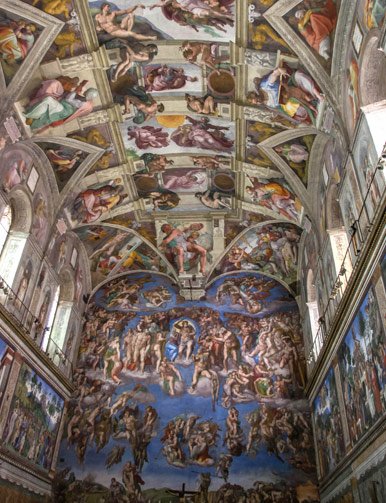
The Sistine Chapel, located in Vatican City, is celebrated for its stunning ceiling painted by Michelangelo between 1508 and 1512.
It features iconic scenes like “The Creation of Adam,” where God extends his hand to impart life to Adam. Visitors marvel at the intricate frescoes that cover the chapel’s interior, which showcase biblical narratives and embody the pinnacle of Renaissance artistry.
The chapel serves as a significant site for papal conclaves and religious ceremonies, drawing millions each year.
4. The Last Supper – Leonardo da Vinci

“The Last Supper,” painted by Leonardo da Vinci between 1495 and 1498, depicts the moment Jesus announces his impending betrayal. Located in the Convent of Santa Maria delle Grazie in Milan, this mural spans 29 feet wide.
Da Vinci’s innovative use of perspective draws viewers into the scene, where the intense emotions of the apostles reflect their disbelief and shock. Its intricate details and vibrant colors contribute to its status as a timeless masterpiece.
5. Venus of Urbino – Titian
“Venus of Urbino,” created by Titian in 1538, is a captivating oil painting housed in the Uffizi Gallery in Florence. The artwork portrays a reclining nude woman who embodies sensuality and beauty.
Titian masterfully uses rich colors and soft brushstrokes to highlight Venus’s curves, inviting viewers to experience the intimacy of the scene.
The painting not only symbolizes love and desire but also represents the ideal of feminine beauty of the Renaissance era.
6. Moses – Michelangelo

Michelangelo’s “Moses,” sculpted between 1513 and 1515, stands as a monumental figure in the Basilica di San Pietro in Vincoli, Rome.
This imposing marble statue depicts the biblical leader with distinctive horns, a symbol interpreted as divine enlightenment.
Measuring over 8 feet tall, “Moses” showcases Michelangelo’s masterful ability to render human emotion and physicality, capturing the moment of contemplation and authority.
The attention to detail, especially in the flowing beard and expressive features, draws viewers into a profound interaction with the artwork.
7. Primavera – Sandro Botticelli

Botticelli’s “Primavera,” painted in the mid-1480s, showcases a rich tapestry of mythological figures. This masterpiece, housed in the Uffizi Gallery, celebrates the arrival of spring and the fertility of nature.
Vibrant colors and delicate lines depict Venus at the center, surrounded by the Three Graces and Mercury. Each figure symbolizes love, beauty, and the rebirth of life, inviting viewers to delve into its enchanting narrative of renewal and joy.
8. The Tempest – Giorgione

Giorgione’s “The Tempest,” painted around 1508, showcases a captivating blend of landscape and narrative. Set in an idyllic scene, it features a mysterious man and a woman, hinting at themes of love and melancholy.
The lush greenery and stormy sky create an atmospheric tension that intrigues viewers. Located in the Galleria dell’Accademia in Venice, this work reflects the transition from the High Renaissance to the Venetian style, emphasizing emotion and natural beauty.
9. The School of Athens – Raphael

Raphael’s “The School of Athens,” created between 1509 and 1511, stands as a pinnacle of Renaissance art.
It adorns the Stanza della Segnatura in Vatican City, showcasing great philosophers and scholars like Plato and Aristotle at its center.
This fresco exemplifies harmony and balance through its architectural perspective and vibrant colors, inviting viewers to explore the intellectual depth of classical philosophy while celebrating the spirit of innovation in the Renaissance.
10. Laocoon and his Sons
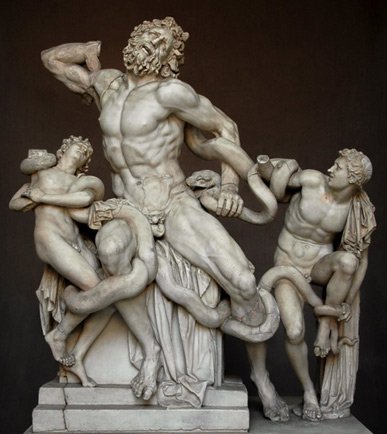
Laocoon and his Sons is a striking ancient sculpture, attributed to Agesander, Athenodoros, and Polydorus of Rhodes.
Created in the 1st century BC, this masterpiece depicts the Trojan priest Laocoon and his sons locked in an anguished struggle against serpents sent by the gods.
Displayed in the Vatican Museums, it exemplifies Hellenistic artistry through its detailed figures and emotional intensity.
The composition captures the themes of fate and suffering, inviting viewers to reflect on the complexities of human experience.


