
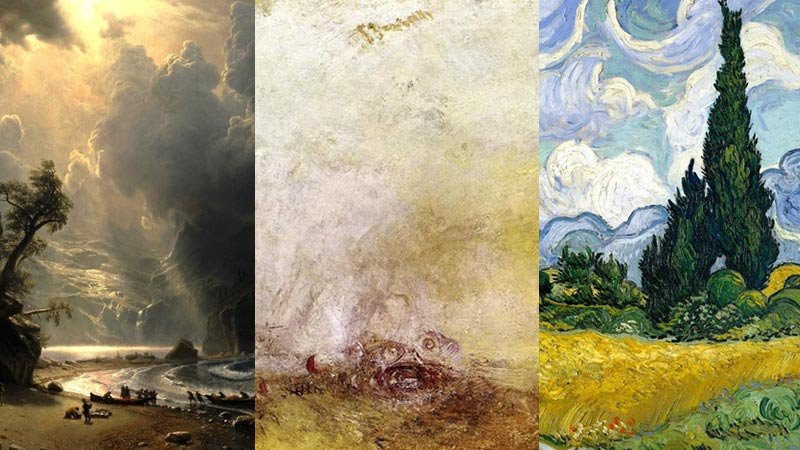
Clouds have a unique ability to transform a landscape painting, often overshadowing the land itself. Their dynamic shapes and ever-changing forms add depth and emotion, creating a captivating atmosphere that draws viewers in.
From serene cumulus to dramatic storm clouds, artists have long harnessed the power of the sky to evoke feelings and set the tone of their work.
In this exploration of ten famous cloud paintings, the artistry behind these ethereal formations takes center stage.
Each piece showcases the remarkable talent of its creator while highlighting how clouds can shape narratives and moods.
By delving into these masterpieces, we uncover the essential role clouds play in artistic expression and the timeless beauty they bring to the canvas.
1. Woman with a Parasol – Madame Monet and son – Claude Monet

Claude Monet’s “Woman with a Parasol” captures his wife Camille Monet and their son Jean against a backdrop of fluffy clouds.
Completed in 1875, this piece showcases a moment of everyday life, with Camille shielding herself from the sun.
The luminous sky and soft clouds enhance the sense of movement and tranquility, exemplifying how Monet masterfully blends figures with atmospheric elements.
2. Sky Above Clouds IV – Georgia O’Keeffe
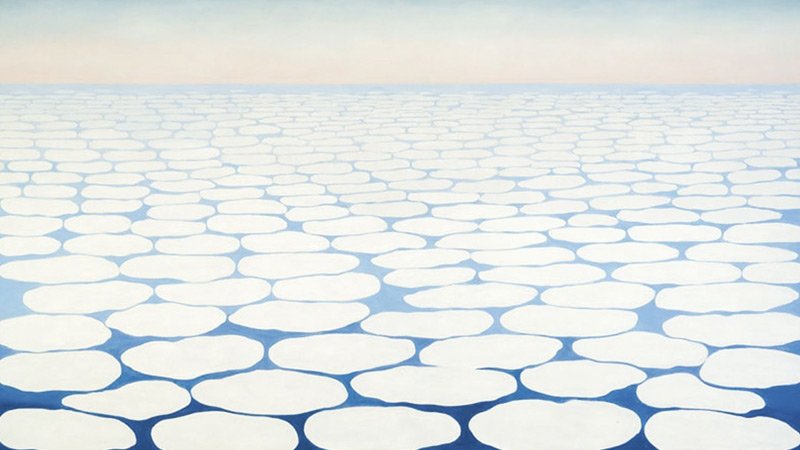
Georgia O’Keeffe’s “Sky Above Clouds IV,” created in the 1960s, showcases her unique abstract technique. It illustrates enormous stretches of cloud cover viewed from an airplane window.
The painting dissolves the boundaries between realism and abstraction, inviting the viewer into a serene, expansive sky.
O’Keeffe’s use of soft colors and patterns enhances the tranquility, making the clouds appear almost ethereal against an endless backdrop, captivating audiences worldwide.
3. Wanderer above the Sea of Fog – Caspar David Friedrich

Caspar David Friedrich’s “Wanderer above the Sea of Fog,” painted around 1818, captures a solitary figure standing atop a rocky precipice, gazing into a vast, fog-filled valley.
The painting’s ethereal clouds create a mystical atmosphere, enhancing the sense of isolation and contemplation.
Friedrich’s masterful use of light and shadow outlines the figure and emphasizes the grandeur of nature, conveying a profound connection between humanity and the sublime.
This artwork remains a defining piece of Romanticism, illustrating the emotional power of clouds in landscape art.
4. View of Toledo – El Greco

El Greco’s “View of Toledo,” painted in 1596-1600, showcases a dramatic representation of the Spanish landscape. It features turbulent clouds swirling above the city, creating a vivid, emotional atmosphere.
The painting contrasts the serene setting with dynamic cloud formations, emphasizing the power of nature.
El Greco’s masterful use of color and light captures both the beauty and intensity of the scene, making this artwork a landmark in Western art history.
5. Study of Clouds – John Constable
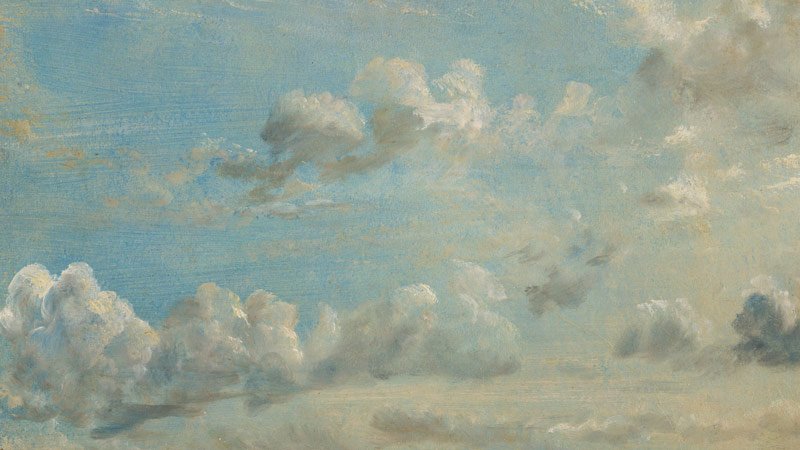
John Constable’s Study of Clouds, created around 1825, showcases his exceptional talent in capturing the ever-changing sky.
He painted this piece outdoors, using oil on paper to depict various cloud formations with striking realism.
Constable’s dedication to plein air painting allowed him to study the nuances of light and shadow, conveying the dynamic nature of clouds.
His work illustrates serenity and tumult, reflecting the profound connection between humanity and nature.
6. Windmill at Wijk bij Duurstede – Jacob van Ruisdael
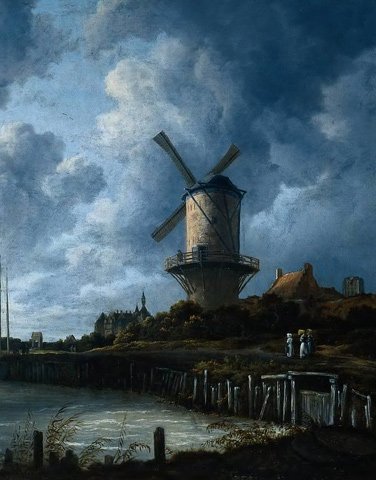
Jacob van Ruisdael’s “Windmill at Wijk bij Duurstede,” painted around 1670, exemplifies Dutch Golden Age painting.
The artwork features a cylindrical windmill harmonizing with a tranquil riverbank, showcasing Ruisdael’s exceptional attention to atmospheric details.
The dynamic interplay of light and shadow elevates the scene, emphasizing the beauty of the landscape. Cumulus clouds float above, enhancing the overall serenity and depth of this masterful depiction.
7. Puget Sound on the Pacific Coast – Albert Bierstadt
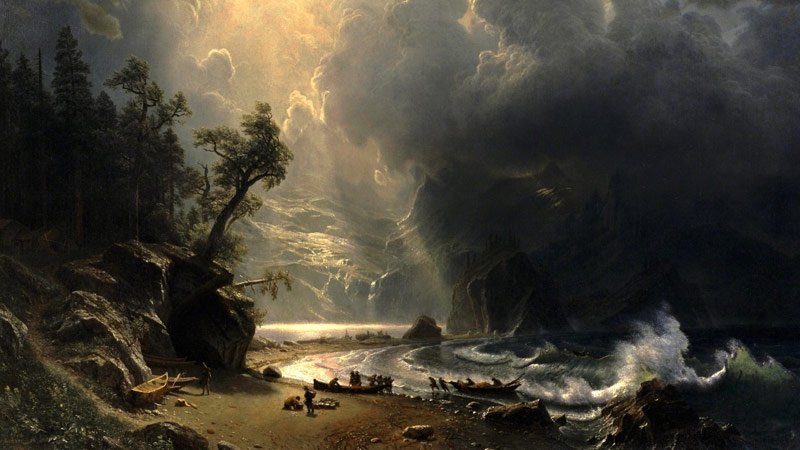
Albert Bierstadt’s “Puget Sound on the Pacific Coast,” painted in 1870, showcases breathtaking cloud formations above a serene landscape.
The painting captures the grandeur of the Pacific Northwest, emphasizing the interplay between light and clouds.
Bierstadt’s meticulous attention to detail conveys a sense of tranquility, as fluffy cumulus clouds reflect the soft sunlight.
This masterpiece epitomizes the Romantic spirit, reinforcing nature’s beauty and its dramatic, ever-changing skies.
8. Wheat Field with Cypresses – Vincent van Gogh
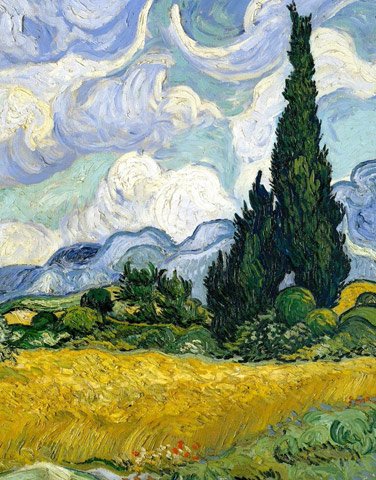
Vincent van Gogh’s “Wheat Field with Cypresses,” painted in 1889, features swirling cumulus clouds that dominate the sky.
It’s set against a golden wheat landscape, showcasing the tranquil yet intense interplay of nature. The cypress trees rise prominently, adding verticality and contrast to the scene.
Van Gogh’s bold brushstrokes and rich colors capture the emotional weight of the moment, inviting viewers to immerse themselves in this atmospheric masterpiece.
9. Beach Scene – Albert Bierstadt
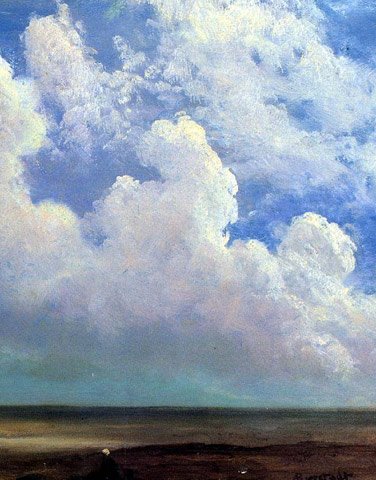
Bierstadt’s “Beach Scene” captures a serene coastal vista, where fluffy clouds float gently above the tranquil waters.
The soft, pastel tones of the sky reflect the calming mood of the scene, inviting viewers to experience the peacefulness of nature. He expertly balances light and shadow, enhancing the dreamlike atmosphere.
The dynamic interplay between the clouds and water exemplifies Bierstadt’s mastery, showcasing how clouds can transform a simple beach landscape into a breathtaking work of art.
10. Sunrise with Sea Monsters – J. M. W. Turner

Turner’s “Sunrise with Sea Monsters,” painted in 1845, masterfully captures the dynamic interplay of elements.
It depicts a dramatic sunrise over tumultuous seas, where colors merge to evoke emotion. Turner uses swirling clouds and vivid hues to enhance the sense of movement, creating an atmospheric display.
The mythical sea monsters lurking beneath the waves add an intriguing narrative layer, highlighting Turner’s ability to blend realism and fantasy seamlessly.


