Deer have captivated artists for centuries, embodying beauty, grace, and a deep connection to nature. Their portrayal in art spans various cultures and styles, from realistic renderings to abstract interpretations.
Whether depicted in serene forest settings or majestic landscapes, deer paintings often evoke a sense of tranquility and power.
Among the most celebrated works, several iconic pieces stand out, showcasing the talent of renowned artists like Sir Edwin Landseer and Rosa Bonheur.
These masterpieces not only highlight the elegance of deer but also reflect the rich symbolism associated with these animals.
In this article, we’ll explore ten famous deer paintings that have left a lasting impact on the art world, inspiring both artists and admirers alike.
1. Deer in the Forest – Franz Marc
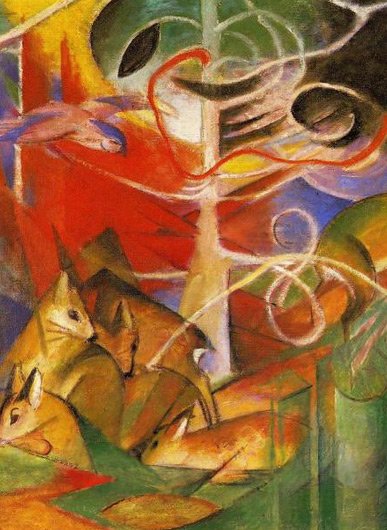
Franz Marc created “Deer in the Forest” in 1913, showcasing a portrayal of deer amidst a lush forest. The deer stand out with their bold, bright colors, contrasting against the deep greens and browns surrounding them.
Marc’s stylized representation features elongated limbs and curved bodies, echoing his fascination with the underlying geometry of nature.
This painting is a quintessential example of German Expressionism, reflecting Marc’s emotional use of color and his deep connection to wildlife.
2. The Wounded Deer – Frida Kahlo

The Wounded Deer, completed in 1946, is a poignant self-portrait by Frida Kahlo. It depicts her as a young deer, pierced by arrows and surrounded by a barren landscape.
Kahlo’s head, crowned with antlers, symbolizes her suffering and vulnerability. The stormy sky reflects her emotional turmoil following a failed spinal surgery.
With the word “Carma” inscribed, this painting captures her feelings of destiny and resignation to fate, showcasing her deep resilience in the face of pain.
3. The Hunt in the Forest – Paolo Uccello
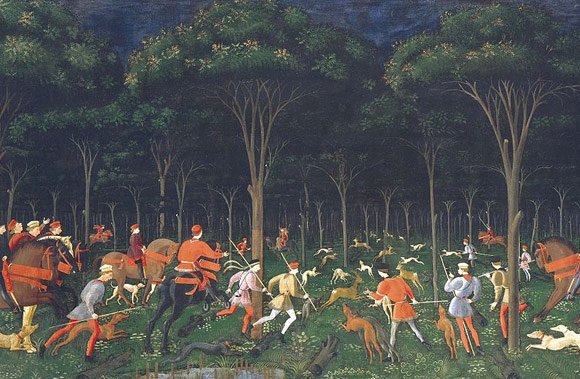
The Hunt in the Forest, completed in 1470, showcases a dynamic scene with hunters on horseback pursuing a stag through a richly detailed forest.
Uccello’s innovative use of linear perspective creates a sense of depth, drawing viewers into the intricate landscape.
The stylized figures, characterized by elongated limbs and geometric precision, reflect Uccello’s fascination with mathematics and movement, capturing both the thrill of the chase and the beauty of nature in Renaissance art.
4. The Vision of Saint Eustace – Annibale Carracci
Annibale Carracci’s “The Vision of Saint Eustace,” completed in 1615, depicts the powerful moment of conversion for Placidus, a Roman general.
The painting shows him kneeling before a crucifix between the antlers of a stag, symbolizing his divine revelation.
The dramatic use of light and shadow enhances the emotional intensity, while the dynamic composition showcases Carracci’s mastery in blending classical techniques with Baroque energy. This work remains an iconic testament to his innovative artistry.
5. The Monarch of the Glen – Sir Edwin Landseer
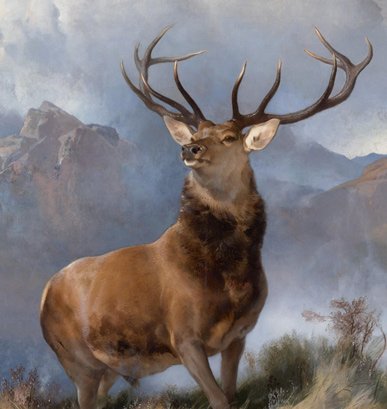
The Monarch of the Glen, completed in 1851, showcases a regal stag atop a rocky outcrop in the Scottish Highlands.
This iconic painting captures the animal’s strength and majesty, with intricate details in the stag’s impressive antlers and fur.
Landseer’s skillful rendering elevates the composition, creating a powerful connection between the viewer and nature.
The painting has become emblematic of Scottish culture, inspiring admiration and debate over its romantic portrayal of wildlife.
6. Red Deer Stag and Hind – George Stubbs
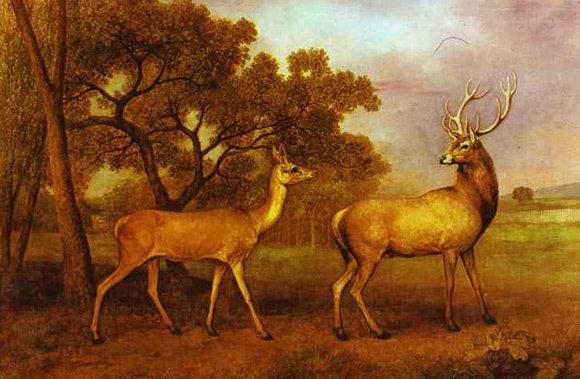
“Red Deer Stag and Hind,” completed in 1764, showcases George Stubbs’s fascination with anatomy and the natural world.
This painting features a dynamic pose of a stag rearing on its hind legs, while the attentive hind observes nearby. Stubbs’s meticulous attention to detail highlights each animal’s unique features and movements.
The realistic landscape enhances the sense of depth, making the scene come alive with atmospheric perspective. This work remains an iconic representation of British wildlife painting, housed in the Tate Britain museum.
7. Landscape with Deer – Rosa Bonheur
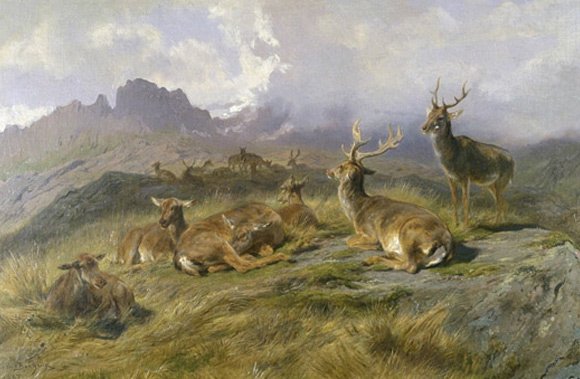
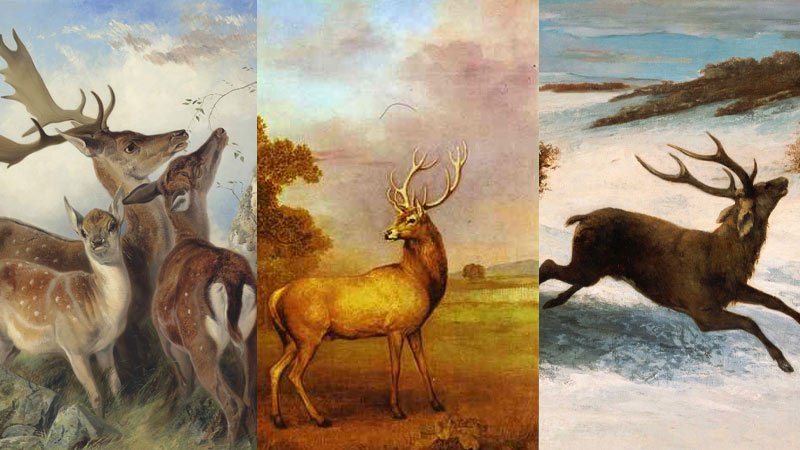
“Landscape with Deer,” painted by Rosa Bonheur in 1868, exhibits a serene scene with deer grazing in a lush environment.
Bonheur’s attention to detail showcases each deer’s unique features, capturing their grace and individuality. The realistic landscape enhances the tranquil mood, featuring verdant greenery and atmospheric perspective that create depth.
This painting exemplifies Bonheur’s skill in animal depiction, making her one of the most celebrated female artists of the 19th century.
8. Cheetah and Stag with Two Indians – George Stubbs
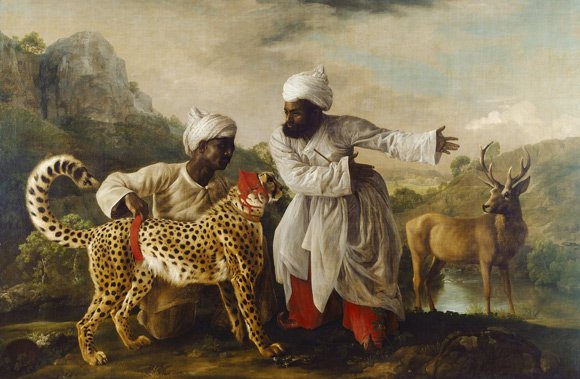
“Cheetah and Stag with Two Indians,” completed in 1765, showcases George Stubbs’s passion for animals and the natural world.
The painting depicts a cheetah, leashed by two Indian men, as it chases a stag through a landscape. Stubbs expertly captures the drama of the hunting scene, with both animals in dynamic poses.
This artwork emphasizes the intricate anatomy of the creatures, reflecting Stubbs’s keen observation of animal movement and his ability to convey excitement in wildlife settings.
9. Deer Running in the Snow – Gustave Courbet
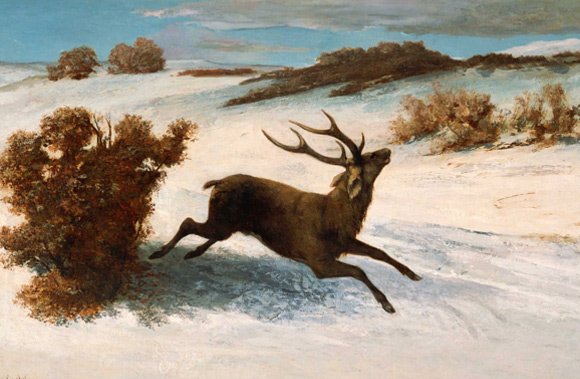
Gustave Courbet’s “Deer Running in the Snow,” completed in 1861, illustrates a lone deer galloping through a snowy landscape.
This painting highlights Courbet’s mastery of realism, with each detail meticulously rendered to convey the deer’s movement and expressions.
The thick impasto technique enhances the textural quality of the snow and surrounding trees, while the subdued color palette captures the cold atmosphere, embodying the beauty and power of nature.
10. Fallow Deer – Richard Ansdell

Fallow Deer by Richard Ansdell, created in 1880, showcases a serene scene of these elegant animals in a tranquil woodland.
Ansdell’s precise attention to detail captures the textures of their distinctive spotted coats, highlighting their graceful forms among the foliage.
The warm palette and soft brushwork evoke an atmosphere of calm, reflecting Ansdell’s mastery in blending realism with the beauty of nature. This painting stands as a testament to Ansdell’s significant contribution to wildlife art.