Forest paintings have captivated artists and viewers for centuries, showcasing the enchanting beauty and complexity of nature.
These artworks often evoke a sense of tranquility, drawing the observer into serene woodland settings filled with rich textures and colors.
From the soft whispers of leaves to the dramatic interplay of light and shadow, forest scenes offer a unique glimpse into the heart of the natural world.
Whether it’s the mystical atmosphere of a dense grove or the vivid hues of an autumn landscape, these masterpieces serve as a reminder of the timeless allure of forests and their profound impact on human creativity.
1. Forest – Paul Cézanne

Cézanne’s Forest, created between 1902 and 1904, exemplifies his Post-Impressionist style. This oil painting on canvas measures 81.9 by 66 centimeters.
It captures a forest scene near Aix-en-Provence, possibly at the entrance to Château Noir. With bold brushstrokes and warm earthy hues, Cézanne portrays the intricate interplay of light and color.
The dappled sunlight enhances the serene atmosphere, inviting viewers to experience nature’s tranquility and beauty.
2. Nymphs and Satyr – William-Adolphe Bouguereau
“Nymphs and Satyr,” painted in 1873, showcases a mythological scene where nymphs encounter a satyr in a secluded pond.
Bouguereau skillfully captures the tension between innocence and temptation, drawing viewers into the lush, forest surroundings.
The painting features delicate details, from the shimmering water to the intricate drapery of the nymphs’ garments.
It masterfully represents the Romantic ideals of beauty and nature’s allure, making it a captivating piece in Bouguereau’s oeuvre.
3. Undergrowth with Two Figures – Vincent van Gogh
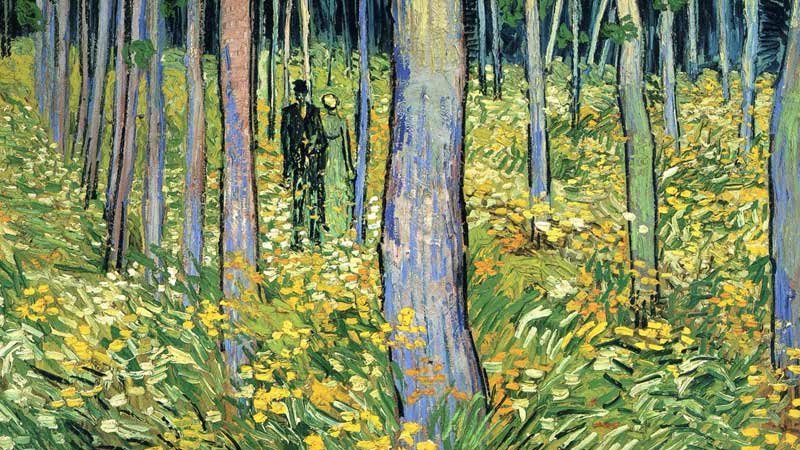
Vincent van Gogh’s “Undergrowth with Two Figures,” painted in 1890, is a stunning oil on canvas work. The artwork features a dense forest where two figures believed to be van Gogh and his friend Paul Eugène Milliet walk amidst colors and thick brushstrokes.
The painting conveys dynamic energy and movement, highlighting van Gogh’s deep connection to nature and his expressive style, making it one of his most emotional masterpieces.
4. The Story of Nastagio degli Onesti (I) – Sandro Botticelli
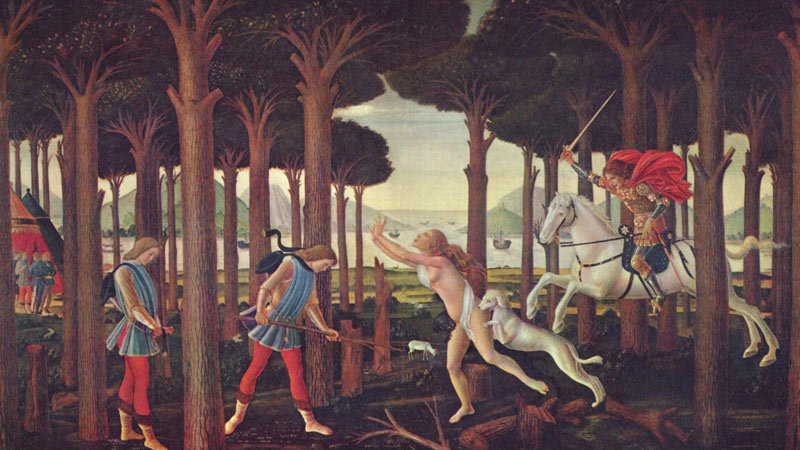
Botticelli’s “The Story of Nastagio degli Onesti (I)” showcases a lush forest setting where the protagonist, Nastagio, encounters the unyielding noblewoman Beatrice.
He rides through foliage, attempting to share a haunting tale of doomed spirits to win her favor.
The composition highlights Botticelli’s mastery of perspective and elegant forms, drawing viewers into the forest’s depth while reflecting the tension between love and rejection. This painting exemplifies his storytelling skill and intricate emotional connections with nature.
5. Morning in a Pine Forest – Ivan Shishkin and Konstantin Savitsky
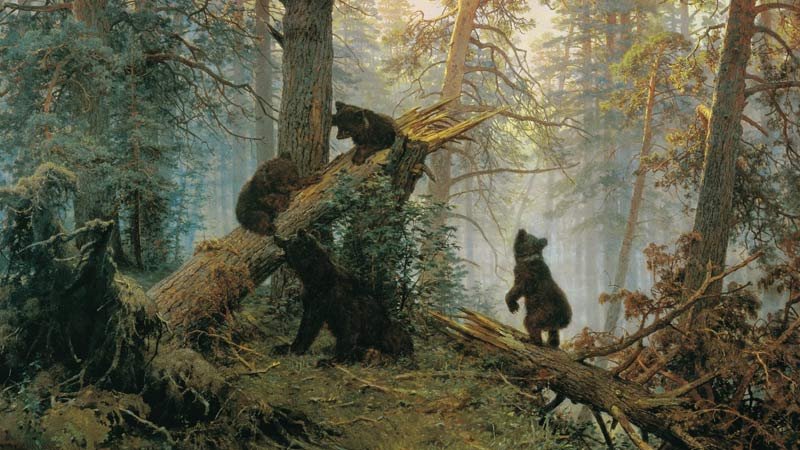
“Morning in a Pine Forest,” painted collaboratively by Ivan Shishkin and Konstantin Savitsky, depicts a serene forest scene filled with wildlife.
The work showcases a group of bears navigating an uprooted tree, hinting at the drama following a recent storm.
The vivid colors reflect the early morning ambiance, while the intricate detail of the foliage captures the tranquil beauty of nature.
This masterpiece beautifully illustrates the harmony of animals and their environment, reveling in the splendor of the waking forest.
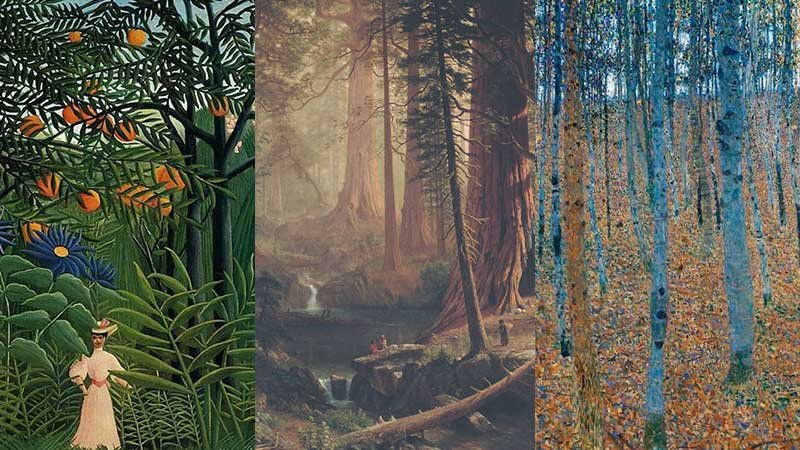
6. Woman Walking in an Exotic Forest – Henri Rousseau
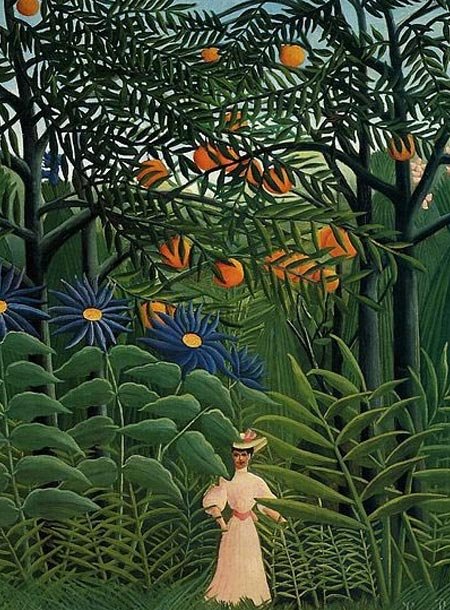
Henri Rousseau’s “Woman Walking in an Exotic Forest,” painted in 1905, showcases a tropical jungle teeming with life.
The scene features a solitary woman in a simple white dress, evoking tranquility among the vivid palm trees and thriving flora.
Rousseau’s use of bold colors and simplified forms creates a dreamlike quality, merging reality with fantasy, capturing viewers’ imaginations while celebrating the allure of untouched nature.
7. The Bodmer Oak, Fontainebleau Forest – Claude Monet
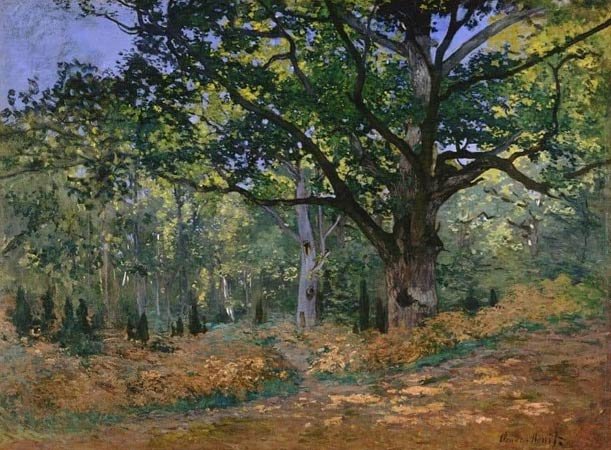
The Bodmer Oak, painted in 1865, showcases Claude Monet’s remarkable ability to capture light and texture.
The majestic oak tree stands against the muted forest backdrop, drawing the viewer’s eye into the dense foliage and distant mountains.
Monet’s loose brushwork and earthy tones evoke the serene beauty of the Fontainebleau Forest, illustrating nature’s grandeur and creating a harmonious balance that entices art lovers exploring forest landscapes.
8. Giant Redwood Trees of California – Albert Bierstadt
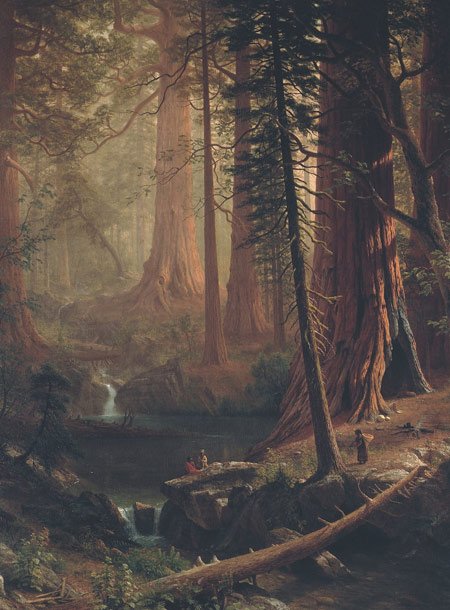
Bierstadt’s “Giant Redwood Trees of California,” painted in 1874, beautifully captures the awe of nature’s grandeur.
The artwork features towering redwoods that dwarf a serene river scene, where two Native Americans peacefully gaze at a distant waterfall. Warm hues of orange infuse the setting, evoking nostalgia.
Bierstadt’s meticulous layering technique enhances the atmosphere, while the luminist style invites viewers to immerse themselves in this tranquil woodland landscape.
9. Beech Forest Buchenwald I – Gustav Klimt
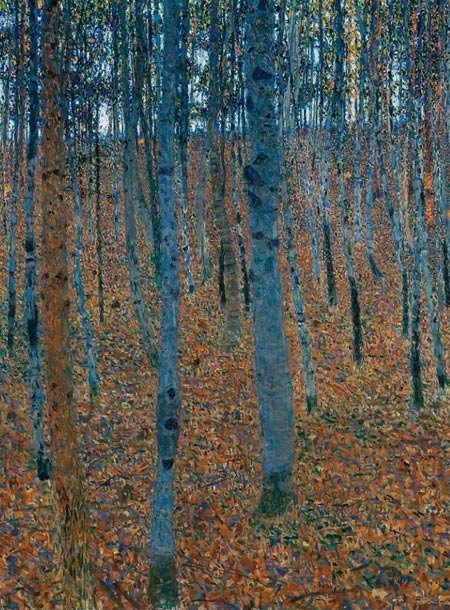
Beech Forest Buchenwald I, created in 1902, showcases Gustav Klimt’s naturalistic style. The painting illustrates a densely packed beech forest, featuring a rich palette of greens, browns, and yellows.
Klimt captures the forest’s beauty and complexity, utilizing depth and movement to guide the viewer’s eye through the foliage.
Bright sunlight filters through the branches, producing a harmonious balance between the warm tones of the leaves and the cool blues of the sky.
10. Down on his Luck – Frederick Mc Cubbin
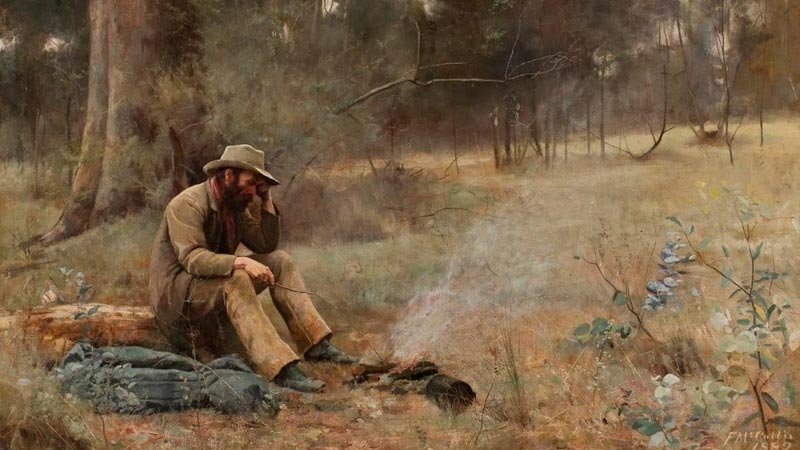
Frederick McCubbin’s “Down on His Luck,” painted in 1889, depicts a despondent swagman sitting beside a campfire in the Australian bush.
The artwork conveys intense emotion, blending dark hues to express melancholy and reflection. McCubbin captures a moment of isolation, emphasizing the swagman’s struggle against the hardships of life.
The surrounding wilderness, rendered in muted tones, enhances the poignant atmosphere, inviting viewers to connect with the solitude experienced in nature.