Throughout art history, the interplay of light and darkness has captivated artists and viewers alike. Black paintings, often symbolizing depth and introspection, have emerged as powerful expressions of emotion and meaning.
From the haunting canvases of the Baroque period to the bold strokes of modern artists, these works challenge perceptions and invite contemplation.
Each piece tells a unique story, reflecting the societal influences and personal struggles of its creator. By delving into these iconic works, one uncovers the profound ways in which darkness can illuminate the human experience.
1. Black Square – Kazimir Malevich

Kazimir Malevich’s Black Square, completed in 1915, stands as a hallmark of modern art. This iconic painting features a large black square, showcasing the artist’s exploration into abstraction.
Initially created as a stage curtain for the Cubo-Futurist opera Victory over the Sun, it ultimately became a standalone work celebrated for its simplicity and profound impact.
Critics regard Black Square as the “zero point of painting,” symbolizing a pivotal moment in art history that ushered in new aesthetic possibilities and challenged traditional boundaries of artistic expression.
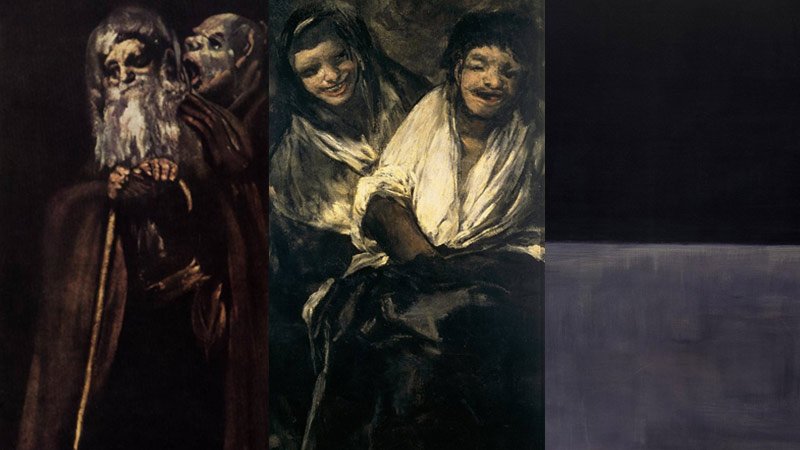
2. Two Old Men – Francisco Goya

Francisco Goya’s Two Old Men, completed in 1823, embodies the emotional depth of his later works. This painting, part of Goya’s renowned Black Paintings series, features two distorted figures set against a striking black backdrop.
Critics often interpret the dark coloring as a portrayal of evil or despair. Goya spent approximately three years perfecting this piece, showcasing his unique ability to blend reality with the grotesque.
This artwork reflects the turmoil of his life, illustrating the psychological struggles faced in old age.
3. Quince, Cabbage, Melon, and Cucumber – Juan Sánchez Cotán
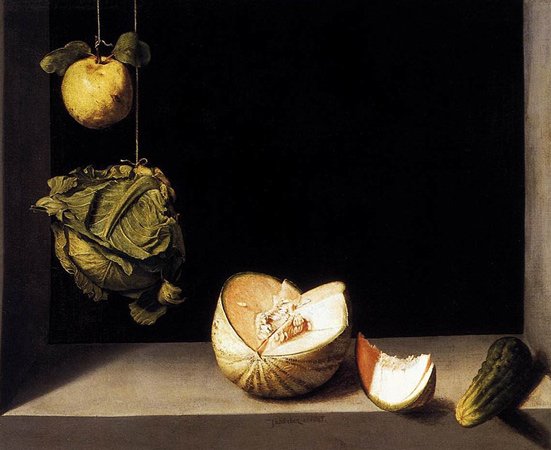
Juan Sánchez Cotán’s Quince, Cabbage, Melon, and Cucumber, completed in 1602, exemplifies the Baroque still-life genre.
He employs a deep black background, enhancing the vibrant textures and forms of the fruits and vegetables. This striking contrast defines the objects, showcasing Cotán’s meticulous attention to detail.
Unlike his contemporaries, who often romanticized subjects, he pursued realistic portrayals, inviting viewers to appreciate the simplicity of everyday life.
This painting not only reflects his innovative style but also signifies a significant moment in the evolution of still-life artistry.
4. Dead Toreador – Édouard Manet

Édouard Manet’s Dead Toreador, completed in 1865, vividly captures the grim aftermath of bullfighting. The painting showcases a bullfighter’s lifeless body sprawled on the ground, clutching his muleta.
Manet employs a predominantly black palette, enriching the dramatic intensity and highlighting the bloodstained costume.
The exceptional detail in the bullfighter’s attire reflects Manet’s mastery of Realism, bringing life to the stark scene.
This work challenges viewers to confront mortality, making it a striking example of how black paintings can evoke deep emotional responses.
5. Man Mocked by Two Women – Francisco Goya

Goya’s Man Mocked by Two Women, completed in 1823, showcases his signature dark style. This artwork depicts a man surrounded by two mocking figures, emphasizing the psychological torment experienced in social interactions.
Notably, the distorted features of the figures, often seen as demonic, reflect Goya’s preoccupation with human nature’s darker aspects.
As part of his Black Paintings series, this piece contributes to the overarching theme of despair and evil, capturing Goya’s profound emotional struggles during the later years of his life.
6. Abstract Painting No. 5 – Ad Reinhardt

Ad Reinhardt’s Abstract Painting No. 5, completed in 1962, represents the pinnacle of his exploration of black as a medium.
It features a canvas that appears solidly painted in black, encouraging viewers to engage in a deeper examination of perception.
Reinhardt intricately manipulated subtle variations in shading, which challenges the boundaries of color and complexity.
This iconic piece exemplifies the minimalist philosophy he championed, prioritizing visual experience over narrative. Reinhardt’s work invites contemplation, making it a profound statement in the realm of abstract art.
7. Iberia – Robert Motherwell
Iberia, completed in 1958, showcases Robert Motherwell’s distinct approach to abstraction. It features a bold use of black paint, creating a deep emotional resonance through contrasting tones.
Motherwell employs varying degrees of depth, producing a compelling interplay of light and shadow. Critics view this piece as a reflection of the artist’s philosophical insights, particularly influenced by the Spanish Civil War.
The intricate shapes and patterns in Iberia further illustrate Motherwell’s ability to evoke profound thoughts and feelings, making it a significant contribution to the realm of black paintings.
8. Untitled (Black on Gray) 1969 – Mark Rothko
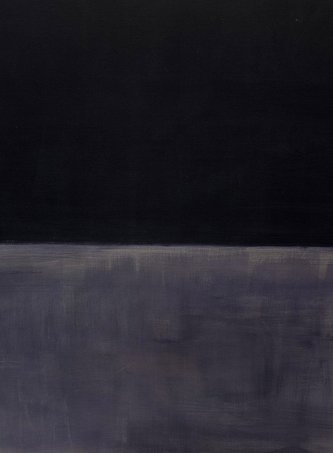
Rothko’s Untitled (Black on Gray) exemplifies his profound exploration of color and emotion. This painting features expansive areas of deep black and muted gray, creating a somber yet contemplative atmosphere.
Rothko aimed to transcend mere aesthetics, inviting viewers to connect with their emotions. He often viewed black as the apex of his artistic journey, challenging the misconception that his dark works reflected despair.
Instead, he aimed to reveal the complexity of human experience through simplicity, making this piece a cornerstone of abstract expressionism and a significant contribution to black painting.
9. Cart with Black Ox – Vincent van Gogh

Vincent van Gogh’s Cart with Black Ox, created in 1884, stands as a significant example of his early work. He captures the essence of a rural landscape in Nuenen, where he painted en plein air.
The artwork showcases a stark contrast between the earthy tones of the cart and the dark figure of the ox, highlighting the natural harmony of the scene.
Van Gogh utilized a vibrant palette that emphasizes his distinctive brushwork, inviting viewers to explore the depth of rural life while reflecting his emotional state during this tumultuous period.
10. Zebra – Victor Vasarely

Zebra, completed in 1937, exemplifies Vasarely’s innovative approach to geometric abstraction through a striking use of black and white.
It features bold, alternating stripes that create a mesmerizing optical illusion. Vasarely’s careful manipulation of form and contrast invites viewers to explore the changing perceptions of space and movement.
This piece transcends a mere representation of the animal, embodying the dynamic interplay of light and shadow.
Critics praise Zebra as a significant work in the Op Art movement, showcasing Vasarely’s ability to blend art and visual science seamlessly.