

Art has always been a powerful reflection of culture and history, and British paintings are no exception. From the majestic landscapes of the Romantic era to the innovative styles of the Modern age, these masterpieces tell stories that resonate through time.
Each brushstroke captures not just beauty but also the essence of the British spirit. In this exploration of the ten most famous British paintings, readers will discover iconic works that have shaped the art world.
These pieces not only showcase artistic brilliance but also reveal the rich tapestry of British life and thought. Whether it’s a serene countryside scene or a thought-provoking portrait, each painting invites viewers to delve deeper into its narrative and significance.
1. The Fighting Temeraire – J. M. W. Turner
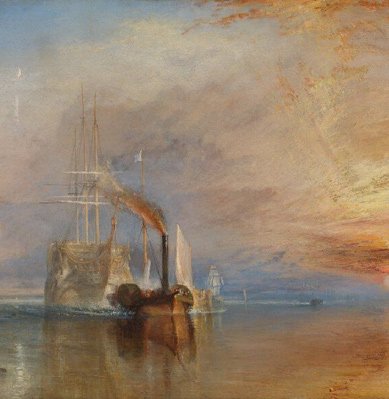
The Fighting Temeraire, painted in 1839, portrays the last voyage of the iconic ship HMS Temeraire. Turner captures the ship being towed to its final berth, symbolizing the end of an era.
His masterful use of light and color creates a dramatic sunset, representing both nostalgia and progress.
The painting emphasizes the transition from sail-powered ships to steam locomotives, highlighting the changes in British society during this period. Turner’s emotional depth and technique resonate with viewers, making it a timeless masterpiece.
2. The Lady of Shalott – John William Waterhouse
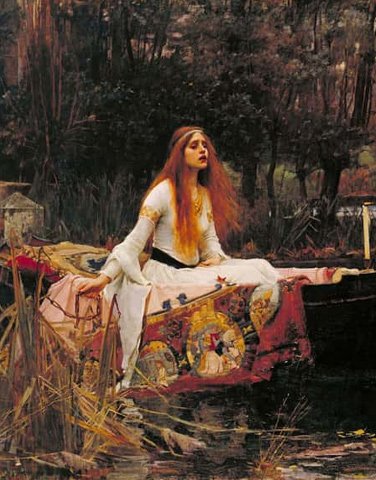
Waterhouse’s “The Lady of Shalott,” painted in 1888, illustrates the tragic tale from Alfred Lord Tennyson’s poem. The artwork depicts a young woman, trapped in a tower, weaving an intricate tapestry.
She gazes longingly at Sir Lancelot through a mirror, symbolizing unattainable love and the constraints of society.
Waterhouse’s use of color and detail enhances the emotional intensity, drawing viewers into her sorrowful narrative.
This painting exemplifies the Pre-Raphaelite ideals, merging myth with vivid depiction, leaving a lasting impact on British art.
3. Mr and Mrs Clark and Percy – David Hockney

David Hockney painted “Mr and Mrs Clark and Percy” in 1970, capturing a modern couple’s essence. The artwork features his friends, fashion designer Ossie Clark and model Celia Birtwell, along with their cat, Percy.
Hockney’s use of bold colors and intricate patterns reflects the vibrancy of 1970s British culture. The painting’s composition showcases an intimate domestic scene, inviting viewers to contemplate relationships and identity.
Its unique style has cemented its place in the canon of British art history, highlighting Hockney’s significant contribution to contemporary painting.
4. Ophelia – John Everett Millais
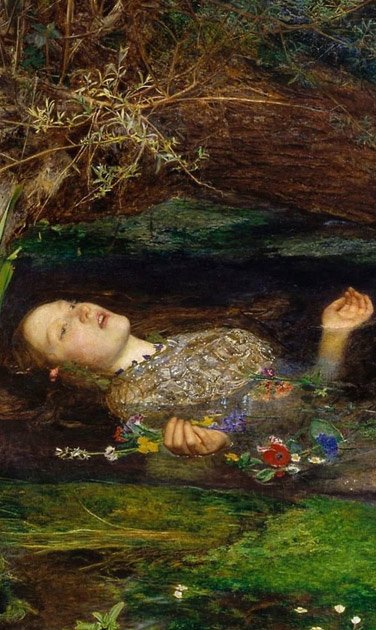
“Ophelia,” painted by John Everett Millais in 1852, portrays the tragic character from Shakespeare’s Hamlet.
Millais captures Ophelia’s last moments in a lush, watery setting, surrounded by flowers and delicate greenery. The meticulous detail enhances both beauty and melancholy, reflecting themes of love and loss.
Millais’s innovative technique and use of color invite viewers to immerse themselves in the narrative, making “Ophelia” one of the most celebrated examples of Pre-Raphaelite art and a profound representation of Victorian sensibilities.
5. The Hay Wain – John Constable

“The Hay Wain,” created by John Constable in 1821, showcases rural life in England’s Suffolk countryside. This iconic landscape painting features a horse-drawn cart, the “wain,” set against a serene river scene.
Constable’s masterful brushwork captures the changing light and atmospheric effects, emphasizing the beauty of nature.
Celebrated for its detailed depiction of lush greenery and tranquil waters, the artwork serves as a nostalgic reminder of agrarian life in early 19th-century Britain. “The Hay Wain” stands as a testament to Constable’s emotional connection to the landscape.
6. Girl with Balloon – Bansky
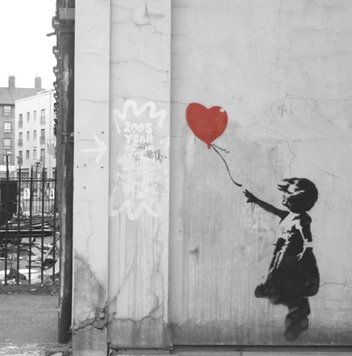
“Girl with Balloon” is a striking piece by the elusive street artist Banksy. Created in 2002, it showcases a young girl reaching for a heart-shaped red balloon, symbolizing hope and innocence.
Banksy’s choice of a simple yet powerful image generates emotional resonance, inviting viewers to reflect on loss and longing.
The artwork transcends its urban setting, sparking conversations about art, society, and identity, further solidifying Banksy’s place in contemporary British art.
7. The Ambassadors – Hans Holbein the Younger
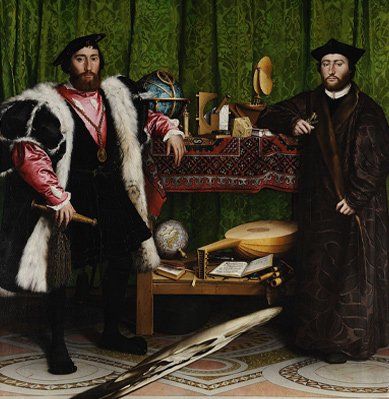
“The Ambassadors,” painted by Hans Holbein the Younger in 1533, features two men immersed in a world of knowledge and power.
Holbein’s meticulous attention to detail captures the richness of textures and patterns, especially in the ornate clothing and intricate objects surrounding the figures.
The painting’s duality reveals themes of religion and philosophy, highlighted by the distorted skull at the bottom, suggesting mortality.
This masterpiece represents the height of Northern Renaissance artistry and has become emblematic of Holbein’s significant role in portraiture.
8. Mr and Mrs Andrews – Thomas Gainsborough
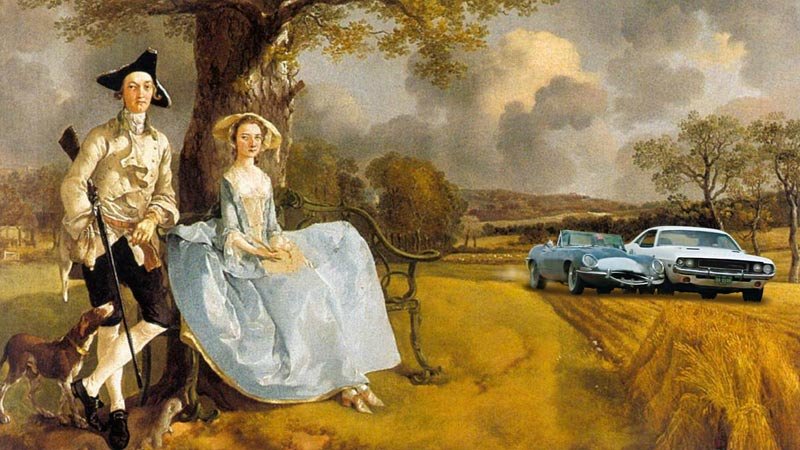
“Mr and Mrs Andrews,” painted by Thomas Gainsborough in 1750, features a young couple adorned in elegant 18th-century attire.
Gainsborough skillfully captures their individual personalities through their poses and expressions. The lush landscape in the background amplifies their social status as landowners.
This artwork represents the emergence of portraiture reflecting both identity and wealth during this era. Gainsborough’s delicate brushwork and attention to detail invite viewers to appreciate the subtleties of human relationships and cultural wealth in British art.
9. Whistlejacket – George Stubbs

Whistlejacket, painted by George Stubbs in 1762, showcases an exceptional depiction of an Arabian horse, emphasizing the animal’s beauty and strength.
Stubbs’s meticulous attention to anatomical detail highlights Whistlejacket’s muscular structure and elegant posture.
The stark, plain background allows the horse to dominate the canvas, focusing viewers’ attention entirely on its form.
This painting not only exemplifies Stubbs’s expertise in animal anatomy but also marks a significant moment in British equestrian art, celebrating the longstanding bond between humans and horses.
10. Three Studies for Figures at the Base of a Crucifixion – Francis Bacon
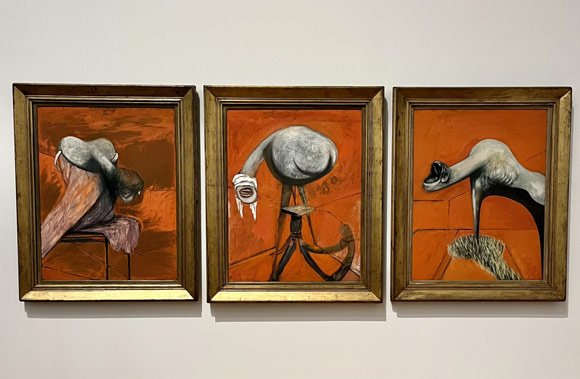
Bacon’s “Three Studies for Figures at the Base of a Crucifixion,” painted in 1944, presents a raw exploration of human suffering.
It depicts distorted figures in haunting shades, capturing emotions of anguish and existential despair. Bacon’s use of grotesque forms invites viewers to confront the darker aspects of humanity.
This triptych resonates deeply, reflecting post-war anxieties and the fragility of life. Its innovative approach marks a pivotal moment in modern British art, showcasing Bacon’s profound impact on contemporary expressionism.


