

Edgar Degas, a master of capturing the essence of modern life, remains one of the most celebrated artists of the late 19th century.
Known primarily for his stunning depictions of ballet dancers, his work transcends mere aesthetics, offering a raw glimpse into Parisian society.
With an impressive catalog that includes over 1,500 works, Degas skillfully blended traditional techniques with Impressionist spontaneity, transforming the way art represented contemporary life.
From the intimate portrayal of the Bellelli Family to the dynamic energy of ballet rehearsals, Degas’s paintings reflect a keen observation of human behavior and urban existence.
Each piece reveals not just the beauty of movement but also the complexities of social class and reality in 19th-century Paris.
Dive into the world of Edgar Degas as we explore ten of his most famous paintings that continue to resonate with audiences today.
1. The Ballet Class
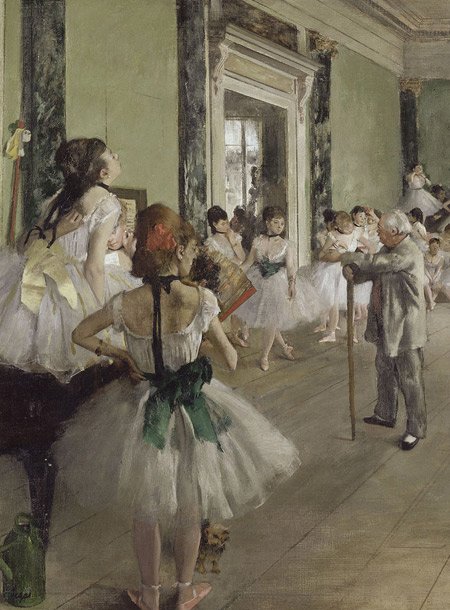
Degas’s The Ballet Class (1874) showcases a dynamic scene inside Paris’s old opera. It features a group of dancers guided by the esteemed instructor Jules Perrot.
The painting captures the essence of graceful movement, emphasizing the energy and concentration of the dancers.
Notably, the composition highlights Degas’s innovative use of perspective and light, creating a vibrant atmosphere.
Two versions exist, with one located at the Metropolitan Museum of Art and the other at the Musée d’Orsay, both illuminating Degas’s masterful blend of realism and Impressionism.
2. The Absinthe Drinker

The Absinthe Drinker (1876) captures a poignant moment in a Parisian café, depicting a woman lost in thought while consuming the controversial drink.
Degas uses muted colors and dramatic lighting to emphasize her isolation. The composition reflects the social issues of the time, highlighting the struggles faced by women in urban society.
Critics often interpret the painting as a commentary on addiction and loneliness, making it a powerful example of Degas’s realistic approach.
This striking work resides at the Musée d’Orsay, showcasing Degas’s ability to blend emotion with raw urban life.
3. Blue Dancers

Blue Dancers (1899) features a stunning portrayal of ballet dancers adorned in blue tutus, capturing their elegance and movement.
Degas employs fluid brushstrokes and vibrant colors, emphasizing the dancers’ grace while creating a dreamlike quality.
The composition presents them in various poses, encapsulating their dedication and artistry. This painting not only highlights Degas’s fascination with the ballet world but also illustrates his mastery of color and light.
Currently housed at the Musée d’Orsay, Blue Dancers remains a testament to Degas’s innovative approach to capturing human movement and emotion.
4. Place de la Concorde
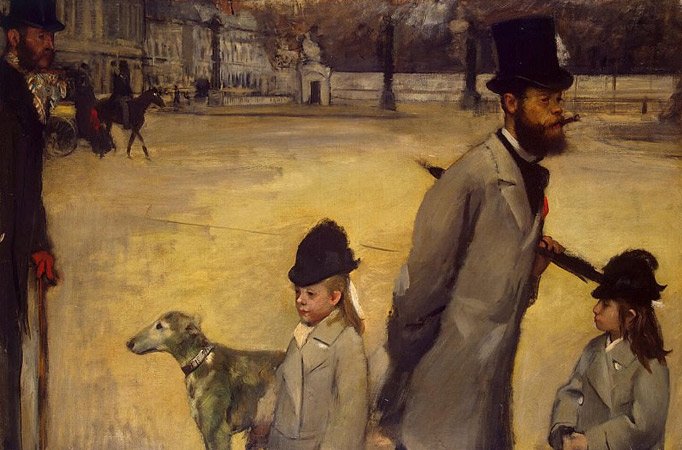
Place de la Concorde (1875) depicts one of Paris’s most iconic public squares, showcasing bustling life and architectural grandeur.
Degas captures the lively atmosphere with his signature Impressionist technique, employing rapid brushstrokes and vibrant colors.
Central figures include horse-drawn carriages and elegantly dressed Parisians, illustrating urban life during the late 19th century.
The composition balances foreground activity with the eternal beauty of surrounding monuments, demonstrating Degas’s skillful blend of movement and stillness.
This masterpiece resides at the Musée d’Orsay, offering viewers a glimpse into Paris’s rich cultural tapestry.
5. The Bellelli Family

The Bellelli Family (1858-1867) stands as one of Edgar Degas’s most significant early works. This family portrait captures his aunt Laura Bellelli, her husband Baron Gennaro Bellelli, and their two daughters, Giulia and Giovanna.
Degas portrays Laura in mourning attire, reflecting sorrow for her deceased father, whose portrait hangs behind her.
The large canvas, often considered Degas’s first major piece, illustrates not only familial bonds but also the emotional weight of Parisian life in the 19th century, blending realism with a keen psychological insight.
Currently displayed at the Musée d’Orsay, it reveals the depth of Degas’s artistic talent during his formative years.
6. After the Bath, Woman drying herself

After the Bath, Woman Drying Herself (1890-1895) showcases Edgar Degas’s mastery of pastel technique. This painting features a woman in an intimate moment, skillfully rendered to evoke transparency through layered pastels.
Degas’s meticulous attention to light and texture captures the motion of the figure, creating an impression of realism.
The artwork reflects his fascination with feminine nudity, drawing both admiration and controversy at the time.
Now housed in the National Gallery, London, this piece stands as a testament to Degas’s innovative approach to capturing everyday life.
7. The Dance Foyer at the Opera on the rue Le Peletier

The Dance Foyer at the Opera on the rue Le Peletier (c. 1872) captures the lively atmosphere of the Paris Opera House, showcasing dancers in a moment of transition.
It highlights Degas’s exceptional skill in utilizing light and depth, creating a vivid scene filled with movement. Degas focuses on the dancers interacting with one another, emphasizing their elegance and camaraderie.
This painting, now part of the Musée d’Orsay collection, exemplifies Degas’s ability to blend the intimate and the theatrical, portraying the ballet world with both authenticity and vibrancy.
8. A Cotton Office in New Orleans

A Cotton Office in New Orleans (1873) is one of Degas’s rare American works, showcasing his family connections to the cotton industry.
The painting depicts his uncle Michel Musson’s office, where figures sort cotton and review ledgers. Notable characters include Degas’s brothers, René and Achille, engaged in daily tasks.
The artwork captures a slice of life, emphasizing the mundane yet vibrant activities central to the business.
This scene reflects the beginnings of Impressionism, highlighting ordinary moments and revealing insights into human behavior in 19th-century America.
9. Portrait of Mary Cassatt

Portraying Mary Cassatt, this painting celebrates the strong artistic bond between Degas and Cassatt, who was a prominent American Impressionist.
Completed in 1873, the artwork features Cassatt holding photographs, highlighting her appreciation of Degas’s technical skills.
The composition showcases her distinct expression, which reflects her admiration for evolving artistic techniques.
Currently housed at the Musée des Beaux-Arts de Pau, this piece symbolizes the friendship that profoundly influenced both artists, marking a pivotal moment in their respective careers.
10. Interior

Interior (c. 1890) captures a domestic scene filled with warmth and intimacy, depicting a woman seated in a comfortable setting.
The composition highlights Degas’s skill in using light to create depth, with soft tones illuminating the figure and surroundings.
This painting exemplifies his focus on everyday life, portraying moments that evoke emotion and familiarity. The arrangement of objects within the room reveals Degas’s attention to detail, complementing the central figure.
Now housed in a private collection, Interior remains a testament to Degas’s ability to blend realism with a personal touch in his artwork.


