Throughout history, horses have symbolized power, grace, and beauty, captivating artists across cultures and eras.
From the dynamic energy of battle scenes to the tranquil elegance of pastoral landscapes, horse paintings reveal not just the majesty of these creatures but also the profound relationship between humans and horses.
This bond has inspired countless masterpieces that reflect the social and cultural contexts of their time.
In this article, we’ll explore ten of the most famous horse paintings that have stood the test of time. Each artwork tells a unique story, showcasing the artistic styles and techniques of renowned painters.
Whether celebrating the strength of horses or their serene presence, these paintings provide a glimpse into the evolving role of horses in society and art. Join us on this journey through the captivating world of horse artistry.
1. Whistlejacket – George Stubbs

George Stubbs painted Whistlejacket in 1762, capturing the essence of a prized racehorse owned by the 2nd Marquess of Rockingham.
The painting features a life-sized depiction of Whistlejacket, showcasing its stunning chestnut coat and flowing mane against a neutral background.
Stubbs focused solely on the horse, devoid of any distractions, allowing its beauty and strength to take center stage.
This artwork exemplifies Stubbs’ exceptional skill in horse anatomy and reflects the enduring allure of equine portraiture in art history.
2. The Horse Fair – Rosa Bonheur
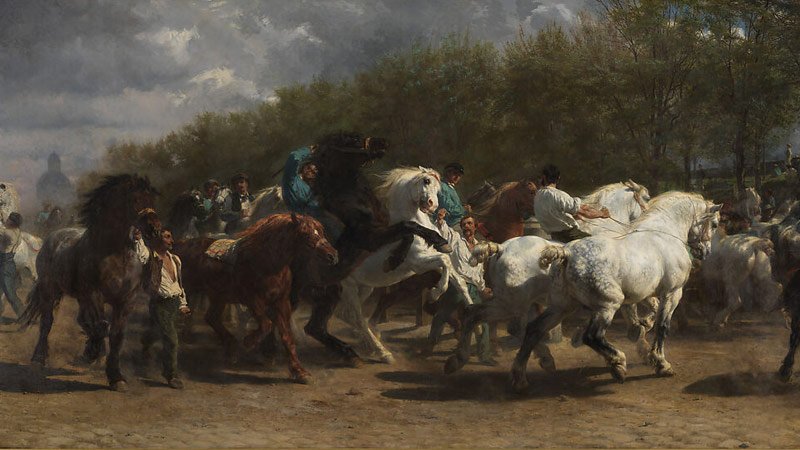
Rosa Bonheur’s The Horse Fair, completed in 1853, captures a vibrant scene at the Parisian horse market. Bonheur dedicated a year and a half to observe and sketch the horses, gaining anatomical insights through detailed studies.
She famously sought police permission to dress as a man, allowing her to visit markets for authentic references.
The painting depicts beautifully-groomed horses parading toward the fair, showcasing Bonheur’s exceptional skill in capturing realism and movement.
Its acclaim at the 1853 Salon cemented her status as a pioneering female artist in a male-dominated field.
3. Napoleon Crossing the Alps – Jacques-Louis David
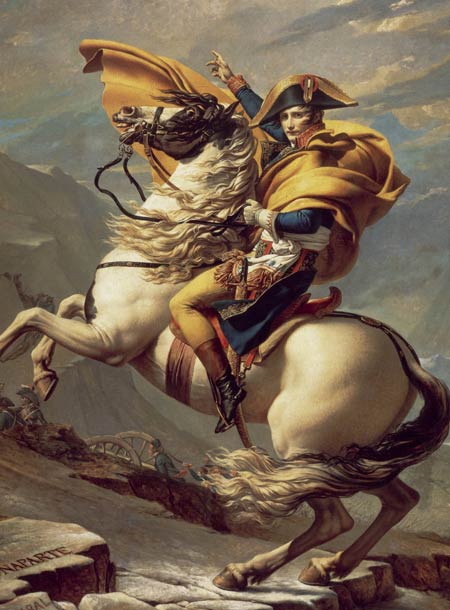
Jacques-Louis David’s “Napoleon Crossing the Alps,” painted in 1801, showcases the French leader commanding his troops through the treacherous Alps.
David captures the powerful moment with dramatic flair, illustrating Napoleon on a rearing horse, embodying ambition and heroism.
The artwork has five original versions, a testament to its impact, with the most famous displayed at the Château de Malmaison.
This painting not only reflects Napoleon’s military prowess but also exemplifies Neoclassical artistry, merging history with political significance, serving as a lasting symbol of power in art.
4. The 1821 Derby at Epsom – Théodore Géricault
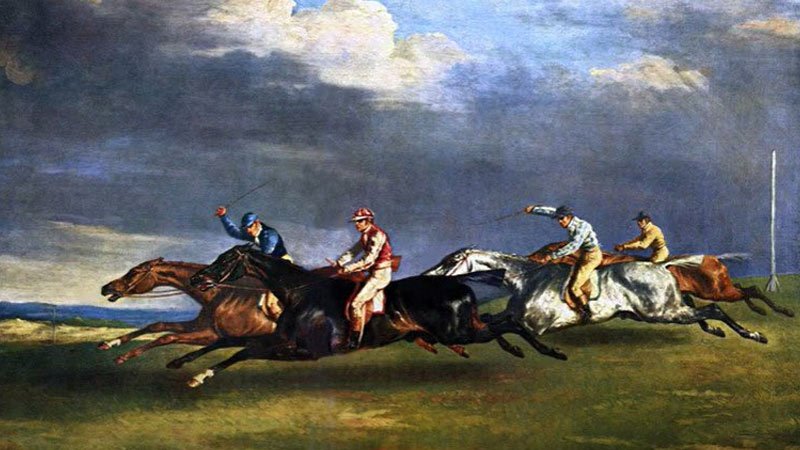
The 1821 Derby at Epsom is one of Théodore Géricault’s most celebrated paintings. It captures the thrill of a horse race with four jockeys tightly packed together.
Géricault’s dynamic brushwork brings intense energy to the scene, showcasing his fascination with horses and their graceful movements.
Commissioned by horse merchant Adam Elmore during Géricault’s visit to England, this oil on canvas work encapsulates the excitement of the race and exemplifies the artist’s deep understanding of equine anatomy. Today, it’s hailed as a classic representation of horses in art history.
5. Lady Godiva – John Collier
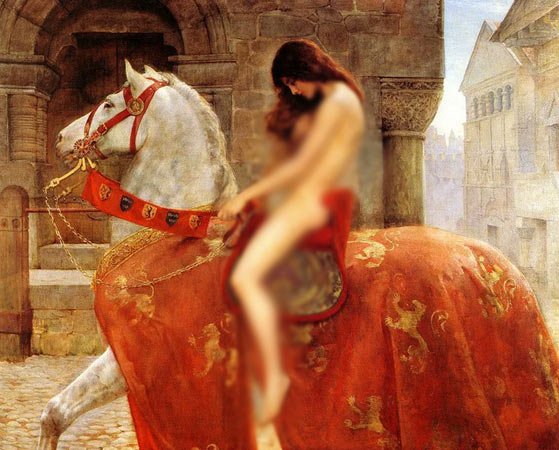
“Lady Godiva,” painted by John Collier in 1898, is an iconic representation of the legendary figure known for her bold protest.
The artwork captures the moment she rides naked through Coventry, mounted on a white stallion adorned with a royal saddle and halter, highlighting Collier’s skill in rendering the female form.
This masterpiece combines elements of beauty and mystery while framing the story against a charming medieval backdrop.
The painting remains a significant piece in art history, celebrated for its realism and the powerful narrative encapsulated in its composition.
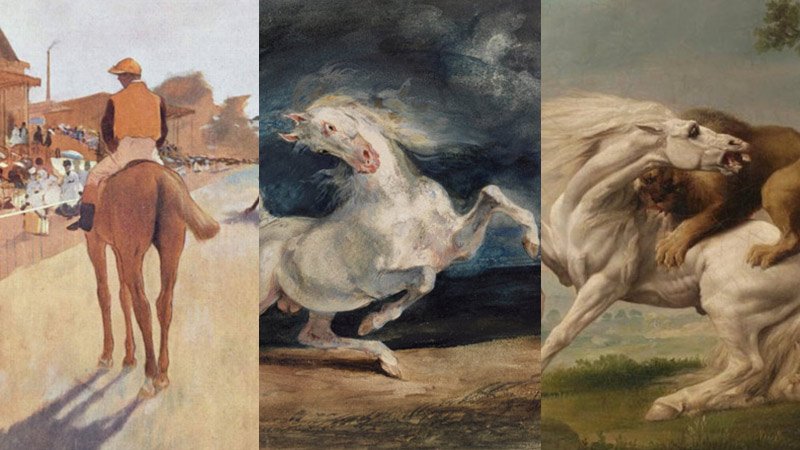
6. Horse Frightened by a Thunderstorm – Eugène Delacroix
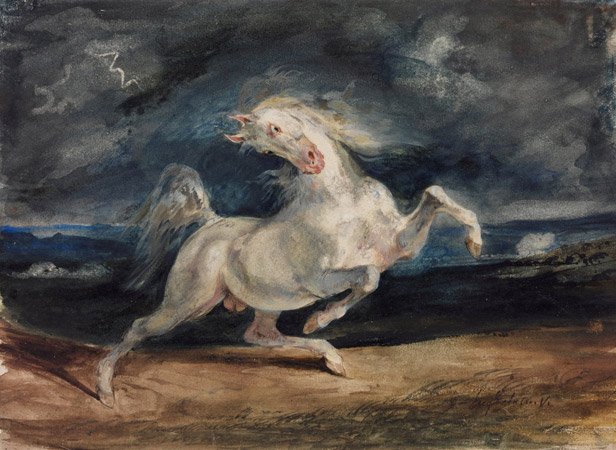
Eugène Delacroix’s “Horse Frightened by a Thunderstorm,” completed in 1829, showcases a dramatic portrayal of a majestic stallion reacting to a violent storm.
The painting features a blackened sky lit by flickering lightning, emphasizing the intense emotions and movement of the horse.
It’s believed Delacroix was inspired by the works of Théodore Géricault, evident in the realistic depiction of the horse’s fear and vigor.
This watercolor exemplifies Delacroix’s mastery of color and composition, capturing the sublime power of nature and the vulnerability of the subject amid chaos.
7. Blue Horses – Franz Marc
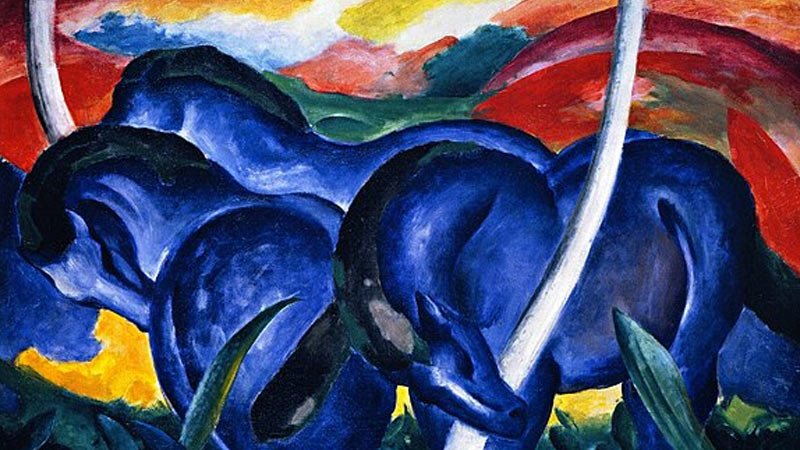
Franz Marc created “Blue Horses” in 1911, showcasing his abstract expressionist style. This painting features three vividly colored blue horses, depicted with curving outlines that echo the rolling red hills behind them.
Marc’s use of bold colors symbolizes the spiritual qualities he attributed to animals, highlighting their purity. The harmonious composition reflects a deep emotional connection to nature, while the blue hue evokes themes of transcendence.
By blending these elements, Marc invites viewers to explore the emotional resonance of equestrian art, establishing a lasting icon in the realm of modern painting.
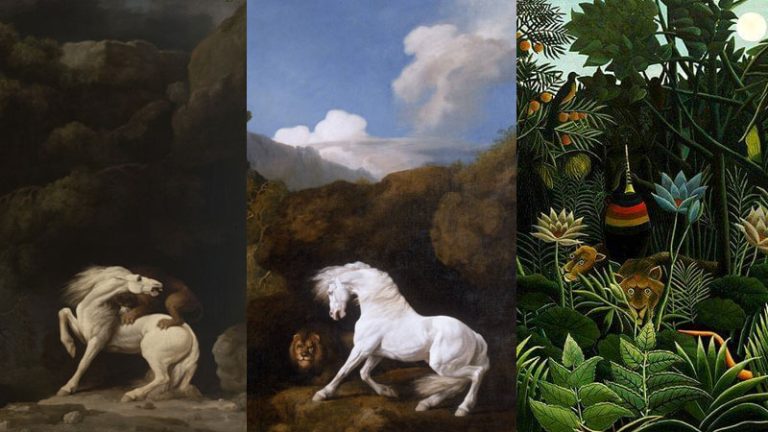
8. A Lion Attacking a Horse – George Stubbs
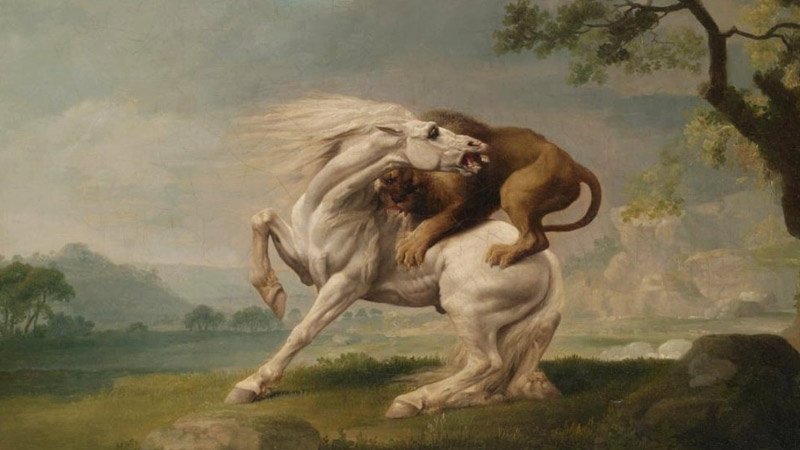
“A Lion Attacking a Horse” exemplifies George Stubbs’ remarkable ability to convey drama and emotion. Completed in the 18th century, this striking painting captures the tension of a lion’s fierce assault on a horse.
Stubbs, known for his anatomical precision, masterfully depicts the horse’s muscular form against the threatening presence of the lion.
The piece showcases Stubbs’ fascination with the themes of conflict and survival, revealing his talent for bringing raw emotion to the canvas.
This artwork stands as a testament to his skill in portraying horses amidst dynamic scenarios, solidifying his legacy in equine art history.
9. The Parade, Race Horses in front of the Tribunes, 1868 – Edgar Degas
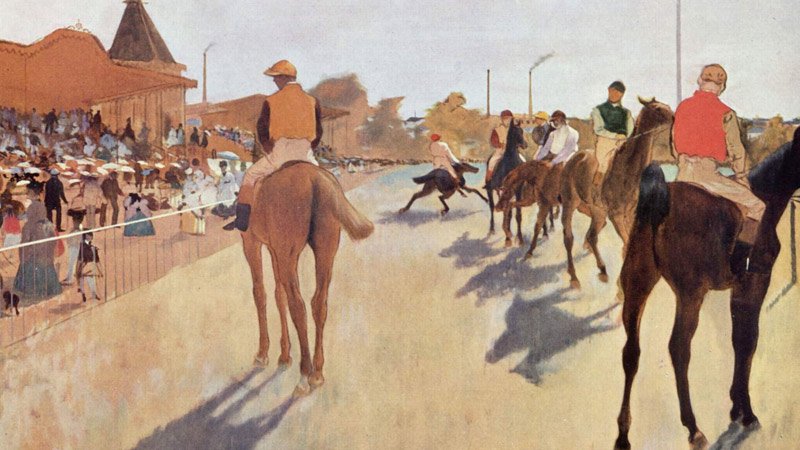
Edgar Degas’ The Parade, Race Horses in front of the Tribunes captures the action and elegance of horse racing.
The painting features at least seven thoroughbred racehorses preparing for the race, showcasing Degas’ mastery in depicting motion.
The vibrant scene highlights the excitement of the racetrack, set against a backdrop of medieval architecture. Degas’ unusual compositional angles immerse viewers in the imagery, allowing them to experience the thrill of the moment while reflecting his fascination with high society.
10. La Femme au Cheval – Jean Metzinger
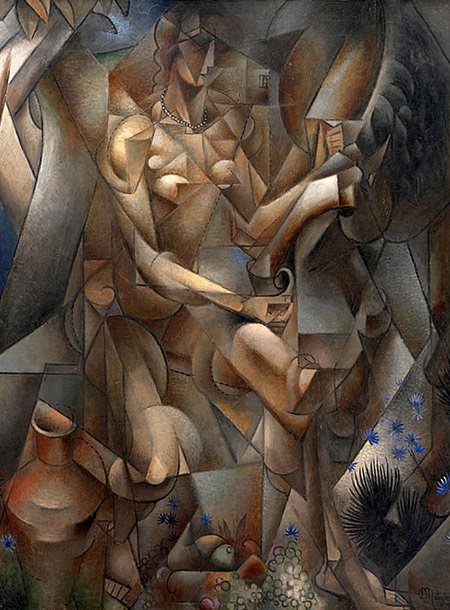
Jean Metzinger’s “La Femme au Cheval,” completed in 1912, stands as a significant Cubist masterpiece. The painting features a female figure intertwined with a horse, demonstrating Metzinger’s ability to portray subjects from multiple perspectives.
The vibrant colors and fragmented forms reflect the hallmark traits of Cubism, emphasizing the dynamic relationship between human and equine.
Exhibited at the Salon des Indépendants in Paris, this artwork garnered acclaim for its innovative depiction, showcasing Metzinger’s mastery in blending form, color, and emotion within the Cubist framework.