Joseph Mallord William Turner, often hailed as the “Painter of Light,” revolutionized landscape painting with his innovative use of color and light.
Born in 1775, Turner’s artistic journey spanned the Romantic era, where he captured the raw power of nature and the changing tides of society.
His paintings often evoke deep emotions, reflecting themes of loss and transformation, particularly in the context of Britain’s maritime history.
Among his most celebrated works, pieces like The Fighting Temeraire and Rain, Steam and Speed showcase Turner’s mastery in blending realism with abstraction.
These iconic paintings not only highlight his technical brilliance but also mark a significant shift towards Impressionism.
Join us as we explore ten of Turner’s most famous paintings, each a testament to his enduring legacy and profound impact on the art world.
1. The Fighting Temeraire
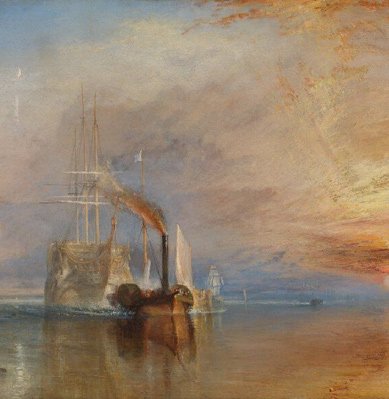
The Fighting Temeraire, created in 1839, depicts the HMS Temeraire being towed up the River Thames toward a shipyard for decommissioning.
Turner captures the poignant moment of transition from sail to steam, symbolizing the end of an era in British naval strength.
His masterful use of light and color contrasts the ghostly white ship against the fiery sunset, evoking a sense of nostalgia.
This iconic painting, celebrated as a national treasure, was voted the top British painting by the public and showcases Turner’s revolutionary techniques that would inspire future art movements like Impressionism.
2. Rain, Steam and Speed – The Great Western Railway
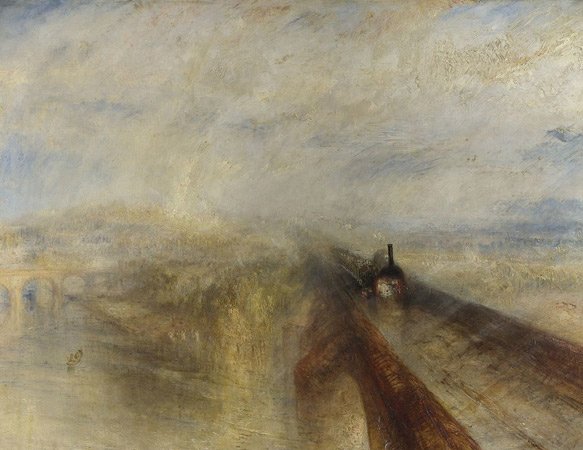
Turner’s Rain, Steam and Speed – The Great Western Railway captures the dynamic intersection of nature and technology.
The painting, displayed at the Royal Academy in 1844, showcases a powerful black locomotive speeding along the River Thames, encapsulating the essence of the Industrial Revolution. Rain and steam blend in the atmosphere, enhancing the sense of motion.
This masterpiece portrays the Maidenhead Railway Bridge, illustrating Turner’s innovative approach to depicting speed and energy.
The artwork stands as a pivotal example of Turner’s late works, foreshadowing the Impressionist movement with its emotive use of light and form.
3. Snow Storm: Steam-Boat off a Harbour’s Mouth
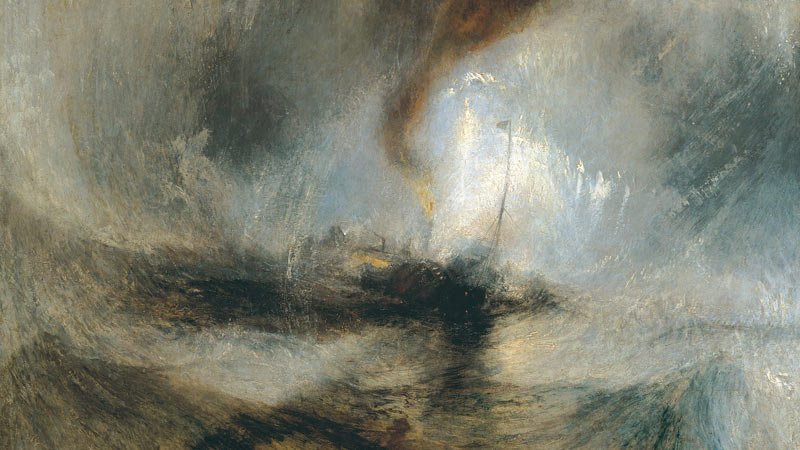
Snow Storm: Steam-Boat off a Harbour’s Mouth, completed in 1842, captures the raw power of nature with dramatic intensity.
Turner’s use of swirling whites and grays effectively conveys a fierce snowstorm, showcasing his ability to depict the complexity of light and movement.
The central steam-boat struggles against the tumultuous waves, illustrating the battle between technology and nature.
Initially met with criticism, this painting later garnered acclaim, with John Ruskin praising it as a masterful representation of maritime motion and atmosphere.
It’s a testament to Turner’s visionary approach to art and his pioneering role in Romantic landscape painting.
4. The Slave Ship
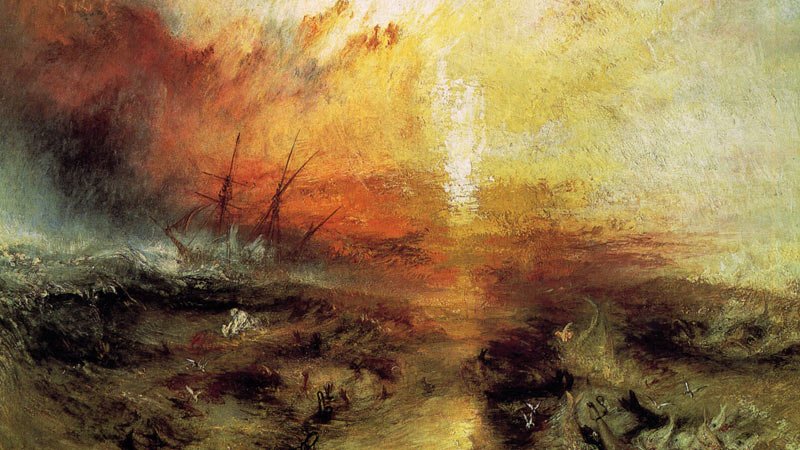
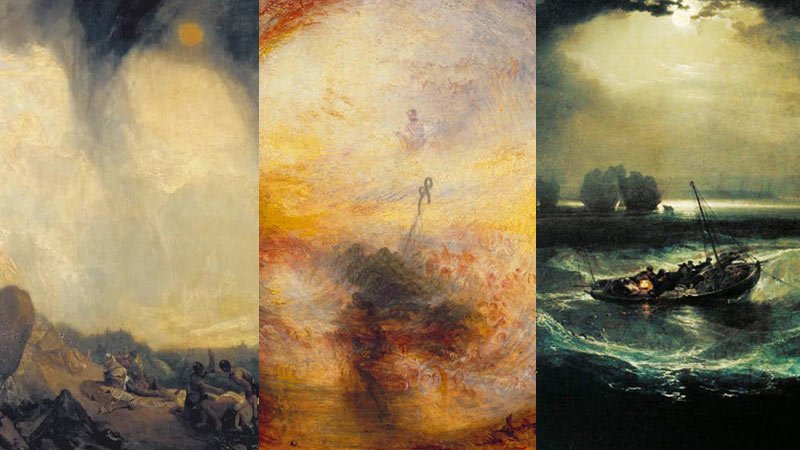
The Slave Ship, also known as Slavers Throwing Overboard the Dead and Dying, Typhoon Coming On, is one of Turner’s most powerful works, created in 1840.
This oil on canvas measures 35.34 in by 48.14 in and currently resides in the Museum of Fine Arts in Boston. Turner dramatically depicts a ship amidst a stormy sea, with human figures cast into the turbulent waters.
The dark, swirling colors and chaotic composition emphasize the horrors of the transatlantic slave trade. This painting not only highlights Turner’s innovative use of light and color but also serves as a poignant commentary on social injustices of his time.
5. Dido Building Carthage
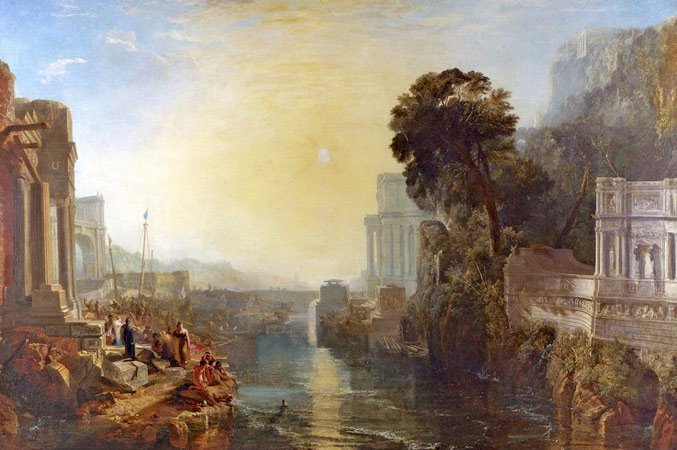
Dido Building Carthage, painted in 1815, illustrates the founding of the ancient city by Dido, the legendary queen.
Turner’s atmospheric effects create a vibrant backdrop, inspired by both classical landscapes and Virgil’s Aeneid.
The blue and white figure of Dido captures attention, symbolizing determination amid construction chaos.
It’s a tribute to Claude Lorrain, mirroring his piece, Seaport with the Embarkation of the Queen of Sheba. Recognized for its dramatic color palette and emotional depth, this painting exemplifies Turner’s mastery of light, establishing his signature style.
6. The Burning of the Houses of Parliament
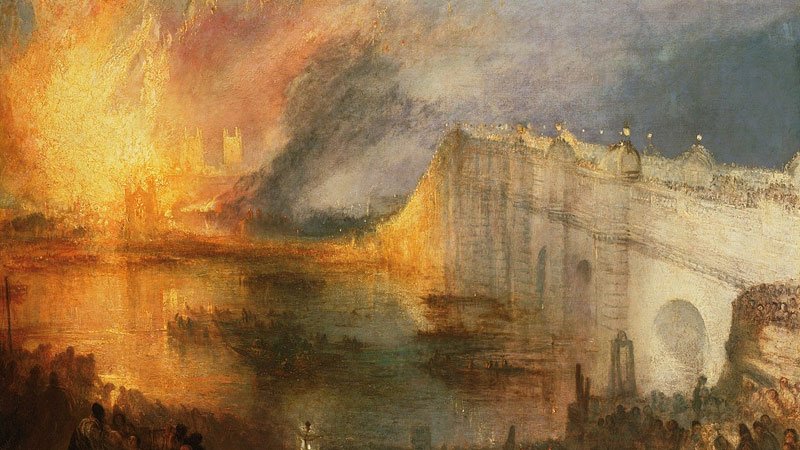
Turner’s The Burning of the Houses of Lords and Commons, painted in 1835, vividly captures the catastrophic fire that engulfed the British Parliament on October 16, 1834.
He witnessed the spectacle from a boat on the River Thames, sketching the dramatic scene as it unfolded. The painting presents the inferno from the upstream perspective near Westminster Bridge, showcasing vibrant flames consuming the House of Commons.
Turner’s use of golden hues illuminates the chaos, with reflections on the Thames heightening the sense of urgency and emotion, illustrating his masterful blend of reality and abstraction.
7. Fishermen at Sea
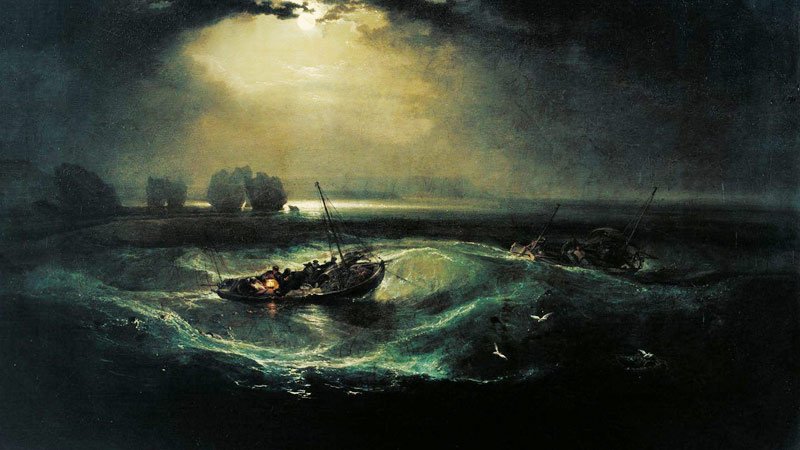
Fishermen at Sea, painted in 1796, marks Turner’s debut at the Royal Academy. Turner captures a moonlit scene with fishermen working along a turbulent shore.
He employs dynamic brush strokes to convey the movement of water and the intensity of nature. The vibrant colors create a dramatic contrast against the night sky.
The painting reflects Turner’s lifelong connection to water, influenced by his childhood experiences with fishmongers.
This work symbolizes his innovative approach to capturing light and atmosphere in marine settings, establishing him as a leading figure in Romantic landscape painting.
8. Light and Colour (Goethe’s Theory) – The Morning after the Deluge – Moses Writing the Book of Genesis
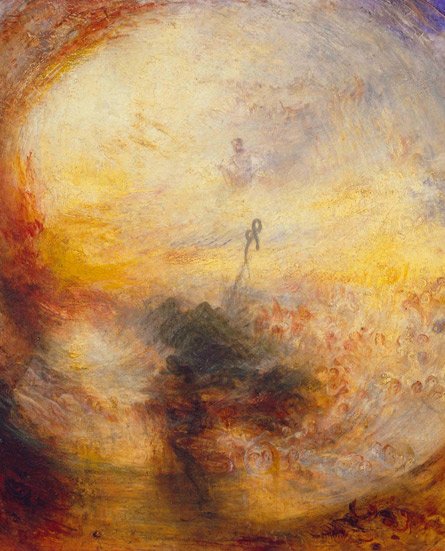
Turner’s Light and Colour (Goethe’s Theory), created in 1843, explores the interplay of light and darkness. He channels Goethe’s theories to depict a dramatic scene post-flood, illustrating both destruction and renewal.
The swirling colors represent the chaos of the biblical deluge while simultaneously conveying hope. Moses is shown writing the Book of Genesis, symbolizing the divine inspiration amidst turmoil.
Turner’s innovative palette captures different light effects, emphasizing emotional resonance. This painting exemplifies his transformative approach to landscape art, influencing future movements like Impressionism.
9. Norham Castle, Sunrise
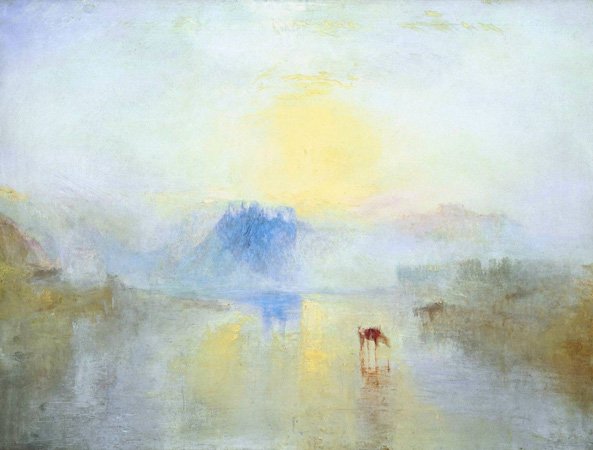
Norham Castle, Sunrise showcases J.M.W. Turner’s fascination with light. Completed around 1845, this oil painting captures the castle’s silhouette against a vibrant sky, which reflects the delicate interplay of dawn light.
Turner first visited Norham in 1797, and he painted the castle multiple times throughout his career, emphasizing its atmospheric qualities.
While some consider this work unfinished, it’s celebrated for its innovative approach and is regarded as a significant example of Turner’s ability to evoke emotion through color and light.
10. Snow Storm: Hannibal and his Army Crossing the Alps
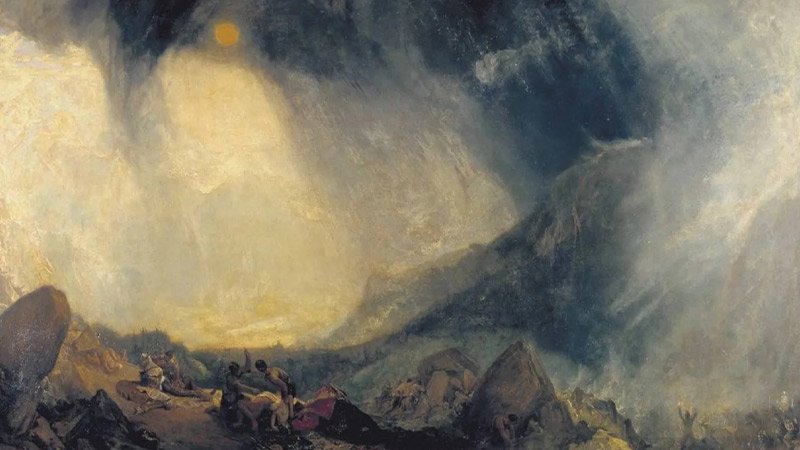
Snow Storm: Hannibal and his Army Crossing the Alps, painted in 1812, captures the harrowing journey of the Carthaginian general Hannibal as he leads his army through treacherous mountain terrain.
Turner masterfully depicts the immense snowstorm obscuring both soldiers and landscape, emphasizing nature’s overpowering force.
The chaotic blend of swirling grays and whites illustrates the struggle against the elements, while Hannibal himself becomes indistinguishable among his men.
This painting highlights the fragility of human ambition against dramatic environmental challenges, resonating with themes of defeat and resilience.