
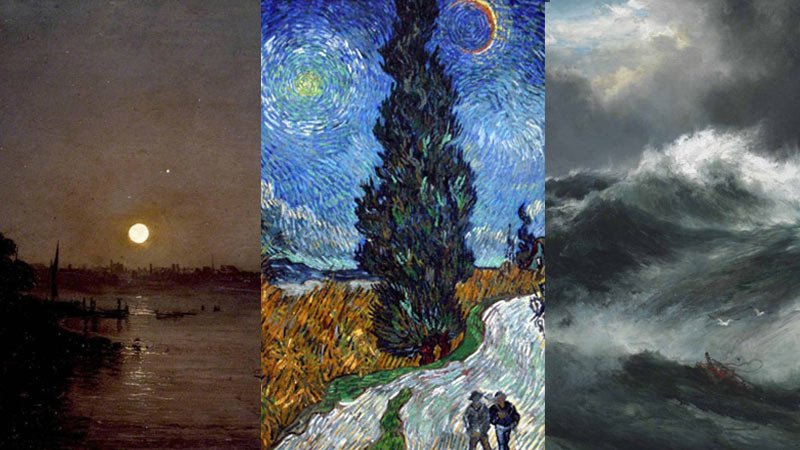
The moon has captivated artists for centuries, inspiring countless masterpieces that capture its ethereal beauty and mysterious allure.
From the soft glow of a crescent moon to the dramatic presence of a full lunar orb, these celestial bodies have served as a backdrop for human emotion and imagination.
In this exploration of the ten most famous moon paintings, readers will discover how different artists interpreted the moon’s light and shadow, each bringing their unique style and perspective to this timeless subject.
These iconic works not only showcase artistic genius but also reflect the cultural significance of the moon throughout history. Join in as we journey through the enchanting world of moonlit art.
1. Man and Woman Contemplating the Moon – Caspar David Friedrich
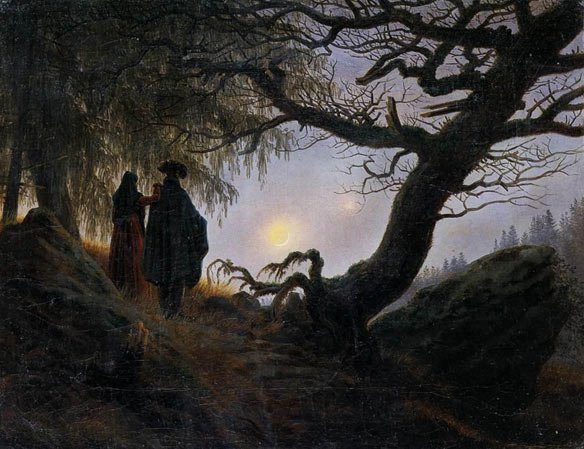
“Man and Woman Contemplating the Moon,” painted in 1830, showcases Caspar David Friedrich’s mastery of Romanticism.
The artwork features a couple standing atop a cliff, gazing at the luminous moon illuminating a tranquil landscape.
Friedrich used stark contrasts between light and shadow to evoke emotions, capturing the sublime beauty of nature and the moon’s profound effect on the soul.
The moon, framed by a vast sky, symbolizes hope and introspection, inviting viewers to reflect on their place in the universe.
This iconic painting remains a quintessential representation of the intimate connection between humanity and the celestial realm.
2. Lindisfarne Castle and Abbey, Holy Island, by Moonlight – John Moore of Ipswich
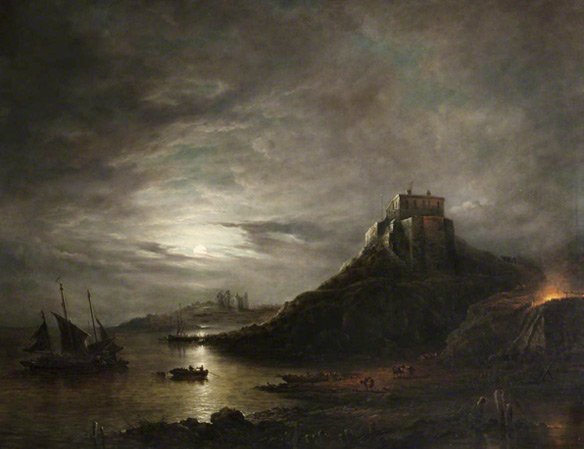
John Moore of Ipswich’s “Lindisfarne Castle and Abbey, Holy Island, by Moonlight” captures the ethereal beauty of the medieval structures bathed in moonlight.
The painting vividly portrays the tranquil atmosphere surrounding the castle and abbey. Moore’s meticulous brushwork highlights the interplay of light and dark, enhancing the moon’s silvery glow against the ancient stones.
The serene reflections on the water add depth, inviting viewers to experience the peaceful solitude of this historic site under the captivating night sky.
This artwork exemplifies Moore’s ability to evoke emotion through the enchanting presence of the moon.
3. Road with Cypress and Star – Vincent van Gogh
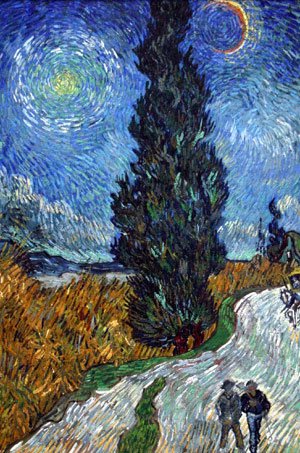
Vincent van Gogh’s “Road with Cypress and Star,” painted in 1890, features a striking night sky dominated by the moon and stars.
The painting captures the essence of van Gogh’s Post-Impressionist style through vibrant colors and dynamic brushstrokes.
Cypresses stand tall along the winding road, leading the viewer’s eye towards the glowing crescent moon. This artwork reflects van Gogh’s emotional connection to nature, conveying feelings of loneliness and wonder.
The starry sky evokes his fascination with the cosmos, showcasing how the moon’s light illuminates the path, inviting introspection and exploration.
4. Nocturne, Blue and Gold – Southampton Water – James McNeill Whistler
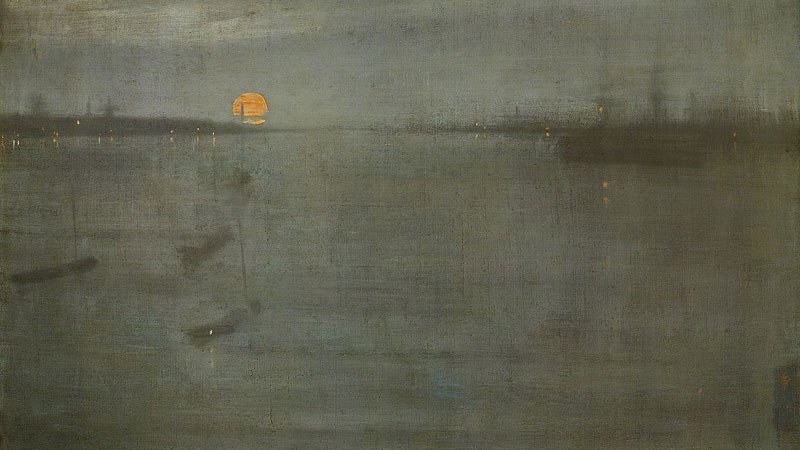
Whistler’s “Nocturne, Blue and Gold – Southampton Water,” painted in 1885, captures the enchanting glow of the moon over the waterway.
Whistler employs a palette of blues and golden tones to evoke a sense of calm and stillness. The soft reflections of moonlight create a dreamy atmosphere, showcasing Whistler’s fascination with light and color.
The minimalist composition emphasizes the beauty of the natural world, inviting viewers to lose themselves in the serene night scene, while also reflecting the artist’s innovative approach to capturing the essence of twilight.
5. Moonlit Shipwreck at Sea – Thomas Moran
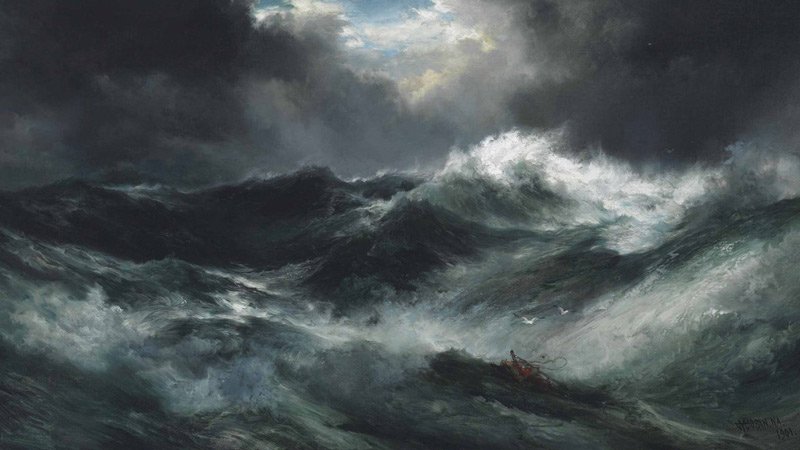
Moran’s “Moonlit Shipwreck at Sea,” painted in 1892, showcases a dramatic scene illuminated by the moon’s soft glow.
The painting captures the haunting aftermath of a shipwreck, with the moonlight casting reflections on the turbulent waves. Moran’s masterful use of light and shadow conveys emotion, evoking a sense of despair and awe.
The vibrant blues and silvers amplify the ocean’s beauty and danger, inviting viewers to grapple with nature’s sublime power. The haunting imagery underscores humanity’s vulnerability when confronted by the vast sea at night.
6. Moonlight, Wood Island Light – Winslow Homer

Winslow Homer’s “Moonlight, Wood Island Light” painted in 1894, captures a serene coastal scene under a luminous moon.
Homer depicts the Wood Island lighthouse, its beam cutting through the night, guiding ships safely. The tranquil water reflects the moon’s silvery glow, creating a harmonious balance between light and shadow.
With its detailed brushwork, Homer conveys a sense of peace and solitude, inviting viewers to experience the beauty of the night landscape.
The composition highlights the artist’s mastery in capturing nature’s moods, emphasizing the moon’s calming influence over the sea.
7. Moonlight, a Study at Millbank – Joseph Mallord William Turner
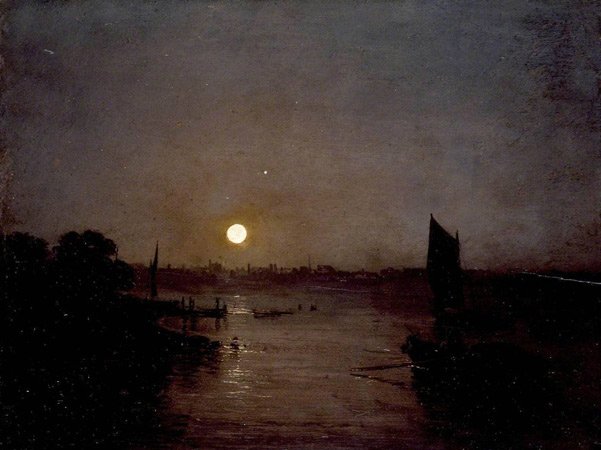
Turner’s “Moonlight, a Study at Millbank,” created in 1845, captures the mesmerizing effects of moonlight on water.
The painting features a tranquil scene where soft silvery light reflects off the Thames, creating a serene atmosphere.
Turner employed a delicate palette of blues and whites, enhancing the ethereal quality of the moonlit night. His innovative use of loose brushwork captures the fleeting nature of light, revealing his deep fascination with atmospheric effects.
This artwork exemplifies Turner’s ability to evoke emotion, inviting viewers to experience the tranquility and beauty of the night sky.
8. A Moonlit Evening – Atkinson Grimshaw
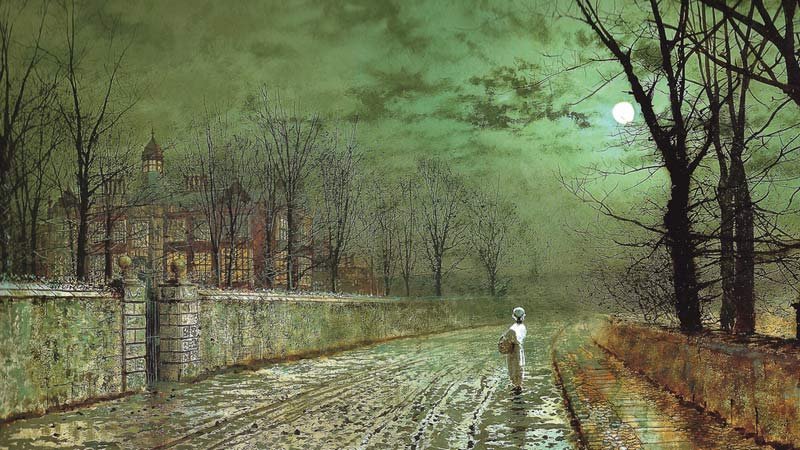
Atkinson Grimshaw’s “A Moonlit Evening” captures the haunting beauty of nighttime landscapes. The painting showcases a tranquil scene where moonlight filters through trees, casting delicate reflections on a serene body of water.
Grimshaw’s meticulous attention to detail amplifies the ethereal quality of the moonlight, while his rich color palette of blues and silvers contributes to a sense of calm.
The interplay of light and shadow invites viewers to immerse themselves in this mystical atmosphere, highlighting Grimshaw’s talent for evoking emotion through the moon’s enchanting glow.
9. Barmouth Moonlight – Christopher Williams
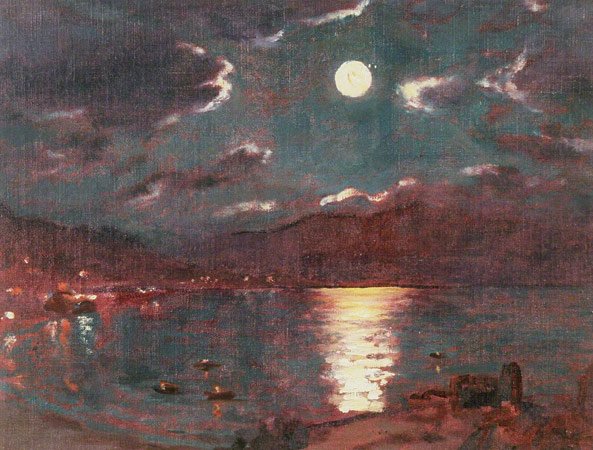
Christopher Williams’ “Barmouth Moonlight” showcases the enchanting glow of the moon over the tranquil waters of Barmouth, Wales.
The painting’s rich blues and silvers capture the serenity of the night, reflecting soft light across the landscape. Williams’ skillful brushstrokes create a dreamy atmosphere, inviting viewers to experience the quiet beauty of the seaside town under moonlight.
This artwork exemplifies the artist’s ability to convey emotion through the delicate interplay of light and shadow, making it a captivating portrayal of a moonlit scene.
10. Moonlight in Naples – Ivan Aivazovsky
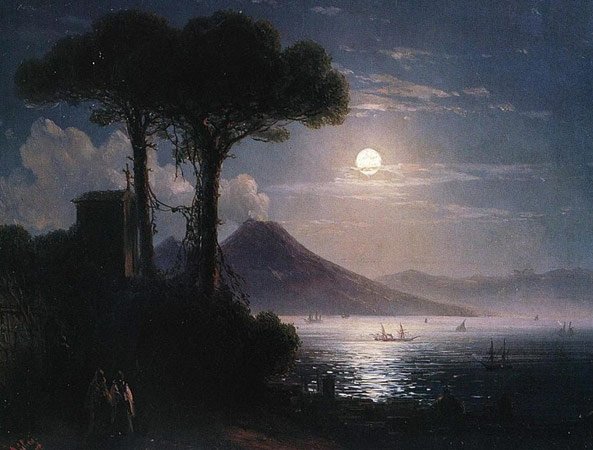
Aivazovsky’s “Moonlight in Naples,” painted in 1841, captures the enchanting beauty of the coastal city bathed in silvery moonlight.
Aivazovsky’s masterful brushwork evokes the tranquility of the Mediterranean, with gentle waves reflecting the moon’s glow.
His use of vibrant blues and whites enhances the scene’s ethereal quality, inviting viewers to bask in the serene atmosphere.
The interplay of light and shadow encapsulates the dreamy essence of a moonlit night, showcasing Aivazovsky’s skill in portraying the sublime beauty of nature and the allure of the night sky.


