
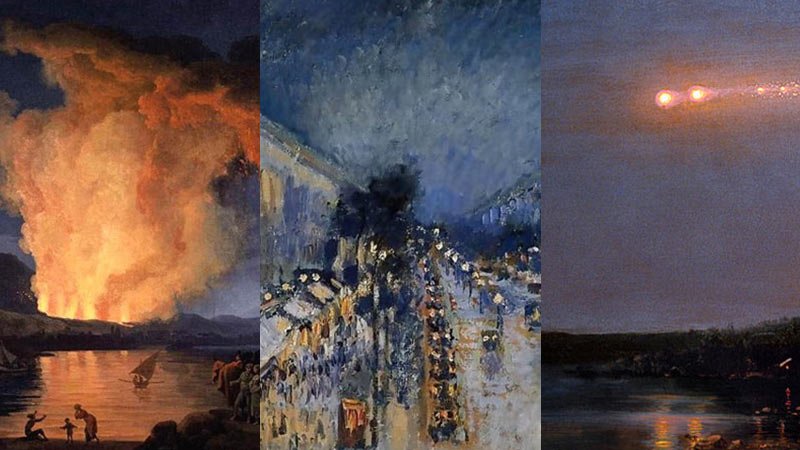
The night sky has enchanted humanity for centuries, inspiring artists to capture its beauty on canvas. From the twinkling stars to the glowing moon, the mysteries of the cosmos have sparked creativity and wonder.
Artists throughout history have portrayed the night in diverse ways, reflecting their awe and curiosity about the universe.
In this exploration of the ten most famous night sky paintings, the spotlight shines on masterpieces that evoke emotions and tell stories of the celestial realm.
These works not only showcase artistic talent but also invite viewers to ponder the vastness above. Join in as we journey through the enchanting depictions of the night sky that have left an indelible mark on art history.
1. The Starry Night – Vincent van Gogh
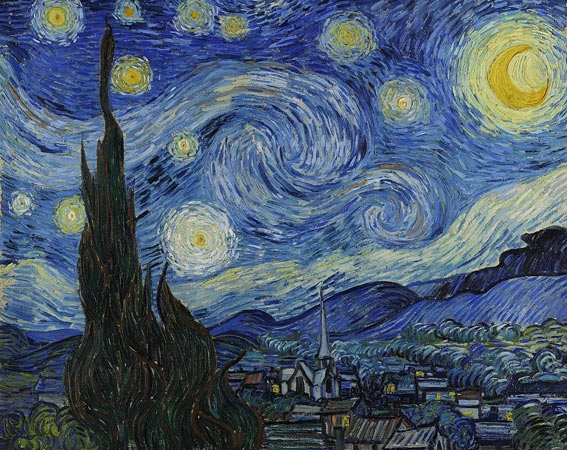
Vincent van Gogh’s The Starry Night, painted in 1889, is a striking depiction of the night sky viewed from his asylum window in Saint-Rémy-de-Provence.
The artwork showcases swirling clouds in vibrant blue and yellow, a bright crescent moon, and radiant stars, creating a dynamic movement.
Van Gogh’s bold brushstrokes evoke emotion and energy, making the viewer feel intertwined with the night’s spirit.
As one of the most acclaimed pieces of Impressionism, it stands as a testament to the artist’s unique connection to nature and his vivid perception of the celestial world.
2. Moonlight – Winslow Homer

Winslow Homer’s Moonlight, created in 1894, captures the enchanting ambiance of a moonlit night over Wood Island, Maine.
The painting showcases a radiant moon glowing in the sky, casting shimmering reflections on the rocky shoreline. It’s renowned for its captivating play of light and shadow, which creates a serene yet dramatic atmosphere.
Homer’s masterful brushwork and choice of color highlight the tranquil beauty of nature, immersing viewers in the enchanting landscape that articulates his deep appreciation for marine life.
3. Boulevard Montmartre; Night Effect – Camille Pissarro
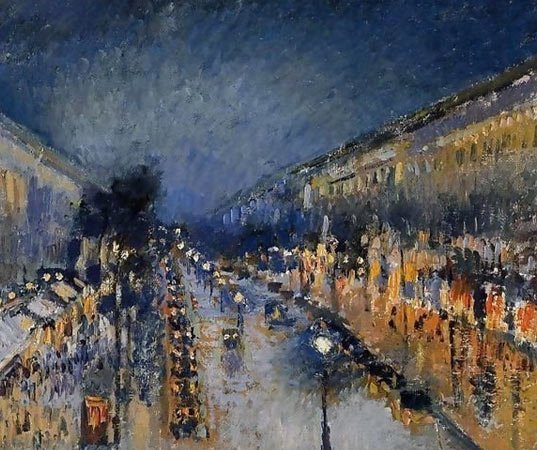
Boulevard Montmartre; Night Effect, painted in 1897, showcases Pissarro’s fascination with the interplay of artificial light.
He captures the vibrant energy of Paris as electric street lamps illuminate the bustling boulevard. This painting serves as a stunning example of Impressionism, blending realism with expressive brushwork to depict ordinary life.
Pissarro’s choice of color and light creates a dreamlike atmosphere, drawing viewers into the nocturnal scene.
The artwork stands out as a unique exploration of night, emphasizing the transformation of urban landscapes during this period.
4. Moonlit Shipwreck at Sea – Thomas Moran

Thomas Moran’s Moonlit Shipwreck at Sea vividly illustrates a haunting yet captivating night scene. Created in 1887, this painting presents a dramatic shipwreck beneath a luminous moon.
The moonlight casts a silver glow on the turbulent waters, enhancing the tumultuous emotions of the scene.
Moran’s dynamic brushwork captures the clash between nature’s beauty and peril, inviting viewers to contemplate the frailty of human existence amid the vastness of the sea.
This masterpiece exemplifies the Romantic style, where the night sky serves as a powerful backdrop to the drama unfolding below.
5. Starry Night Over the Rhône – Vincent van Gogh
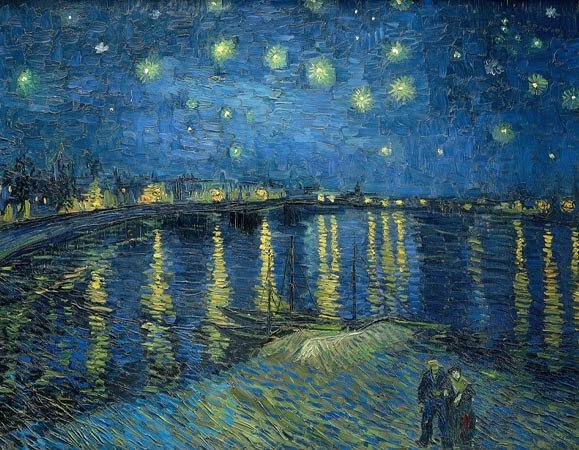
Vincent van Gogh painted Starry Night Over the Rhône in 1888 during his time in Arles, France. This masterpiece highlights a picturesque night scene where twinkling yellow stars illuminate the deep blue sky above the tranquil Rhône River.
He uses energetic brushstrokes to convey movement and emotion, capturing a moment where couples leisurely stroll along the waterfront.
The contrasting warm lights from gas lamps reflect beautifully on the cool waters, showcasing van Gogh’s bold color palette and unique artistic style, which immortalizes the essence of a starry night.
6. Keelmen Heaving in Coals by Moonlight – Joseph Mallord William Turner
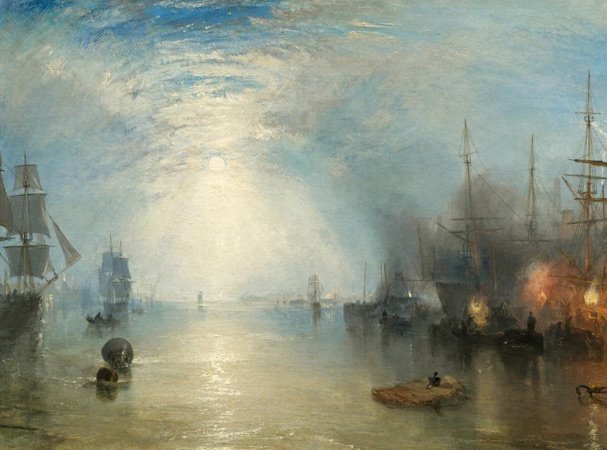
Turner’s Keelmen Heaving in Coals by Moonlight, painted in 1835, showcases the artist’s unique interpretation of the night sky.
The painting captures coal workers laboring under a luminous moon, symbolizing the industrial revolution’s demands.
Rich, swirling clouds merge with moonlight, creating a dramatic atmosphere. Turner’s signature blending of colors enhances the scene, showcasing his fascination with light and movement.
With its stark contrast between the dark waters and the glowing moon, this piece remains a powerful representation of the emotional and physical toil during a transformative era in history.
7. View of the Eruption of Mount Vesuvius – Pierre-Jacques Volaire

Pierre-Jacques Volaire’s View of the Eruption of Mount Vesuvius vividly captures the surreal spectacle of a volcanic eruption against a tranquil night sky.
Painted in the 1770s, this artwork contrasts the glowing chaos of the eruption with serene moonlight illuminating the scene.
Volaire’s brushwork effectively conveys the explosive energy, with ash and lava soaring high into the atmosphere.
The painting channels historical accounts from Pliny the Younger, emphasizing the dramatic tension between nature’s fury and the calmness of a clear evening, creating an unforgettable visual narrative.
8. River View by Moonlight – Aert van der Neer

Aert van der Neer’s River View by Moonlight, completed in the 1640s, expertly captures the calm beauty of nighttime.
The painting emphasizes the interplay of shadow and light, where moonbeams illuminate the dark riverside. The water reflects the moon’s glow, creating a serene atmosphere.
Van der Neer’s skillful brushwork brings out the details of the landscape and the people leisurely walking along the banks.
This captivating scene exemplifies the artist’s mastery of nocturnal landscapes, making it one of the most memorable works of the Dutch Golden Age.
9. The Meteor of 1860 – Frederic Edwin Church

Frederic Edwin Church’s The Meteor of 1860 captures a mesmerizing moment in the night sky. It depicts a fiery meteor streaking through a clear atmosphere, illuminating the dark landscape with its bright light.
Church, a prominent member of the Hudson River School, expertly contrasts the meteor’s brilliance against the shadows of the land, highlighting the dramatic nature of the event.
This painting reflects both the wonder of the celestial phenomenon and the impact of global advancements that diminish our night skies today, evoking nostalgia for a more pristine view of the heavens.
10. Nocturne in Black and Gold – The Falling Rocket – James Abbott McNeill Whistler

James Abbott McNeill Whistler painted Nocturne in Black and Gold – The Falling Rocket in 1875, skillfully capturing a fireworks display against a foggy night sky.
Whistler’s use of muted tones like blue, green, and gray creates a serene yet abstract ambiance. Powerful splashes of yellow represent the bright fireworks, evoking rich emotions.
The painting invites viewers to appreciate the ephemeral beauty of the moment, unlike traditional narratives. This piece exemplifies the Art for Art’s Sake movement, where sensation takes precedence over realism.


