Rivers have been lifelines for civilizations, shaping cities and cultures for millennia. Their flowing waters have inspired countless artists, who’ve captured the beauty and significance of these waterways in their work.
From the bustling banks of the Seine to the serene landscapes of the Thames, rivers have become symbols of life, trade, and creativity.
Each painting tells a story, revealing the artist’s vision and the historical context of their time. Join in as we journey through vibrant brushstrokes and captivating scenes that celebrate the enduring allure of rivers and their role in shaping our world.
1. The Fighting Temeraire, tugged to her last berth to be broken up – J. M. W. Turner

Turner’s iconic painting, completed in 1839, captures the poignant moment when the once-mighty warship, HMS Temeraire, is towed by a steam-powered tugboat along the Thames River.
The scene symbolizes the end of an era; the transition from sail to steam power in naval history. Turner’s masterful use of grays and blues renders the ship ghostlike, evoking feelings of nostalgia.
This artwork not only commemorates the Temeraire’s role in the Battle of Trafalgar but also serves as an allegory for technological progress and change.
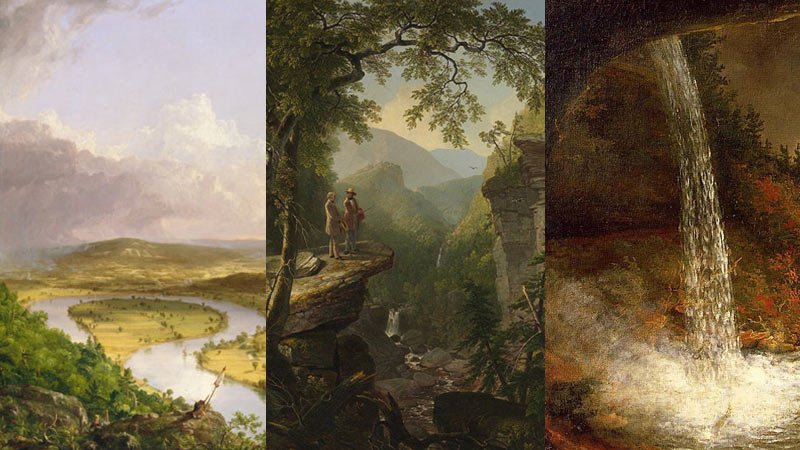
2. The Oxbow – Thomas Cole

Thomas Cole’s “The Oxbow,” completed in 1836, presents a striking contrast between nature’s wildness and human cultivation.
The painting divides the canvas: on the left, untouched wilderness flourishes, while the right showcases the orderly landscape shaped by settlers.
This dichotomy reflects the 19th-century tension between expansion and preservation. Cole’s masterful use of light and shadow enhances the dramatic impact, inviting viewers to contemplate humanity’s relationship with nature.
The Connecticut River’s majestic bend serves as a powerful symbol of both beauty and transformation.
3. Valley of the Yosemite – Albert Bierstadt

Bierstadt’s “Valley of the Yosemite,” painted in 1864, captures the serene beauty of the Merced River amid towering granite cliffs.
He skillfully illustrates the sunlight dancing on the water, highlighting the natural wonder of the landscape. Settlers were beginning to establish homes in the rugged Yosemite area, making Bierstadt’s depiction resonate with tranquility amidst untamed wilderness.
The work evokes awe, drawing viewers into the stunning interplay of light and shadow across the majestic valley. This painting remains a testament to the artist’s ability to encapsulate nature’s grandeur.
4. The Hay Wain – John Constable

John Constable’s 1821 masterpiece, The Hay Wain, displays a tranquil scene along the River Stour, emphasizing rural life in England.
It features three horses pulling a hay-laden wagon through shallow waters, with Willy Lott’s cottage in the background. Originally exhibited at the London Royal Academy, it went unsold but gained fame over time.
In 2005, it ranked as the second greatest painting in Britain. Today, it resides in The National Gallery in London, serving as a remarkable example of Romantic-era landscape art.
5. Washington Crossing the Delaware – Emanuel Leutze
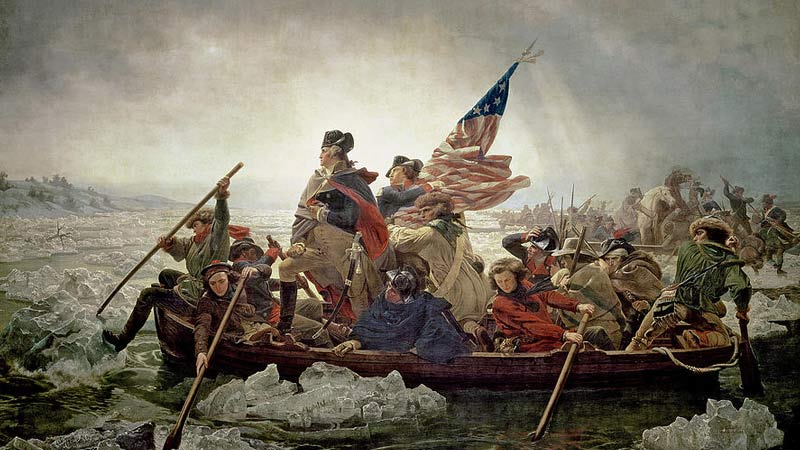
Emanuel Leutze’s iconic painting, “Washington Crossing the Delaware,” completed in 1851, immortalizes a pivotal moment in American history.
Leutze portrays George Washington heroically standing at the prow of a boat, leading troops across the icy Delaware River on Christmas night. This dramatic scene captures the bold maneuver that preceded the American victory at Trenton.
Lt. James Monroe, depicted holding the American flag, adds to the moment’s significance, emphasizing the spirit of determination and resilience. This painting remains a powerful symbol of courage and leadership in the face of adversity.
6. La Grenouillère – Pierre-Auguste Renoir

Renoir’s “La Grenouillère,” painted in 1869, represents a lively scene on the Seine River. The artwork showcases a popular leisure spot where people gather to enjoy the sun and water.
Renoir brilliantly captures the essence of social interaction, using vibrant colors and fluid brushstrokes. His focus on light play reflects the shimmering water and the joyful ambiance of the moment.
This painting exemplifies the Impressionist style, highlighting personal connections to nature and the allure of outdoor leisure, making it one of the key river paintings that truly resonates with viewers.
7. Bathers by a River – Henri Matisse

Matisse’s “Bathers by a River,” completed in 1917, stands as a striking example of Fauvism, celebrated for its bold colors and dynamic compositions.
The painting features four nude figures leisurely bathing in a tranquil river, encapsulating the harmony between humanity and nature.
Matisse’s distinctive brushwork enhances the sense of movement, while his vibrant color palette evokes a feeling of warmth and vitality.
This artwork not only reflects the artist’s fascination with the human form but also exemplifies the broader themes of freedom and joy intrinsic to the Fauvist movement.
8. Kaaterskill Falls – Thomas Cole
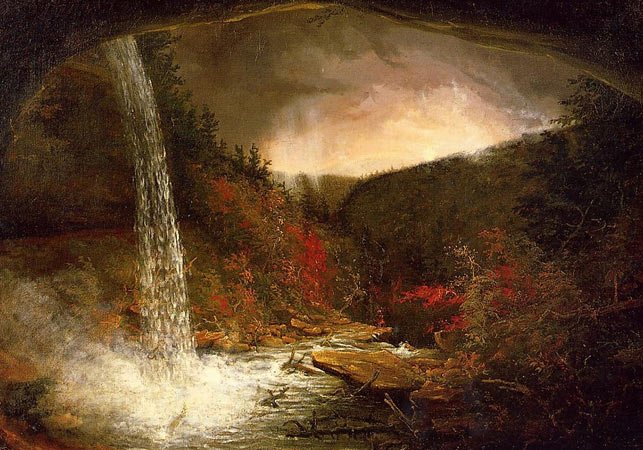
Thomas Cole’s “Kaaterskill Falls,” painted in 1826, captures the mesmerizing beauty of the iconic waterfall in the Catskill Mountains.
The artwork features a unique perspective from inside the upper waterfall, showcasing two cascading flows gracefully tumbling down.
Cole employs dramatic lighting and intricate details, reflecting his Romantic ideology that focuses on nature’s sublime qualities.
This painting not only represents the grandeur of the American landscape but also serves as a significant tourist attraction within the Spruce Creek area, emphasizing Cole’s impact on American landscape art.
9. Kindred Spirits – Asher Brown Durand

Asher Brown Durand’s “Kindred Spirits,” completed in 1849, significantly honors the friendship between two influential figures, Thomas Cole and William Cullen Bryant.
It features the two artists standing on a rocky outcropping, overlooking a serene stream below. The painting captures a vast, expansive view typical of the Hudson River School style, showcasing Durand’s expert realism.
Critics believe this artwork commemorates Cole’s legacy, particularly poignant as he had died just a year prior.
The rich details and emotional connection in “Kindred Spirits” invite viewers to reflect on art’s role in preserving friendship and nature.
10. River Landscape with Ferry – Salomon van Ruysdael

Salomon van Ruysdael’s “River Landscape with Ferry” showcases a serene riverscape enhanced by a ferry crossing.
This 17th-century artwork highlights the harmony of nature and human activity. He captures a tranquil river adorned with lush foliage, reflecting the beauty of Dutch landscapes. The ferry, bustling with figures, symbolizes everyday life along waterways.
Van Ruysdael’s meticulous details and soft color palette evoke a sense of calm, inviting viewers to appreciate the intricate connection between rivers and human existence. His work significantly contributes to the tradition of river paintings in art history.