

Sadness has long been a profound theme in art, captivating both artists and audiences alike. From the Renaissance to the modern era, painters have sought to explore the depths of human emotion, using their canvases to reflect the sorrowful aspects of life.
The rise of Expressionism marked a significant shift, encouraging artists to delve deeper into the lives of ordinary people and their struggles.
In this exploration of the ten most famous sad paintings, the emotional weight of each piece reveals the artists’ personal experiences and societal influences.
These masterworks not only evoke a sense of melancholy but also serve as powerful reminders of the shared human condition. Each painting tells a story, drawing viewers into a world where sadness reigns, yet beauty persists.
1. Melancholy – Edvard Munch

Edvard Munch painted Melancholy in 1891, embodying profound sadness and emotional depth. This masterpiece features a solitary figure, inspired by Munch’s own tortured soul, gazing toward a desolate shore reminiscent of Asgardstrands beach.
Munch’s use of color and expressive brushwork amplifies the sense of despair, reflecting his tumultuous personal relationships.
Critics often regard this painting as a pinnacle of Expressionism, showcasing how artists can convey complex emotions through visual art. The haunting imagery and depth of feeling capture the universal experience of melancholy.
2. Christina’s World – Andrew Wyeth
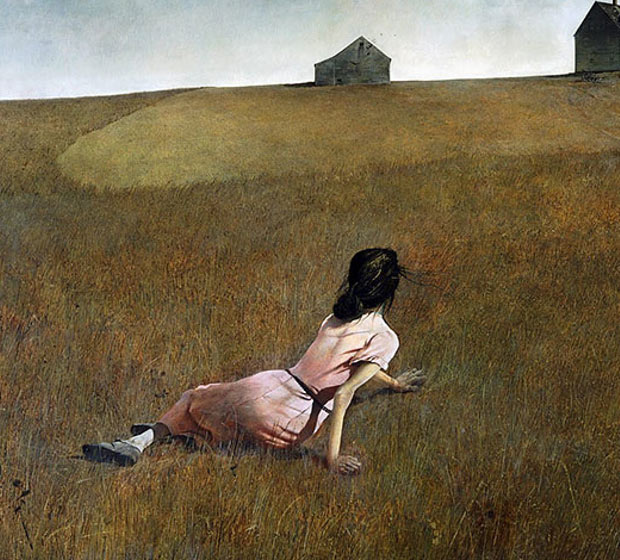
Andrew Wyeth’s “Christina’s World,” created in 1948, captures profound sadness through its striking imagery.
The painting depicts a young girl, paralyzed from the waist down, lying in a grassy field, yearning for a distant farmhouse.
Soft, muted colors evoke a sense of isolation, mirroring the girl’s internal struggle. Wyeth’s portrayal emphasizes the emotional weight of her physical limitations, contrasting the beauty of the landscape with her feelings of longing and confinement.
This piece articulates the depth of human emotion, marking it as one of the most impactful sad paintings in art history.
3. Sorrow (also known as The Magdalen) – Paul Cezanne

Cézanne’s “Sorrow,” painted between 1868 and 1869, magnificently portrays the grief of Mary Magdalene upon hearing of Jesus’ demise.
The artwork encapsulates deep emotion through its somber tones, especially the rich blues and muted earth colors that evoke a sense of loss.
Magdalene’s desolate expression and posture resonate with viewers, illustrating the weight of her sorrow. This piece stands as a testament to human vulnerability, showcasing how powerful the emotion of grief can manifest through art.
Cézanne’s mastery in representing complex sentiments solidifies “Sorrow” as a pivotal work in exploring themes of melancholy.
4. La Mélancolie – Louis-Jean-François Lagrenée

Lagrenée’s “La Mélancolie,” completed in 1785, stands as a captivating exploration of sadness and solemnity. The painting features a young woman adorned in elegant robes, her expression embodies profound melancholy.
Somber colors, primarily muted blues and grays, enhance the atmosphere of sadness. Various jewels adorn her, contrasting with her sorrowful demeanor, inviting viewers to ponder the disparity between external beauty and internal despair.
This exquisite work encapsulates the essence of human emotion, solidifying its place among the most impactful paintings reflecting melancholy in art history.
5. Femme assise (Melancholy Woman) – Picasso

Femme Assise, painted by Pablo Picasso in 1903, exemplifies the artist’s profound exploration of sadness during his blue period.
This artwork features a despondent woman slumped over, resting her arm in a defeated posture. The dominant blue hues amplify her emotional detachment, encapsulating a deep sense of sorrow.
Picasso’s portrayal of this melancholic figure reflects his personal struggles with depression and grief, particularly influenced by the suicide of a close friend.
The painting serves as a poignant reminder of the complexities of human emotion, resonating deeply with viewers.
6. L’Absinthe – Edgar Degas

Degas’s “L’Absinthe,” painted in 1876, captures the essence of sadness through its depiction of a woman in a Paris café.
The subject’s vacant expression and slumped posture convey deep melancholy, reminiscent of the societal apathy prevalent during the time.
Using muted colors and shadowy tones, Degas emphasizes her emotional detachment, symbolizing the effects of absinthe, a popular drink linked to despair.
The scene mirrors the struggles of urban life, inviting viewers to reflect on isolation and emotional turmoil in a rapidly changing society.
7. Automat – Edward Hopper

Depicting urban solitude, Edward Hopper’s “Automat,” painted in 1927, captures a melancholic moment. The artwork features a lonely woman seated alone at a marble table, staring blankly at her cup of coffee.
Soft light reflects off the glass walls, enhancing her disconnection from the bustling city outside. Her expression conveys a profound sense of contemplation, inviting viewers to ponder her story.
Hopper’s use of muted colors amplifies the emotional weight, presenting a timeless exploration of loneliness amidst modern life’s chaos. This evocative piece resonates with anyone who has experienced solitude in a crowded world.
8. At Eternity’s Gate – van Gogh

Vincent van Gogh’s “At Eternity’s Gate,” created in 1890, powerfully embodies sorrow through its depiction of an old man in despair.
The subject’s frail form, with his head buried in his hands, communicates profound grief without uttering a word.
Van Gogh’s expressive brushwork and muted color palette, dominated by dusky tones, deepen the emotional impact, inviting viewers to feel the weight of loss.
This poignant portrayal resonates with anyone familiar with sadness, marking it as one of the most significant expressions of melancholy in art history.
9. St. Jerome in his Study by Candlelight – Aertsen Van Leyden

Aertsen Van Leyden’s “St. Jerome in his Study by Candlelight,” painted around 1520, captures the essence of melancholy in a darkened room illuminated by a single candle.
St. Jerome, epitomizing deep contemplation, rests his head on one hand while holding a skull in the other, symbolizing mortality and the fleeting nature of life.
Somber hues dominate the piece, enhancing the eerie atmosphere and reflecting the seriousness of his scholarly pursuits.
This artwork is housed in the Rijksmuseum in Amsterdam, resounding as a poignant reflection on human emotion and spiritual introspection.
10. The Old Guitarist – Picasso
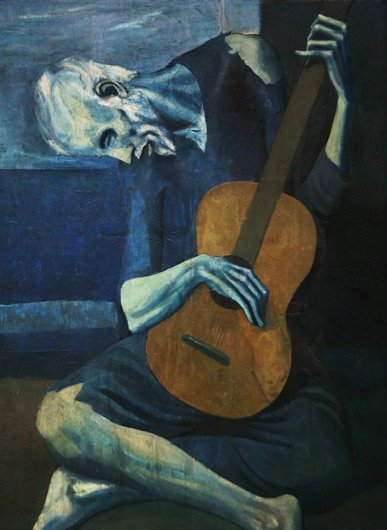
Pablo Picasso’s “The Old Guitarist,” painted between 1903 and 1904, embodies profound sorrow during his Blue Period. The artwork features a visually impaired musician, evoking themes of poverty and social isolation.
Its dominant azure tones intensify the melancholic mood, reflecting Picasso’s personal struggles following the suicide of his friend.
Through the character’s defeated posture and somber expression, Picasso connects viewers with the emotional weight of despair, emphasizing the shared experience of human suffering and sorrow. This painting remains iconic in its portrayal of sadness within art history.


