
Trees have captivated artists for centuries, symbolizing everything from peace to the mysteries of nature. Their ever-changing forms and colors offer a rich tapestry for creative expression, making them a favorite subject in art.
From the blooms of spring to the stark silhouettes of winter, tree paintings evoke a wide range of emotions and stories, inviting viewers to explore deeper meanings.
In this article, we’ll delve into ten of the most famous tree paintings that have left an indelible mark on art history.
Renowned artists like Vincent van Gogh and Claude Monet have masterfully captured the essence of trees, intertwining them with themes of hope, loss, and the beauty of nature.
Each artwork tells its own story, showcasing the unique relationship between trees and the human experience. Join us as we journey through these iconic pieces that celebrate the timeless allure of trees in art.
1. Almond Blossoms – Vincent van Gogh

Vincent van Gogh painted Almond Blossoms in 1890 as a heartfelt gift for his brother Theo’s newborn son. The artwork features delicate almond tree branches adorned with bright blossoms against a striking blue sky.
Van Gogh’s unique style captures the beauty of new life, showcasing his admiration for Japanese printmaking.
This piece symbolizes hope and joy, celebrating the significance of family and rebirth through the blossoming tree’s colors and intricate details.
2. Cairn in Snow – Caspar David Friedrich

Cairn in Snow, painted by Caspar David Friedrich in 1807, captures a somber winter scene where barren oak trees stand against a cold backdrop.
This artwork reflects themes of solitude and contemplation, with the cairn symbolizing a pagan burial site. Friedrich expertly evokes emotional depth through his choice of colors and stark imagery, inviting viewers to ponder the intersection of life and death.
The desolate environment serves as a powerful reminder of nature’s beauty intertwined with human history.
3. Avenue of Schloss Kammer Park – Gustav Klimt

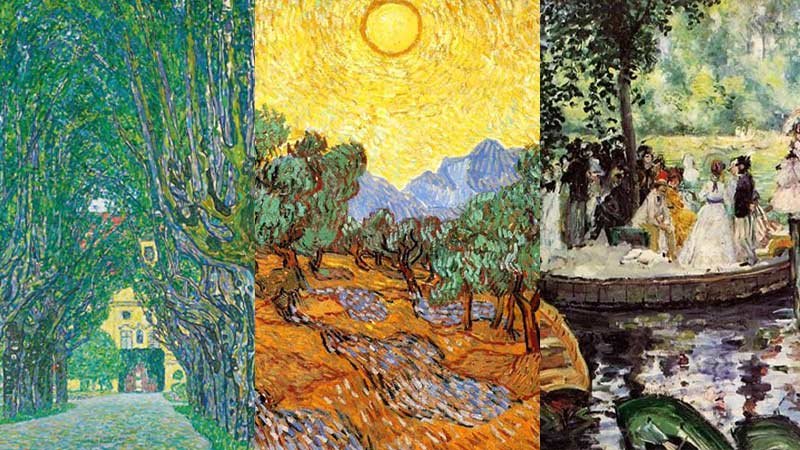
Avenue of Schloss Kammer Park, painted in 1912, epitomizes Klimt’s mastery of perspective and color. The artwork depicts a cobblestone road bordered by majestic trees, creating a vast green canopy overhead. Klimt’s intense blues and greens evoke a serene atmosphere, highlighting nature’s tranquility.
This largely overlooked piece showcases Klimt’s ability to intertwine the beauty of landscapes with the emotional depth often found in his more famous works focused on the female form.
4. The Hay Wain – John Constable
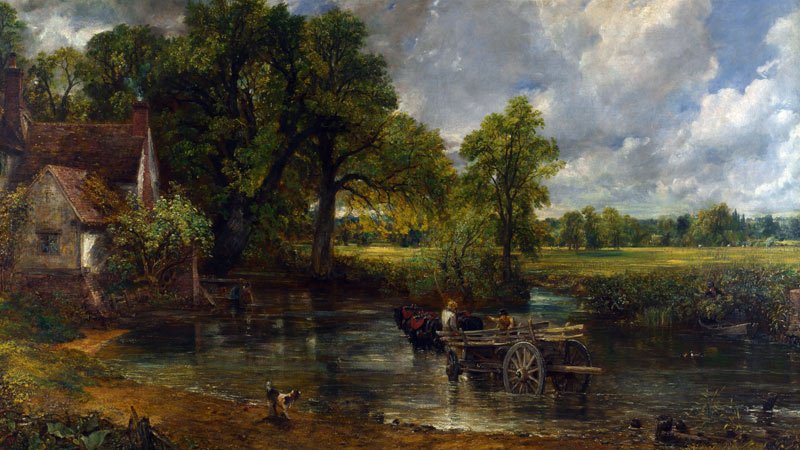
John Constable’s The Hay Wain, completed in 1821, captures the idyllic English countryside along the River Stour. It portrays three horses pulling a wooden cart through shallow waters, surrounded by lush trees that embody serene rural life.
This masterpiece signifies Constable’s dedication to landscape art, with its authentic depiction of Suffolk’s scenery.
Initially shown at the Royal Academy, it gained prominence over time, now residing in The National Gallery, London, celebrated as a timeless symbol of nature’s beauty.
5. Olive Trees with Yellow Sky and Sun – Vincent van Gogh
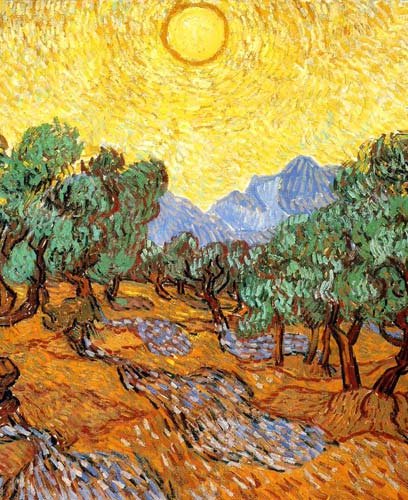
Vincent van Gogh painted “Olive Trees with Yellow Sky and Sun” in 1889, showcasing his fascination with nature’s colors.
The artwork features twisted olive trees under a radiant, yellow sky, exemplifying his characteristic brushwork.
Van Gogh’s use of bold hues conveys emotion and energy, reflecting his inner turmoil and connection to the landscape.
This piece exemplifies his commitment to capturing nature’s beauty, using olive trees to symbolize peace and resilience amidst chaos.
6. La Grenouillère – Pierre-Auguste Renoir

Renoir completed “La Grenouillère” in 1869, depicting a lively gathering by the Seine River. This Impressionist masterpiece captures the essence of Parisian social life, featuring trees that frame the scene.
The lush foliage and dappled light create a warm atmosphere, inviting viewers to experience the joy of camaraderie.
Renoir’s ability to blend nature with human interaction showcases his skill in portraying the beauty of everyday life, making this painting a celebrated representation of tree art in Impressionism.
7. Forest in Autumn – Gustave Courbet
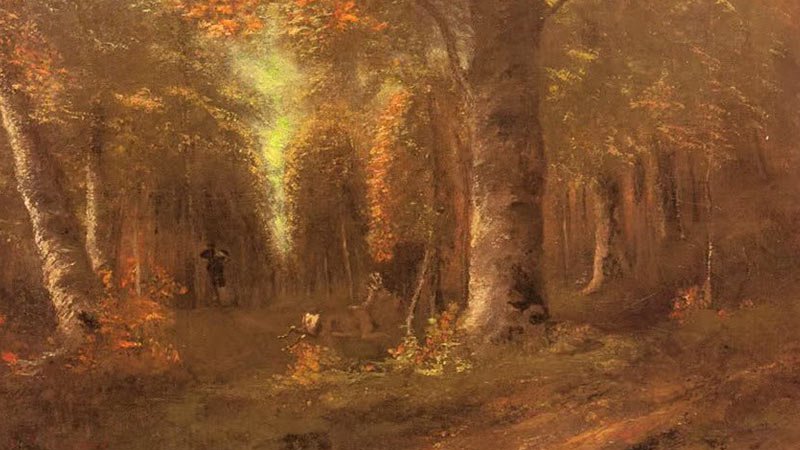
“Forest in Autumn,” painted in 1841 by Gustave Courbet, exemplifies the artist’s mastery of Realist painting. The artwork showcases vivid autumn foliage, with auburn leaves glistening in the light.
Courbet skillfully contrasts light and shadow, creating depth and a sense of tranquility within the forest. This painting highlights the serenity of nature, inviting viewers to immerse themselves in the beautiful interplay of colors and textures that define a changing season.
8. Giant Redwood Trees of California – Albert Bierstadt
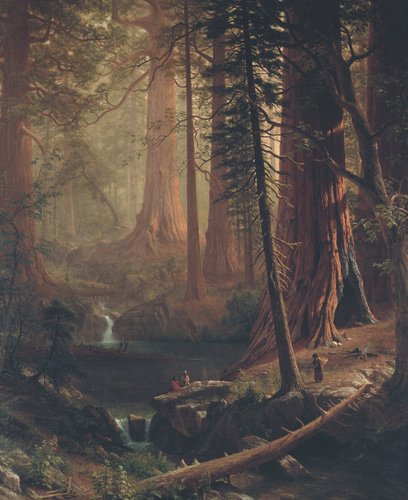
Albert Bierstadt’s “Giant Redwood Trees of California,” completed in 1874, captures the majestic beauty of California’s towering redwoods.
He expertly depicts the grandeur of nature, with massive trees rising against a vivid sky. This painting highlights the intricate details of the trees’ bark and foliage, emphasizing realism.
Bierstadt’s ability to convey the awe-inspiring scale of the redwoods creates an enchanting experience, inviting viewers to appreciate the tranquil yet powerful essence of these ancient giants.
9. The Artists Family In The Garden – Claude Monet
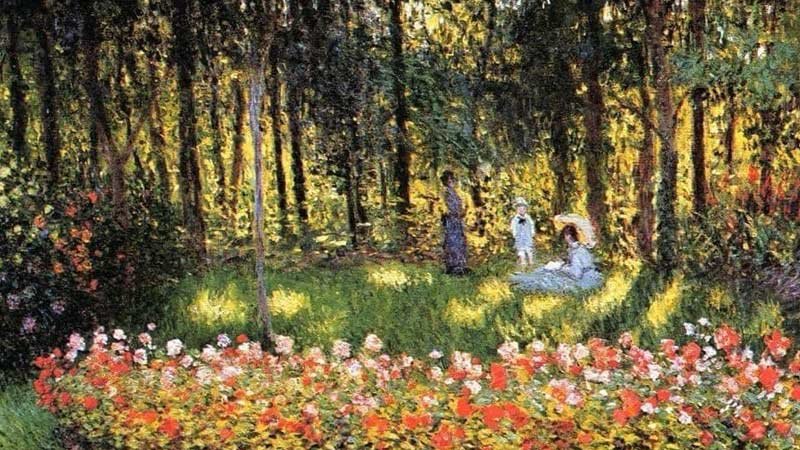
Claude Monet’s “The Artists Family in the Garden,” created in 1875, showcases a serene moment in nature. This iconic Impressionist piece features Monet’s wife Camille and their son surrounded by lush greenery.
The towering trees symbolize protection and comfort, framing the intimate family scene. Monet’s expert use of light color breathes life into the artwork, capturing a sense of warmth and happiness, inviting viewers to feel the tranquility of this cherished experience.
10. Four Trees – Egon Schiele

Egon Schiele’s “Four Trees,” painted in 1917, highlights the varying conditions of four trees against a orange sun.
Schiele’s choice of bold colors captures the essence of nature’s diversity, symbolizing the struggle of individuality versus societal norms.
The trees display a mix of vitality and decay, representing the complexities of the human condition. This iconic piece resides in The Belvedere, Vienna,
showcasing Schiele’s unique perspective on life and creativity amidst the backdrop of an open mountainous landscape.


