
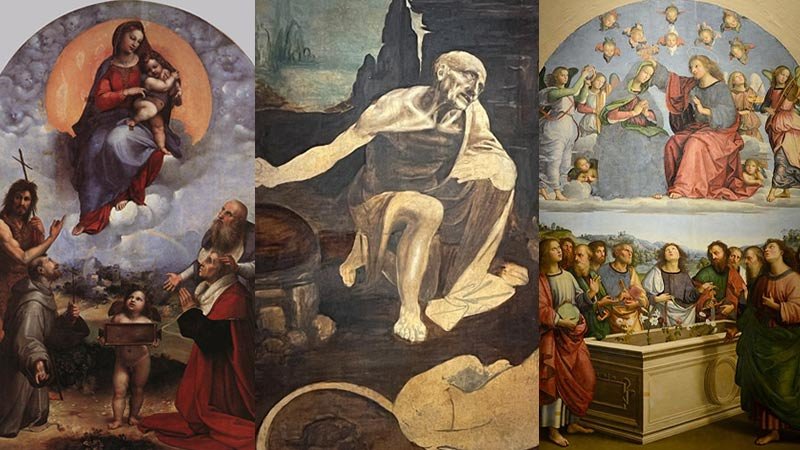
The Vatican, the smallest country in the world, boasts one of the largest and most impressive art collections ever assembled.
For art enthusiasts, missing a visit to this cultural treasure is like passing up a masterpiece itself. With thousands of artworks to explore, the Vatican Museums are home to iconic pieces that have shaped the history of art and religion.
Among the stunning array of masterpieces, 13 paintings stand out for their historical significance and artistic brilliance.
From Leonardo da Vinci’s “St. Jerome” to the breathtaking frescoes of the Sistine Chapel, these works not only showcase the genius of their creators but also tell profound stories that resonate through time.
Get ready to embark on a journey through the Vatican’s artistic wonders, where each brushstroke invites admiration and reflection.
1. The School of Athens – Raphael

The School of Athens, painted by Raphael between 1509 and 1511, showcases the pinnacle of Renaissance art.
This fresco, located in the Stanza della Segnatura, features iconic thinkers of antiquity, including Plato and Aristotle, in a harmonious composition.
With 50 figures arranged under a magnificent arch, it symbolizes the confluence of philosophy, science, and spirituality.
Raphael cleverly incorporated his contemporaries, including a nod to Michelangelo, making this work a celebrated masterpiece of intellectual unity.
2. Transfiguration – Raphael
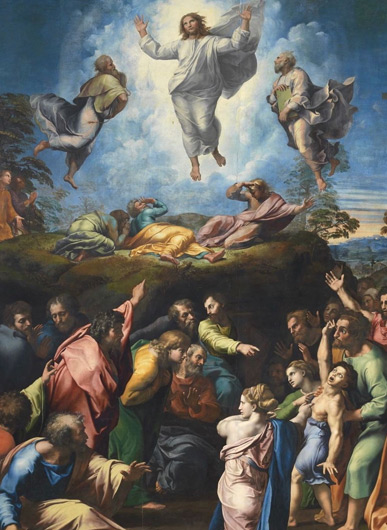
Raphael’s “Transfiguration,” painted in 1520, showcases the dual nature of Jesus Christ, combining human emotion with divine light.
The painting’s upper half radiates brightness, featuring Jesus flanked by prophets Elijah and Moses, while the lower half depicts a sick boy surrounded by anguished figures.
This masterpiece, housed in the Pinacoteca, serves as a significant bridge between the High Renaissance and Baroque styles, celebrated for its dramatic use of chiaroscuro that highlights both despair and hope.
3. Saint Jerome in the Wilderness – Leonardo da Vinci
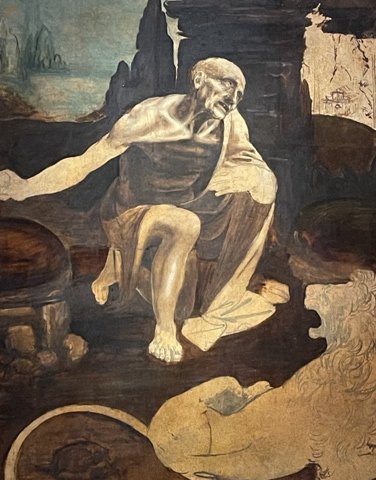
“Saint Jerome in the Wilderness,” painted by Leonardo da Vinci around 1482, is an unfinished masterpiece housed in the Pinacoteca.
It depicts St. Jerome, a hermit, in a contemplative pose, emanating profound sorrow. The painting’s enigmatic nature sparks curiosity, as its original purpose and patron remain unknown.
Leonardo’s meticulous attention to anatomy and emotion creates an intimate connection with the viewer, making this work a pivotal example of his artistic genius.
4. Sistine Chapel Ceiling – Michelangelo

Michelangelo’s Sistine Chapel Ceiling, completed between 1508 and 1512, stands as a monumental achievement in art history.
It features nine central scenes from Genesis, with “The Creation of Adam” being the most iconic. The breathtaking frescoes showcase Michelangelo’s mastery of human anatomy and composition.
Several artists assisted him, but the visionary ideas and execution were predominantly his. This extraordinary work attracts over 20,000 visitors daily, continuing to inspire awe and admiration.
5. Martyrdom of St. Erasmus – Nicolas Poussin
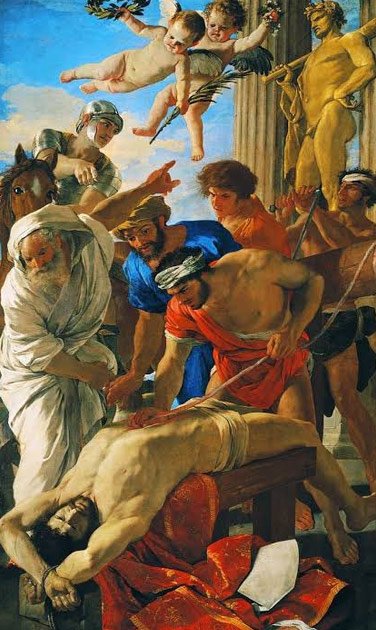
Nicolas Poussin’s Martyrdom of St. Erasmus (1628-1629) captivates with its graphic representation of martyrdom.
The painting, commissioned for St. Peter’s Basilica, depicts St. Erasmus being tortured, his entrails cruelly drawn out by an executioner. Pagan priests mock him, pointing at a statue of Hercules he refused to worship.
Above, angels offer symbols of martyrdom: a palm and a crown, creating a striking contrast between suffering and divine promise. This intense work remains a testament to Poussin’s dramatic style and early Christian themes.
6. The Entombment of Christ – Caravaggio
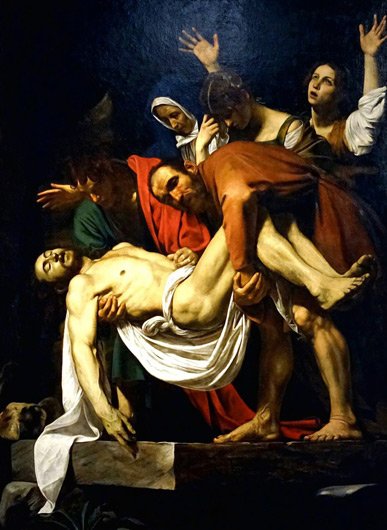
Caravaggio’s “The Entombment of Christ,” painted between 1603 and 1604, provides a striking portrayal of Christ’s burial.
This masterpiece showcases his signature chiaroscuro technique, contrasting light and dark to evoke emotion.
Positioned in the Pinacoteca Vaticana, the painting depicts Christ’s lifeless body being lowered into a tomb, surrounded by mournful figures, including the Virgin Mary.
The work marked a shift from idealized portrayals of saints to more relatable, human subjects, deeply impacting the Baroque art movement.
7. Aldobrandini Wedding
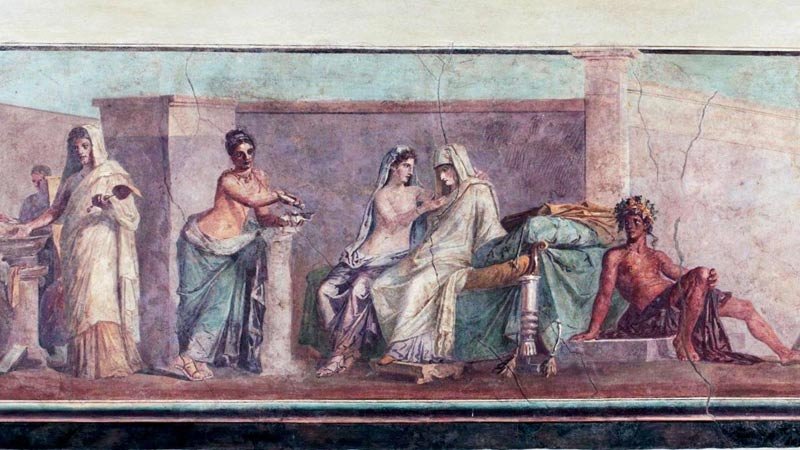
Aldobrandini Wedding, an enchanting ancient Roman fresco, dates back to the late first century BC. This masterpiece portrays a wedding scene intertwined with mythological figures, reflecting the cultural richness of the era.
Unearthed around 1600 on Esquiline Hill, it exemplifies early Roman artistic influence. Owned by the Aldobrandini family until 1818, this fresco’s significance in art history sparked extensive scholarly interest, including studies by renowned figures like Winckelmann and Bottiger. Visitors can admire its intricate details at the Vatican Museum today.
8. Oddi Altarpiece – Raphael
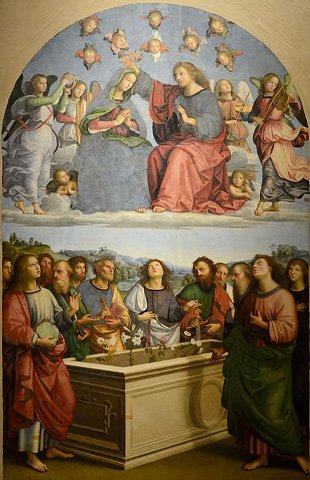
Oddi Altarpiece showcases Raphael’s artistic brilliance, painted between 1502 and 1504. Housed in the Vatican Pinacoteca, this masterpiece was commissioned for the Oddi family chapel in San Francesco al Prato in Perugia.
Leandra Baglioni, Simone degli Oddi’s widow, initiated the commission. The altarpiece features a stunning composition, combining religious themes with Raphael’s signature use of color and depth, highlighting his exceptional talent in Renaissance art.
9. Deliverance of Saint Peter – Raphael
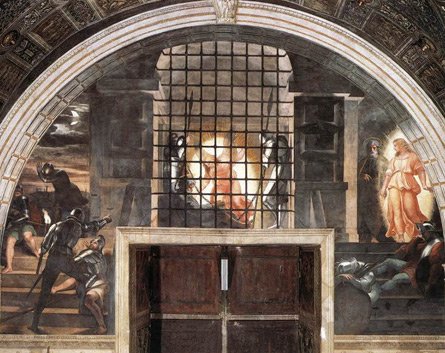
Raphael’s “Deliverance of Saint Peter,” painted in 1514, graces the Stanza di Eliodoro. The fresco narrates the miraculous escape of Saint Peter from prison, highlighting key moments of the biblical story.
The angel awakens Peter amidst sleeping guards, while dramatic lighting emphasizes the tension. Raphael’s mastery of color and light creates a captivating scene that draws viewers into the narrative.
This masterpiece not only showcases his artistic prowess but also reflects the themes of faith and liberation central to the Renaissance.
10. Stefaneschi Triptych – Giotto
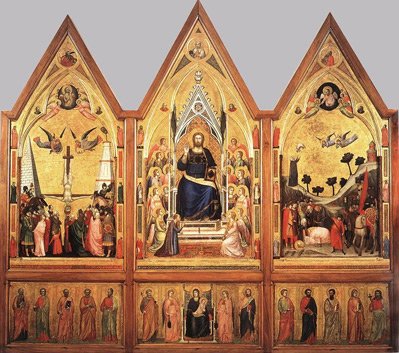
Stefaneschi Triptych, painted by Giotto around 1313, serves as a significant altarpiece for the Canons altar in Old St. Peter’s Basilica.
Giotto’s mastery of emotion shines through in this triptych, displaying vivid scenes of Christ and the Virgin Mary that highlight the artist’s innovative use of space and narrative.
This work stands out for its rich detail, iconic composition, and historical significance, representing a pivotal moment in the evolution of Gothic art. Currently, it resides in the Vatican Pinacoteca.
11. The Fire in the Borgo – Raphael
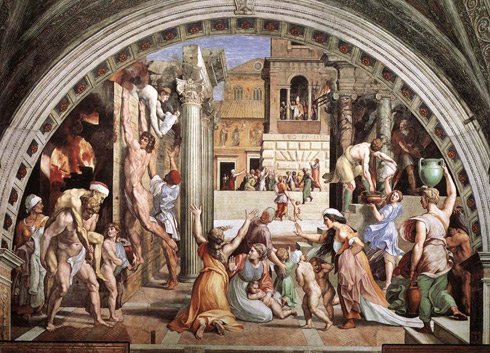
Raphael’s “The Fire in the Borgo,” created between 1514 and 1517, is a striking fresco located in the Apostolic Palace.
It depicts a dramatic scene of chaos and rescue amidst a fire, showcasing Raphael’s expertise in composition and storytelling.
While commonly attributed to Raphael, his aide Giulio Romano may have contributed to the painting’s execution, emphasizing a collaborative spirit in Renaissance art. The piece reflects themes of heroism and divine intervention, strongly resonating during its time.
12. The Mass at Bolsena – Raphael
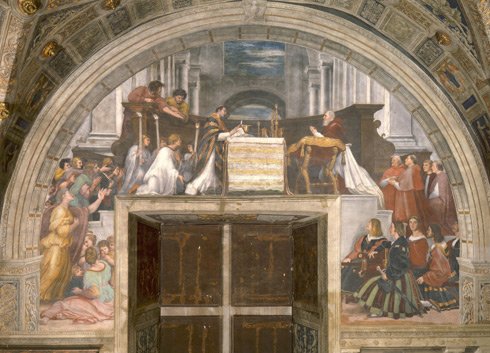
Raphael’s “The Mass at Bolsena,” painted between 1512 and 1514, captures a miraculous event from the 13th century. It depicts a priest witnessing the blood of Christ seeping from a communion wafer during mass.
Located in the Stanza di Eliodoro, this fresco showcases Raphael’s mastery of composition and detail. The colors and dramatic expressions draw viewers into the emotional intensity of the scene, making it a highlight of the Vatican Museums.
13. Madonna of Foligno – Raphael
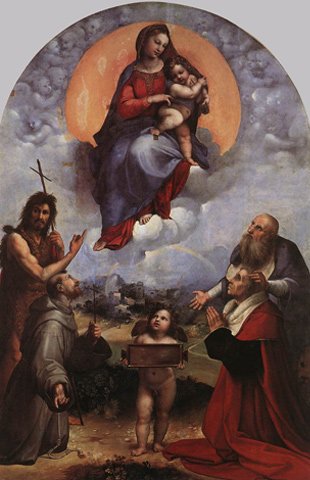
Raphael’s Madonna of Foligno is a stunning depiction of the Virgin Mary cradling the infant Christ amidst heavenly clouds.
Painted around 1511-1512, this masterpiece showcases Raphael’s ability to blend divine beauty with human emotion.
Below Mary, saints John the Baptist and Francis of Assisi gesture toward the Holy Family, while St. Jerome introduces the painting’s patron, Sigismondo de Conti. This work exemplifies the essence of the Italian High Renaissance.


