
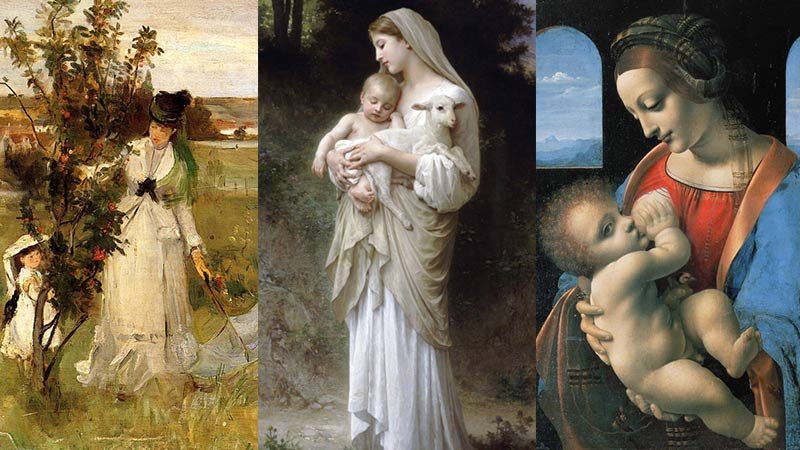
The bond between a mother and child is a timeless theme that has captivated artists throughout history. From the tender embrace in Renaissance masterpieces to the expressive strokes of modern art, these paintings encapsulate the profound love and connection shared between them.
This powerful symbol of nurturing, creativity, and devotion resonates across cultures and generations.
Each artwork tells a unique story, reflecting the emotions and experiences that come with motherhood. As these masterpieces transcend time and place, they invite us to appreciate the universal language of love that connects us all.
1. Three Ages of Woman – Gustav Klimt
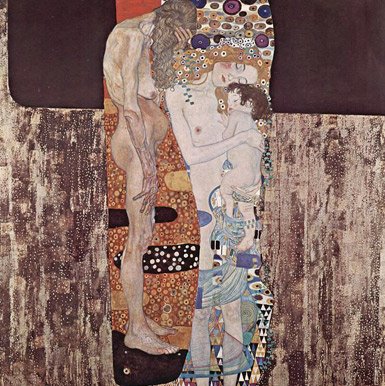
Gustav Klimt painted Three Ages of Woman in 1905, showcasing a woman at different life stages along with her child.
The central focus is the mother tenderly embracing her baby, surrounded by flowers that symbolize fertility and love.
This artwork exemplifies the themes of nurture, vulnerability, and the passage of time. Klimt’s signature style features rich colors and intricate patterns, making this piece a profound representation of the mother-child bond.
2. Camille Monet and Child – Claude Monet
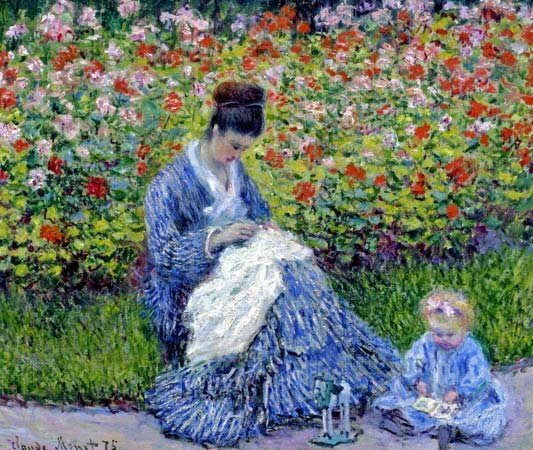
Claude Monet’s Camille Monet and Child, painted in 1875, beautifully captures the intimate bond between a mother and her child.
The artwork shows Monet’s wife, Camille, knitting while a young child sits beside her, engrossed in a booklet. Set in Argenteuil, France, the scene bursts with vibrant colors and an abundance of flowers, typical of Monet’s Impressionist style.
This piece not only highlights familial love but also embodies the interplay between human connections and nature.
3. Innocence – William-Adolphe Bouguereau
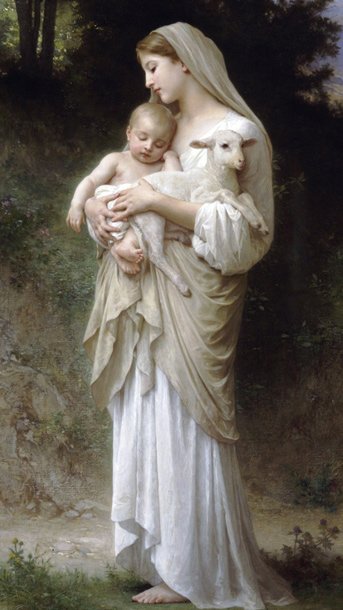
Bouguereau’s “Innocence,” completed in 1893, stands out as a touching portrayal of maternal love.
It features the Virgin Mary holding a peacefully sleeping baby Jesus in one arm and a lamb in the other. The lamb symbolizes Christ’s future sacrifice, enhancing the painting’s emotional depth.
Bouguereau’s realistic style showcases both the tender bond and the serene beauty of motherhood, reflecting themes common in his work while marking a departure from his more erotic subjects.
4. Madonna Litta – Da Vinci

Da Vinci’s painting “Madonna Litta” features Mary breastfeeding the young Jesus, capturing the intimate bond between mother and child.
The artwork contrasts light and dark, with the pair set inside a castle on a hilltop, emphasizing their closeness.
Scholars debate its authorship, suggesting it may be the work of Da Vinci’s pupil. This piece stands as a notable representation of nurturing love during the Renaissance era.
5. Gabrielle et Jean – Pierre-Auguste Renoir
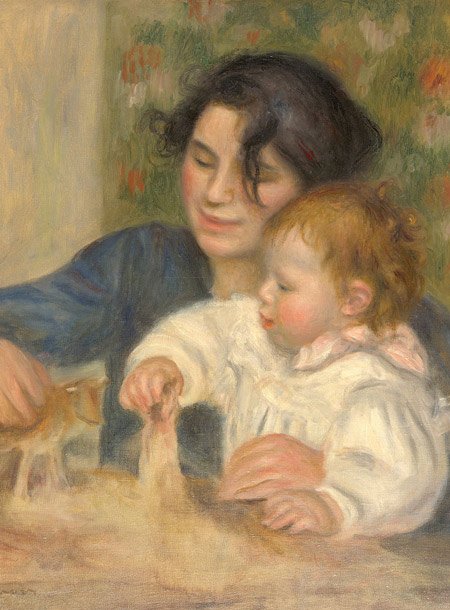
Renoir’s Gabrielle et Jean, painted in 1896, showcases a tender moment between his son, Jean, and the nanny, Gabrielle Renard.
The artwork captures intimacy through soft brushstrokes and gentle colors, emphasizing the warm bond between the figures.
Gabrielle is seen embracing young Jean, who plays with a toy cow, embodying joy and innocence.
This piece highlights Renoir’s ability to portray everyday life filled with love and affection, making it a standout in his collection of mother and child themes.
6. Madonna di Loreto – Caravaggio
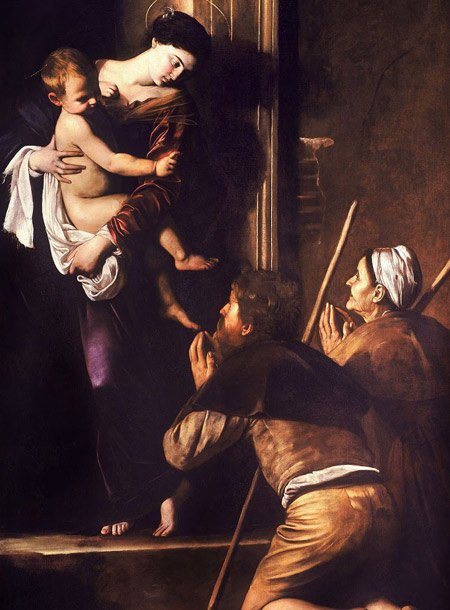
Caravaggio’s “Madonna di Loreto,” painted in 1606, presents a bold depiction of the Virgin Mary and baby Jesus. The artwork diverges from traditional representations by showing Mary barefoot, symbolizing humility.
Two peasants kneel in reverence, highlighting the connection between the divine and everyday life. Critics of the time deemed this portrayal provocative for its authenticity and emotional depth, representing a significant shift in artistic interpretation of sacred subjects.
Caravaggio’s use of chiaroscuro enhances the dramatic effect, capturing the profound bond between mother and child.
7. Hide and Seek – Berthe Morisot

Berthe Morisot’s “Hide and Seek,” completed in 1873, captures a playful moment between a mother and her daughter.
The painting features the child hiding behind a bush, showcasing the intimate dynamics of their relationship. Morisot’s signature soft brushstrokes evoke a light, airy quality, emphasizing the innocence of childhood and the joy of maternal affection.
This artwork exemplifies Morisot’s unique perspective as a female artist in the Impressionist movement, celebrating both femininity and the tender bond shared between mothers and children.
8. The Sistine Madonna – Raphael

The Sistine Madonna, completed in 1514, showcases the Virgin Mary holding the infant Jesus, surrounded by angels. Raphael’s masterful use of color and composition creates a divine atmosphere.
The figures appear to float above the viewer, emphasizing their celestial significance. Mary’s serene expression and Christ’s intimacy convey profound maternal love.
The painting’s dramatic clouds and the angels’ gazes enhance the emotional connection, making it a timeless representation of motherhood in art.
9. Breakfast in Bed – Mary Cassatt
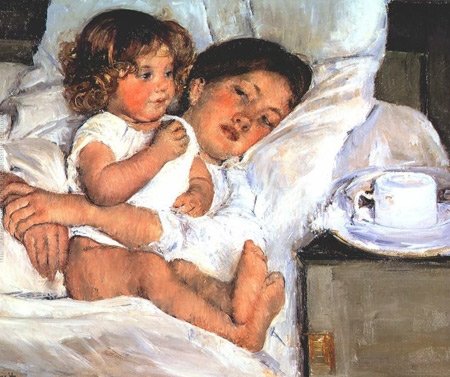
Mary Cassatt’s 1897 painting “Breakfast in Bed” beautifully captures a tender moment between a mother and her child. It features a young mother lounging in bed, holding her child close.
The vibrant colors and soft brushstrokes convey warmth and intimacy, highlighting the everyday simplicity of their bond.
The different expressions of motherly love and gentle protectiveness resonate, making this work a classic example of Cassatt’s focus on maternal themes. This painting embodies the essence of joy and the beauty found in quiet shared moments.
10. Music Lesson – Lord Frederic Leighton
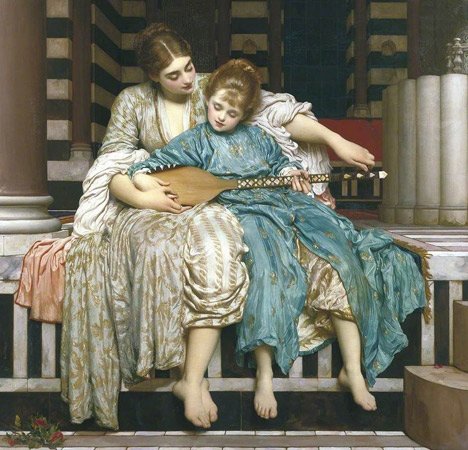
“Music Lesson,” painted by Lord Frederic Leighton in 1877, depicts a mother teaching her daughter to play a stringed instrument.
The artwork showcases Leighton’s masterful use of realistic detail, particularly in the flowing garments of both figures.
The warm, intimate setting emphasizes the nurturing bond between mother and child as music symbolizes cultural enrichment and familial connection.
This piece stands out for its striking portrayal of a shared learning experience, highlighting both art and maternal affection.
11. The Virgin and Child with Saint Anne – Da Vinci
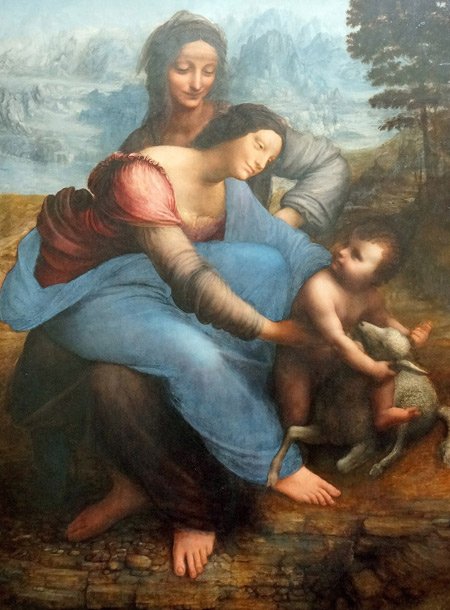
Leonardo da Vinci’s “The Virgin and Child with Saint Anne” showcases a profound maternal bond, depicting Saint Anne, the Virgin Mary, and the newborn Jesus.
Crafted between 1501 and 1519, this unfinished oil painting illustrates Mary restraining Christ, symbolizing his future sacrifice.
Da Vinci’s intricate details, soft hues, and use of chiaroscuro enhance the emotional depth, capturing the essence of maternal love and divine connection.
This masterpiece represents a significant evolution in Renaissance art, emphasizing the depth of familial love.
12. Madonna della Seggiola – Raphael

Madonna della Seggiola, painted by Raphael around 1514, showcases the Virgin Mary tenderly embracing the infant Jesus.
The artwork is renowned for its delicate balance and serene quality, emphasizing maternal love. Mary’s gentle expression creates a sense of calm that resonates deeply.
The composition moves away from traditional linear styles, highlighting Raphael’s innovative approach. This piece remains a significant example of Renaissance art, celebrating the timeless bond between mother and child.
13. Mother with a Child and a Chambermaid – Pieter de Hooch

Pieter de Hooch’s “Mother with a Child and a Chambermaid,” painted around 1668, presents a serene domestic scene.
The artwork captures a moment of intimacy, where a mother interacts gently with her child while a chambermaid assists.
Soft light streams through the window, illuminating the tender expressions and highlighting the warmth of their bond.
De Hooch’s meticulous attention to detail and composition enhances the painting’s emotional depth, showcasing the harmony of family life during the Dutch Golden Age.


