
Camille Claudel stands as a remarkable figure in the world of sculpture, challenging societal norms in late 19th and early 20th century France.
Her innovative creations delve into universal themes such as love, loss, and the passage of time, showcasing an expressive intensity that captivates audiences.
Despite her talent being recognized by contemporaries, her work remains relatively obscure outside of France.
This article explores the significant contributions of Claudel, highlighting her technical virtuosity and the emotional depth of her sculptures.
From intimate portraits to grand allegories, her diverse body of work reflects a keen observation of human experience.
As we examine her most important pieces, we uncover the profound impact of her artistry and the legacy she leaves behind, inviting a renewed appreciation for this trailblazing artist.
1. Sakuntula (or Vertumnus and Pomona)

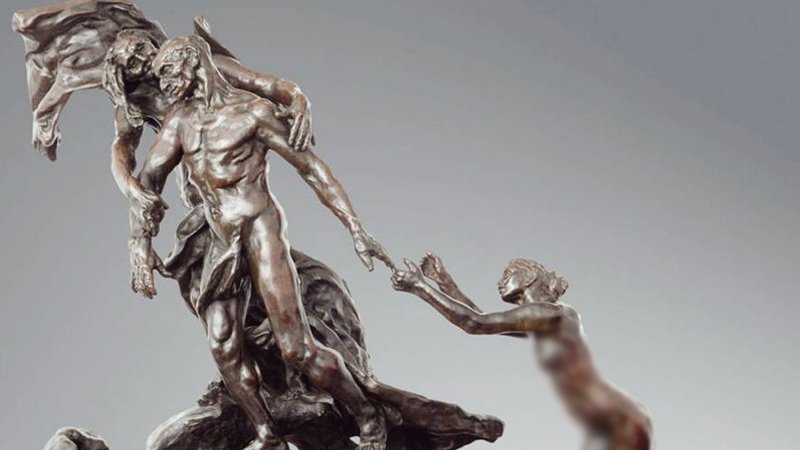
Sakuntula, also known as Vertumnus and Pomona, showcases Camille Claudel’s extraordinary skill and creativity.
This piece embodies a sensual narrative of love rooted in mythology. Every detail in the sculpture highlights the connection between the characters, drawing viewers into their poignant story.
Claudel’s portrayal of Sakuntula reflects emotional complexity, emphasizing the themes of longing and separation. His unique techniques offer a seamless blend of realism and fantasy.
The composition captures a moment of intimate connection, revealing her deep understanding of human emotions and relationships.
Claudel’s artistic vision shines through, making this work a significant example of her mastery in sculpture.
2. The Waltz
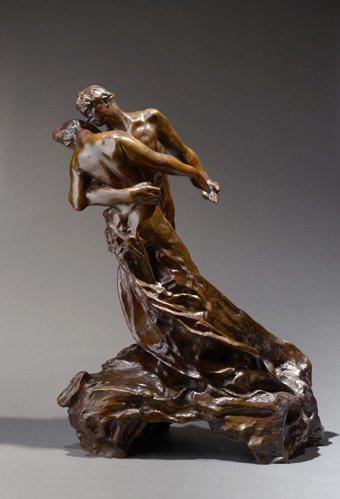
The Waltz features a dynamic portrayal of two lovers surrendering to a passionate dance. Initially rejected for depicting complete nudity, Camille Claudel reimagined the work, including intricate draperies.
This adjustment led to critical acclaim when the plaster version debuted in 1893. Although the French government declined to commission a marble version, the sculpture gained recognition through a remarkable bronze cast.
Exhibiting in Belgium in 1894, then in the United States the following year, The Waltz continued to captivate audiences.
Claudel created additional variations using tinted plaster, bronze, and stoneware, often reducing the drapery in later renditions.
This piece stands as one of her most frequently exhibited works outside of France, showcasing her innovative approach to movement and emotion in art.
3. Clotho
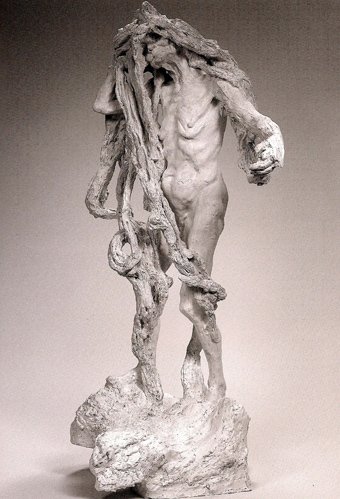
Claudel’s Clotho showcases her mastery of sculptural form and emotional depth. This piece embodies the mythological figure Clotho, one of the Three Fates, who spins the thread of life.
It captures the delicate balance between creation and destiny, highlighting Claudel’s ability to convey complex themes through her artistry.
Crafted in 1893, Clotho draws viewers in with its intricate details and emotive expression. The sculpture’s subtle gestures reflect the weight of life’s choices and the inevitability of fate.
This work stands as a testament to Claudel’s innovative approach while reinforcing her significance in the realm of late 19th-century sculpture.
4. The Gossips

Source: vlinder-01.dds.nl
“The Gossips” is one of Camille Claudel’s notable sculptures, completed in 1897. This piece showcases two women engaged in fervent conversation, embodying the intimacy and emotion of social discourse.
Claudel’s exquisite attention to detail and fluid forms captures the essence of gossip in a way that feels both timeless and relatable.
The figures’ expressions reveal distinct personalities and a shared moment, highlighting Claudel’s ability to weave narrative into her work.
Critics have often praised this sculpture for its realistic portrayal of human interaction, illustrating how Claudel’s talent for character development enhances her compositions.
“The Gossips” represents a powerful statement on the dynamics of female relationships, further solidifying Claudel’s position as a groundbreaking artist.
5. Maturity
Maturity in Camille Claudel’s work shines through her profound understanding of emotional intricacies. Her sculpture The Gossips exemplifies this maturity, depicting two women in animated conversation that captures the essence of human interaction.
The distinct personalities conveyed through their expressions demonstrate Claudel’s heightened sense of character development.
In Clotho, Claudel explores complex themes such as fate and destiny, showcasing her ability to balance emotional depth with technical skill.
This piece encapsulates the mythological figure’s significance, reflecting Claudel’s growth as an artist who could convey profound narratives through form.
Her later works, like Sakuntula, further illustrate her mature vision, intertwining realism and fantasy to depict mythology’s sensual narratives.
Each piece marks a significant step in her artistic evolution, solidifying her legacy as one of the 19th century’s most pioneering sculptors.
6. The Wave
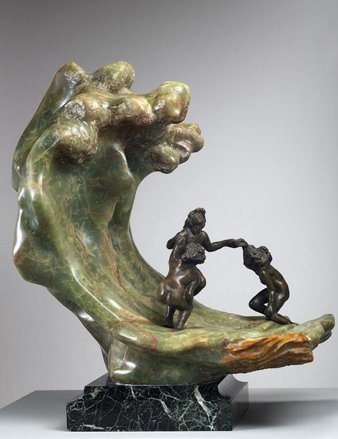
The Wave stands out as one of Camille Claudel’s most celebrated pieces, embodying the raw energy of nature.
Crafted between 1897 and 1898, this sculpture reflects Claudel’s mastery of form and movement. The artwork vividly captures the swell of waves, showcasing her emotional connection to the sea.
Attention to detail is prominent in the fluidity of the figures, symbolizing the dynamic interplay between water and earth.
Critics have noted how The Wave emphasizes Claudel’s innovative approach to portraying natural forces.
Viewers often find themselves drawn to the sculpture’s lifelike quality, which reveals her deep understanding of materials and technique.
This piece remains a vital part of her portfolio, illustrating her ability to convey emotion through the natural world.


