

Judy Chicago stands as a pioneering force in the world of contemporary art, reshaping perceptions of femininity and the role of women in creative expression.
With a career spanning over five decades, her work boldly confronts societal norms and challenges the art historical canon.
Chicago’s innovative use of traditionally feminine media, such as needlework, alongside more masculine techniques like welding, exemplifies her commitment to redefining artistic boundaries.
Her iconic installation, The Dinner Party, serves as a seminal piece that not only highlights the contributions of women throughout history but also invites dialogue on gender and equality.
Chicago’s art is not merely aesthetic; it’s a call to action, reflecting her deep-rooted desire for social justice.
As we explore the important works of Judy Chicago, we uncover a legacy that continues to inspire and provoke thought, making her a vital figure in the ongoing conversation about art and activism.
1. 1968: Domes
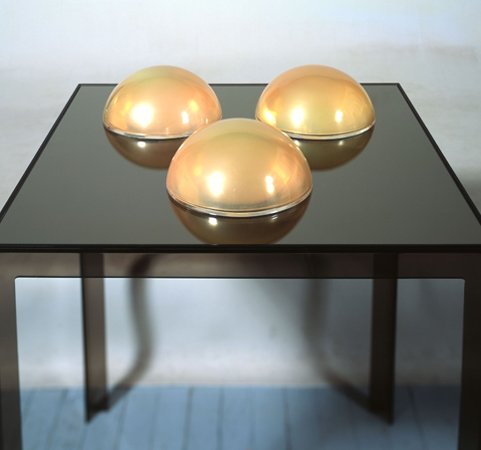
Source: artbasel.com
In 1968, Judy Chicago created a series of sculptures called “Domes.” This groundbreaking work focused on themes of femininity, using soft, organic forms to evoke the female body.
Chicago aimed to challenge conventional perceptions of women’s art, emphasizing their strength and beauty.
Each dome served as a metaphor for protection and nurturing, inviting viewers to engage with the feminine experience.
Chicago’s exploration of these themes became a pivotal moment in her career, highlighting her commitment to feminist art.
The “Domes” not only reflect her artistic vision but also underscore her influence on the broader art movement.
2. 1973: Through the Flower

In 1973, Judy Chicago founded the feminist art organization “Through the Flower.” This initiative aimed to elevate women’s contributions to art history while providing a platform for emerging female artists.
Chicago’s commitment to education, advocacy, and visibility drove the project forward, attracting attention to issues often overlooked in mainstream art.
Through public events and exhibitions, artists networked and gained exposure. The organization’s workshops empowered women to explore their creativity and express their unique perspectives.
By fostering collaboration, Chicago built a supportive community that encouraged artistic exploration and development.
3. 1979: The Dinner Party
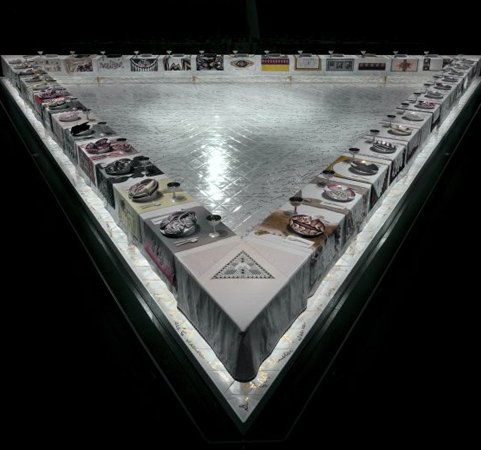
In 1979, Judy Chicago unveiled The Dinner Party, a monumental installation celebrating women’s historical achievements.
The centerpiece features a forty-eight-foot triangular table, set for thirty-nine remarkable women from various eras of Western civilization.
Each place setting showcases unique runners embroidered with the guest’s name and imagery reflecting her legacy.
Glass plates with butterfly and floral motifs, symbolizing the vulva, adorn the settings, merging art with women’s history.
The installation honors not just the guests present at the table but also acknowledges 999 other women, whose names grace the white tile floor below.
By creating this immersive experience, Chicago transforms the narrative of history, spotlighting female contributions often overlooked in traditional accounts.
4. 1984: Hatching the Universal Egg

In 1984, Judy Chicago created “Hatching the Universal Egg,” an ambitious installation that explores themes of creation and transformation.
This work combines intricate craftsmanship with rich symbolism, representing birth and the female experience. The central piece, an egg-like form, invites viewers to contemplate notions of emergence and potential.
Each element within the installation, from organic shapes to vibrant colors, reflects Chicago’s commitment to elevating women’s narratives in art.
Notably, it employs diverse materials and textures, further enhancing its tactile experience. Chicago encourages dialogue surrounding femininity and the significance of women in art, continuing her advocacy for gender equality and empowerment.
5. 1985: Driving the World to Destruction
In 1985, Judy Chicago explored the theme of environmental degradation through her work, highlighting humanity’s detrimental impact on the planet.
She created an iconic piece titled “The End: A Manifesto for the Future.” This provocative artwork combines striking visuals with stark messages, urging viewers to confront the reality of ecological destruction.
Chicago’s imagery frequently included burnt landscapes and images of decay, compelling audiences to acknowledge the fragility of nature.
Each element in her work serves as a reminder of the urgent need for change. Through this innovative approach, she not only reflects on contemporary issues but also instigates essential discussions about sustainability and responsibilities towards the environment.
6. 1991: Imbalance of Power
In 1991, Judy Chicago created “Imbalance of Power,” an impactful series exploring power dynamics in gender relationships.
This work consists of a series of powerful images that starkly critiques the societal structures that perpetuate inequality.
Through vivid colors and bold shapes, Chicago captures the tension between masculine authority and feminine subjugation.
Every piece in the series challenges viewers to confront uncomfortable truths regarding gender roles. Chicago’s intention stands clear: to spark dialogue and encourage reflection on these persistent issues.
The artwork’s striking visuals serve as a rallying cry for equality and justice, solidifying Chicago’s place as a significant figure in feminist art.


