
Jean Baptiste Siméon Chardin stands as a pivotal figure in 18th-century French art, renowned for his masterful still life and genre paintings.
Born in 1699, Chardin diverged from the prevalent Rococo style, choosing instead to capture the beauty of everyday life with a remarkable sense of realism.
His works, characterized by carefully balanced compositions and a soft diffusion of light, invite viewers into intimate domestic scenes, showcasing kitchen maids, children, and ordinary objects with profound depth.
Chardin’s art transcended mere representation; it conveyed a deeper appreciation for the mundane. His ability to elevate simple subjects to the realm of fine art solidified his status as one of the most important artists of his time.
As we explore the significance of Chardin’s contributions, we uncover the timeless appeal of his work and its enduring impact on the art world.
1. The Ray (1725-26)
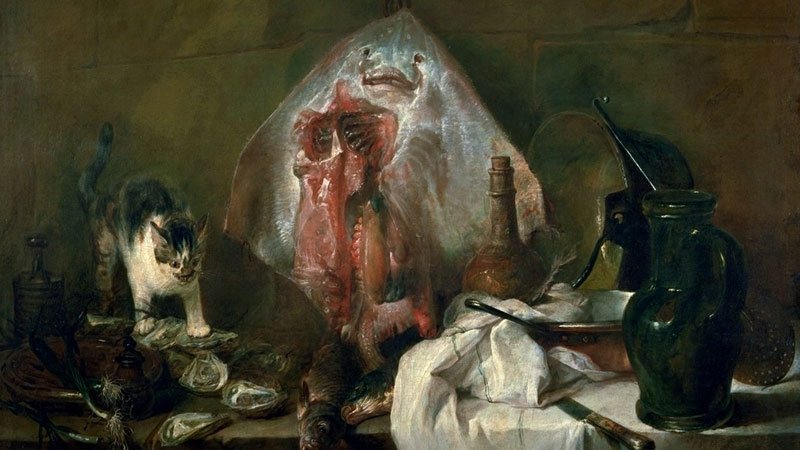
“The Ray” is a stunning example of Chardin’s skill in still life painting. Featuring a freshly caught ray fish, this artwork captures the fish’s intricate textures and subtle colors.
The careful arrangement of objects creates a harmonious composition that draws the viewer’s eye. Also, the soft, diffused lighting enhances the scene’s realism, showcasing Chardin’s mastery of naturalism.
Critics praise this piece for its vivid portrayal of everyday life, emphasizing the artist’s ability to elevate simple subjects into fine art.
Notably, “The Ray” reflects Chardin’s dedication to celebrating mundane moments through thoughtful artistic expression.
2. The Washerwoman (1733)
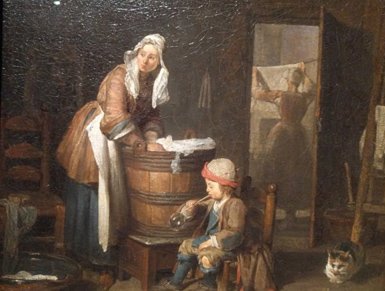
“The Washerwoman” exemplifies Jean Baptiste Siméon Chardin’s ability to capture everyday tasks with grace. This painting features a woman engrossed in her work, illustrating a moment that’s both relatable and intimate.
Chardin employs soft lighting to enhance the texture of the fabric and water, allowing viewers to appreciate the details.
In this artwork, he subtly conveys the dignity of labor, presenting the washerwoman as a figure of strength and vitality.
The carefully balanced composition draws the eye to her focused expression, further emphasizing her dedication.
Critics admire this piece for its realism, which invites the audience to reflect on the importance of daily life.
3. Soap Bubbles (c. 1734)
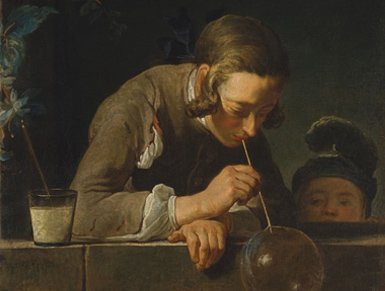
“Soap Bubbles” showcases Chardin’s exceptional talent in rendering the fleeting quality of light and form. The painting features a young boy, captivated as he prepares to blow bubbles, which reflects the artist’s fascination with innocence and childhood wonder.
Rich colors create a contrast, enhancing the translucence of the bubbles while emphasizing their ephemeral nature.
Chardin’s brushwork adds texture to the boy’s clothing, highlighting both movement and detail. Art critics often commend this piece for its ability to evoke a sense of joy and nostalgia, reminding viewers of the simple pleasures of life.
By capturing this moment, Chardin illustrates the intersection of realism and emotion in his work, reinforcing his legacy as a master of still life and genre painting.
4. The House of Cards (1736-37)
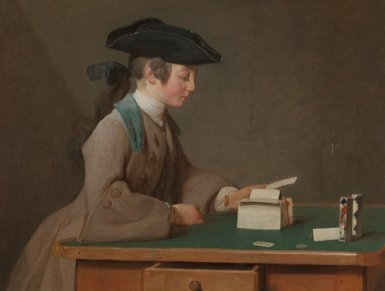
“The House of Cards” is an enchanting work that illustrates Chardin’s skill in capturing the charm of childhood. This painting portrays a young boy engrossed in building a precarious tower of cards, emphasizing the tension of his delicate task.
He uses soft, warm light to highlight the boy’s concentration, infused with a sense of innocence.
A careful arrangement of colors showcases the rich textures of the cards and the table surface. Critics note how this piece resonates with viewers, evoking nostalgia for simple joys and the pursuit of play.
Chardin’s attention to detail in both expression and form enriches the overall narrative, making it a compelling example of 18th-century genre painting.
5. Basket of Wild Strawberries (1761)
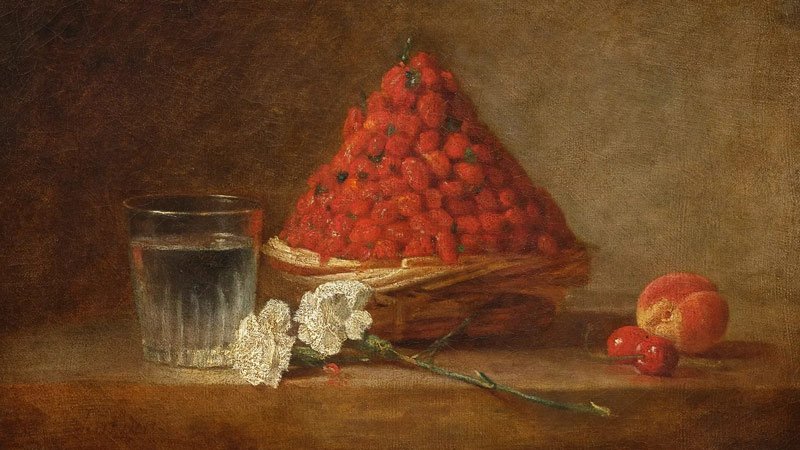
“Basket of Wild Strawberries” exemplifies Chardin’s dedication to capturing the delicate beauty of nature. This still life features a carefully arranged basket filled with vibrant strawberries, their bright red hue contrasting beautifully against the lush green foliage.
Chardin’s attention to detail reveals the artist’s mastery of light and shadow, enhancing the strawberries’ natural shine.
Also, the composition invites viewers to admire the fragile and transitory nature of the fruit. He emphasizes a sense of intimacy, as if the viewer could reach out and touch the fresh berries.
Critics praise this artwork for its vibrant colors and emotional resonance, solidifying Chardin’s reputation as a masterful still life painter.
6. Self-Portrait with Spectacles (1771)
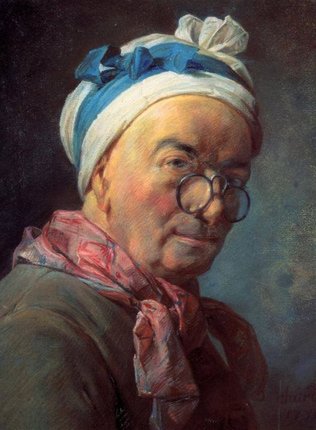
“Self-Portrait with Spectacles” reveals Jean Baptiste Siméon Chardin’s introspective side. This artwork, created in 1771, showcases the artist’s masterful use of pastel on paper.
Chardin’s thoughtful expression invites viewers into his world, reflecting his connection to the art he created. The spectacles symbolize both intellectualism and a keen observance of life around him.
Chardin’s attention to detail is evident in the rich textures of his clothing and the delicate rendering of the spectacles.
How he captures light adds depth to the piece, bringing a lifelike quality to the portrait. Observers often admire the composition for its balance and the intimate glimpse it offers into the life of the esteemed painter.
Through this self-portrait, Chardin immortalizes not only his likeness but also his commitment to the artistry of everyday existence.


