
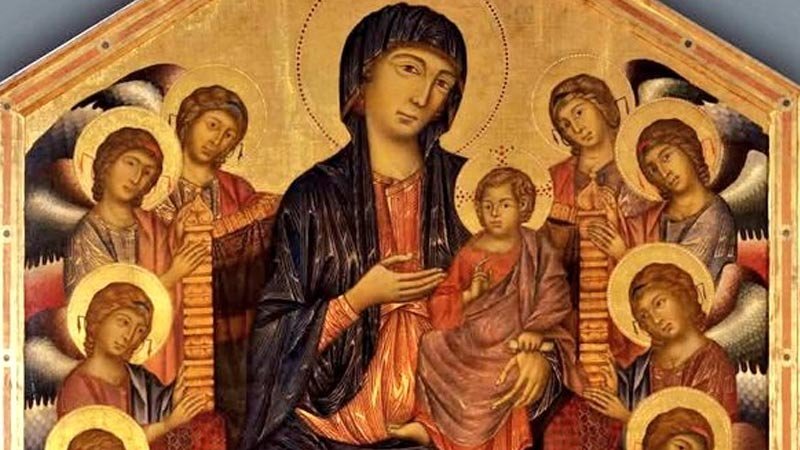
Cimabue, a pivotal figure in the transition from medieval to Renaissance art, has left an indelible mark on the history of painting.
His innovative approach broke away from the rigid, two-dimensional styles of Byzantine art, introducing a sense of naturalism that would shape the future of artistic expression.
With a keen eye for detail and emotional depth, Cimabue’s works invite viewers into a world where divine subjects resonate with human experience.
Among his most significant contributions are the stunning frescoes and altarpieces that showcase his mastery of light, color, and form.
The use of gilded tesserae and soft outlines creates a captivating interplay of light and shadow, enhancing the spiritual narrative of his compositions.
As art historians continue to explore Cimabue’s legacy, it becomes increasingly clear that his genius not only influenced contemporaries like Giotto but also paved the way for the artistic innovations of the Renaissance.
1. The Crucifixion
Source: standrewschurchsupply.com
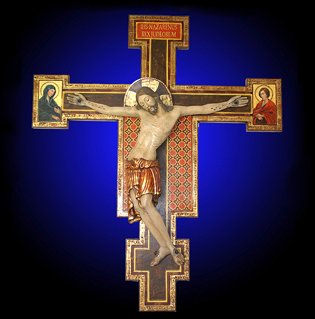
Cimabue’s Crucifixion exemplifies his innovative approach to depicting Christ’s suffering. The artwork showcases a large wooden crucifix commissioned by the Dominican order for the Basilica of San Domenico in Arezzo.
Artistic choices, like Christ’s contorted body and nearly closed eyes, powerfully convey the anguish of crucifixion while straying from previous Byzantine styles.
Attention to detail is evident in the red loincloth and the gilding that adorns the piece. The two mourning figures, the Virgin Mary and St. John the Evangelist are positioned as half-figures on the cross’s horizontal axis, enhancing the emotional impact.
Also, a small panel at the top features a blessing Christ, following traditional Byzantine conventions. Such elements demonstrate Cimabue’s ability to balance innovation with respect for past artistic traditions.
2. The Crucifixion
Source: en.wikipedia.org
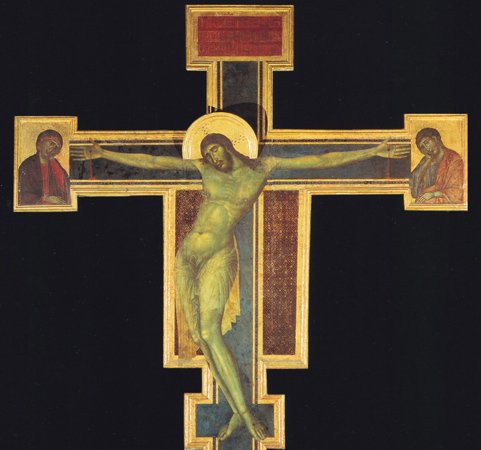
Cimabue’s Crucifixion, a monumental wooden piece, was commissioned for the Basilica of San Domenico in Arezzo.
This artwork captures Christ in profound agony, with a contorted body and nearly closed eyes that reflect his suffering.
The details, such as Christ’s red loincloth adorned with gold highlights, enhance the realism. Two mourning figures, the Virgin Mary and St. John the Evangelist, are depicted as half-figures on the cross’s horizontal axis, adding emotional depth.
Also, a small panel of the Blessing Christ aligns with Byzantine traditions, showcasing Cimabue’s skill in fusing innovation with established artistic conventions.
3. The Flagellation of Christ
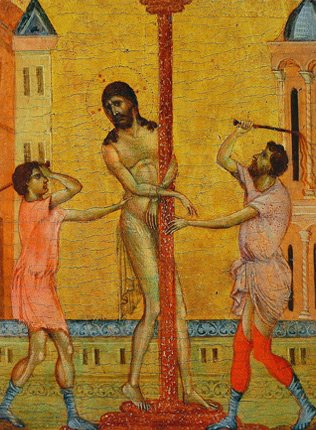
Cimabue’s The Flagellation of Christ stands as a pivotal work, illustrating his mastery in conveying human emotion.
This piece captures the intense moment of Christ’s suffering, showcasing the dramatic tension of the scene. He depicts Christ bound and vulnerable, surrounded by figures expressing a range of emotions from cruelty to sadness.
Notably, the composition uses light and shadow effectively, drawing the viewer’s eye toward the central figure of Christ.
The figures around him reveal distinct expressions, enhancing the narrative’s emotional complexity.
Also, the intricate details in the clothing of the attackers and the restrained posture of Christ highlight Cimabue’s skill in naturalism.
Cimabue’s choice of colors contributes to the overall impact, with blues and reds symbolizing both pain and divinity.
This artwork not only reflects the artist’s innovative approach but also serves as a critical bridge from the Byzantine style to the burgeoning Renaissance ideals.
4. The Virgin and Child with Two Angels
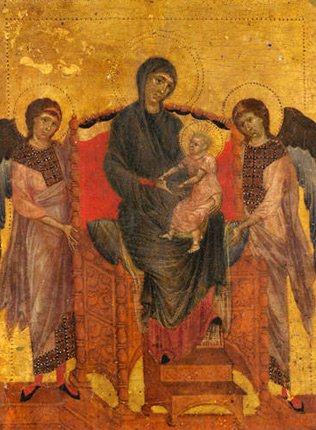
Cimabue’s The Virgin and Child with Two Angels showcases his evolving style during the late 13th century. This work, characterized by its rich color palette and intricate details, highlights the figures of the Virgin Mary and the Christ Child at the center.
Viewers notice the two angels flanking them, each adding to the serene yet divine atmosphere of the piece.
Light plays a crucial role in this artwork, drawing attention to the sacred figures. The delicate brushwork and gold accents enhance their presence, creating a sense of ethereal beauty.
Completed around 1280 to 1285, this piece reflects the artist’s departure from Byzantine rigidity, embracing a more naturalistic approach.
It’s a pivotal moment in art history, showcasing the blend of emotion and spirituality that marks Cimabue’s contribution to the Renaissance.
5. Christ Mocked
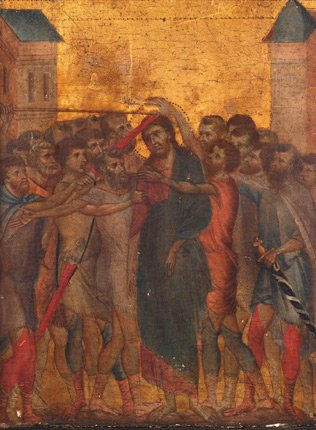
Cimabue’s Christ Mocked stands as an exemplary representation of his innovative style. This tempera painting, completed around 1280, captures the moment before Christ’s crucifixion, illustrating the mockery he faced.
He depicts Christ with a crown of thorns, surrounded by sneering figures, which evokes an emotional response from viewers.
Notably, the contrast between Christ’s serene expression and the aggressive demeanor of the onlookers highlights the depth of suffering and betrayal.
The use of vibrant colors enhances the dramatic tension in the scene. Cimabue’s meticulous attention to detail transforms this artwork into a pivotal example of early Renaissance naturalism, marking a significant departure from traditional Byzantine styles.
This piece profoundly impacts the evolution of emotional narrative in art.
6. Virgin and Child Enthroned, and Prophets (Santa Trinita Maestà)
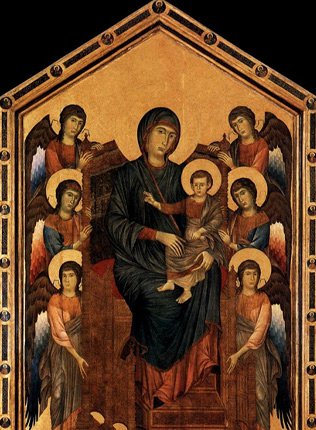
Cimabue’s Virgin and Child Enthroned is an iconic work created around 1280 for the church of Santa Trinita in Florence.
This monumental painting measures an impressive 12 feet tall and 7 feet wide, showcasing the Virgin Mary seated on a majestic throne.
The Christ Child is positioned on Mary’s lap, depicted in a moment of blessing with a priestly gesture.
Artfully, Cimabue’s arrangement of the angels around the throne diverges from traditional representations.
Six angels engage the viewer, with two gazing directly at Christ, creating a connection between the holy figures and the audience. The composition invites viewers to imitate the pious focus modeled by the angels.
Significantly, the figures at the base of Mary’s throne include important prophets and heroes like Jeremiah, Abraham, David, and Isaiah.
Each of these figures holds scrolls inscribed with biblical texts that foreshadow Christ’s arrival. This innovative technique not only enhances the narrative but also underscores the theological significance of these Old Testament figures in Christian belief.
Cimabue’s Santa Trinita Maestà thus serves as a powerful testament to his unique approach, blending traditional iconography with emotional depth.
7. Saint John the Evangelist (detail)
Source:commons.wikimedia.org
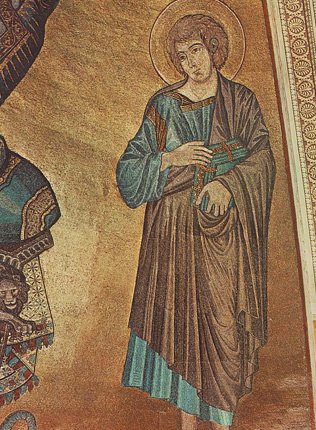
Cimabue’s portrayal of Saint John the Evangelist in the Crucifixion detail powerfully captures the emotional weight of the moment.
Depicted as a half-figure, St. John expresses profound sorrow, embodying the agony of Christ’s suffering alongside the Virgin Mary. His facial features reflect grief and compassion, further enhancing the artwork’s emotional intensity.
In this work, the positioning of St. John emphasizes his connection to the narrative, drawing viewers into the scene.
The detailed brushwork in the fabric of his garment showcases Cimabue’s skill, with rich colors that add depth and texture.
This attention to detail serves to humanize the figure, allowing the audience to connect on a personal level.
Cimabue’s innovative use of light highlights the figure of St. John, reinforcing his importance within the composition.
This strategic lighting not only directs focus but also amplifies the spiritual atmosphere of the piece.
By blending realism with a deep emotional resonance, Cimabue ensures that St. John’s presence is not merely decorative but essential to the storytelling.


