

Auguste Rodin, often celebrated as the father of modern sculpture, transformed the art world with his groundbreaking techniques and emotional depth.
Born in 1840, he created iconic pieces that continue to resonate today, such as The Thinker and The Kiss.
These masterpieces not only showcase his mastery of human anatomy but also his ability to capture the complexities of the human experience.
Rodin’s innovative approach set him apart from his contemporaries, allowing him to express raw emotion and inner turmoil through stone and bronze.
His sculptures tell stories that transcend time, inviting viewers to explore the profound themes of love, suffering, and existential contemplation.
1. The Thinker
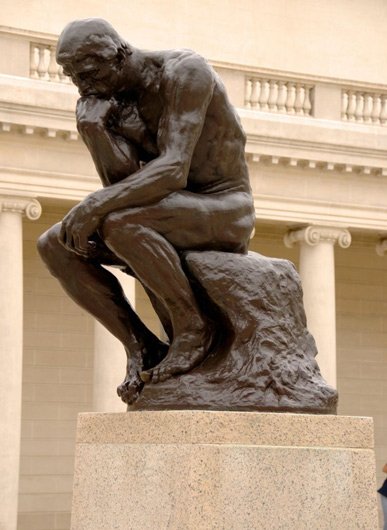
The Thinker, created by Auguste Rodin in 1880, captures a nude male figure deeply engrossed in thought. Originally part of the monumental Gates of Hell, it embodies philosophical introspection.
With its strong musculature, the sculpture reflects influences from Michelangelo and depicts human emotion profoundly.
Cast in bronze in 1904, The Thinker symbolizes creativity and contemplation, making it one of the most recognizable sculptures worldwide. Variants of this work can also be found in various museums, emphasizing its global significance.
2. Monument to Balzac
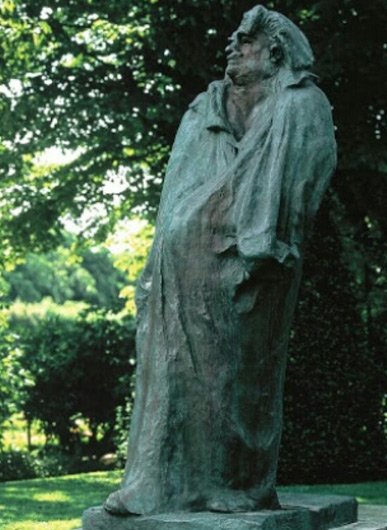
Rodin’s Monument to Balzac, commissioned in 1898, depicts the renowned French writer Honoré de Balzac. Rather than focusing on physical traits like glasses or books, Rodin aimed to capture Balzac’s essence.
The sculptor worked for seven years, resulting in a bold, dynamic form that challenged conventions.
Despite initial rejection by the Société des Gens de Lettres, the piece became iconic, celebrated for its emotional depth and innovative portrayal of a literary figure. Cast in bronze decades later, it now stands near Boulevard du Montparnasse in Paris.
3. The Gates of Hell

The Gates of Hell, commissioned in 1880, stands as Rodin’s magnum opus. This monumental sculpture features over 200 figures, vividly depicting scenes from Dante Alighieri’s Inferno. Innovative forms emerge within tormented expressions, reflecting profound themes of love, suffering, and existential dread.
Rodin envisioned viewers interacting with the piece, contemplating their own experiences of hell. Notable figures from this work include The Thinker, symbolizing deep reflection, and The Kiss, showcasing passion and anguish.
Despite its incomplete status at Rodin’s death in 1917, the sculpture remains a cornerstone of modern art, housed at the Musée d’Orsay in Paris.
4. The Kiss
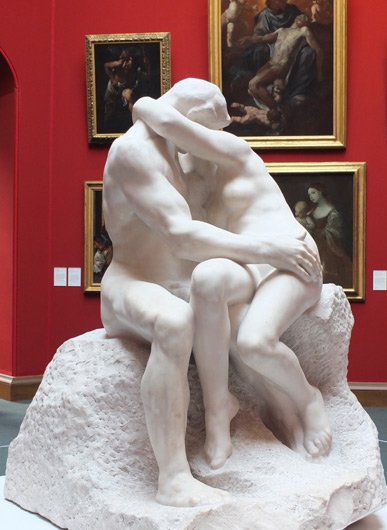
The Kiss, created in 1882, showcases an embracing couple in marble, capturing raw emotion and sensuality. Initially intended as part of The Gates of Hell, it represents the doomed lovers Paolo and Francesca from Dante’s Inferno.
Rodin’s attention to anatomical detail and fluid composition made this work universally beloved. Three larger-than-life versions were commissioned during his lifetime, with notable pieces displayed in the Rodin Museum in Paris and the Ny Carlsberg Glyptotek in Copenhagen.
The sculpture’s enchanting theme symbolizes eternal love, transcending time and art alike.
5. Burghers of Calais
The Burghers of Calais, completed by Rodin in 1889, depicts six citizens of Calais volunteering to sacrifice their lives during the Hundred Years War.
Each figure expresses unique emotions, from despair to resignation. Standing barefoot in sackcloth, they symbolize vulnerability while avoiding eye contact, highlighting their isolation.
Originally commissioned to honor Eustache de Saint Pierre, Rodin’s inclusion of all six figures challenges traditional heroic narratives.
The monument, initially placed on a pedestal, was later relocated to ground level to enhance its emotional impact.
6. The Age of Bronze

Rodin created The Age of Bronze in 1877, marking a breakthrough in his career. Initially titled The Conquered, this striking sculpture represents a young man in a moment of awakening.
Rodin’s use of a delicate contrapposto embodies naturalism, with most weight resting on one leg, inviting viewers to engage with the work.
Critics even accused him of casting directly from a live model, a controversy that enhanced his fame. This piece reflects Rodin’s innovative approach to capturing movement and life in sculpture.
7. Saint John the Baptist Preaching
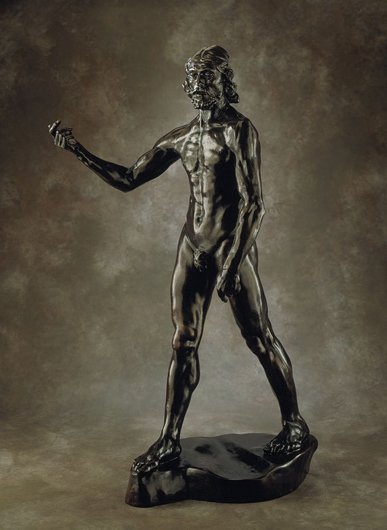
Saint John the Baptist Preaching, created between 1878 and 1880, highlights Rodin’s early artistic vision. He modeled this larger-than-life figure inspired by an Italian peasant, capturing raw emotion and a mystical connection to nature.
The sculpture stirred controversy at its 1880 Salon debut due to its bold, naked representation of a biblical figure.
Rodin’s innovative approach reflects his philosophy, intertwining historical and religious narratives, which would become key elements in his later works.
8. The Walking Man
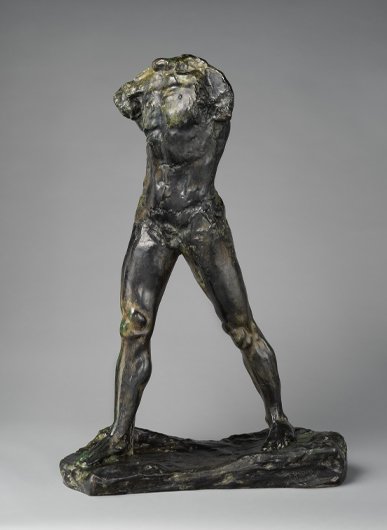
The Walking Man, created between 1905 and 1907, showcases Rodin’s exploration of movement and form.
He left the sculpture headless and armless, emphasizing the dynamic nature of the body’s strong legs and arched torso.
This innovative approach diverged from typical 19th-century sculptures, highlighting energy and motion. Initially met with mixed reviews, the piece became a revolutionary example of modern sculpture, illustrating Rodin’s mastery in capturing the human experience.
9. The Shade

Source: mutualart.com
The Shade is a striking representation of Rodin’s mastery in capturing the human form. Created as part of The Gates of Hell, it features a solitary figure shrouded in shadow, symbolizing the timeless struggle between light and darkness.
This modern interpretation showcases a rich chocolate brown hue, indicating a more recent casting process.
Measuring about 6 feet in height, The Shade embodies complex emotional themes, enriching Rodin’s legacy in the realm of contemporary sculpture.
10. Eternal Springtime
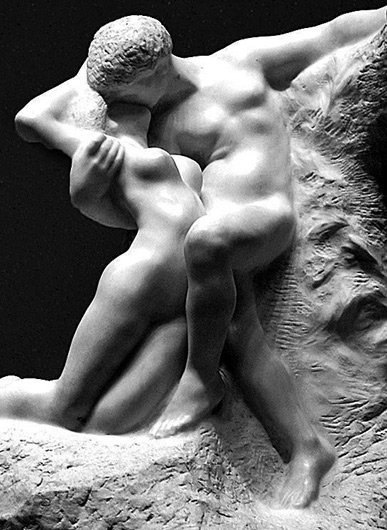
Eternal Springtime, created in 1884, embodies the passionate embrace of romantic love. Rodin captures the moment as a couple entwines, showcasing emotional vulnerability and tenderness. The female figure arches her torso, accepting the kiss with grace.
This sculpture draws inspiration from the mythological story of Cupid and Psyche, celebrating the timeless connection between lovers.
Its dynamic composition and expressive forms reflect Rodin’s genius in portraying raw human sensuality, making this work a lasting homage to love’s beauty.


