
Rome, a city steeped in history, boasts an incredible array of statues and sculptures that tell stories of its glorious past.
From the majestic emperors to the divine gods, these works of art serve as a testament to the Roman Empire’s cultural and artistic achievements.
With thousands of statues lining its streets and filling its museums, Rome offers an unparalleled glimpse into the lives and legends that shaped the ancient world.
This article explores the ten most famous Roman statues and sculptures, highlighting their significance and the fascinating tales behind them.
Each piece not only showcases the artistic mastery of its time but also reflects the political and social dynamics of ancient Rome.
As readers delve into this journey through time, they’ll discover the enduring legacy of these iconic figures that continue to inspire awe and admiration today.
1. Augustus of Prima Porta
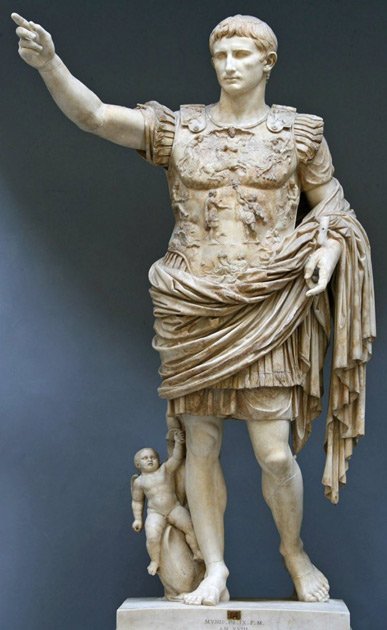
Augustus of Prima Porta is a renowned marble statue depicting Augustus Caesar, the first Roman emperor.
Found in 1863 at the Villa of Livia, this 2.03-meter tall sculpture showcases Augustus as a commander-in-chief, complete with ornate armor symbolizing his military victories.
Originally crafted by Greek artisans, it’s believed to replicate a lost bronze original. The statue celebrates Augustus’ divine representation and his diplomatic success in reclaiming Roman standards, embodying the blend of artistry and propaganda in ancient Rome.
2. Farnese Hercules
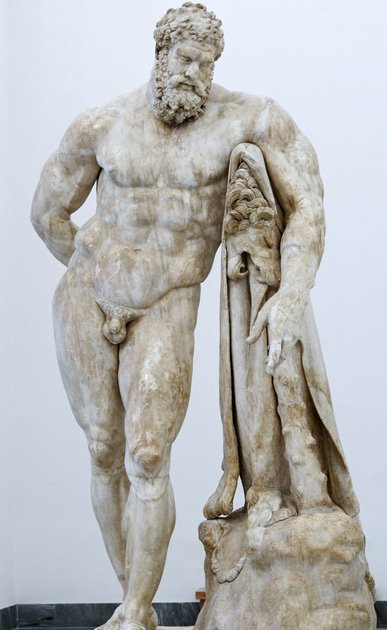
Farnese Hercules stands as a monumental representation of the legendary hero from Greek mythology. Crafted in the early 3rd century CE, this impressive marble statue is attributed to the unknown Greek artist Glykon.
The sculpture depicts a weary Hercules resting on his club, signifying his triumphs after completing one of his legendary Twelve Labors.
Originally a bronze piece by Lysippos from the 4th century BCE, the Farnese Hercules became a symbol of strength and endurance.
Currently housed in the Museo Archeologico Nazionale in Naples, it continues to captivate visitors with its intricate details and commanding presence.
3. The Orator

The Orator, also known as L’Arringatore, is a lifesize bronze statue dating back to the early 1st century BCE.
This captivating figure depicts Aule Metele, an Etruscan senator, gesturing with his right arm, engaging a crowd. Dressed in a toga exigua, he represents the merging of Etruscan culture within Roman society.
Standing at 179 cm tall, the statue showcases Rome’s mastery in portraiture and verism, highlighting the sociopolitical climate of the time as Romans absorbed other cultures.
4. Equestrian Statue of Marcus Aurelius
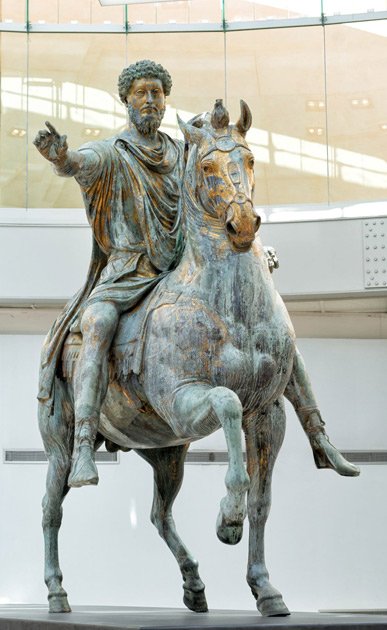
The Equestrian Statue of Marcus Aurelius, crafted in the 2nd century CE, showcases the emperor in a commanding pose atop a horse.
Standing over 4 meters tall, the statue symbolizes power and victory, reflecting Marcus Aurelius’ triumph over the Sarmatians.
Unlike many bronze sculptures from antiquity, this statue survived due to a misattribution as a representation of Emperor Constantine.
Its intricate details and historical significance make it a lasting symbol of imperial authority and philosophical leadership in Roman art.
5. Colossus of Constantine
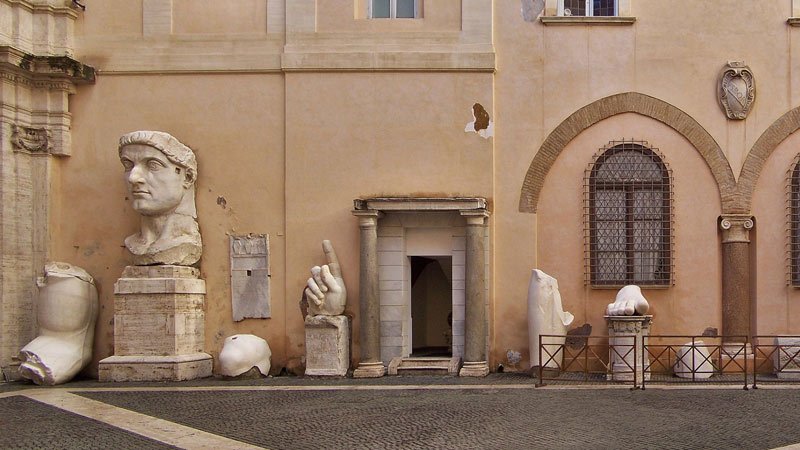
The Colossus of Constantine is a monumental acrolithic statue that celebrated Emperor Constantine the Great. Originally towering at about 12 meters (40 feet) tall, it graced the Basilica of Maxentius in Rome.
The statue’s head, arms, and legs, crafted from white marble, exemplified Roman artistry, while the core consisted of brick and timber, possibly gilded in bronze.
Surviving sections can be seen at the Palazzo dei Conservatori, showcasing its grandeur and significance in Roman history.
The massive head alone reaches over 2.12 meters, emphasizing its impressive scale and impacting ancient Roman culture.
6. Statue of Antinous (Delphi)
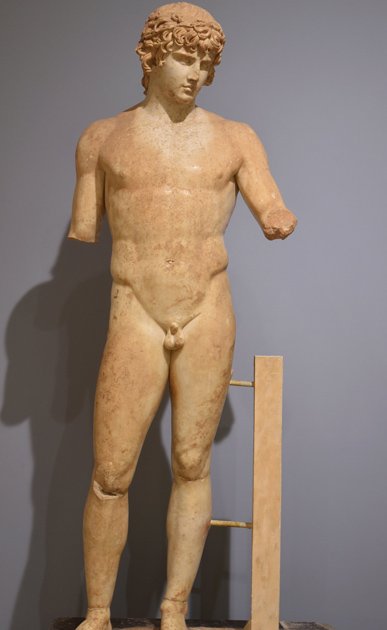
The Statue of Antinous at Delphi symbolizes the deep affection Emperor Hadrian held for his beloved companion.
This antique statue represents Antinous, a beautiful young Greek from Bithynia, who died under mysterious circumstances in the Nile.
Hadrian commissioned this statue in AD 130 as a tribute, showcasing Antinous in a larger-than-life depiction.
Crafted with exquisite attention to detail, the statue blends abstract elements with realistic features, reflecting Hadrian’s divine reverence for Antinous and emphasizing his transcendent nature.
7. Togatus Barberini
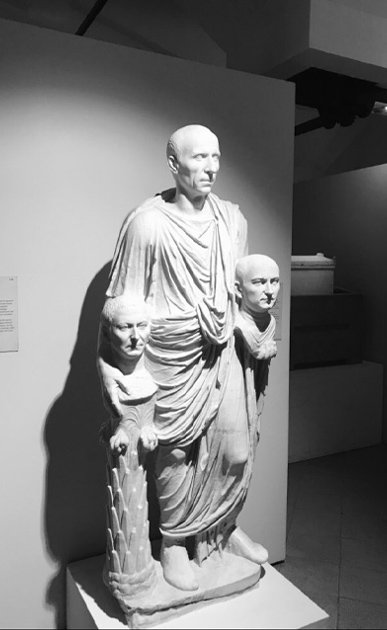
Togatus Barberini represents a significant example of Roman portraiture, showcasing a man wearing the traditional toga.
Dating back to the 1st century BCE, this marble statue stands out for its intricate detailing and realistic depiction of features.
It captures the essence of Roman societal roles and familial ties, reflecting the gravitas expected of a Roman citizen.
The statue is believed to be a tribute to the Barberini family, emphasizing the importance of ancestry and status in ancient Rome’s political landscape.
Now housed in the Palazzo Barberini, it continues to impress viewers with its lifelike expression and artistry.
8. Bust of Emperor Lucius Verus

The Bust of Emperor Lucius Verus, created in the 2nd century CE, exemplifies Roman portraiture’s focus on realism and detail.
This marble bust portrays Lucius Verus with soft features and intricate textures that reflect his gentle demeanor.
Standing as a testament to his reign alongside Marcus Aurelius, the bust captures the elegance of Roman emperors while showcasing the artistic mastery of the period.
Currently housed in the Museo Nazionale Romano, it offers insight into not just imperial representation but also the broader cultural values of the Roman Empire.
9. Bronze of Trebonianus Gallus
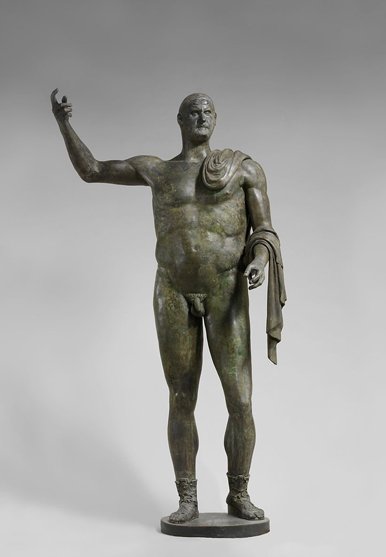
The Bronze of Trebonianus Gallus is an exceptional statue that captures the essence of Roman imperial authority.
Standing approximately 1.8 meters tall, this bronze statue was dedicated to the emperor Trebonianus Gallus, who ruled from 251 to 253 CE.
Known for its detailed inscriptions, it showcases the emperor’s military achievements and divine associations.
Crafted during a turbulent period, the statue reflects the socio-political complexities of its time, emphasizing Gallus’s role in maintaining stability in the empire amidst challenges.
Today, it serves as a testament to Roman craftsmanship and the significance of representation in ancient art.


