
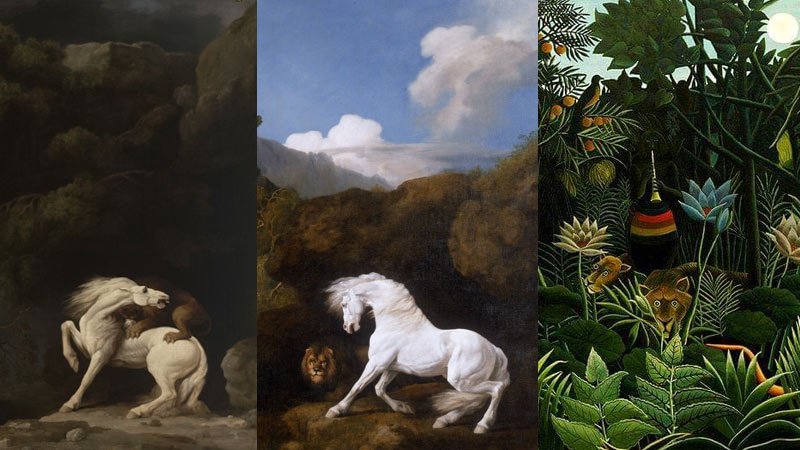
Lions have long captivated the human imagination, symbolizing strength, power, and courage across various cultures.
Their majestic presence has inspired countless artists throughout history, leading to the creation of iconic paintings that celebrate their beauty and ferocity.
From ancient depictions to modern interpretations, these artworks offer a glimpse into the artistic vision and techniques of their creators.
In this exploration of ten famous lion paintings, viewers will encounter a range of styles and periods, showcasing how artists have portrayed this magnificent creature.
Each piece tells a unique story, reflecting not only the lion’s regal nature but also the cultural significance it holds.
Join in as we journey through the world of art, highlighting these stunning representations of one of nature’s most revered animals.
1. Daniel in the Lions’ Den – Peter Paul Rubens
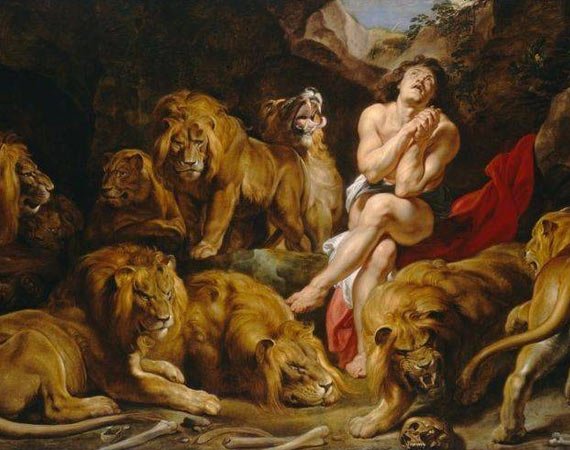
“Daniel in the Lions’ Den,” painted by Peter Paul Rubens in 1615, depicts the biblical tale of Daniel, who faced lions for his unwavering faith.
The composition captivates with lions arranged menacingly around Daniel, enhancing the scene’s tension. Rubens employed colors and intricate textures to portray both danger and serenity.
This masterpiece, showcasing Rubens’ Baroque creativity, is housed in the National Gallery of Art in Washington, D.C., and remains a significant highlight in the history of lion paintings.
2. The Sleeping Gypsy – Henri Rousseau
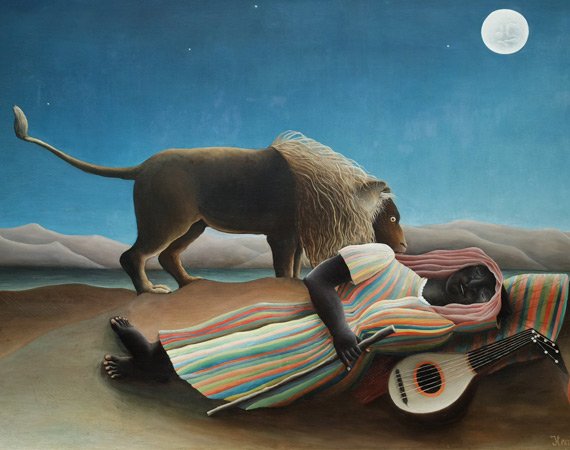
The Sleeping Gypsy, completed in 1897, features a serene scene where a woman sleeps in a desert, watched over by a lion.
Henri Rousseau’s dreamlike composition creates a sense of mystery, inviting viewers to ponder the story behind the image. The woman, dressed in attire with a mandolin nearby, suggests a narrative of travel and artistry.
The lion embodies both menace and protection, enhancing the painting’s tension and allure. This artwork stands as a prime example of Rousseau’s unique, imaginative style.
3. A Lion Attacking a Horse – George Stubbs
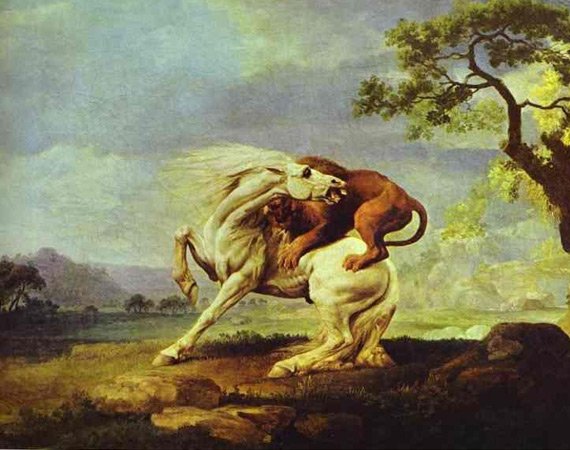
George Stubbs’ painting “A Lion Attacking a Horse,” completed in 1765, depicts a fierce confrontation between a lion and a horse.
The artwork showcases Stubbs’ mastery of anatomical accuracy and dynamic movement, vividly capturing the moment of chaos.
The lion’s bared claws and teeth emphasize the urgency of the scene, while the horse’s panic reflects vulnerability.
Celebrated for its technical skill, this painting remains a poignant interpretation of the wild’s brutal beauty, earning its place as a beloved masterpiece in the Museum of Modern Art, New York City.
4. The Dream – Henri Rousseau
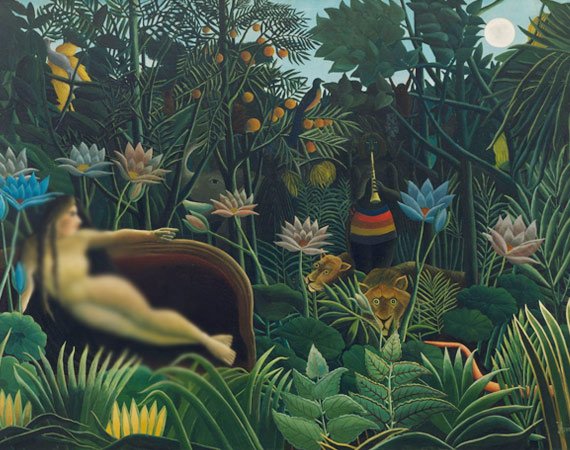
“The Dream,” completed in 1910 by Henri Rousseau, captures a tranquil yet enchanting scene. It features a naked woman reclining on a couch amidst a jungle, with a lion curiously gazing at her.
Rousseau’s signature dreamlike style infuses the composition with mystery and allure. The woman’s closed eyes convey a deep sense of introspection, while the lion’s calm presence suggests protection, creating a fascinating contrast between the exotic setting and the surreal atmosphere.
This painting exemplifies Rousseau’s imaginative vision and remains a celebrated artwork in the realm of lion paintings.
5. La Chasse aux lions – Eugène Delacroix
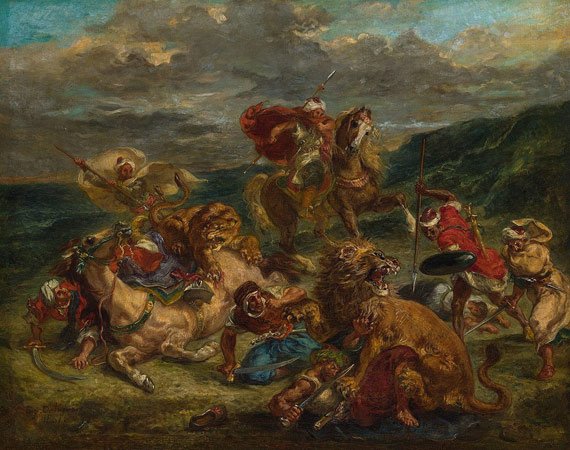
La Chasse aux lions, completed in 1855, showcases Eugène Delacroix’s mastery of Romanticism through a gripping hunting scene in North Africa.
This vivid painting captures a chaotic fray as horsemen and dogs pursue a group of lions, reflecting the raw power and beauty of nature.
Delacroix’s bold brushstrokes and dynamic composition evoke excitement and danger, making this work a standout example of artistic expression. Today, it resides in the Musée d’Orsay, celebrated for its ability to inspire awe in viewers.
6. A Horse Frightened by a Lion – George Stubbs
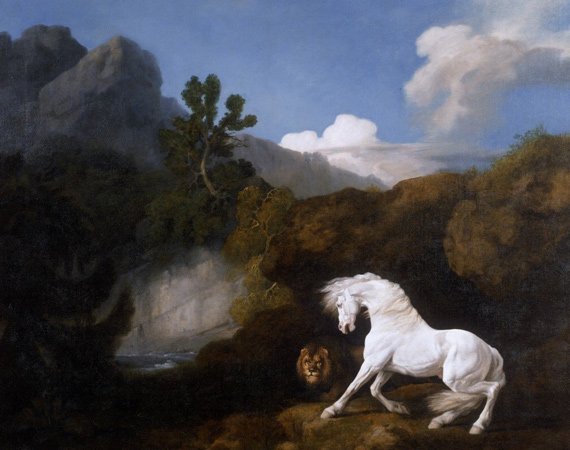
George Stubbs’ “A Horse Frightened by a Lion,” created in the 1760s, vividly captures the moment of terror experienced by its equine subject.
The painting portrays a horse frozen in fear, its eyes wide and muscles tense as it confronts a menacing lion. Stubbs’ masterful anatomical accuracy and emotional intensity bring this dramatic encounter to life.
As part of his famous Lion and Horse cycle, it showcases Stubbs’ ability to convey both the beauty and chaos of the animal kingdom, solidifying his legacy in animal art.
7. Allegory of Prudence – Titian
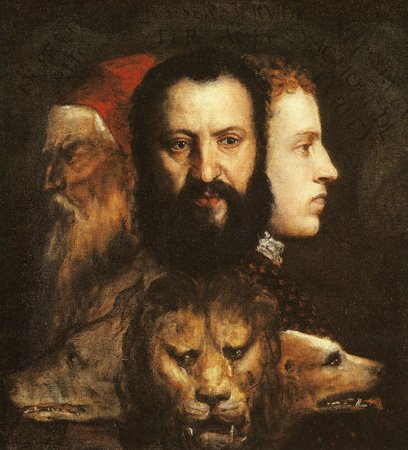
“Allegory of Prudence,” created by Titian between 1550 and 1565, features three human heads and three animals, including a lion, symbolizing different forms of wisdom.
The lion, positioned centrally, represents courage and strength in achieving prudence. This intricate oil-on-canvas painting encourages viewers to reflect on the qualities needed for wise decision-making.
Housed in London’s National Gallery, this artwork exemplifies Titian’s masterful use of color and composition, solidifying his place as a key figure in Renaissance art.
8. Resting Lion – Leroy Neiman
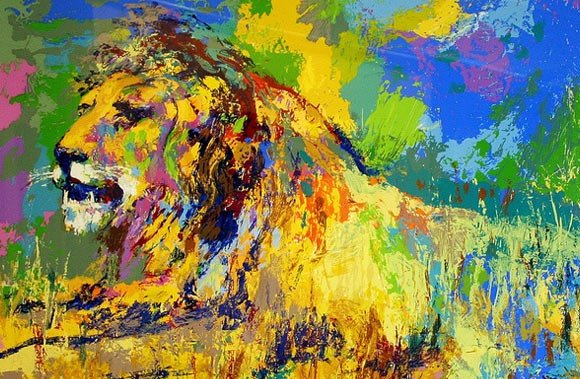
Resting Lion, painted by Leroy Neiman, showcases a striking portrayal of a lion exuding majesty and tranquility. Neiman’s use of bold colors and loose brushstrokes brings the creature to life, merging regality with vulnerability.
The composition captures a serene moment, emphasizing the lion’s powerful presence. Housed in the LeRoy Neiman Foundation collection, this artwork exemplifies Neiman’s talent for infusing energy and expression into his subjects, reinforcing the lion’s captivating nature in the animal kingdom.
9. The Lion of St Mark 1516 – Vittore Carpaccio
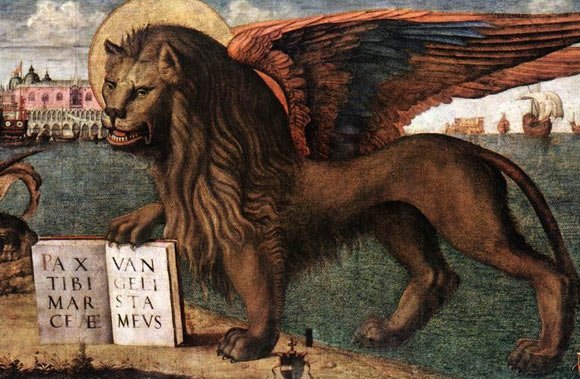
Carpaccio’s “The Lion of St Mark” stands as a defining piece of Venetian art. It portrays the winged lion, emblematic of Venice and its patron saint, St Mark.
The lion perches on a book, its paw resting on open pages, symbolizing wisdom and justice. The colors and intricate details of Venice’s skyline, including St Mark’s Basilica and Campanile, showcase Carpaccio’s skill.
Completed in 1516, this work reflects both the grandeur of the city and the artist’s mastery of historical themes.
10. Lion (The Look Out) – Rosa Bonheur
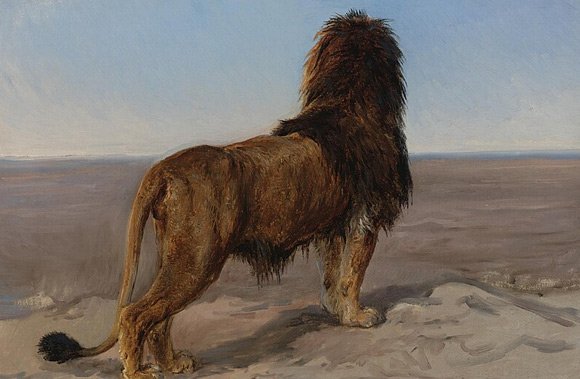
Rosa Bonheur’s “Lion (The Look Out)” completed in 1888, showcases a male lion standing vigilant, embodying strength and dignity.
This painting impresses with its remarkable realism, displaying the lion’s anatomical precision and lifelike fur. Bonheur, celebrated for her animal portraits, captures the essence of the lion’s majesty, enhancing its regal presence.
Today, this masterpiece stands as a testament to Bonheur’s exceptional talent and love for wildlife, resonating deeply with viewers who admire her artistic vision.


