
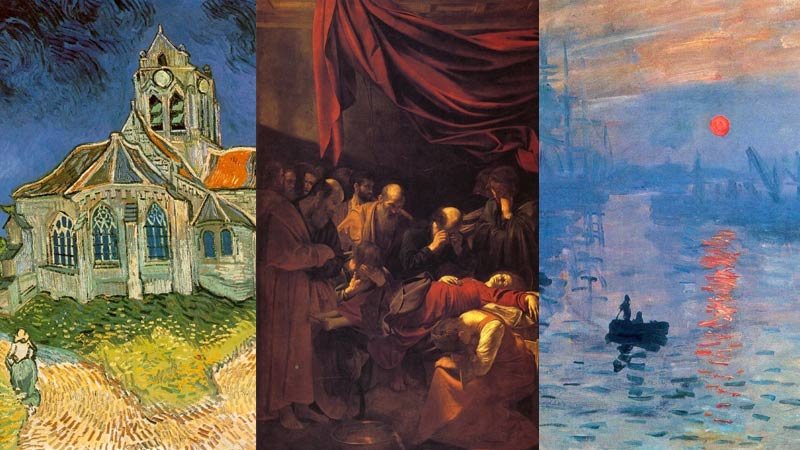
Paris, the City of Lights, is a treasure trove of artistic masterpieces that beckon art lovers from around the globe.
With its rich history and culture, the city boasts some of the world’s most renowned museums and galleries, including the iconic Louvre and the Musée d’Orsay.
While the Mona Lisa often steals the spotlight, countless other breathtaking works deserve equal attention.
Exploring Paris is like stepping into a living canvas, where each neighborhood reveals a story told through brushstrokes.
From the romantic allure of Impressionism to the bold statements of modern art, the city’s diverse collections offer a glimpse into the evolution of artistic expression.
This article highlights ten must-see paintings that capture the essence of Parisian artistry, ensuring that every visit is a journey through time and creativity.
1. Mona Lisa – Leonardo da Vinci
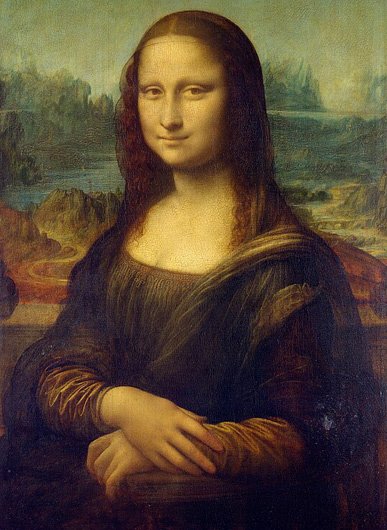
Leonardo da Vinci’s Mona Lisa (c. 1503-1506) is arguably the most famous painting in the world. Measuring 77 cm by 53 cm, this masterpiece is celebrated for its captivating expression and detailed sfumato technique.
Housed in the Louvre, it attracts nearly 30,000 visitors daily, drawn by the allure of her enigmatic smile. This iconic artwork represents the pinnacle of Renaissance art and continues to inspire intrigue and admiration.
2. Liberty Leading the People – Eugène Delacroix

Liberty Leading the People (1830) serves as a powerful symbol of revolution. Delacroix portrays a bare-chested woman, embodying Liberty, leading diverse Parisians over barricades.
She waves the French tricolor flag, representing freedom and equality. This dramatic scene, set against Notre-Dame Cathedral, commemorates the July Revolution that toppled King Charles X.
The painting’s colors and emotive composition have made it a lasting icon in French art and culture.
3. The Coronation of Napoleon – Jacques-Louis David
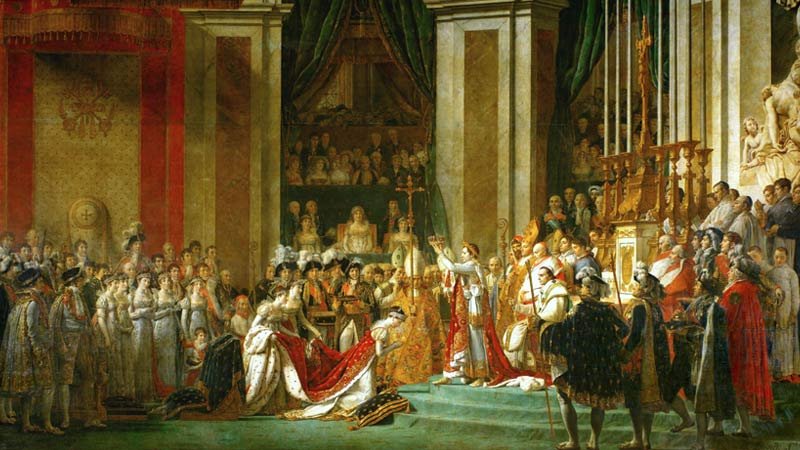
Jacques-Louis David’s The Coronation of Napoleon (1805-1807) captures the moment when Napoléon crowned himself Emperor.
This colossal painting, measuring 62 by 979 cm, showcases the grandeur of the ceremony at Notre-Dame Cathedral.
David emphasizes the intricate details of the figures and lavish costumes, creating a vivid historical record.
It’s a striking example of Neoclassical art, serving both as a celebration of Napoléon’s authority and a significant political statement in French history.
4. The Raft of Medusa – Théodore Géricault

The Raft of Medusa, painted by Théodore Géricault between 1818 and 1819, captures the harrowing aftermath of the 1816 wreck of the French frigate Méduse.
Géricault’s meticulous preparation involved interviewing survivors, constructing a scale model of the raft, and studying corpses.
This masterpiece, displayed in the Louvre, portrays themes of despair and hope with striking realism, leaving a lasting impact on the Romantic movement and influencing future artists.
5. Impression, Sunrise – Claude Monet
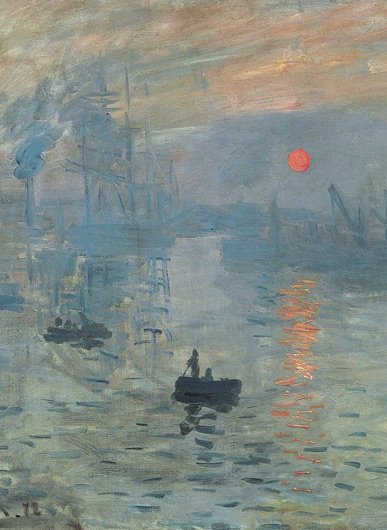
Monet’s Impression, Sunrise (1872) is a groundbreaking painting that brought forth the Impressionist movement.
This stunning artwork depicts the port of Le Havre, Monet’s hometown, illuminated by a fleeting red sunrise. Its animated brushstrokes marked a departure from traditional painting styles, allowing colors to take center stage.
Unveiled in 1874, this masterwork remains a testament to Monet’s innovative spirit and artistic revolution in capturing light and atmosphere.
6. Le Déjeuner sur l’herbe – Édouard Manet
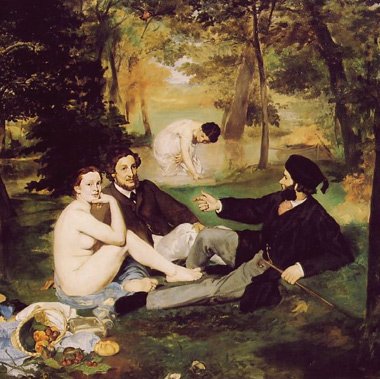
Manet’s Le Déjeuner sur l’herbe (1863) stirred significant controversy upon its debut at the Salon des Refusés. It features two elegantly dressed men sitting next to a nude woman, challenging contemporary norms.
The painting borrows from classic works yet introduces a modern twist, evoking questions about morality and societal values.
This bold composition marked Manet’s pivotal role in the transition from Realism to Impressionism, solidifying his status as a revolutionary in the art world.
7. Olympia – Édouard Manet
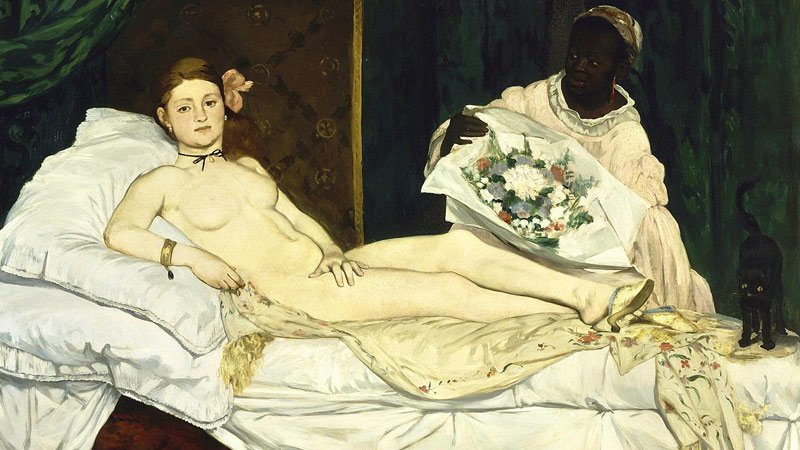
Édouard Manet’s Olympia (1865) caused a scandal when first exhibited at the Salon. It features a reclining nude woman, directly gazing at the viewer, challenging 19th-century norms around female representation.
This provocative piece draws inspiration from Titian’s Venus of Urbino while adding a contemporary twist.
The bold brush strokes and stark contrasts highlight Manet’s departure from traditional art, solidifying his influence in the transition to modernism.
8. Bal du moulin de la Galette – Pierre-Auguste Renoir

Renoir’s Bal du moulin de la Galette (1876) depicts a lively afternoon dance at the Moulin de la Galette in Montmartre.
He captures the energetic atmosphere with colors and dynamic brushstrokes. The painting showcases Parisian social life, filled with elegantly dressed figures enjoying music and refreshments.
This iconic piece epitomizes Impressionism, drawing viewers into a sunlit scene that celebrates joy and community. Today, it resides in the Musée d’Orsay, where it continues to enchant art lovers.
9. Death of the Virgin – Caravaggio
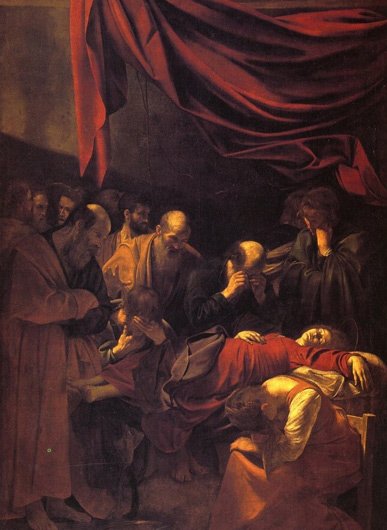
Caravaggio’s Death of the Virgin (1606) profoundly depicts the moment of Mary’s passing. This emotionally charged painting showcases the artist’s hallmark chiaroscuro technique, highlighting the tender grief surrounding the Virgin’s lifeless body.
Displayed at the Louvre, it illustrates raw human emotion through muted colors and dramatic contrasts, emphasizing the sanctity of the scene while offering a strikingly human portrayal of Mary, dressed in deep red, evoking empathy in viewers.
10. The Church at Auvers – Vincent van Gogh
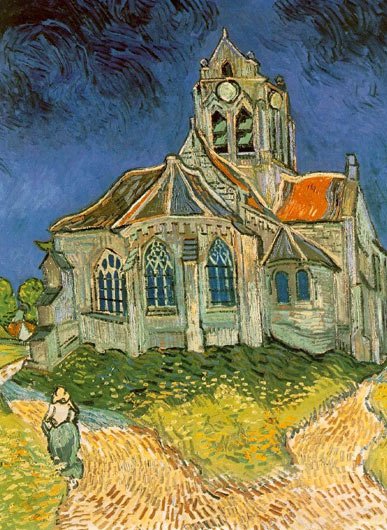
Vincent van Gogh painted The Church at Auvers in 1890, capturing the early Gothic architecture of the church in Auvers-sur-Oise.
Van Gogh’s use of colors and dynamic brushstrokes brings the scene to life, making the stone structure appear almost animated.
This masterpiece exemplifies his Impressionist style and his emotional connection to the landscape, showcasing a striking contrast between the church’s somber tones and the lively environment surrounding it.


