In the heart of Florence, the Uffizi Gallery stands as a testament to the brilliance of Renaissance art.
With a collection that spans from the 13th to the 17th century, it showcases masterpieces from renowned artists, making it a must-visit for art lovers and history enthusiasts alike.
Visitors are greeted by an array of iconic works that reflect the evolution of artistic expression across centuries.
Among its treasures, the Uffizi houses celebrated pieces like Botticelli’s “Birth of Venus” and da Vinci’s “Annunciation.” Each painting tells a unique story, capturing the essence of its time and the genius of its creator.
As one of the world’s most important museums, the Uffizi Gallery invites exploration and admiration for the artistry that has shaped cultural history.
1. The Birth of Venus – Sandro Botticelli

The Birth of Venus, painted between 1482 and 1485, stands as a pinnacle of 15th-century Italian art. It features Venus emerging from the sea on a shell, her beauty symbolizing love and life.
The depiction, rich in allegorical references, captures the essence of humanistic culture. Commissioned by the Medici family, this iconic work is a tribute to their appreciation for ancient beauty reimagined in the Renaissance.
2. Primavera – Sandro Botticelli

Primavera, painted between 1477 and 1482, stands out as one of Sandro Botticelli’s masterpieces. This work celebrates spring and features several mythological figures, including Venus, Mercury, and the Three Graces.
With a palette and rich symbolism, Primavera embodies the harmony between nature and human values.
Commissioned by Lorenzo di Pierfrancesco de Medici, this iconic artwork currently hangs in the Uffizi Gallery, captivating viewers with its elegance and intricate details.
3. Medusa – Caravaggio
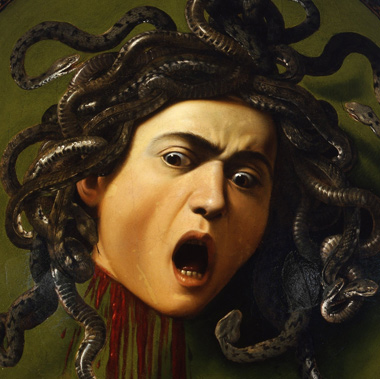
Caravaggio painted “Medusa” between 1597 and 1598, showcasing his mastery in dramatic realism. The artwork depicts Medusa’s severed head with a lifelike expression of terror, capturing her imminent fate.
Housed in the Uffizi Gallery, this painting was commissioned by Cardinal Francesco Maria del Monte as a gift for the Grand Duke of Tuscany.
It’s notable for its intricate details and striking use of light, embodying Caravaggio’s innovative style that profoundly influenced Baroque art.
4. Annunciation – Andrea del Verrocchio and Leonardo da Vinci
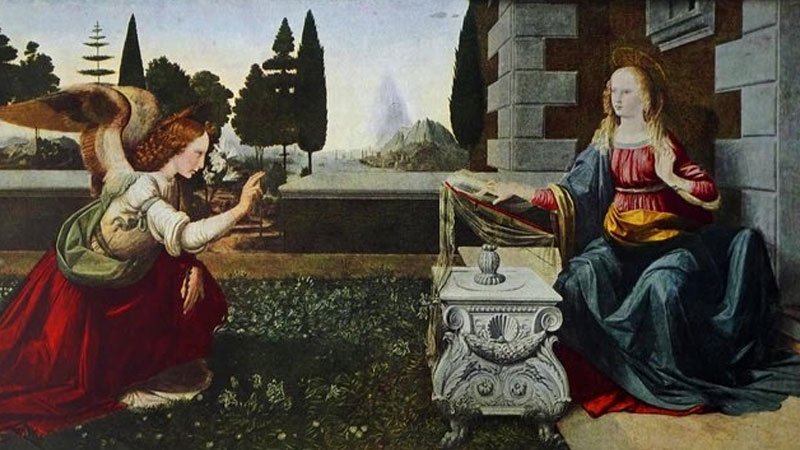
Leonardo da Vinci painted “Annunciation” between 1472 and 1475 under the guidance of his master Andrea del Verrocchio.
This masterpiece portrays the moment the Archangel Gabriel announces to the Virgin Mary that she will bear the Son of God.
The outdoor setting represents a notable departure from traditional representations. The vibrancy of the figures and the detailed drapery showcase Leonardo’s early mastery, highlighting his innovative approach to perspective and realism in Renaissance art.
5. Doni Tondo – Michelangelo
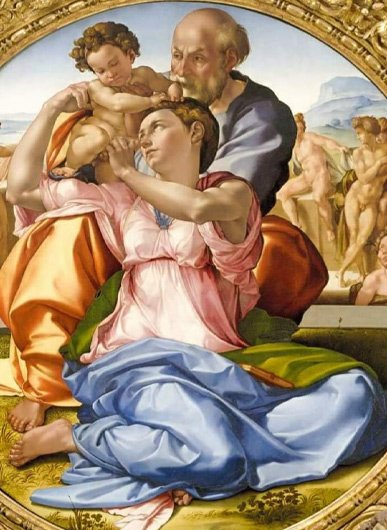
Michelangelo’s Doni Tondo, painted around 1506, is a tempera masterpiece showcasing the Holy Family. This round painting, commissioned by Agnolo Doni, features dramatic poses colors that define the Mannerist movement.
The composition includes Mary, Joseph, and the Child, infused with lifelike expressions. Viewers can admire the original frame carved to Michelangelo’s design, enhancing the painting’s grandeur in Hall 35 of the Uffizi Gallery. It remains a pivotal work reflecting the evolution of 16th-century Italian art.
6. Venus of Urbino – Titian
Titian’s “Venus of Urbino,” completed in 1538, is a captivating example of Renaissance art. This stunning painting features the goddess Venus reclining on a bed, symbolizing love and beauty.
Richly nuanced colors and masterful use of light emphasize her sensuality and allure. The painting, commissioned by Duke Guidobaldo II Della Rovere, also conveys themes of fidelity and motherhood, evident in the dog at Venus’ feet. You can find this masterpiece in Hall 83, dedicated to Titian.
7. Adoration of the Magi – Leonardo da Vinci
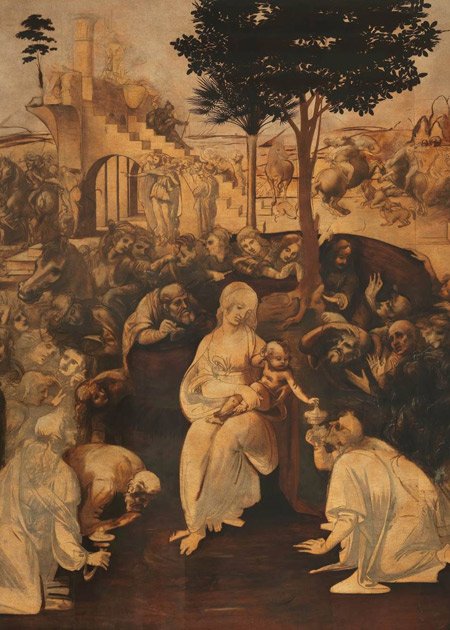
Depicting the visit of the Magi to the newborn Jesus, “Adoration of the Magi” is an unfinished masterpiece painted by Leonardo da Vinci around 1481.
This artwork showcases the artist’s early mastery of composition and emotion, featuring a dynamic arrangement of figures.
Leonardo’s innovative use of light and shadow enhances the depth of the scene. The intricate details in the rich garments and expressions reflect the blend of reverence and awe experienced by the visitors.
Housed in Room 15, this painting captures a pivotal moment rich in symbolism and artistic significance.
8. Bacchus – Caravaggio

Caravaggio’s Bacchus, painted around 1596, captivates with its lifelike detail and inviting composition. The work showcases Bacchus, the god of wine, depicted as a youthful figure with grapes and vine leaves adorning his head.
He holds out a cup of wine, inviting viewers to join him in revelry. Unique for its realism, it reflects Caravaggio’s signature style by emphasizing humanity, shown through features like dirty fingernails. This masterpiece resides in Hall 90 of the Uffizi Gallery.
9. Diptych of Federico da Montefeltro and Battista Sforza – Federico da Montefeltro and Piero della Francesca
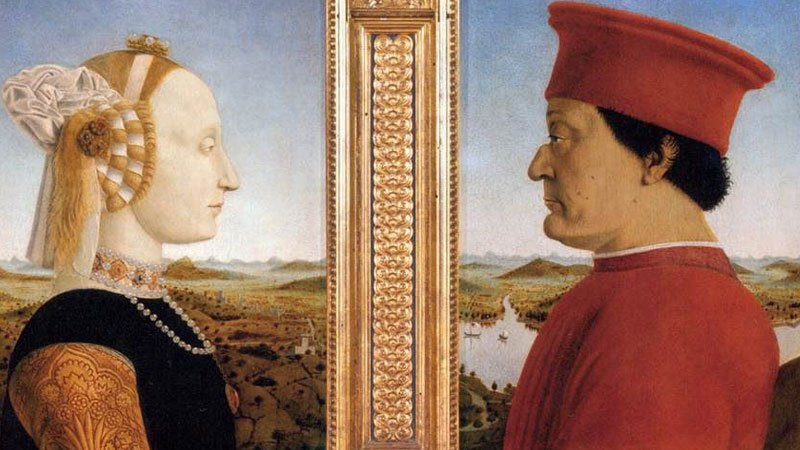
Piero della Francesca created the “Diptych of Federico da Montefeltro and Battista Sforza” between 1465 and 1470.
The artwork features two panels: Federico on the right, adorned in a red and gold gown, exuding confidence, and Battista on the left, elegantly dressed in blue and gold, projecting dignity.
This masterpiece showcases the couple gazing directly at the viewer, set against a backdrop of a stunning landscape that reflects the power of their court.
10. Ognissanti Madonna – Giotto
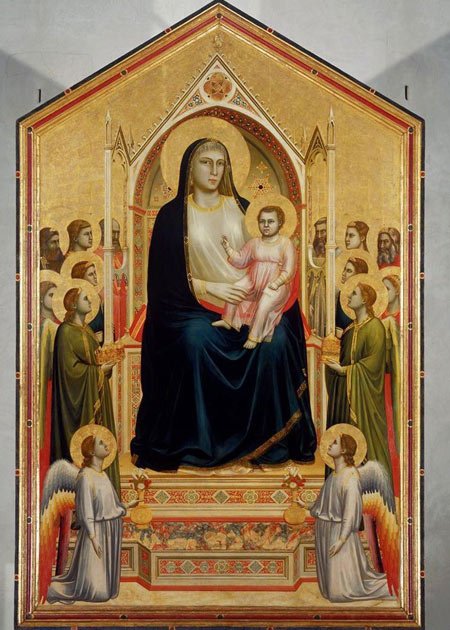
Giotto’s “Ognissanti Madonna” is a captivating large wooden panel created around 1300. It showcases the Virgin Mary in a realistic form, marking a significant shift in medieval art.
Located in Hall 2 on the first floor, this painting represents the transition from Byzantine styles to more humanistic portrayals.
Giotto’s innovative approach profoundly influenced Renaissance artists, establishing a new standard for religious iconography that emphasized emotional depth and realism.
11. Santa Trinita Maestà – Cimabue

Cimabue’s “Santa Trinita Maestà,” painted around 1300, exemplifies a pivotal moment in art history. The piece depicts the Virgin Mary enthroned with the infant Jesus, surrounded by angels and saints.
Considered one of the first breakthrough works from the Gothic style, it showcases a shift toward naturalism.
Housed in the Uffizi Gallery, this striking altarpiece exhibits colors and innovative composition that influenced subsequent Renaissance artists profoundly.
12. Self-portrait – Raphael

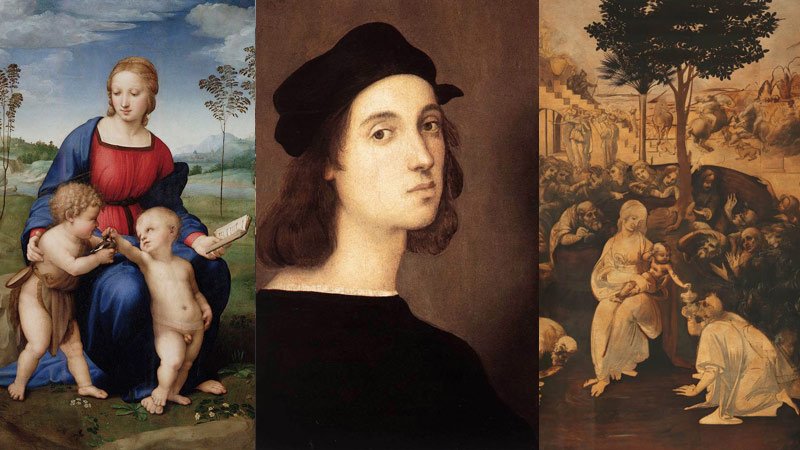
Self-portrait by Raphael, painted around 1506, showcases the artist’s distinctive style and personality. Featuring a thoughtful expression, it reflects his confidence and artistic prowess.
Raphael depicts himself wearing a renaissance attire, with his curly hair framing his face. Located in the Uffizi Gallery, this artwork emphasizes the tradition of self-portraits among Renaissance artists, illustrating their self-awareness and status within the art world.
Raphael’s exceptional technique captivates viewers, making it a must-see piece for art enthusiasts.
13. Madonna del Cardellino – Raphael

Raphael painted the Madonna del Cardellino between 1505 and 1506. This oil-on-wood masterpiece depicts the Virgin Mary with the Christ Child and John the Baptist, surrounded by lush landscapes.
The colors and serene expressions showcase Raphael’s early mastery. Originally gifted to Lorenzo Nasi for his wedding, the painting endured significant damage during an earthquake in 1548, shattering into seventeen pieces.
After a ten-year restoration, it returned to the Uffizi Gallery in 2008, revealing its poetic beauty anew.