
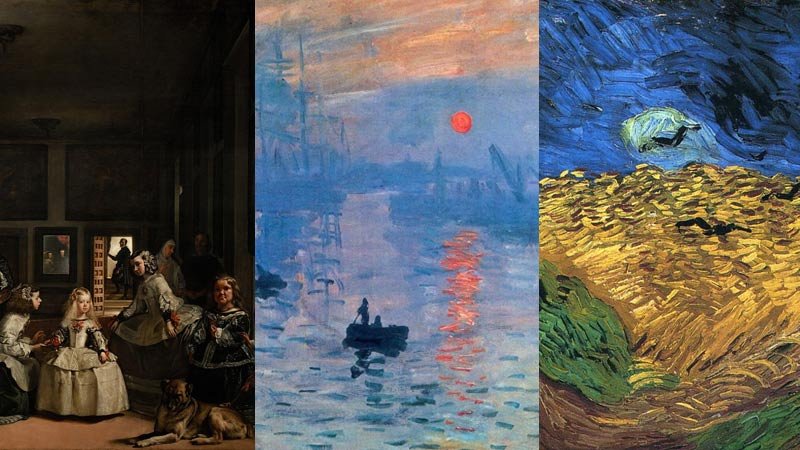
Europe stands as a treasure trove of artistic brilliance, showcasing centuries of creativity and cultural evolution.
From the stunning frescoes of the Renaissance to the emotive brushstrokes of modern art, the continent is home to some of the world’s most celebrated masterpieces. Each painting tells a story, reflecting the artist’s vision and the historical context of its time.
This article delves into 13 iconic paintings that have shaped the landscape of art in Europe. These works not only highlight the genius of their creators but also invite viewers to explore the rich tapestry of European history.
Whether you’re an art enthusiast or a curious traveler, these masterpieces are essential stops on your journey through the art capitals of Europe.
1. Guernica – Pablo Picasso

Picasso painted Guernica in 1937 as a reaction to the horrific bombing of the Basque town during the Spanish Civil War.
Measuring 11.5 feet tall by 25.6 feet wide, this monumental work uses stark black and white to depict the chaos of war.
Central figures include a gored horse and a screaming woman, symbolizing intense suffering and loss. Guernica now resides in the Museo Reina Sofía in Madrid, serving as a powerful antiwar statement and a poignant reminder of the atrocities of conflict.
2. The Kiss – Gustav Klimt
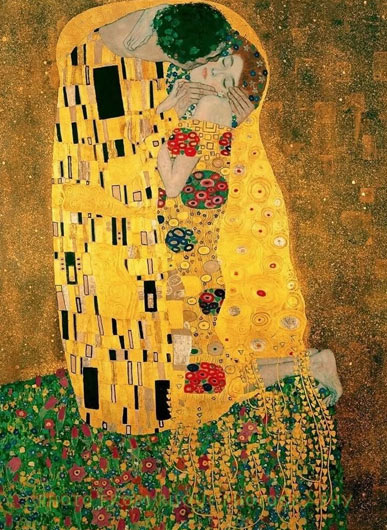
Gustav Klimt created The Kiss between 1907 and 1908, during his renowned Golden Period. The artwork, housed in the Österreichische Galerie Belvedere in Vienna, features two lovers enveloped in intricate, decorative robes.
Its opulent use of gold leaf, alongside oil and canvas, reflects Byzantine influences. This iconic piece represents Klimt’s mastery of the Art Nouveau style and is celebrated for portraying intimacy and passion, making it a must-see for art lovers visiting Vienna.
3. The Mona Lisa – Leonardo da Vinci
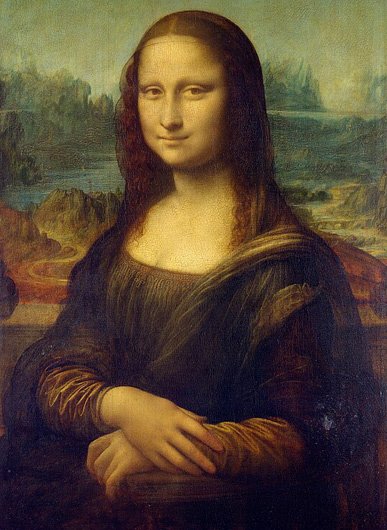
Leonardo da Vinci’s “Mona Lisa,” painted between 1503 and 1506, is arguably the most famous portrait in the world.
Housed in the Louvre Museum, this iconic artwork showcases da Vinci’s mastery of the sfumato technique, creating soft transitions between colors and a captivating atmospheric quality.
The subject, believed to be Lisa Gherardini, has intrigued viewers for centuries with her enigmatic smile, sparking numerous interpretations.
This masterpiece draws millions of visitors annually, making it a top highlight for anyone exploring European art.
4. Impression, Sunrise – Claude Monet
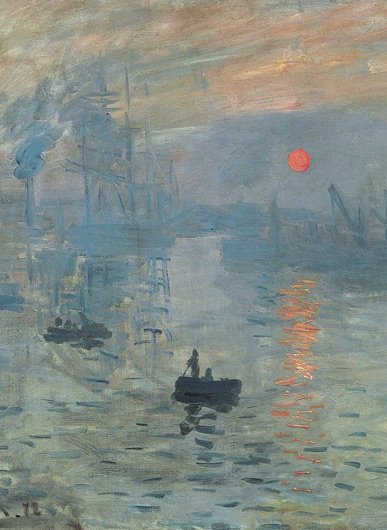
Claude Monet’s “Impression, Sunrise,” painted in 1872, marks the birth of the Impressionist movement. This oil on canvas captures the serene port of Le Havre, Monet’s hometown, showcasing the gentle play of light with hues of orange and gray.
First exhibited in 1874, the painting shocked critics but gained recognition over time. Today, it resides at the Musée Marmottan Monet in Paris, where art enthusiasts admire its captivating depiction of dawn and fog over the bustling port.
5. The Birth of Venus – Sandro Botticelli

Sandro Botticelli’s “The Birth of Venus,” painted between 1484 and 1486, is a quintessential masterpiece of the Early Renaissance.
This iconic piece, housed in the Uffizi Gallery in Florence, depicts the goddess Venus emerging from the sea in a large scallop shell.
Surrounded by mythological figures, including the winds and a nymph, Venus’s graceful stance reflects classical influences.
Notably, it’s recognized as the first large-scale depiction of a nude woman in over a millennium, marking a significant moment in art history.
6. The Night Watch – Rembrandt
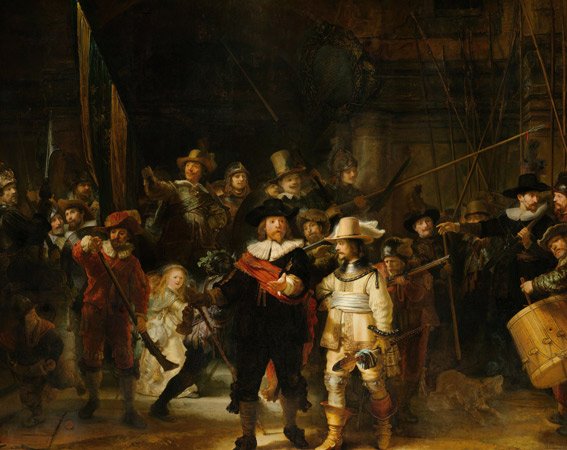
Rembrandt’s “The Night Watch,” painted in 1642, is a monumental group portrait celebrated for its dynamic composition.
Measuring approximately 12 by 14 feet, it portrays Captain Frans Banning Cocq leading a civic militia. Renowned for its dramatic use of light and shadow, this masterpiece first appeared at the Rijksmuseum in Amsterdam.
The painting’s nickname stems from the thick, dark varnish initially applied, giving the impression of a night scene, despite depicting a morning gathering.
7. The Last Supper – Leonardo da Vinci

The Last Supper, painted by Leonardo da Vinci between 1495 and 1498, covers an enormous wall in the Convent of Santa Maria delle Grazie in Milan.
Measuring 15 by 29 feet, this iconic fresco captures the moment Jesus reveals his impending betrayal to his apostles, showcasing raw emotional tension.
Leonardo employed tempera on gesso, a technique that ultimately led to its deterioration over time. Despite this, the artwork remains a pivotal cultural landmark, attracting countless visitors who come to witness its dramatic portrayal of human psychology.
8. Las Meninas – Diego Velázquez

“Las Meninas,” painted in 1656, stands as Diego Velázquez’s most renowned work, displaying a complex interaction between reality and illusion.
This oil on canvas captures a moment within the Royal Alcazar of Madrid during King Philip IV’s reign. The central figure, Infanta Margaret Theresa, is surrounded by her maids of honor, a chaperone, two dwarfs, and a dog, while Velázquez depicts himself painting in the foreground.
This intricate composition challenges viewers’ perceptions, making “Las Meninas” a subject of extensive analysis and debate in art history.
9. Bal du moulin de la Galette – Pierre-Auguste Renoir

Renoir’s “Bal du moulin de la Galette,” painted in 1876, captures a lively Sunday afternoon in Montmartre, Paris.
This oil on canvas, measuring 4.3 by 3.6 feet, showcases working-class Parisians enjoying music, dance, and socializing.
The colors and dappled light highlight Renoir’s impressionistic style, creating a sense of joyous movement.
Today, this masterpiece is exhibited at the Musée d’Orsay, inviting viewers to experience the charm of 19th-century Parisian life.
10. The Raft of the Medusa – Théodore Géricault

Théodore Géricault’s “The Raft of the Medusa,” completed in 1818, explores the harrowing aftermath of the Méduse shipwreck off the Mauritanian coast.
This monumental painting portrays survival amidst despair, as only 15 of over 100 shipwrecked individuals lived after days adrift, facing hunger and cannibalism.
Géricault’s meticulous research included interviews with survivors and morgue studies, leading to an emotionally charged composition that solidified his role as a Romanticism pioneer. Now housed in the Louvre, it remains a striking commentary on human endurance.
11. Sistine Chapel Ceiling – Michelangelo

Michelangelo’s breathtaking Sistine Chapel Ceiling is a masterpiece of Renaissance art. Commissioned in 1508, it took four years to complete.
Featuring nine scenes from the Book of Genesis, the ceiling includes the iconic Creation of Adam. The ceiling boasts over 175 individual pictorial fields, showcasing diverse figures and intricate details.
Today, it remains a top highlight in the Vatican Museums, attracting millions of visitors each year who marvel at its grandeur and artistic brilliance.
12. Liberty Leading the People – Eugène Delacroix

Liberty Leading the People, painted in 1830 by Eugène Delacroix, symbolizes freedom and revolution. It depicts a unified group rallying under the allegorical figure of Liberty, who brandishes the tricolor flag of France.
The captivating composition showcases various social classes, demonstrating collective courage during the July Revolution.
This oil on canvas masterpiece, housed in the Louvre in Paris, invites viewers to reflect on the fight for liberty and the power of the people.
13. Wheatfield with Crows – Vincent van Gogh
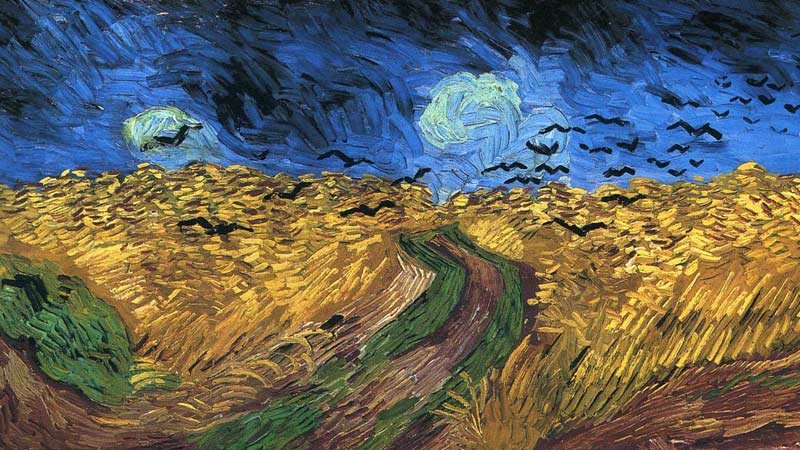
Wheatfield with Crows, painted in July 1890, is one of Van Gogh’s final works and is often regarded as a poignant reflection of his tumultuous state of mind.
This expressive oil painting, showcasing a vast wheatfield under a stormy sky, features dramatic crows soaring overhead, symbolizing themes of death and isolation.
It’s displayed at the Van Gogh Museum in Amsterdam, captivating viewers with its raw emotion and sudden brushwork.
The painting exemplifies Van Gogh’s masterful use of color and form, making it a must-see for art enthusiasts exploring European masterpieces.


