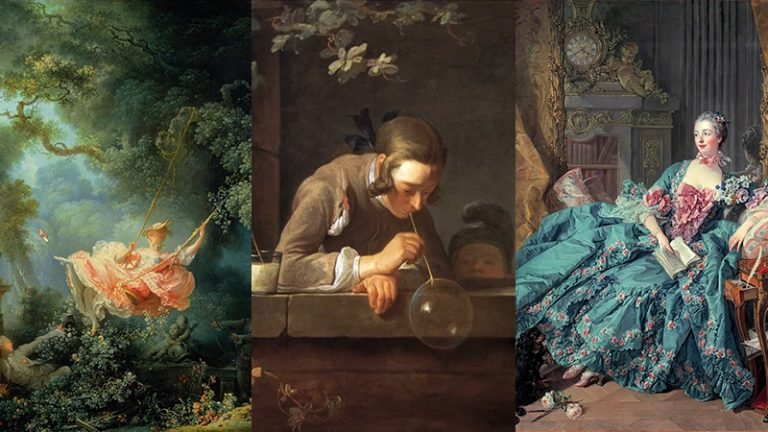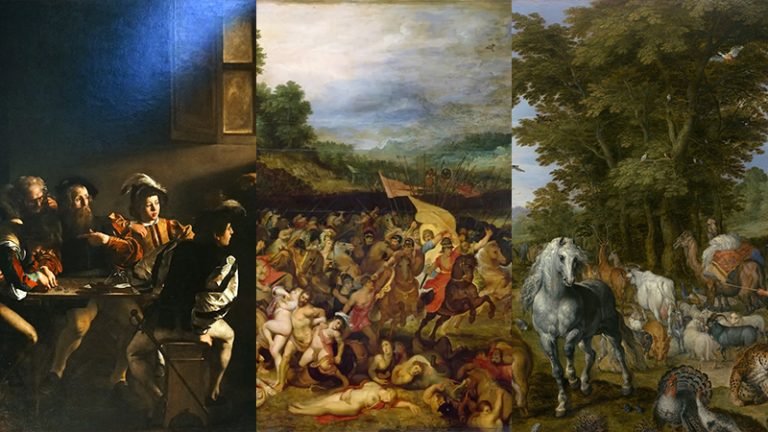
The 18th century marked a vibrant era in art, characterized by dramatic shifts in style and technique. As the world embraced the Enlightenment, artists explored new themes, from the grandeur of historical narratives to the intimacy of everyday life.
This period gave birth to masterpieces that still resonate today, reflecting the cultural and social currents of their time.
From the elegance of Rococo to the emerging neoclassicism, these paintings offer a glimpse into the creativity and innovation that shaped the art world.
1. The Death of Marat – Jacques-Louis David
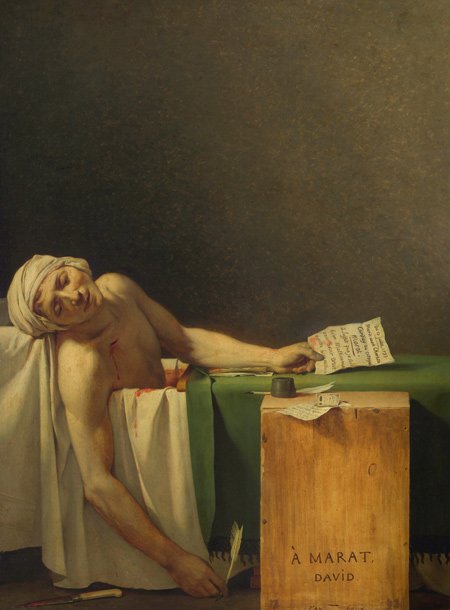
Jacques-Louis David painted The Death of Marat in 1793, capturing the dramatic assassination of revolutionary leader Jean-Paul Marat.
The artwork features Marat in a bathtub, lifeless, clutching a message about his killer, Charlotte Corday. This piece exemplifies Neoclassical art’s clarity and emotional depth while honoring Marat’s contributions to the revolution.
David’s meticulous attention to detail and stark contrast emphasize the political turmoil of the era, making this painting a powerful narrative and a cornerstone of 18th-century art.
2. The Swing – Jean-Honoré Fragonard
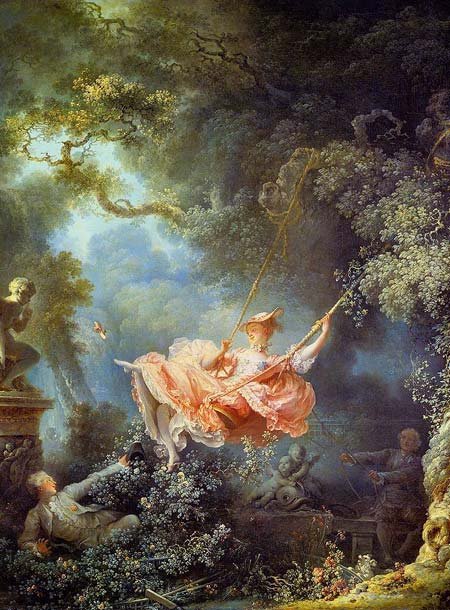
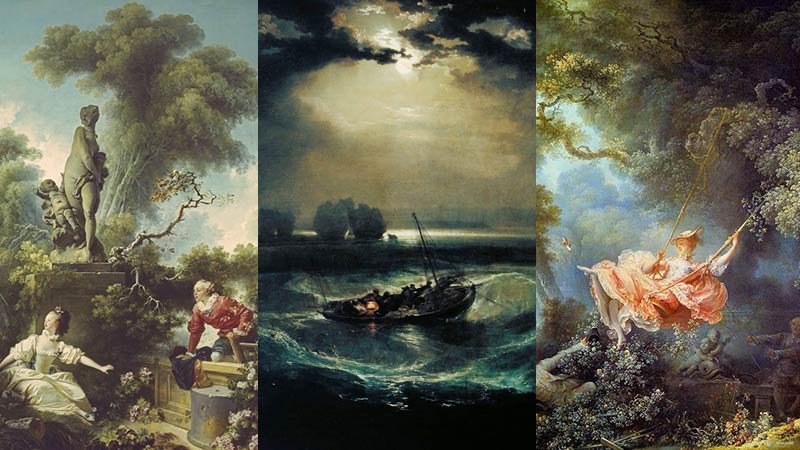
The Swing, painted by Jean-Honoré Fragonard in 1767, epitomizes the playful spirit of Rococo art. It showcases a young woman on a swing, while a hidden lover admires her from below.
The lush garden setting and soft pastel colors enhance the romantic atmosphere. Fragonard’s dynamic brushwork captures the fleeting moment of joy and flirtation.
This iconic piece symbolizes the era’s focus on love and leisure, making it a celebrated masterpiece of 18th-century art. Its charm continues to captivate audiences, reflecting the societal values of the time.
3. The Death of General Wolfe – Benjamin West

Benjamin West’s The Death of General Wolfe, painted in 1770, showcases a pivotal moment in British history. This artwork depicts the dying General James Wolfe during the Battle of Quebec, surrounded by soldiers.
West’s use of dramatic lighting and bold colors emphasizes the significance of the moment, blending realism with heroic idealism.
The composition features a neoclassical style, highlighting Wolfe’s sacrifice and valor in a contemporary context.
This painting not only marked a turning point in historical art but also established West as a leading figure in the American and British art scenes.
4. Isaac Newton – William Blake
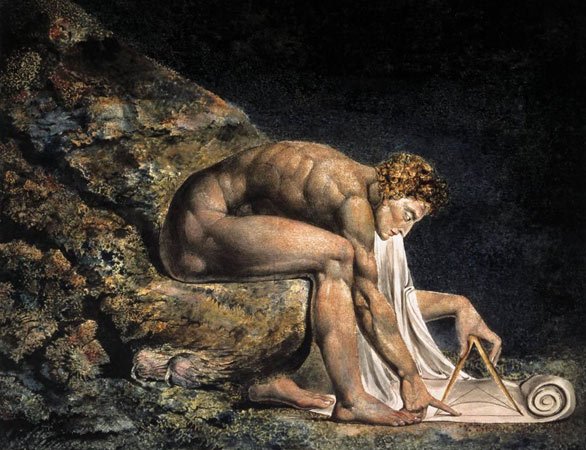
William Blake’s painting, Isaac Newton, created in 1795, portrays the illustrious scientist as a young, muscular figure resting on a boulder.
Blake’s depiction contrasts with the typical representation of Newton as an elderly philosopher. He illustrates Newton engrossed in a piece of parchment marked with geometric symbols, seemingly unaware of the natural beauty surrounding him.
This imagery reflects Blake’s critical perspective on Newton’s scientific approach, highlighting a tension between empirical rigor and the appreciation of art and nature. Blake’s work serves as a captivating commentary on the era’s intellectual debate.
5. Fishermen at Sea – J.M.W. Turner
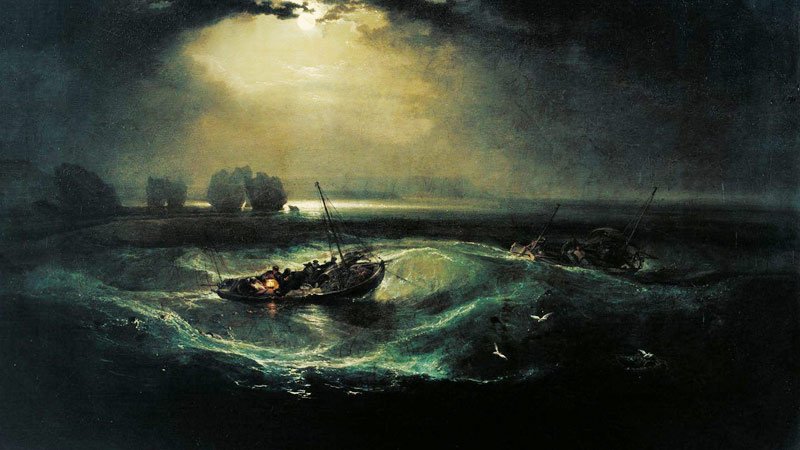
Turner’s painting, Fishermen at Sea, created in 1796, captures the raw power of nature and its impact on human endeavors.
This artwork depicts fishermen battling turbulent waves under a stormy sky, showcasing Turner’s skill in portraying light and movement.
The dramatic scene embodies the struggle between humanity and the sea, reflecting the Romantic fascination with nature’s majesty.
Critics praise Turner’s innovative brushwork and color palette, illustrating emotional intensity and highlighting the perilous reality of maritime life during the 18th century.
6. The Triumph of Venus – François Boucher
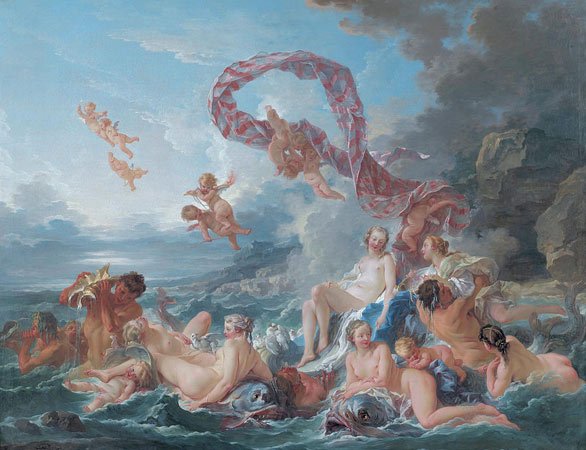
Boucher’s The Triumph of Venus, painted in 1740, exemplifies the elegance of Rococo art. He depicted the goddess Venus emerging from the ocean, surrounded by nymphs, tritons, and cherubic putti.
This composition captures the asymmetrical layout characteristic of the style. Ample pink tones imbue the figures with life while echoing in the flowing sash above them.
Boucher’s innovative approach popularized the inclusion of mythological themes in 18th-century art, influencing other artists of the period and cementing his legacy within the Rococo movement.
7. Ancient Rome – Giovanni Paolo Panini
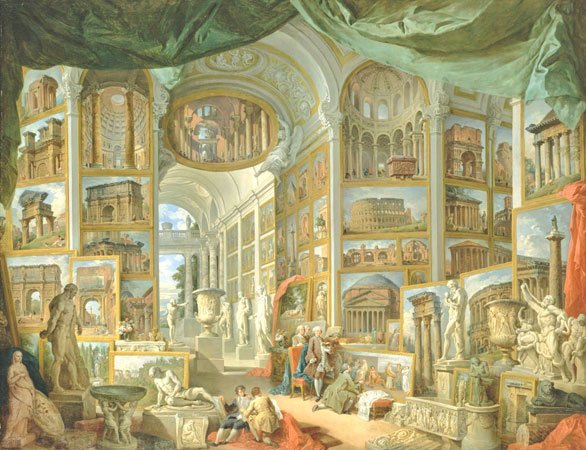
Panini’s depiction of Ancient Rome showcases his mastery in perspective and composition. He often portrayed iconic Roman landscapes, emphasizing grand ruins and historical sites.
His work stands out for its intricate details and vibrant colors, drawing viewers into a rich narrative of the city’s past. For instance, his painting of the Pantheon exemplifies his skill in capturing architectural grandeur.
Panini’s influence extended beyond Italy, as he taught at the French Academy in Rome, nurturing the next generation of artists eager to explore panoramic art.
8. Oath of the Horatii – Jacques-Louis David
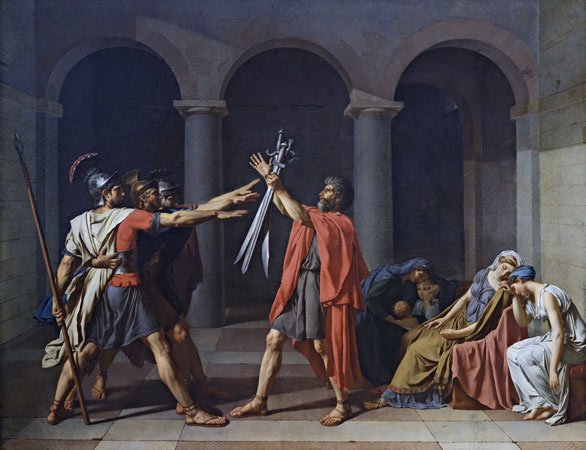
Jacques-Louis David’s Oath of the Horatii, painted in 1784, represents a turning point in Neoclassical art. David depicts three brothers swearing allegiance to their father, showcasing themes of patriotism and sacrifice.
The vivid colors and stark contrasts emphasize the emotional intensity of the moment. This work draws upon a 7th-century BC myth, blending historical authenticity with dramatic storytelling.
David’s meticulous attention to detail reinforces the composition’s clarity, making it an enduring symbol of civic duty and moral integrity, illustrating the cultural value placed on heroism during the era.
9. The Meeting (from the Loves of the Shepherds) – Jean-Honoré Fragonard
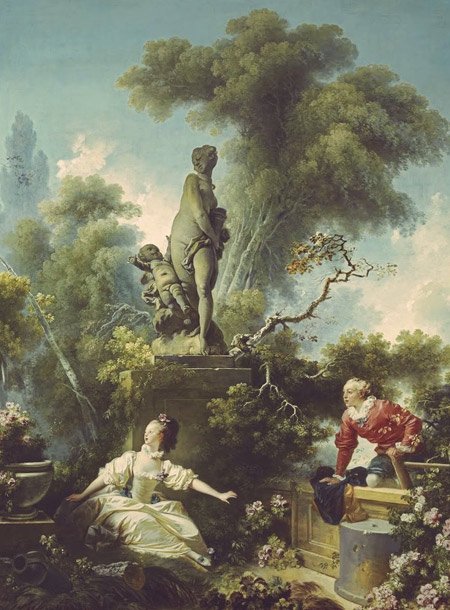
Fragonard’s The Meeting, painted in 1772, captures a secret rendezvous between a young couple, symbolizing the clandestine nature of romance.
The scene showcases the man scaling a garden wall, while the woman glances back, ensuring their liaison remains hidden.
Fragonard’s expertise in history painting infuses the moment with a dramatic flair, as lush greenery and elegant attire highlight the Rococo style’s playfulness.
This artwork exemplifies the artist’s recurring theme of youthful love, reflecting societal challenges around intimacy in 18th-century France.
10. Cornelia, Mother of the Gracchi, Pointing to her Children as Her Treasures – Angelica Kauffman
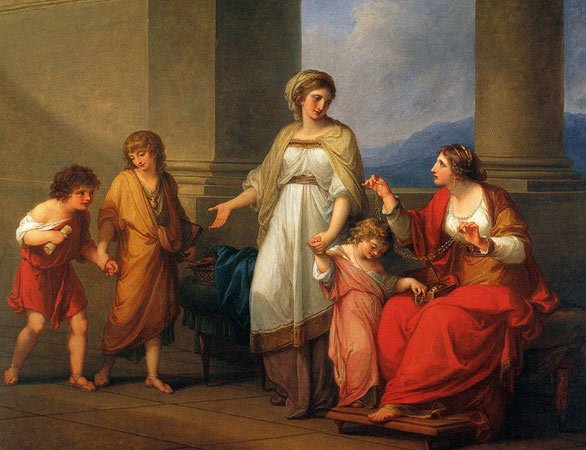
Kauffman’s Cornelia, Mother of the Gracchi represents a pivotal moment in Roman history. She depicts Cornelia, strong and poised, showcasing her children as her true treasures.
Kauffman uses soft colors and neoclassical elements to convey maternal love and virtue. The composition emphasizes Cornelia’s dignity, framing her sons as symbols of promise and legacy.
This painting not only reflects personal sacrifice but also highlights the role of women in shaping history. Kauffman’s masterful technique and emotional depth make this artwork a remarkable tribute to motherhood in the 18th century.