
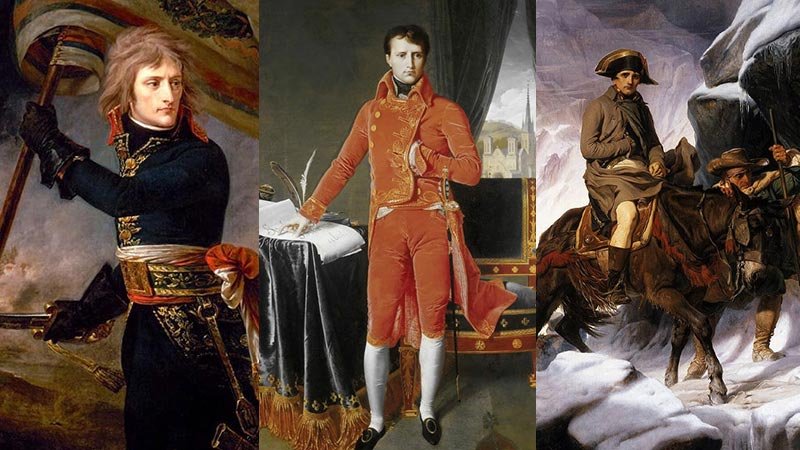
Napoleon Bonaparte, a towering figure in European history, has inspired countless masterpieces that capture his complex legacy.
Artists from his time and beyond sought to portray his military prowess, political ambition, and personal charisma through their work.
These paintings not only depict significant events but also reflect the cultural and artistic movements of their respective eras.
From the heroic scenes of battle to intimate portraits, the art surrounding Napoleon reveals much about his character and the impact he had on the world.
This article explores ten of the most famous Napoleon paintings, showcasing how these works continue to resonate with audiences today.
Each piece tells a story that goes beyond paint and canvas, offering a glimpse into the life of one of history’s most influential leaders.
1. Napoleon Crossing the Alps – Jacques-Louis David
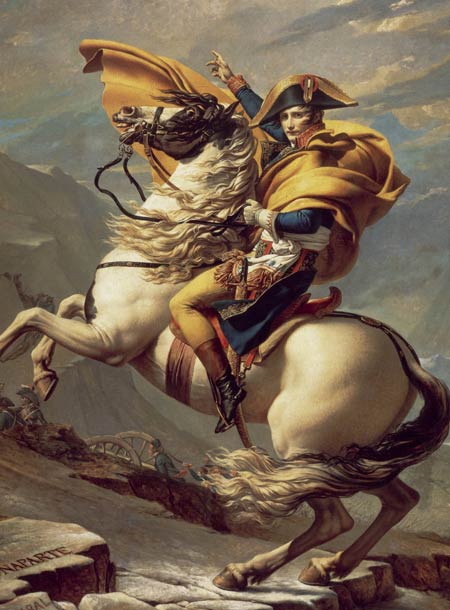
“Napoleon Crossing the Alps” is one of Jacques-Louis David’s most renowned paintings, completed in 1801. The artwork depicts Napoleon boldly leading his army through the Alps, capturing his military genius.
David portrays him on a rearing horse, symbolizing strength and determination. This artwork idealizes the historical event; in reality, Napoleon rode a mule.
David created several versions, all intended to immortalize Napoleon’s leadership and inspire his followers. The painting’s dramatic composition remains a powerful representation of his legacy and emblematic of the Neoclassical style.
2. The Coronation of Napoleon – Jacques-Louis David
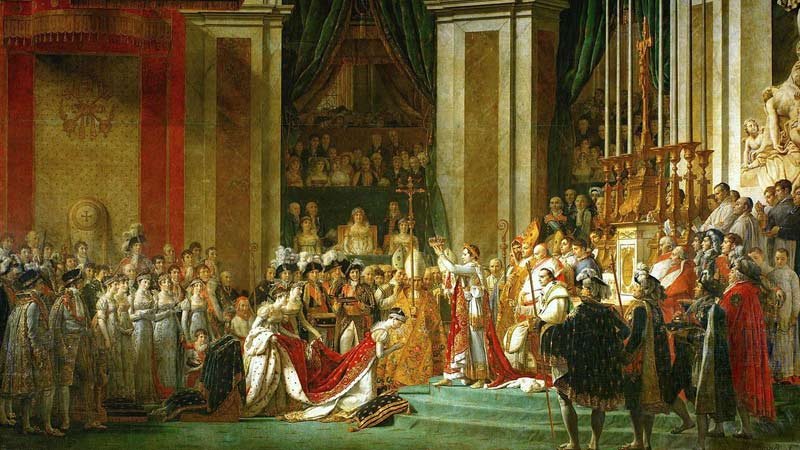
Jacques-Louis David’s The Coronation of Napoleon, completed in 1807, captures the monumental event of Napoleon crowning himself Emperor at Notre-Dame Cathedral on December 2, 1804.
This colossal painting, measuring almost 10 meters by 6 meters, features over 200 meticulously portrayed figures, emphasizing grandeur and significance.
David focuses on the dramatic moment when Napoleon crowns his wife, Josephine, highlighting power dynamics and symbolic authority.
The work serves as political propaganda, showcasing both Napoleon’s command and the Church’s endorsement. As a masterpiece of French Neoclassical art, it remains a highlight of the Louvre’s collection.
3. Napoleon I on His Imperial Throne – Jean Auguste Dominique Ingres
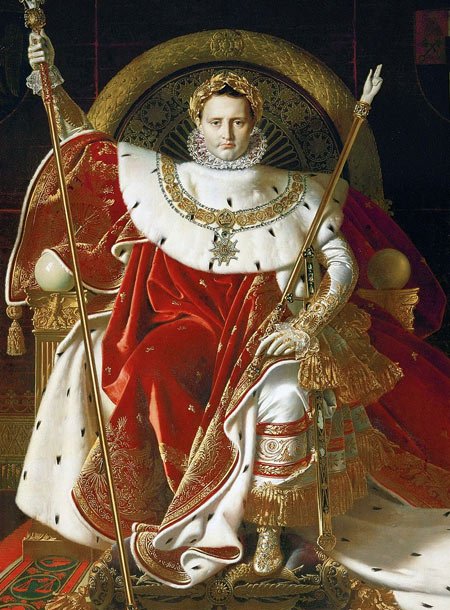
“Napoleon I on His Imperial Throne,” created by Jean Auguste Dominique Ingres in 1806, showcases Napoleon in all his regal splendor.
The painting depicts him seated on an ornate throne, adorned in his coronation robes, exuding confidence and authority.
Ingres meticulously details the throne’s ivory ball-encrusted armrests and the royal sceptre held in Napoleon’s right hand.
The composition emphasizes his status, capturing the essence of his imperial ambitions. As a hallmark of Neoclassical portraiture, the piece reinforces Napoleon’s image as a powerful ruler and a symbol of the era’s grandeur.
4. The Emperor Napoleon in His Study at the Tuileries – Jacques-Louis David
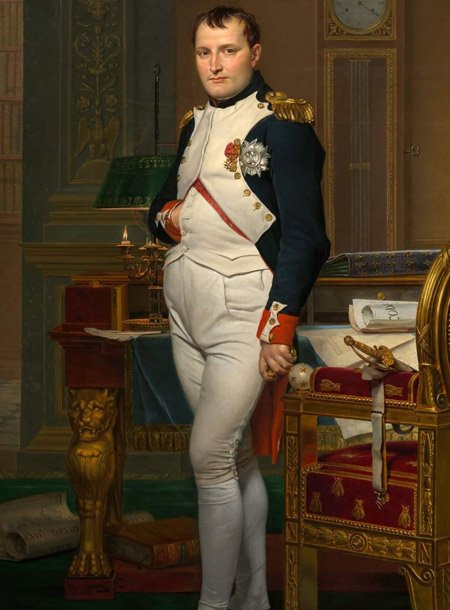
The painting “The Emperor Napoleon in His Study at the Tuileries,” created by Jacques-Louis David in 1812, portrays a focused Napoleon immersed in his work.
It showcases him dressed in his green uniform, adorned with the Legion of Honour medal. David captures an air of calm confidence, emphasizing Napoleon’s dedication and authority.
The detailed setting of his private study adds to the intimate atmosphere, highlighting the intellectual side of his leadership. This painting serves as a testament to Napoleon’s dual role as both a military commander and a statesman.
5. Bonaparte Visiting the Plague Victims of Jaffa – Antoine-Jean Gros
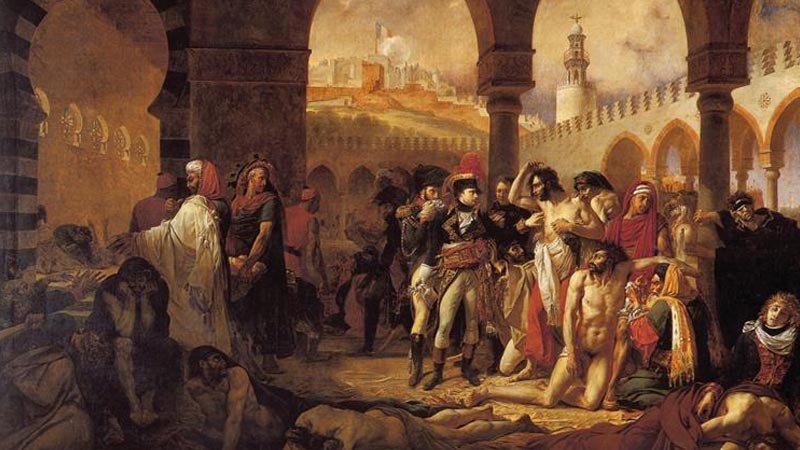
“Bonaparte Visiting the Plague Victims of Jaffa,” painted by Antoine-Jean Gros in 1804, vividly captures a poignant moment during Napoleon’s Egyptian campaign.
The artwork depicts Napoleon, dressed in an elegant uniform, as he compassionately visits his sick troops suffering from the plague at the Armenian Saint Nicholas Monastery in Jaffa.
Gros emphasizes Napoleon’s authority and humanity, portraying him in a position of power while also showing his concern for the afflicted.
This painting symbolizes the duality of leadership strength and empathy and remains a significant testament to Napoleon’s complex legacy.
6. War. The Exile and the Rock Limpet – J. M. W. Turner
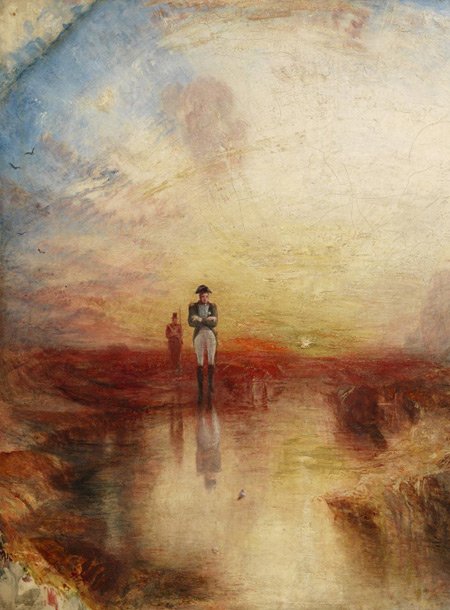
Turner’s “War. The Exile and the Rock Limpet,” created in 1842, portrays Napoleon during his exile on St. Helena.
The painting captures the defeated leader’s isolation, depicting him as a diminutive figure gazing at his reflection in a rock pool.
The dramatic, tumultuous sky emphasizes his turmoil and regret. A British soldier stands guard, symbolizing his captivity and loss of power.
Turner’s work critiques Napoleon’s ambition and legacy, contrasting grandiosity with vulnerability. This poignant scene encapsulates the solitude that marked Napoleon’s final years.
7. The Distribution of the Eagle Standards – Jacques-Louis David
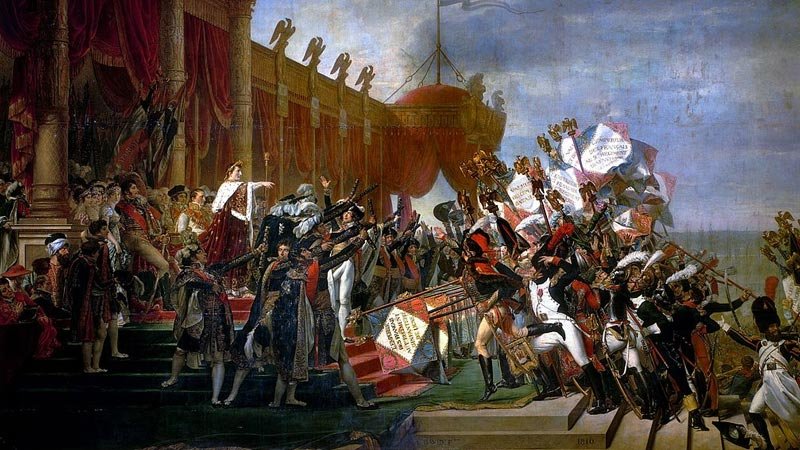
The painting “The Distribution of the Eagle Standards,” created by Jacques-Louis David in 1810, commemorates an important military ceremony held in 1804.
David captures the moment when Napoleon, having recently assumed the title of Emperor, distributes eagle standards to his troops, symbolizing loyalty and valor.
David’s artwork features Napoleon at the center, confidently presenting the eagles reminiscent of Roman military tradition.
The vibrant colors and dynamic composition convey the drama of the event, while the surrounding soldiers exhibit reverence and pride.
This powerful piece reinforces Napoleon’s authority and the revival of imperial glory, solidifying his role as a leader within the pantheon of history.
8. Bonaparte, First Consul – Jean Auguste Dominique Ingres
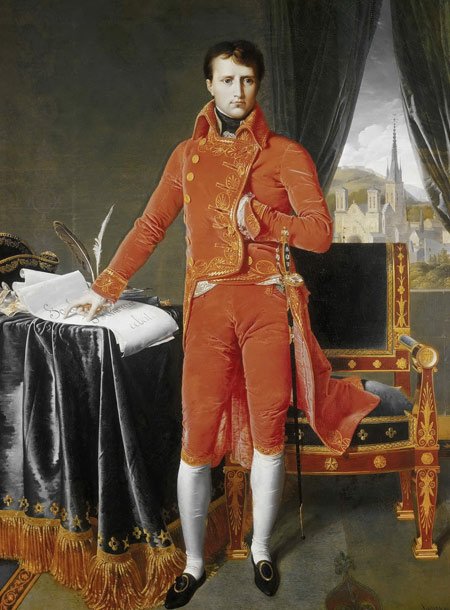
“Bonaparte, First Consul,” painted by Jean Auguste Dominique Ingres in 1804, captures Napoleon’s triumphant rise to power.
Ingres portrays Napoleon in a military uniform, seated with a commanding presence and confidence. The detailed background features symbols of authority, including a laurel wreath, emphasizing his status as the leader of France.
Ingres masterfully uses color and light to highlight Napoleon’s features, reflecting both his ambition and charisma.
This painting stands out as a quintessential representation of early 19th-century Neoclassicism, reinforcing Napoleon’s image as a powerful and influential figure in European history.
9. Bonaparte at the Pont d’Arcole – Antoine-Jean Gros
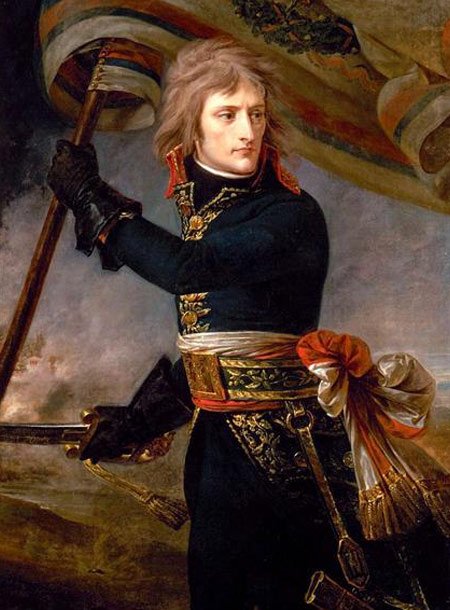
“Bonaparte at the Pont d’Arcole,” painted by Antoine-Jean Gros in 1796, depicts Napoleon during a pivotal moment in the Battle of Arcole.
Gros portrays Napoleon leading his troops with a flag raised high, exemplifying bravery and leadership. The dramatic use of light highlights his focused expression, inspiring his soldiers to victory against the Austrians.
This painting was commissioned by Napoleon himself to enhance his public image, symbolizing military prowess and charisma.
As an early representation of Napoleon’s campaigns, it remains a significant piece in illustrating his enduring legacy.
10. Bonaparte Crossing the Alps – Paul Delaroche
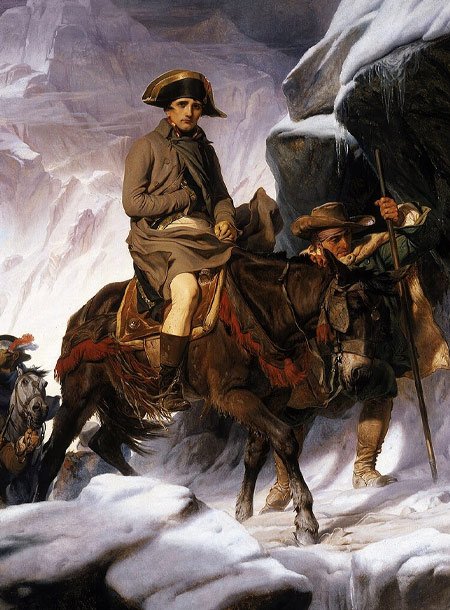
“Bonaparte Crossing the Alps,” painted by Paul Delaroche in 1848, presents a unique interpretation of Napoleon’s famous journey.
Delaroche depicts Napoleon riding a mule, contrasting the heroic imagery often associated with the event. The painting captures the harsh Alpine landscape and the soldiers accompanying him, emphasizing the challenge of the crossing.
Delaroche’s use of dark tones and dramatic lighting creates a striking atmosphere, reflecting the grit and determination behind Napoleon’s surprise maneuver against the Austrians in Italy. This piece, though idealized, offers insight into the historical significance of this ambitious feat.


