
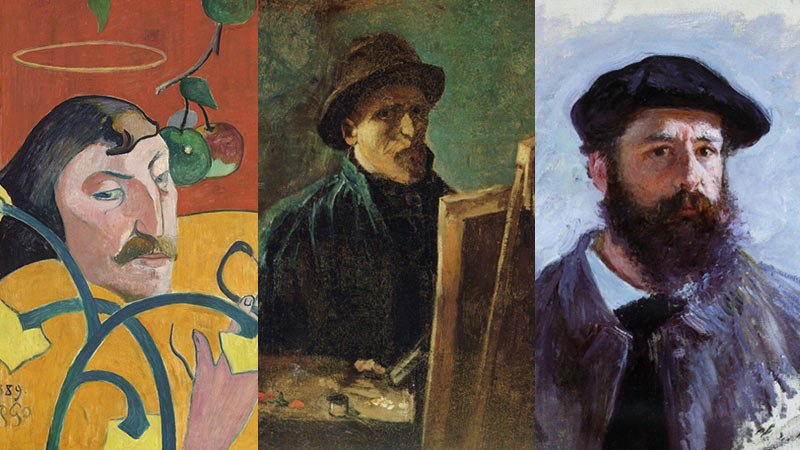
Self-portraiture has captivated artists for centuries, serving as a powerful means of self-expression and exploration.
From the Early Renaissance to contemporary art, this practice has allowed creators to delve into their identities and emotions, often resulting in some of the most iconic images in history.
The allure of capturing one’s essence on canvas or through other mediums has led to the creation of countless self-portraits, each telling a unique story.
Among these works, some stand out as particularly significant, showcasing the evolution of style and technique across different art movements.
Each piece not only reflects the artist’s personal journey but also offers a glimpse into the broader cultural context of its time, making these portraits timeless treasures in the world of art.
1. Self-Portrait with Bandaged Ear – Vincent van Gogh
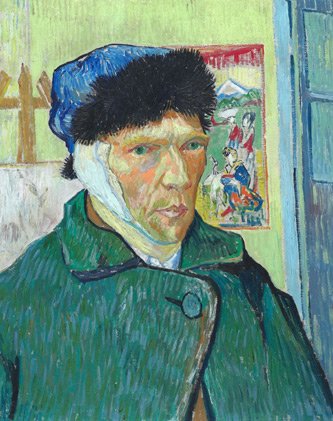
Vincent van Gogh painted Self-Portrait with Bandaged Ear in 1889, shortly after he infamously cut off part of his ear.
This iconic artwork portrays his solemn expression, with a bandage prominently wrapped around his right ear.
The dark green background and his heavy coat emphasize his isolation. Despite his turmoil, the piece reflects a strive for recovery and artistic control, showcasing van Gogh’s emotional depth during a critical period of his life.
2. The Desperate Man – Gustave Courbet

Gustave Courbet’s The Desperate Man, painted in 1845, stands as a seminal self-portrait in the Realism movement. The artwork showcases Courbet’s intense gaze and emotional turmoil, drawing viewers into his inner struggles.
Its landscape orientation defied traditional portrait norms of the time, highlighting his innovative approach. This piece not only reflects Courbet’s mastery of realism but also serves as a profound statement on the complexities of human emotion and identity.
3. Self-Portrait with Thorn Necklace and Hummingbird – Frida Kahlo
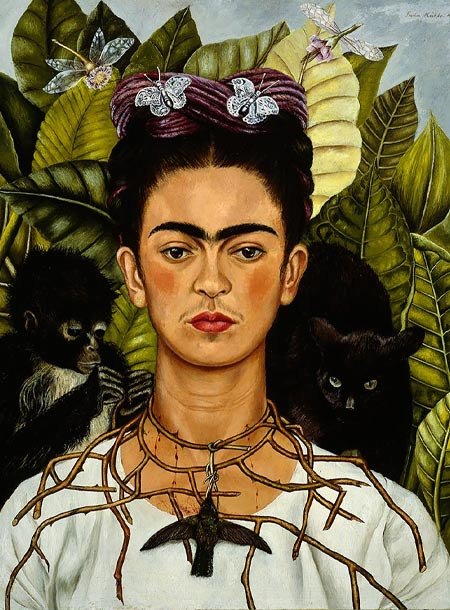
Frida Kahlo’s Self-Portrait with Thorn Necklace and Hummingbird, painted in 1940, vividly portrays her emotional struggles.
The thorn necklace symbolizes suffering and pain, while the hummingbird, often a symbol of hope, hangs lifeless. Kahlo uses rich colors and intricate details, including Mexican iconography to express her identity.
This portrayal manifests themes of resilience and defiance, cementing her place as a leading figure in art and a voice for cultural awareness in Mexico.
4. Portrait of a Man in Red Chalk – Leonardo da Vinci
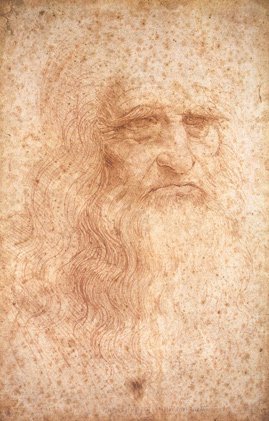
Portrait of a Man in Red Chalk, created around 1510, is widely believed to be a self-portrait of Leonardo da Vinci.
Crafted using red chalk on paper, this rare artwork captures the artist nearly 60 years old, showcasing his mastery of the human form.
The piece’s somber tones and meticulous detail have made it an iconic representation of the Renaissance Man, now housed in the Royal Library of Turin, Italy.
5. Self-Portrait at the Age of Twenty Eight – Albrecht Dürer
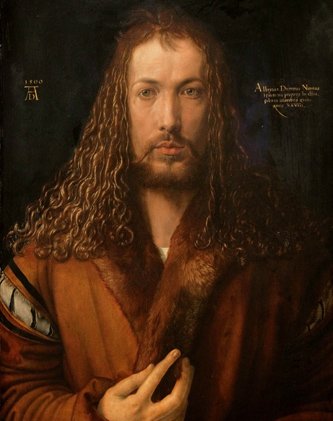
Albrecht Dürer’s Self-Portrait at the Age of Twenty Eight, created in 1500, showcases his artistic confidence. Dürer presents himself frontally against a dark background, wearing a luxurious fur coat.
His curled locks frame his face, while his hand gestures evoke Christ’s blessing, linking the divine to his artistry.
This iconic image demonstrates how Dürer intertwined personal identity and spiritual significance, marking a pivotal moment in Northern Renaissance art.
6. Self-Portrait with Halo and Snake – Paul Gauguin
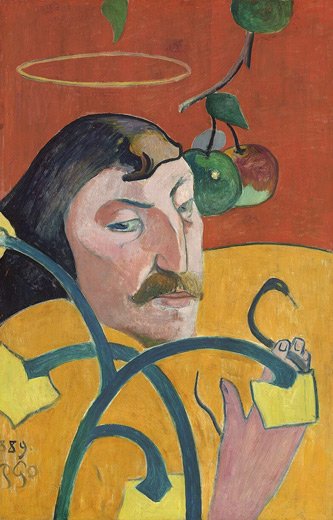
Paul Gauguin’s Self-Portrait with Halo and Snake, painted in 1889, exemplifies his unique style. This oil-on-wood piece reflects Gauguin’s late Brittany era, showcasing his vibrant color palette.
The artwork incorporates religious symbolism and an avant-garde composition, inviting interpretation.
The snake, often seen as a symbol of temptation, contrasts with the halo’s divine connotations, enhancing its complexity. Today, this iconic work resides in the National Gallery of Art in Washington, D.C.
7. Self-Portrait with a Beret – Claude Monet

Claude Monet’s Self-Portrait with a Beret, painted in 1886, showcases his distinctive blurred brushstrokes and balanced light and dark contrasts.
The work features Monet’s characteristic unpainted canvas approach, emphasizing his innovative technique. At 46 years old, he vividly expresses his artistic identity, donning his signature beret and beard.
This iconic piece illustrates the essence of Impressionism, reflecting both personal and creative exploration through the artist’s unique style.
8. Soft Self-Portrait with Grilled Bacon – Salvador Dali
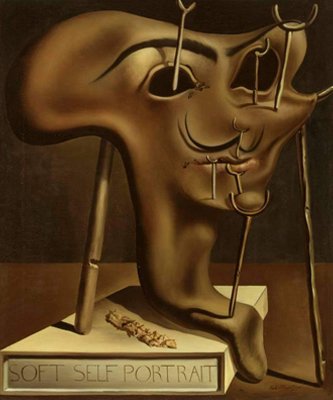
Salvador Dali’s Soft Self-Portrait with Grilled Bacon, painted in 1941, features a surreal representation of his face alongside a piece of bacon.
Dali’s unique style embodies ambiguity, with a structureless visage that melts and drapes over a pedestal.
The iconic upturned mustache confirms its identity as a self-portrait, while crutches support the mask-like face, illustrating Dali’s fascination with the fluidity of reality and imagination in his artistic exploration.
9. Self-Portrait at the Age of 63 – Rembrandt
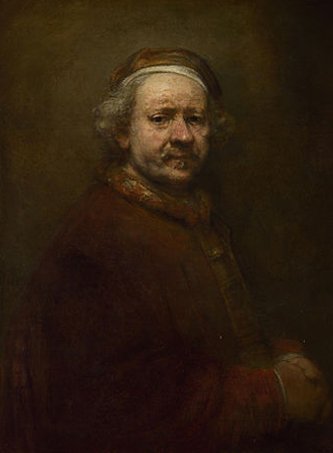
Rembrandt’s Self-Portrait at the Age of 63, painted in 1669, stands as a powerful testament to his artistry. This iconic piece captures the artist’s aged face, revealing strength and self-assurance despite its somber tones.
As one of his final works, it showcases his trademark color palette and intricate brushwork. This portrait also marks the culmination of approximately 80 self-portraits, reflecting his artistic evolution and profound connection to identity.
10. Self-Portrait with a Sunflower – Anthony van Dyck
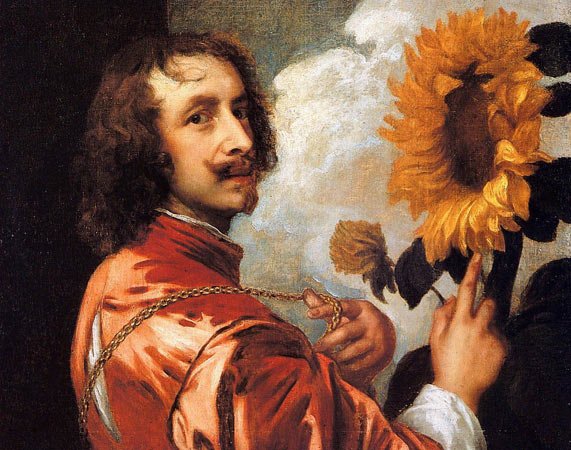
Anthony van Dyck’s Self-Portrait with a Sunflower, painted between 1632 and 1633, showcases his role as the chief painter at the court of Charles I.
The vibrant sunflower symbolizes warmth and light, adding complexity to the piece. Van Dyck’s confident gaze and luxurious attire highlight his status and mastery in portraiture.
This iconic artwork reflects his innovative style, embodying the essence of Baroque art while immortalizing his identity as a premier artist.
11. Self-Portrait with Dark Felt Hat at the Easel – Vincent van Gogh
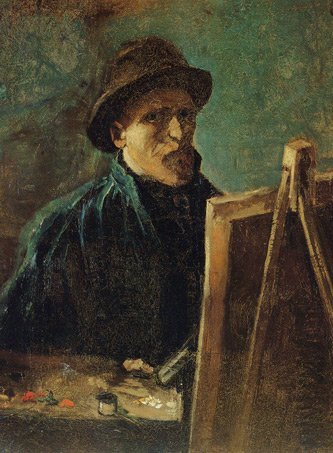
Vincent van Gogh painted Self-Portrait with Dark Felt Hat at the Easel in 1886, during his time in Paris. This artwork showcases his evolving style, featuring bold brushstrokes and vibrant colors.
The dark felt hat symbolizes his identity as an artist, while the easel highlights his dedication to his craft. This self-portrait reflects van Gogh’s emotional turbulence and deep introspection, offering insight into his psyche at a critical moment in his life.
12. Self-Portrait as the Allegory of Painting – Artemisia Gentileschi
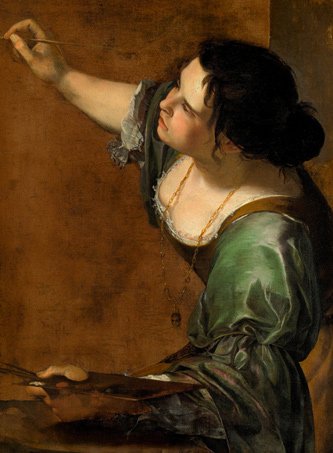
Artemisia Gentileschi’s Self-Portrait as the Allegory of Painting (1638-1639) stands as a powerful statement of femininity in art.
She depicts herself with disheveled hair, a gold necklace, and a green dress, holding a brush and palette. By omitting the traditional cloth covering her mouth, Gentileschi embraces her voice as a female artist.
This boldness reflects her defiance against a male-dominated art world, showcasing her identity through the personification of painting itself.
13. Self-Portrait with Raised Bare Shoulder – Egon Schiele
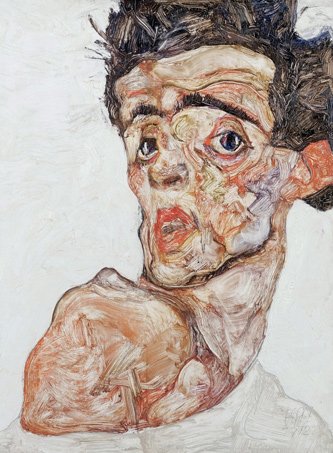
Egon Schiele’s Self-Portrait with Raised Bare Shoulder, created in 1912, stands as a stark expression of raw emotion.
Schiele’s bold brushwork captures his bony shoulder, raising it defensively. This piece reflects his radical break from tradition, showcasing themes of sexuality and identity.
Its confrontational gaze draws viewers into Schiele’s world, compelling them to confront his inner conflicts, which often blended shame and sensuality, ultimately defining his unique artistic voice.
14. Reflection (Self-Portrait) – Lucian Freud

Freud’s Reflection (Self-Portrait), completed in his early 60s, presents a raw and unfiltered view of aging. He confronts the realities of his physical form, showcasing his sallow skin and weary expression.
The piece captures his intense introspection, blurring lines between vulnerability and ego. Freud masterfully portrays psychological truths, making the viewer reflect on the complexities of self-perception and the passage of time in this haunting self-portrait.
15. Self-Portrait (Yo Picasso) – Pablo Picasso

Pablo Picasso’s Self-Portrait (Yo Picasso), painted in 1972, showcases his evolution as an artist. This piece highlights his signature bold brushstrokes and fragmented style that defined his later works.
Picasso portrays himself with exaggerated features, emphasizing both vulnerability and strength.
The artwork captures a moment of introspection, conveying themes of identity and mortality as he faced the twilight of his life, making it a significant reflection on his artistic journey.


