Chiengora stands out as a fiber with a captivating narrative. At its core, it is “dog wool,” a textile fiber derived from the undercoat of specific dog breeds.
The very name, Chiengora, hints at its nature, combining the French word “Chien” for dog with “Angora,” referencing the soft wool from Angora rabbits.
This etymology immediately positions it alongside other fine animal fibers known for their softness and warmth.
What makes Chiengora particularly noteworthy is its combination of key characteristics: exceptional warmth, remarkable softness, and inherent sustainability.
It possesses a warmth that far exceeds traditional sheep wool and a softness often likened to cashmere, making it highly desirable for luxury applications.
Furthermore, its collection method contributes to an eco-friendly profile, positioning it as a valuable addition to the global textile landscape. As we explore its history, properties, and applications, its value becomes increasingly apparent.
A Look at Chiengora’s Rich History
The use of dog hair for textiles is far from a modern invention; it boasts a rich and extensive history that spans continents and centuries. The term “Chiengora” itself provides a clue to its origins.
Ancient Roots
Evidence strongly suggests that indigenous cultures, particularly the Coast Salish people in North America, were pioneers in utilizing dog hair for textiles.
They skillfully spun dog hair into yarn, which was then woven or knitted into essential clothing and blankets.
To enhance the strength and durability of these ancient fibers, they were often blended with other natural materials, such as goat wool.
This historical practice underscores the fiber’s long-standing recognition for its insulating properties and usability.
Renaissance and Victorian Eras
While perhaps not as prominent as it was among indigenous groups, the practice of spinning dog hair also existed in Europe during the Renaissance and Victorian periods. Those who recognized and valued the fiber’s inherent warmth occasionally utilized it.
However, unlike sheep wool, which became a cornerstone of large-scale textile industries, dog hair spinning remained a more niche or domestic practice during these times and was not widely commercialized.
Modern Revival
The 21st century has witnessed a significant resurgence in interest in Chiengora. This modern revival is driven by several contemporary factors.
There’s a growing global focus on sustainability and eco-friendly practices in production and consumption. Consumers and manufacturers alike are seeking materials that minimize environmental impact and offer ethical sourcing.
Coupled with this is a renewed appreciation for the unique and luxurious properties of dog wool, which are recognized as rivalling even some of the finest and most sought-after fibers available today.
This convergence of sustainability concerns and an appreciation for unique quality has propelled Chiengora back into the textile spotlight.
Why Chiengora Stands Out: Exploring Its Key Fiber Properties
Chiengora possesses a suite of distinct properties that make it a highly attractive and unique fiber within the textile industry. These characteristics contribute to its appeal, particularly in luxury and performance applications:
Exceptional Softness

One of the most frequently highlighted properties of Chiengora is its remarkable softness. It is consistently described as being softer than traditional sheep wool.
In fact, its softness is often compared favorably to that of cashmere, one of the world’s most highly prized and softest natural fibers.
This inherent softness makes Chiengora exceptionally comfortable to wear against the skin and highly desirable for high-end garments and accessories.
Superior Warmth
Beyond softness, Chiengora excels in providing warmth. It is reported to be up to 80% warmer than traditional sheep wool.
This impressive thermal insulation makes it an outstanding choice for cold-weather clothing and items designed to provide maximum warmth without excessive bulk.
Lightweight Feel
Despite its capacity for delivering significant warmth, Chiengora fiber is inherently lightweight. This combination of warmth and low weight ensures that garments and items made from Chiengora provide comfort without feeling heavy or cumbersome. This is a key benefit for wearables like sweaters, scarves, and blankets.
Appealing Sheen and Texture
The fiber naturally possesses a pleasing luster. This natural sheen imparts a silky appearance to the finished yarn and fabric. The overall texture contributes significantly to the luxurious feel of products made with Chiengora.
Hypoallergenic Nature
For individuals sensitive to animal fibers, Chiengora offers a potential advantage. It is less likely to cause allergic reactions compared to some other animal fibers.
This is attributed to the absence of lanolin, the natural oil typically found in sheep’s wool, which is often the source of irritation for some individuals.
Surprising Durability
While its softness and delicate appearance might suggest fragility, Chiengora fiber is described as being strong and durable.
This durability ensures that items made from Chiengora can withstand regular use, making it suitable for a variety of applications beyond purely decorative items.
These properties collectively position Chiengora as a fiber that offers both luxurious comfort and practical performance, making it a compelling alternative or complement to established fine fibers.
The Journey of Dog Wool: Collection and Processing Steps
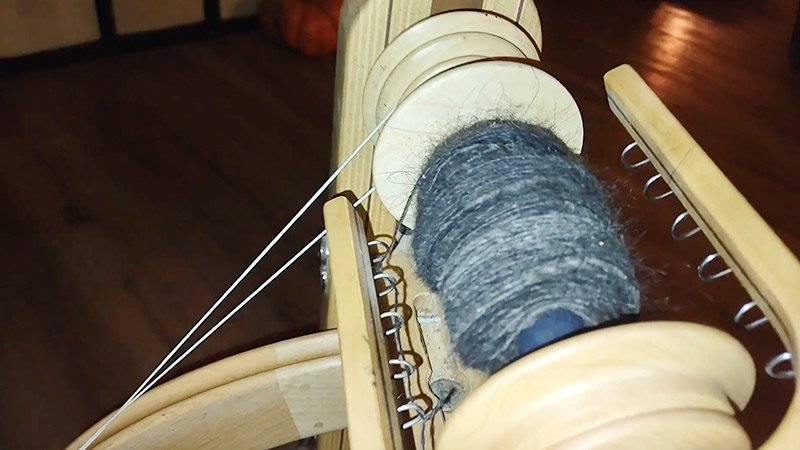
The process of obtaining Chiengora fiber is distinct from methods like shearing used for sheep and other animals. A fundamental principle is that the collection process is entirely non-invasive and does not involve harming the animal in any way.
Collection Method
Chiengora fiber is primarily collected by brushing dogs. This method is most effective and yields the best results when performed during the dog’s natural shedding seasons, which are typically spring and fall.
As dogs naturally shed their undercoats, the loose hair can be easily gathered through regular grooming.
Ideal Breeds
Not all dog breeds produce suitable fiber for spinning Chiengora. The most desirable fur comes from breeds that possess a double coat – an outer layer of guard hairs and a soft, dense undercoat.
Examples of breeds specifically mentioned as producing suitable fiber include Samoyeds, Pomeranians, Huskies, and Newfoundlands. These breeds naturally produce an abundant, soft undercoat that is ideal for spinning.
Cleaning and Carding
Once the loose hair is collected, it undergoes essential preparation steps. The fiber must be thoroughly cleaned to remove any dirt, debris, or foreign matter that may have been collected along with the hair.
After cleaning, the fiber is carded. Carding is a process that aligns the fibers and prepares them for spinning, removing any remaining tangles and creating a consistent mass ready to be drawn out into yarn.
Spinning
The cleaned and carded fiber is then spun into yarn. This can be done using the Chiengora fiber on its own or, quite commonly, the fiber is blended with other natural fibers.
Blending with materials like sheep wool, alpaca, or silk serves to enhance the yarn’s properties, such as increasing its durability, improving its texture, or altering its drape.
This blending process allows for the creation of unique yarns tailored for specific textile applications.
This careful and ethical collection and processing sequence ensures that the fiber is obtained responsibly while preparing it optimally for use in various textile applications.
Crafting with Chiengora: Products and Uses in Textiles
Due to its unique combination of softness, warmth, and luxurious feel, Chiengora fiber finds its application primarily in the luxury and niche markets. Its properties make it particularly well-suited for items where comfort, warmth, and a premium feel are paramount:
High-Quality Clothing
Chiengora is a popular choice for creating various clothing items, especially those intended for warmth. It is frequently used for knitting sweaters, scarves, hats, and gloves.
The fiber’s excellent ability to trap heat makes these garments highly effective for cold weather. The softness ensures they are comfortable to wear directly against the skin.
Luxury Accessories
The lightweight yet insulating nature of Chiengora also makes it ideal for accessories. It is used to craft shawls, wraps, and other items where a combination of warmth, elegance, and minimal weight is desired.
Specialized Blended Yarns
As noted in the processing section, Chiengora is often blended with other fibers. These blended yarns are specifically created for high-quality knitwear and weaving projects.
By combining Chiengora with fibers like wool, alpaca, or silk, textile artisans and manufacturers can develop unique yarns that inherit the best characteristics of each component, offering enhanced durability, unique textures, and specialized performance.
Elegant Home Décor
Beyond wearables, Chiengora fiber is also utilized in home textiles to add a touch of luxury and comfort. It can be used to create luxurious throws, blankets, and pillow covers.
These items leverage the fiber’s softness, warmth, and natural sheen to bring a cozy and elegant feel to interior spaces.
The versatility of Chiengora, particularly when blended, allows it to be adapted for a range of high-quality applications where its unique properties can be fully appreciated.
The Eco-Friendly Choice: Chiengora’s Sustainable Story
In an era where the environmental and ethical impact of materials is under increasing scrutiny, Chiengora emerges as a standout fiber due to its inherent sustainability. It is often highlighted as one of the most sustainable fibers available.
Truly Eco-Friendly Sourcing
The method of collecting Chiengora is a key factor in its sustainability. Since the fiber is sourced from dogs through regular grooming, it means the collection process is entirely non-invasive and cruelty-free.
Unlike methods that require harvesting an animal’s coat in a way that might cause discomfort, shedding collection is a natural part of dog care.
This ethical sourcing aligns well with the growing consumer demand for animal welfare in textile production.
Significant Waste Reduction
A major environmental benefit of Chiengora is its role in waste reduction. It utilizes dog hair that would otherwise be discarded and potentially sent to landfills.
By transforming this natural byproduct into a valuable textile fiber, it provides a sustainable alternative to creating entirely new fibers from raw resources, thereby reducing overall waste.
Natural Biodegradability: Unlike synthetic fibers derived from petroleum, Chiengora is a natural protein fiber. This means it is biodegradable.
At the end of its lifecycle, Chiengora can naturally decompose, reducing its long-term environmental impact compared to non-biodegradable synthetic materials that persist in the environment for centuries.
The sustainable and ethical aspects of Chiengora production make it an incredibly appealing option for environmentally conscious consumers and brands looking to minimize their ecological footprint.
Enhanced FAQ: Common Questions About Chiengora
Based on the properties and challenges discussed, here are answers to some frequently asked questions about Chiengora:
Is Chiengora Itchy?
Unlike some traditional wools which can cause itching due to scales on the fiber and the presence of lanolin, Chiengora is known for its exceptional softness.
It is described as softer than sheep wool and comparable to cashmere. Furthermore, it doesn’t contain lanolin, which is often a cause of allergic reactions and itching in sheep wool.
Therefore, Chiengora is generally considered less likely to cause itching and is suitable for sensitive skin.
How is Chiengora Collected? Does it Hurt the Dog?
Chiengora is collected by brushing dogs during their natural shedding periods. The key principle is that this process is entirely non-invasive and cruelty-free. It utilizes hair that the dog is naturally shedding anyway. No shearing or harming the animal is involved.
What Kind of Dogs Provide Chiengora Fiber?
The most suitable fiber comes from breeds with double coats. This includes a soft, dense undercoat that is shed seasonally. Specific examples mentioned in the source include Samoyeds, Pomeranians, Huskies, and Newfoundlands.
Is Chiengora More Sustainable Than Other Fibers?
Yes, Chiengora is considered one of the most sustainable fibers available. This is because it is sourced from naturally shed hair (reducing waste), the collection is non-invasive and cruelty-free, and the fiber is biodegradable.
It repurposes a natural byproduct that would otherwise be discarded, offering a circular approach to fiber sourcing.