
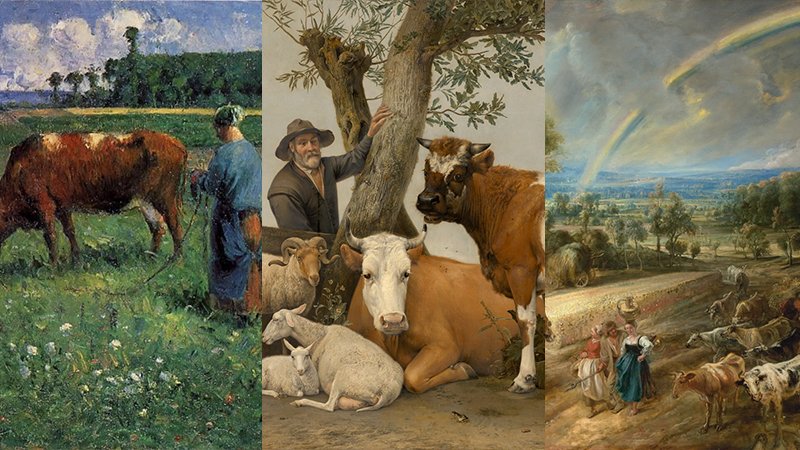
Cows have trotted through the annals of art history as symbols of fertility, nourishment, and even spiritual grace. From ancient cave paintings to modern masterpieces, these gentle giants have captivated artists and viewers alike for thousands of years.
Their presence in art reflects not just rural life but also deep cultural significance across various societies.
This article explores ten of the most famous cow paintings, showcasing how artists have transformed these humble creatures into subjects of beauty and reverence.
Each piece tells a unique story, highlighting the evolution of cow art and its enduring charm. Join in as we delve into the serene landscapes and colors that celebrate the quiet grace of cows, revealing their place in the artistic world.
1. Peasants of Flagey Back From the Fair – Gustave Courbet
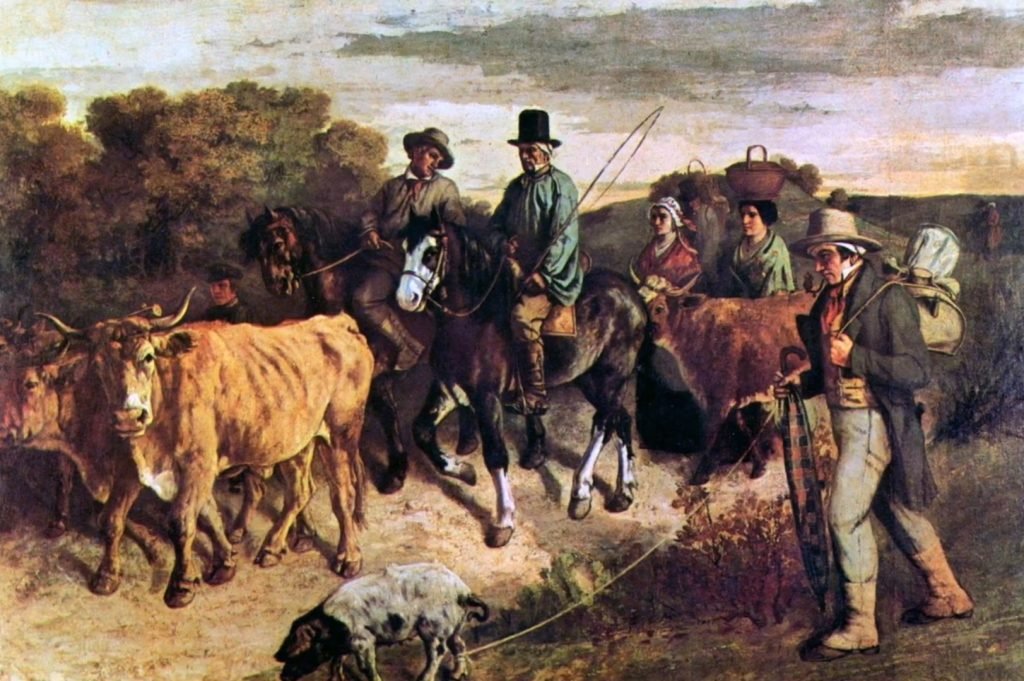
Gustave Courbet’s 1850 masterpiece, Peasants of Flagey Back From the Fair, presents a poignant glimpse into rural life.
Depicting a group of farmers journeying home with their cattle, the painting emphasizes the challenges faced by the working class.
Critics initially deemed the portrayal inauthentic, yet it captures the essence of the era’s agrarian struggles.
Courbet’s bold colors and detailed figures draw the viewer’s eye, celebrating the dignity of labor while also questioning societal norms. This painting solidifies its place as a pivotal work in realist art history.
2. Ploughing in Nevers – Rosa Bonheur
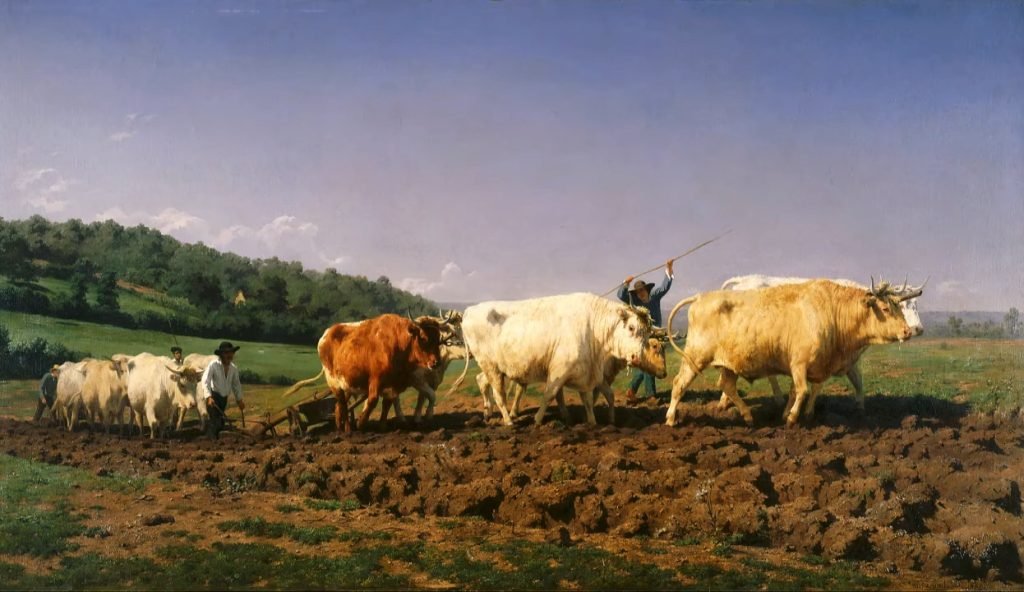
“Ploughing in Nevers,” completed in 1849, is one of Rosa Bonheur’s most celebrated works. This painting showcases a team of oxen expertly plowing a field, demonstrating incredible realism and detail.
Bonheur captures the colors of the landscape and the dynamic interplay of sunlight and shadows.
Viewers feel as if they’re standing in the field, witnessing the toil of agrarian life. Awarded a First Medal at the Salon, this piece is a standout example of how Bonheur elevated livestock to majestic subjects in art.
3. Lying Cow – Vincent van Gogh
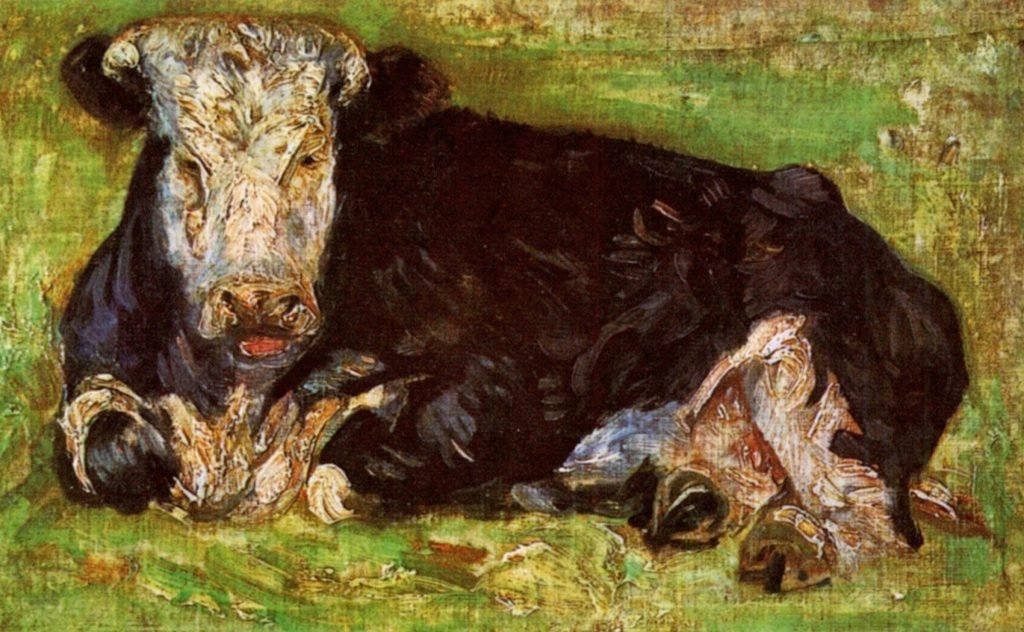
“Lying Cow,” painted in 1883, captures Van Gogh’s unique brushwork and emotional depth. The piece features a relaxed cow resting amidst a serene landscape, showcasing Van Gogh’s ability to evoke tranquility.
This painting, one of only two completed during his time in The Hague, reflects his early exploration of Impressionism.
The harmonious color palette enhances the cow’s gentle form while the characteristic strokes reveal Van Gogh’s evolving style.
Rare among his works, “Lying Cow” stands as a testament to the quiet beauty found in rural life, elevating cows to central subjects in art.
4. Woman Milking a Cow – Jean-François Millet
Jean-François Millet’s 1854 painting “Woman Milking a Cow” masterfully captures the intimate connection between humans and their animals. It features a woman seated with a cow, bathed in the soft morning light illuminating the hillside.
This scene illustrates daily rural life, highlighting the importance of farming in 19th-century France. The painting stands out for its simplicity and authenticity, evoking a sense of tranquility.
Millet’s attention to detail and atmospheric elements reflect the dignity of agrarian work, making this artwork a significant piece in the Realism movement.
5. Landscape with a Rainbow – Peter Paul Rubens
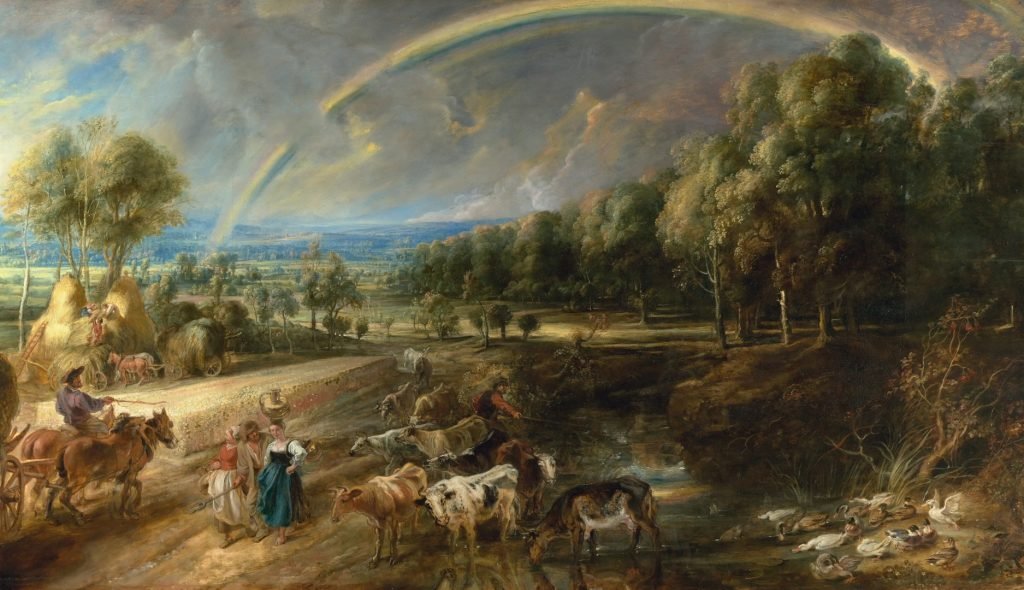
“Landscape with a Rainbow,” created around 1636, exemplifies Peter Paul Rubens’ mastery of light and color. This painting depicts a serene countryside where workers are seen alongside their cattle, embracing the simplicity of rural life.
A rainbow arches overhead, symbolizing hope and tranquility. Rubens’ intricate brushwork captures the lush beauty of nature, highlighting bovines as integral elements of the landscape.
This piece not only reflects the artist’s Baroque style but also celebrates the harmony between humans and animals in agricultural settings.
6. The Young Milkmaid – Julien Dupré
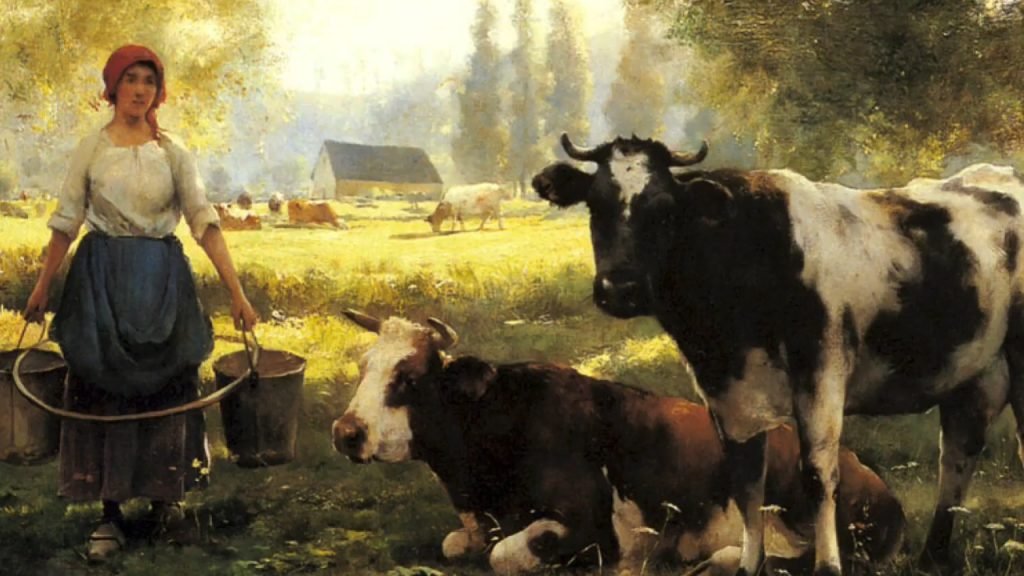
Julien Dupré’s “The Young Milkmaid,” completed in the late 1800s, captures the essence of rural life. This enchanting painting features a young girl alongside a dairy cow, holding a milk jug poised to be filled.
Dupré masterfully uses gentle colors and bright lighting to evoke purity and the beauty of nature. Viewers are drawn into the serene atmosphere, reflecting the daily routines of agrarian life.
This piece stands out among Dupré’s works and exemplifies how he portrayed the simple yet significant moments of rural existence, celebrating the connection between humans and their environment.
7. A Brindled Shorthorn Cow, Bred at Calke – Thomas Weaver
Thomas Weaver’s “A Brindled Shorthorn Cow, Bred at Calke” presents a curious depiction of a cow that draws attention for its peculiar proportions.
Critics note the cow’s head appears smaller relative to its body, leading to interpretations of Weaver’s potential commentary on agricultural practices.
This painting reflects Weaver’s fascination with rural farming life during the 18th century, hinting at the disquiet surrounding unnatural methods used to fatten livestock.
The artwork stands out as a unique piece within the early realism movement, capturing both the beauty and complexities of agrarian existence.
8. The Young Bull – Paulus Potter
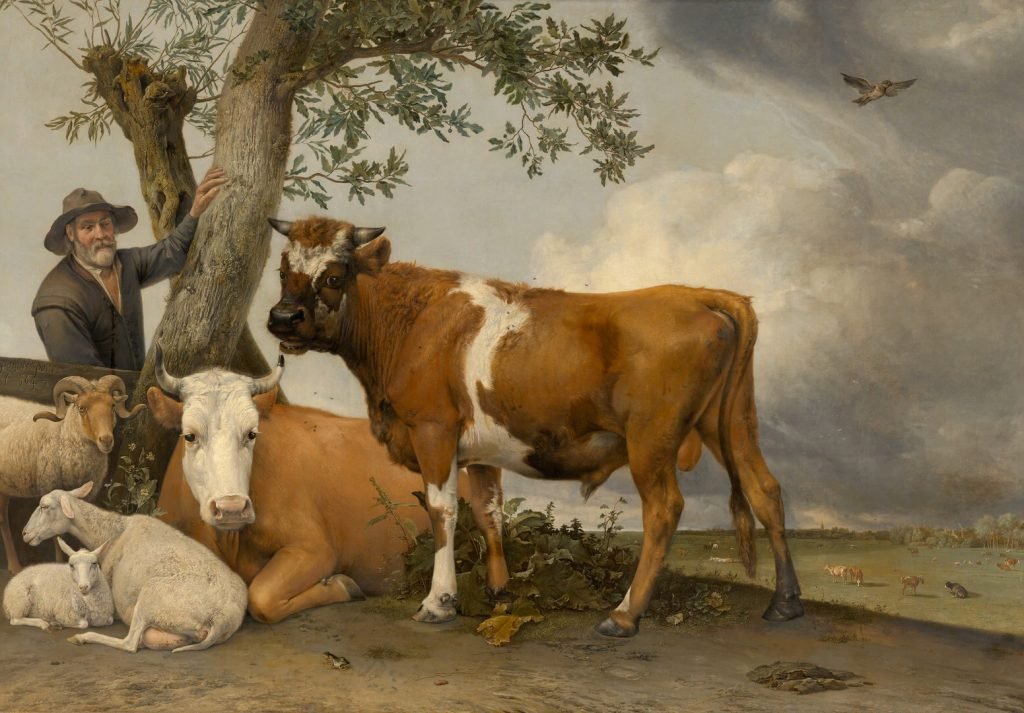
Paulus Potter’s “The Young Bull,” painted in 1647, showcases a playful young bull dominating the canvas. The expression of the bull mirrors that of the stocky farmer standing nearby, capturing a moment of connection.
Potter’s masterful use of realism brings out the animal’s personality against a backdrop of dark storm clouds, illustrating the changing weather that often influenced his work.
This painting emphasizes the significance of young bullocks in Dutch farming, as they were essential livestock sold for fattening and slaughter, making it a notable representation of agrarian life in the 17th century.
9. Girl Tending a Cow in Pasture – Camille Pissarro
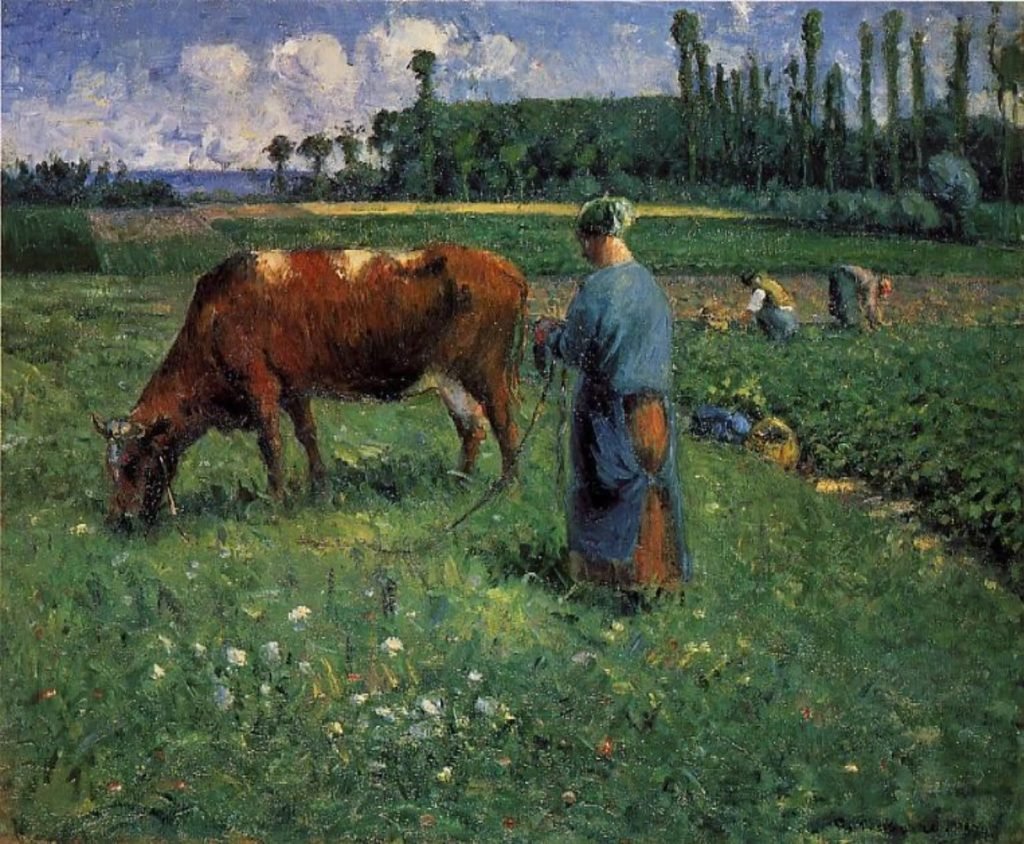
Pissarro’s “Girl Tending a Cow in Pasture” showcases a young girl attentively caring for a cow in a serene landscape. This 1884 painting captures the essence of pastoral life through soft brushwork and a color palette.
Pissarro’s depiction emphasizes harmony between humans and nature, illustrating the tranquility of rural chores. The light filters gently through trees, creating a warm, inviting atmosphere that highlights the beauty of everyday moments.
Through this piece, Pissarro elevates the act of tending livestock into an evocative, tender scene, reflecting the simplicity and grace of agrarian life.


