The 19th century marked a transformative period in the world of art, where creativity flourished and new movements emerged.
Artists began to break away from traditional techniques, embracing realism and later, impressionism. This shift allowed them to express their inner emotions and perspectives, leading to some of the most iconic works in art history.
From the brushstrokes of Vincent Van Gogh to the innovative styles of Claude Monet and Edgar Degas, these painters left an indelible mark on the art world.
The era produced masterpieces that not only reflect the changing times but also continue to inspire generations.
1. Woman with a Parasol – Claude Monet

Monet painted Woman with a Parasol in 1875, capturing a moment outdoors with colors and dynamic brushstrokes.
The artwork features a woman, Monet’s wife, holding a parasol against the backdrop of a breezy hillside.
He skillfully showcases light and shadow, drawing attention to the interplay of sunlight on her dress. The young child beside her is Monet’s son, adding a personal touch.
This painting epitomizes Impressionism, highlighting Monet’s innovative technique of painting en plein air to depict natural scenes.
2. Liberty Leading the People – Eugene Delacroix

Eugene Delacroix created Liberty Leading the People in 1830, inspired by the July Revolution in France. The painting features a powerful female figure, often identified as Marianne, symbolizing liberty and the fight for freedom.
Narrating a dramatic scene, Delacroix captures the valiant charge of ordinary citizens armed with muskets.
Adorned in a flowing dress and waving the French flag, Liberty beckons the revolutionary spirit, embodying dedication and patriotism in this iconic masterpiece.
This artwork remains a stunning representation of the era’s passion for liberal ideals and societal change.
3. The Gleaners – Jean-Francois Millet

“The Gleaners,” painted in 1857, showcases three peasant women gleaning leftover wheat in a vast rural landscape.
Millet emphasizes the grit and dignity of the working class, employing soft earth tones and natural lighting to enhance the emotional weight of the scene.
The women’s bent postures and coarse clothing portray the hardships of rural labor. This artwork not only highlights themes of poverty and social inequality but also challenges traditional artistic subjects, drawing attention to the often-overlooked lives of the poor in 19th century France.
4. Dejeuner sur l’Herbe – Edouard Manet

Manet’s “Dejeuner sur l’Herbe,” painted in 1863, stirred controversy with its bold portrayal of a nude woman seated beside two fully clothed men. The painting shocks viewers by juxtaposing casual nudity against a traditional picnic setting.
Critics initially condemned it for its perceived vulgarity, yet it symbolized a pivotal moment in art history.
This work challenged conventional norms, influencing future generations of artists and paving the way for the Impressionist movement, reflecting a significant evolution from Realism to modern artistic expression.
5. The Raft of the Medusa – Théodore Géricault
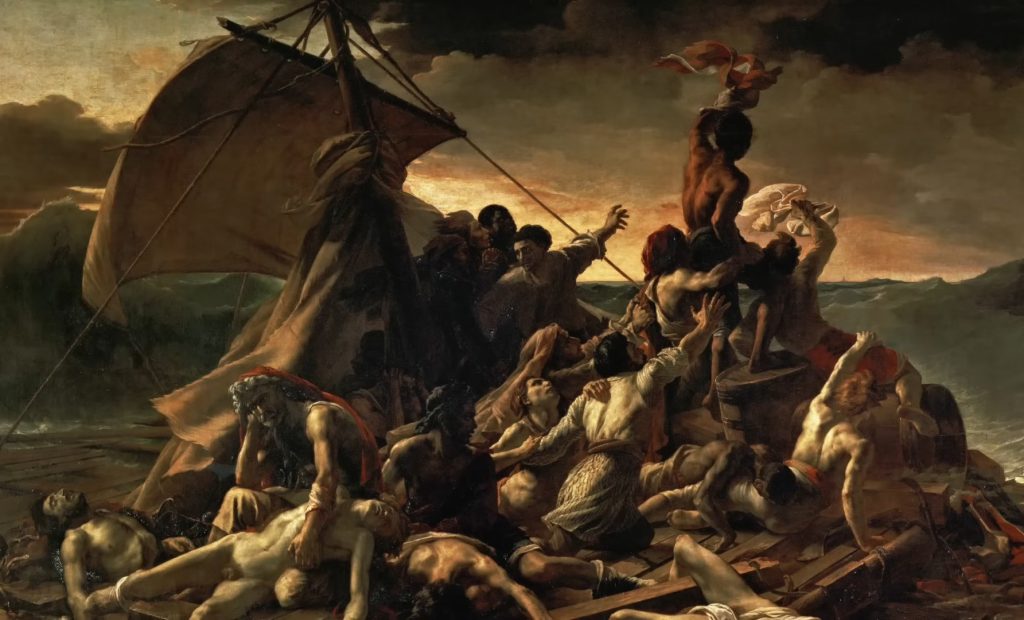
The Raft of the Medusa, created by Théodore Géricault in 1819, depicts the harrowing tale of the survivors from the wreck of the French frigate Medusa.
Géricault’s dark palette captures the despair of the 15 sailors adrift for 13 days, where they resorted to cannibalism.
The painting immortalizes their struggle against nature and highlights the negligence of the French naval command, making it a powerful commentary on human suffering.
Known as an iconic example of French Romanticism, this artwork profoundly influenced the art world and remains a significant historical reference.
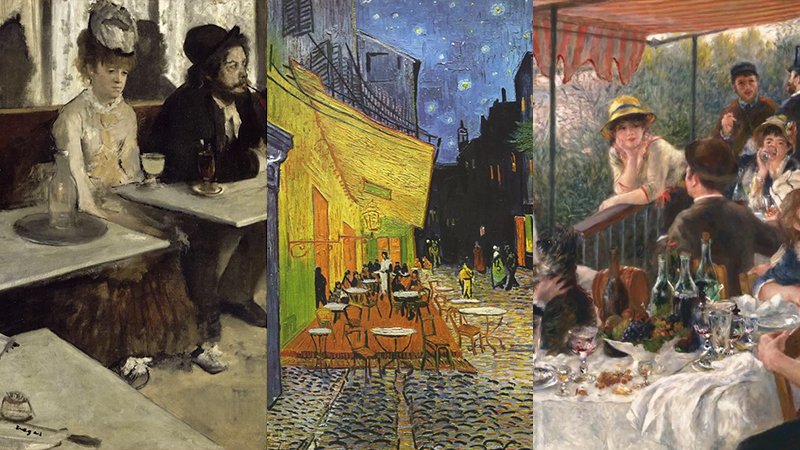
6. Cafe Terrace at Night – Van Gogh

“Cafe Terrace at Night,” painted in 1888, features a street scene in Arles, France. Van Gogh’s signature bold colors and dynamic brushstrokes create a warm, inviting glow from the café, showcasing the intimate connection between humans and their environment.
This masterpiece captures the essence of nightlife, depicting patrons engrossed in conversation under the stars.
Van Gogh’s unique perspective reflects both beauty and isolation, marking it as a landmark in the transition from realism to impressionism. The painting remains celebrated for its emotional depth and innovative use of light.
7. The Lady of Shalott – John William Waterhouse

Waterhouse’s The Lady of Shalott, painted in 1888, illustrates the tragic fate of a woman cursed to observe life from afar. He captures a moment as she floats down a serene lake in a boat, embodying the themes of longing and isolation.
The painting’s colors and detailed composition evoke the beauty reminiscent of the Italian Renaissance.
Drawing inspiration from Tennyson’s poem, Waterhouse’s work resonates with viewers, transporting them into a world of myth and romance while showcasing his mastery of the Pre-Raphaelite style.
8. Luncheon of the Boating Party – Pierre-Auguste Renoir

Renoir’s “Luncheon of the Boating Party,” completed in 1881, captures a joyful gathering of friends at the Maison Fournaise restaurant.
Renoir uses colors to depict relaxed social interactions among Paris’s affluent youth. The artwork features dynamic compositions and detailed expressions, showcasing the warmth of the midday sun.
Each character embodies the carefree spirit of the time, making it a quintessential representation of Impressionism and life in 19th century France.
This masterpiece reflects Renoir’s ability to immortalize friendship and conviviality through his brushstrokes.
9. The Absinthe Drinker – Edgar Degas

Degas’ The Absinthe Drinker, painted in 1876, portrays a solitary couple in a Paris café, emphasizing their inebriation.
Degas captures the somber mood with dark tones and haunting expressions, reflecting the effects of absinthe, a drink known for its lethargy.
Critics initially scorned him for depicting such subjects, yet this work exemplifies his commitment to realism and social commentary.
Degas’ artistic innovation shines through, as he challenges traditional notions by showcasing the raw aspects of French society during the 19th century.
10. The Card Players – Paul Cezanne

Cézanne completed “The Card Players” in 1895, showcasing two men engrossed in a card game at a small table. The painting features a bottle of wine beside them, adding a touch of social context.
Cézanne’s brushwork and color planes create an intimate atmosphere, immersing viewers in the moment. His focus on everyday life, particularly casual gatherings, was groundbreaking for its time.
Critics debated the merit of such subjects in fine art, yet Cézanne’s unique approach helped pave the way for modern artistic expressions.