
Michelangelo, a master of the Renaissance, transformed the world of art with his breathtaking sculptures and statues.
His extraordinary ability to breathe life into marble has left an indelible mark on the art world. Each piece tells a story, capturing the essence of human emotion and divine beauty, making them timeless treasures.
In this exploration of the 11 most famous Michelangelo sculptures and statues, readers will discover the genius behind works like the iconic David and the awe-inspiring Pietà.
These masterpieces not only showcase Michelangelo’s unparalleled skill but also reflect the cultural and historical context of their creation.
Whether you’re an art enthusiast or a casual observer, these iconic sculptures offer a glimpse into the brilliance of one of history’s greatest artists.
1. David

David stands as one of Michelangelo’s most iconic sculptures, expertly crafted between 1501 and 1504. The statue, carved from a single block of marble, depicts the Biblical hero David before his battle with Goliath.
Standing 17 feet tall, it exemplifies Renaissance ideals of beauty and human anatomy. Michelangelo’s meticulous attention to detail reveals a tension in David’s pose, showcasing both courage and contemplation.
This masterpiece resides in the Galleria dell’Accademia in Florence, drawing countless visitors who admire its grandeur and emotional intensity.
2. The Pietà
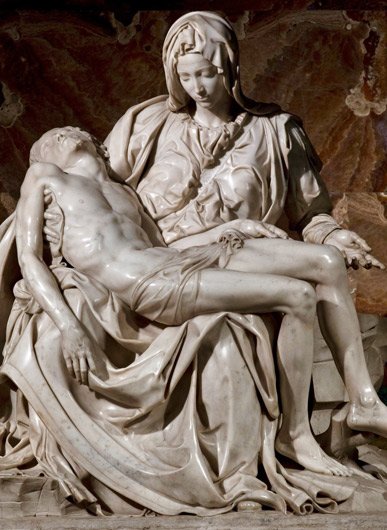
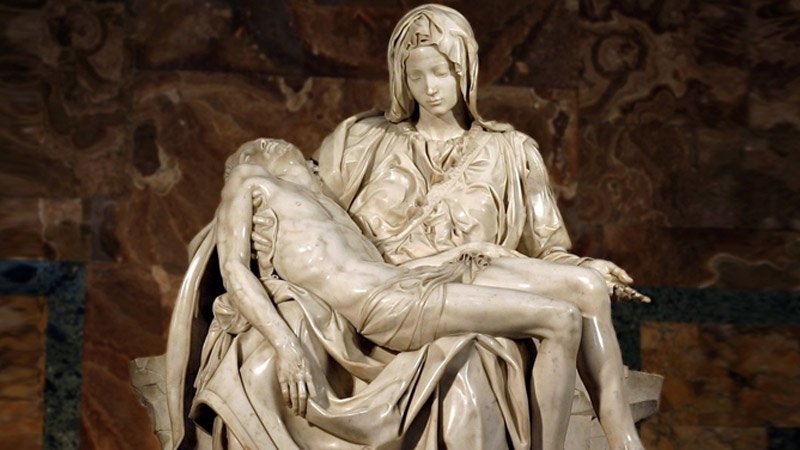
Michelangelo’s Pietà, sculpted between 1498 and 1499, showcases a poignant moment, depicting Mary cradling the lifeless body of Jesus.
Crafted from Carrara marble, this statue stands at 5 feet 8 inches tall and exudes serene beauty and profound sorrow.
Unique in its intricate detail, it highlights the juxtaposition of youth and suffering, particularly in Mary’s youthful features, capturing a tender yet heartbreaking expression.
Perfectly displayed in St. Peter’s Basilica, it continues to resonate with visitors, embodying the emotional depth characteristic of Michelangelo’s artistry.
3. Bacchus
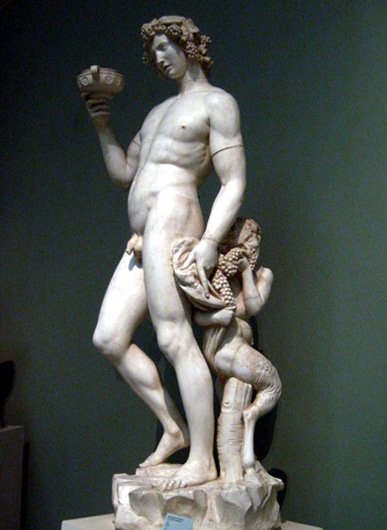
Bacchus, sculpted by Michelangelo in 1496, portrays the Roman god of wine and revelry. Standing at 6 feet tall, this marble statue captures Bacchus in a moment of intoxicated indulgence.
Michelangelo’s expertise is evident in the intricate details, from the flowing drapery of his garments to the expressive features of his face.
The statue showcases not just Bacchus’s joyful demeanor but also the sensuality of the human form. Currently housed in the Bargello Museum in Florence, Bacchus exemplifies Michelangelo’s mastery of both anatomy and emotional expression.
4. Moses

Michelangelo’s Moses, sculpted between 1513 and 1515, stands at 8 feet tall and is a part of the tomb of Pope Julius II. The statue depicts Moses with striking realism, showcasing powerful muscles and expressive features.
Notably, Moses has horns on his head, symbolizing divine radiance, as described in the Book of Exodus.
This masterpiece, housed in San Pietro in Vincoli, exemplifies Michelangelo’s ability to convey emotion and drama, capturing the moment of contemplation and authority.
5. The Madonna of Bruges
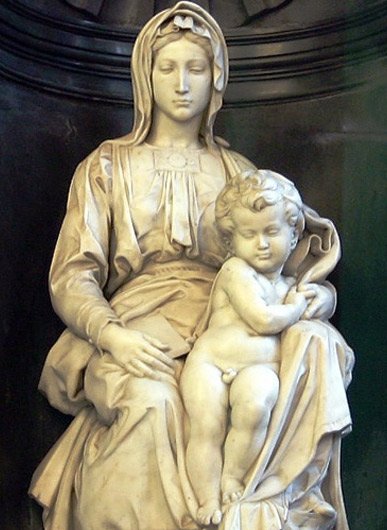
The Madonna of Bruges, sculpted by Michelangelo around 1501, stands at 3 feet 11 inches tall. This exquisite marble statue depicts the Virgin Mary tenderly holding the Christ child.
Michelangelo’s skill is evident in the detailed drapery and the serene yet dynamic expressions on their faces.
Currently located in the Church of Our Lady in Bruges, Belgium, this masterpiece represents a blend of divine grace and human emotion, showcasing Michelangelo’s unique ability to evoke tenderness through stone.
6. The Deposition (The Florentine Pietà)
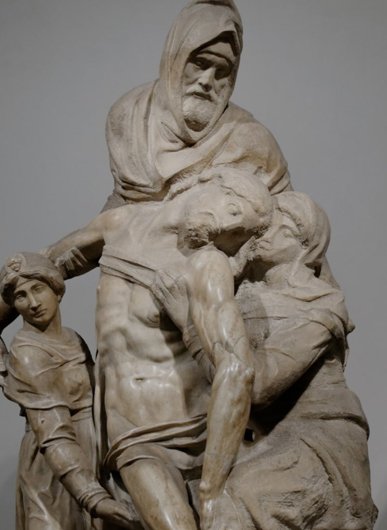
The Deposition, also known as The Florentine Pietà, showcases Michelangelo’s emotional intensity and mastery of form.
Crafted between 1547 and 1555, this powerful sculpture depicts the moment Jesus’ body is taken down from the cross.
Standing at about 5 feet 9 inches, the statue features Mary, Nicodemus, and two other figures, with intricate details conveying grief and compassion.
Initially intended for Michelangelo’s tomb, this unfinished work reveals his struggle with mortality while exemplifying the ethereal beauty of the human form.
Currently displayed in the Museo dell’Opera del Duomo in Florence, it captivates visitors with its raw emotion and dramatic composition.
7. Tomb of Pope Julius II
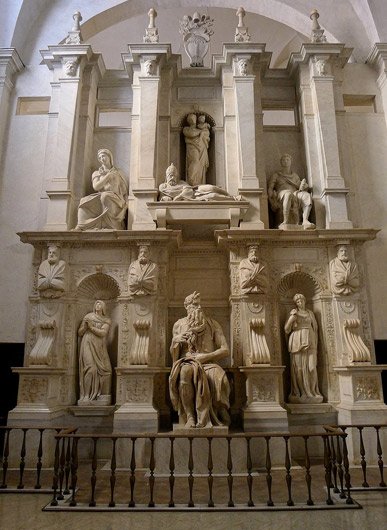
The Tomb of Pope Julius II, designed by Michelangelo, showcases a grand architectural vision. It features four colossal sculptures, including the famous statue of Moses alongside the anguished figures of Leah and Rachel.
The mausoleum, originally planned for St. Peter’s Basilica, exemplifies Michelangelo’s mastery in blending sculptural beauty with powerful symbolism.
Though incomplete, it reflects themes of faith and mortality, leaving a lasting impression on visitors at San Pietro in Vincoli.
8. The Genius of Victory
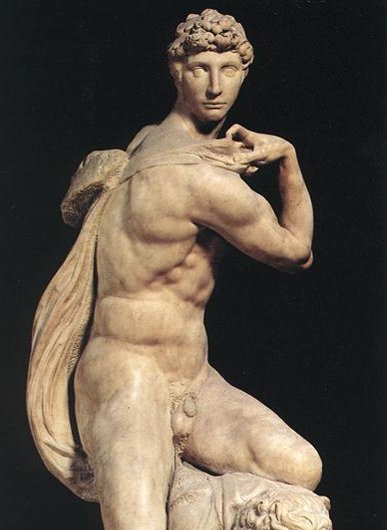
The Genius of Victory, sculpted by Michelangelo between 1532 and 1534, showcases an awe-inspiring figure symbolizing triumph.
Standing at approximately 10 feet tall, this marble statue captures a victorious figure draped in flowing garments, with a dynamic pose that conveys motion and grace.
Michelangelo’s intricate detailing highlights the strength and elegance of the human form. Originally intended for the Tomb of Pope Julius II, it remains a testament to Michelangelo’s ability to merge symbolism with physicality, now displayed in the Museo dell’Opera del Duomo in Florence.
9. Rebellious Slave
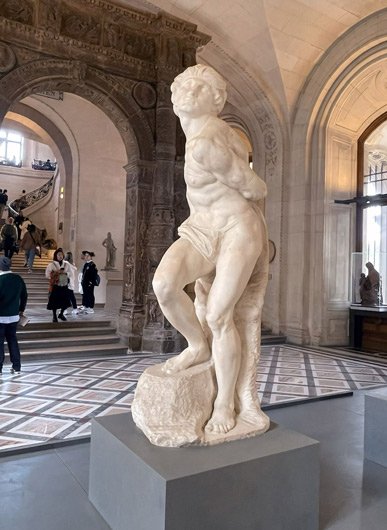
Michelangelo’s Rebellious Slave, sculpted between 1513 and 1516, stands at about 6 feet tall and is part of a series intended for the tomb of Pope Julius II.
The statue represents a figure in a dynamic struggle, symbolizing the tension between human will and confinement.
Michelangelo’s expertise shines through in the detailed musculature and expressive face, capturing the essence of rebellion and resistance.
Currently housed in the Louvre Museum, this masterpiece exemplifies the artist’s focus on the emotional complexities of the human experience.
10. Dying Slave
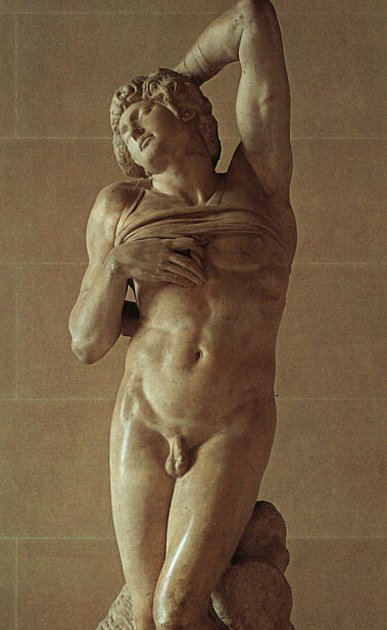
Michelangelo’s Dying Slave, sculpted between 1513 and 1516, stands at about 6 feet tall. This captivating statue embodies the struggle against death, portraying a figure caught in the act of dying.
Michelangelo’s mastery is evident in the detailed anatomy and the emotional depths he evokes. Currently part of a series intended for Pope Julius II’s tomb, the Dying Slave resides in the Louvre Museum.
It represents the poignant tension between life and death, characteristic of Michelangelo’s late works.
11. Risen Christ, Cristo della Minerva
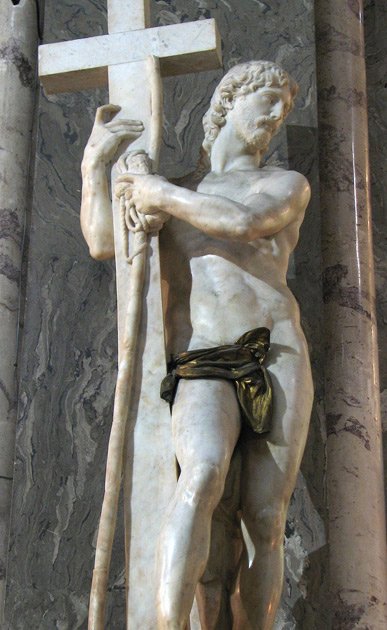
Risen Christ, known as Cristo della Minerva, was sculpted by Michelangelo around 1519. It stands approximately 5 feet 9 inches tall and showcases Christ in a triumphant pose, with an expression of serene confidence.
The statue emphasizes anatomical precision and drapery, capturing the tension in Christ’s body as He emerges from the tomb.
Housed in the Church of Santa Maria sopra Minerva in Rome, this masterpiece reflects Michelangelo’s profound understanding of divine representation and embodies themes of resurrection and hope.


