Bridges have long captivated artists, serving as symbols of connection and beauty in the landscape. Their majestic structures often frame breathtaking views, drawing the eye and inspiring creativity.
Throughout history, many renowned painters have immortalized these architectural wonders on canvas, capturing the interplay of light and shadow that brings each scene to life.
In this article, we’ll explore ten of the most famous bridge paintings, showcasing the unique styles and perspectives of the artists behind them.
From Claude Monet’s enchanting depictions to the striking compositions of lesser-known talents, these works reveal how bridges transcend mere function to become subjects of artistic expression.
Join us as we journey through time and art, discovering the stories behind these iconic pieces.
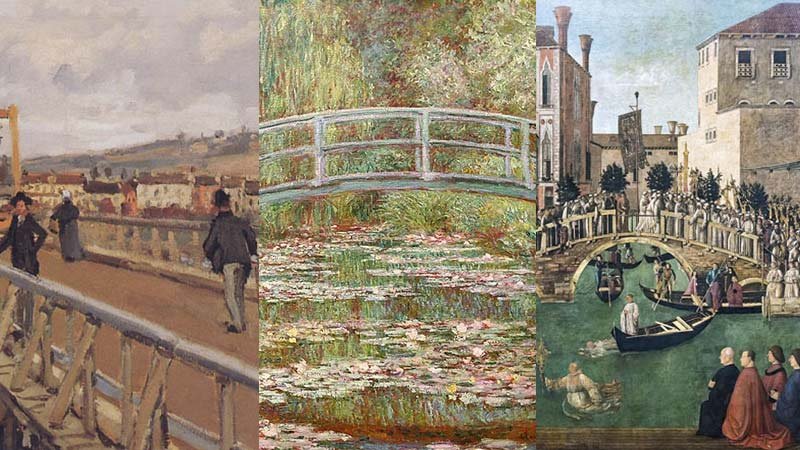
1. Bridge over a Pond of Water Lilies – Claude Monet

Monet completed “Bridge over a Pond of Water Lilies” in 1899, during a period of intense focus on nature. This iconic painting depicts a tranquil scene featuring a graceful bridge arching over a serene pond filled with vibrant water lilies.
Monet’s masterful use of color and light captures the lush greenery surrounding the pond, emphasizing the beauty of the floral elements.
The artwork encapsulates his Impressionist style, highlighting the interplay of reflection and natural elements, inviting viewers to immerse themselves in this picturesque moment.
2. The Argenteuil Bridge – Claude Monet

The Argenteuil Bridge, painted in 1874, showcases Claude Monet’s skill in perspective and vibrant color. Set on the outskirts of Paris, this work captures a moment infused with sunlight, reflecting off the Seine River.
Monet’s brushwork brings the bridge and its surroundings to life, depicting boats lazily floating beneath it.
The artwork exemplifies the Impressionist technique of painting en plein air, immersing viewers in the fleeting beauty of nature and architecture intertwined in this picturesque scene.
3. Landscape with a Stone Bridge – Rembrandt

Rembrandt’s “Landscape with a Stone Bridge,” painted in 1637, portrays a dramatic scene rich in detail. The painting features an old stone bridge arching over a small river, enveloped by a looming storm cloud.
Sunlight breaks through, illuminating the water where two boats, filled with rowers, navigate toward shore. The contrast of light and shadow showcases Rembrandt’s mastery of atmospheric depth, capturing both the beauty and tension of nature.
This work exemplifies his ability to create evocative landscapes that tell stories through light and darkness.
4. Rain, Steam and Speed – The Great Western Railway – J. M. W. Turner
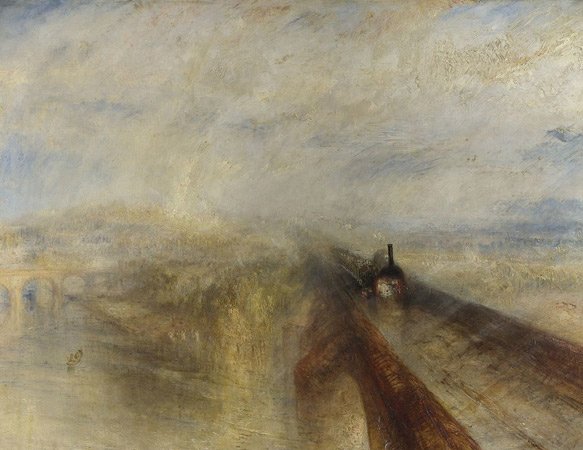
“Rain, Steam and Speed – The Great Western Railway,” painted in 1844, showcases Turner’s ability to depict movement and atmosphere.
It features a steam train hurtling across a bridge, enveloped in mist and rain. The dynamic interplay of light and shadow illustrates the power of industrial progress while also highlighting nature’s influence.
Turner’s brushwork emphasizes motion, capturing the viewer’s eye as the train dominates the landscape, merging human innovation with the raw beauty of the English countryside. This piece stands as a testament to the evolving relationship between technology and art.
5. Water Lilies and Japanese Bridge – Claude Monet

Monet’s “Water Lilies and Japanese Bridge,” painted in 1899, showcases his fascination with nature. He depicts an arched bridge over a tranquil pond, with vibrant water lilies floating peacefully.
This artwork reflects Monet’s signature Impressionist style, characterized by fluid brushwork and soft colors. The interplay of light on the water adds depth, while the lush greenery envelops the scene in serenity.
This painting illustrates Monet’s dedication to capturing different lighting conditions, presenting the bridge as a serene focal point amidst nature’s beauty.
6. The Langlois Bridge at Arles – Vincent van Gogh

Vincent van Gogh painted “The Langlois Bridge at Arles” in 1888, focusing on an intricately designed drawbridge over a canal.
It captures women washing clothes by the waterside while a horse-drawn carriage crosses. Van Gogh’s use of bold colors creates an electric intensity, showcasing his trademark brushwork.
Bright sunlight highlights the earthy tones of the bridge, contrasting beautifully with the blue sky and water. This painting epitomizes van Gogh’s love for the landscape and his deep connection to the natural world.
7. Charing Cross Bridge – André Derain

André Derain’s “Charing Cross Bridge,” painted in 1906, captures the iconic structure with bold colors and strong brushstrokes.
This artwork emphasizes vibrancy, using vivid hues to portray reflections in the Thames River. Derain skillfully showcased the bridge’s architectural elegance against the backdrop of the busy city, blending Impressionist techniques with Fauvist elements.
The interplay of light and color creates a dynamic atmosphere, inviting viewers to experience the energy of London.
This piece stands as a testament to Derain’s innovative approach, making it a notable contribution to bridge paintings.
8. Footbridge at Argenteuil – Alfred Sisley

Alfred Sisley’s “Footbridge at Argenteuil,” painted in 1872, beautifully captures a peaceful riverside scene.
Sisley’s Impressionist style is reflected in the soft color palette, emphasizing the gentle light filtering through the trees.
The footbridge, arching gracefully over the Seine, connects the landscape and its lively waters, inviting viewers to appreciate this tranquil moment.
Boats float nearby, and the delicate brushwork evokes a sense of calm, showcasing Sisley’s ability to masterfully blend nature with human architecture.
9. Miracle of the Cross at the Bridge of S. Lorenzo – Gentile Bellini

Gentile Bellini’s “Miracle of the Cross at the Bridge of S. Lorenzo,” painted in 1500, showcases a pivotal moment in Venetian history.
Bellini depicts the miraculous event where a fallen cross inspired faith among onlookers. The bridge serves as a backdrop, symbolizing unity and divine intervention.
Rich colors and detailed expressions illustrate the drama and emotional intensity of the scene. This artwork exemplifies Renaissance artistry, merging religious narrative with architectural representation, captivating viewers through its depth and storytelling power.
10. Under the Bridge at Hampton Court – Alfred Sisley

Alfred Sisley’s “Under the Bridge at Hampton Court,” painted in 1874, captures a serene riverside scene along the Thames.
The painting features a charming bridge arching over the water, framed by lush trees and vivid reflections. Sisley’s use of light and color exemplifies his Impressionist technique, bringing to life the tranquil atmosphere of the locale.
The gentle ripples of the river and the interplay of dappled sunlight invite viewers to immerse themselves in this idyllic moment in time, showcasing the harmonious relationship between nature and architecture.