Cubism revolutionized the art world in the early 20th century, shattering traditional perspectives and inviting viewers to experience art in a completely new way.
This groundbreaking movement, spearheaded by artists like Pablo Picasso and Georges Braque, introduced a fragmented approach to form and space that challenged the very foundations of representation.
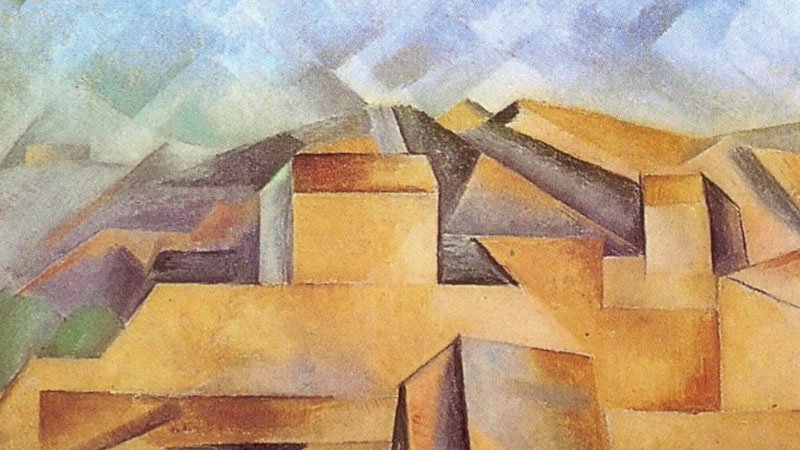
Within Cubism, two primary types emerged: Analytical and Synthetic. Analytical Cubism deconstructs subjects into geometric shapes and muted colors, while Synthetic Cubism reassembles these elements, often including mixed media and vibrant hues.
Understanding these distinct styles not only enriches one’s appreciation of modern art but also reveals the profound impact Cubism has had on subsequent artistic movements.
Dive into the fascinating world of Cubism and explore how these innovative techniques continue to influence artists today.
1. Proto-Cubism
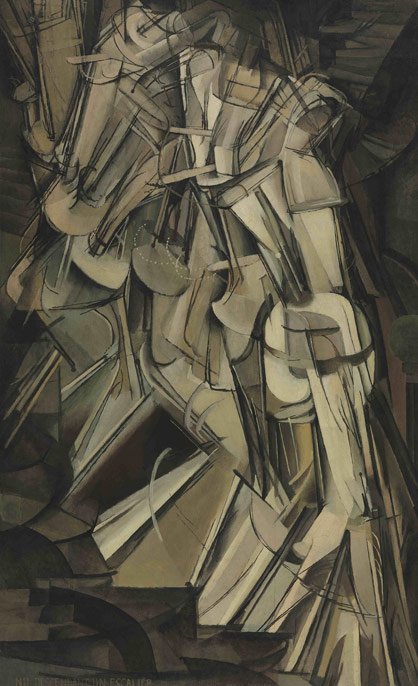
Proto-Cubism marks the early experimentation phase leading to Cubism’s development. Artists began to explore new perspectives by deconstructing forms and challenging traditional representation.
Influential pieces from this period often feature simplified shapes, which hint at the complexities that would define later styles.
Pablo Picasso’s works, particularly during the late 19th century, exemplify this emerging style with their focus on geometric elements.
Georges Braque also contributed significantly through his innovative approach to form, urging viewers to see subjects from multiple angles.
Distinctively, Proto-Cubism sets the groundwork for the more defined stages of Cubism, paving the way for the analytical techniques that followed.
As artists focused on abstraction, they began to influence the artistic landscape, inspiring those who would embrace the full spectrum of Cubist expression.
2. Analytical Cubism
Analytical Cubism marked a pivotal shift in how artists represented reality. Artists like Pablo Picasso and Georges Braque deconstructed subjects into geometric shapes, emphasizing form over color.
Each piece often featured a muted color palette, primarily utilizing grays, browns, and ochres to maintain focus on structure.
Intricate details were broken down and rearranged, allowing viewers to see multiple perspectives within a single work.
The lack of a definitive viewpoint challenged traditional representation, encouraging deeper exploration of the subject matter.
Notable examples include Picasso’s “Les Demoiselles d’Avignon,” which reflects these principles through fragmented figures.
Analytical Cubism often incorporated overlapping planes, revealing the complexity of three-dimensional objects on a two-dimensional surface.
This innovative approach sought to depict reality in an abstract manner, setting the stage for the subsequent evolution into Synthetic Cubism.
3. Synthetic Cubism
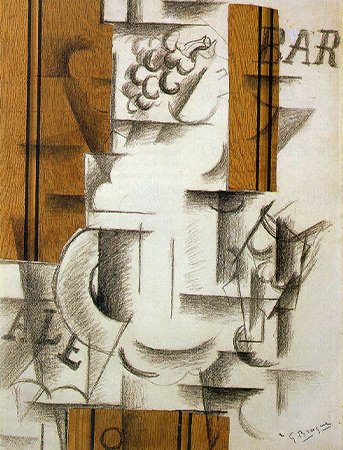
Synthetic Cubism emerged as a vibrant evolution of the Cubist movement, building upon the foundations laid by Analytical Cubism.
Artists began to incorporate mixed media techniques, utilizing collage and including materials like newspaper clippings and textured paper.
This style emphasized color and form, often characterized by a bold palette that reflected the subject’s emotional essence.
Techniques such as assemblage and collage allowed for a playful interaction between different elements.
Artists like Pablo Picasso and Georges Braque reassembled fragmented forms into cohesive compositions that presented multiple viewpoints simultaneously.
Notable works, including Picasso’s “Still Life with Chair Caning,” showcase this innovative approach, transforming everyday objects into artistic statements.
Synthetic Cubism also shifted the focus from merely deconstructing objects to creatively reconstructing them, making it a significant milestone in modern art’s narrative.
The style encouraged viewers to engage with the artwork more dynamically, appreciating the layers and complexities embedded within each piece.