Fall brings plenty of chances to have fun with your clothes. Sweaters, boots, coats, and scarves can turn simple pieces into outfits that feel warm and put together. Yet adding more layers does not always make a look better.
Sometimes, the trouble comes from small details. A coat may pull across the shoulders. Trouser hems may bunch over boots. Several strong pieces may compete for attention. Even clothes you love can feel awkward when their shapes, fabrics, or colors do not work well together.
The good news is that you rarely need a whole new wardrobe to solve these problems. A different shoe, a lighter layer, or a small change in how you wear a shirt can make a real difference.
These fall outfit styling mistakes to avoid will help you get more from the clothes you own. Treat them as useful checks, rather than strict rules. Your taste, comfort, climate, and daily routine should guide the final look.
1. Wearing Dark Autumn Colors Without Any Contrast
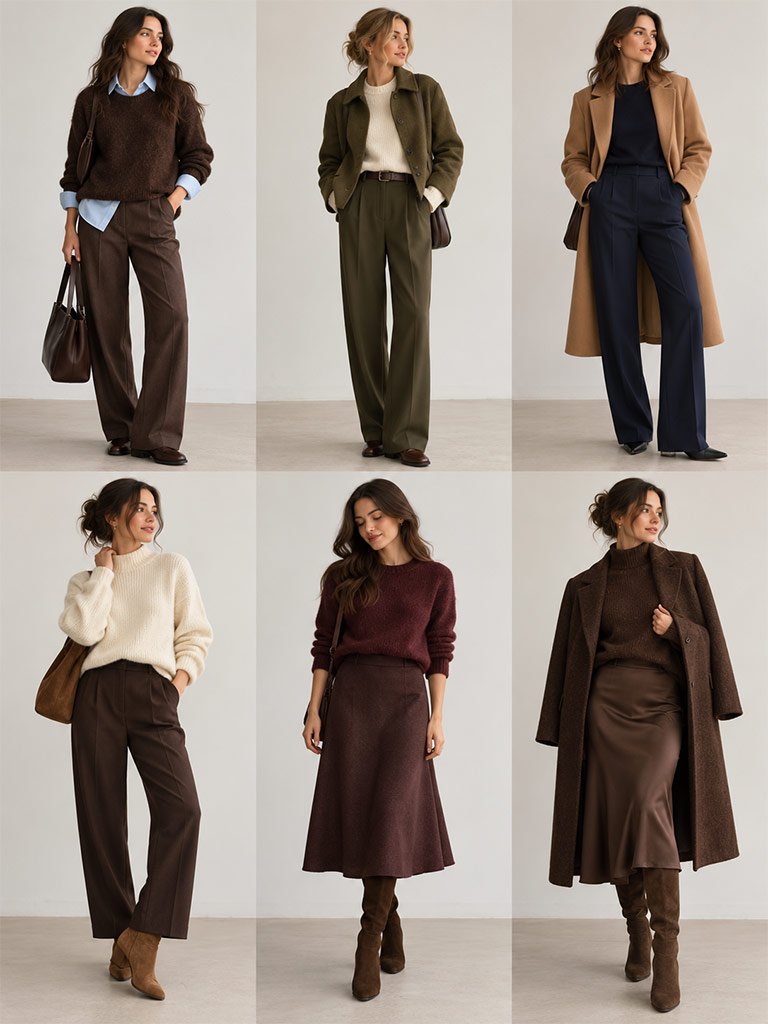
Brown, olive, navy, and burgundy are easy shades to reach for in fall. They work well with many wardrobe basics and can create a calm, coordinated look.
The problem is not wearing these colors together. It is choosing pieces that all have the same depth and finish when you want an outfit with more definition.
A dark brown sweater, brown trousers, brown boots, and a brown coat can blend into one solid shape. That may be exactly what you enjoy. But if the outfit feels flat, a little contrast can help.
How to fix it:
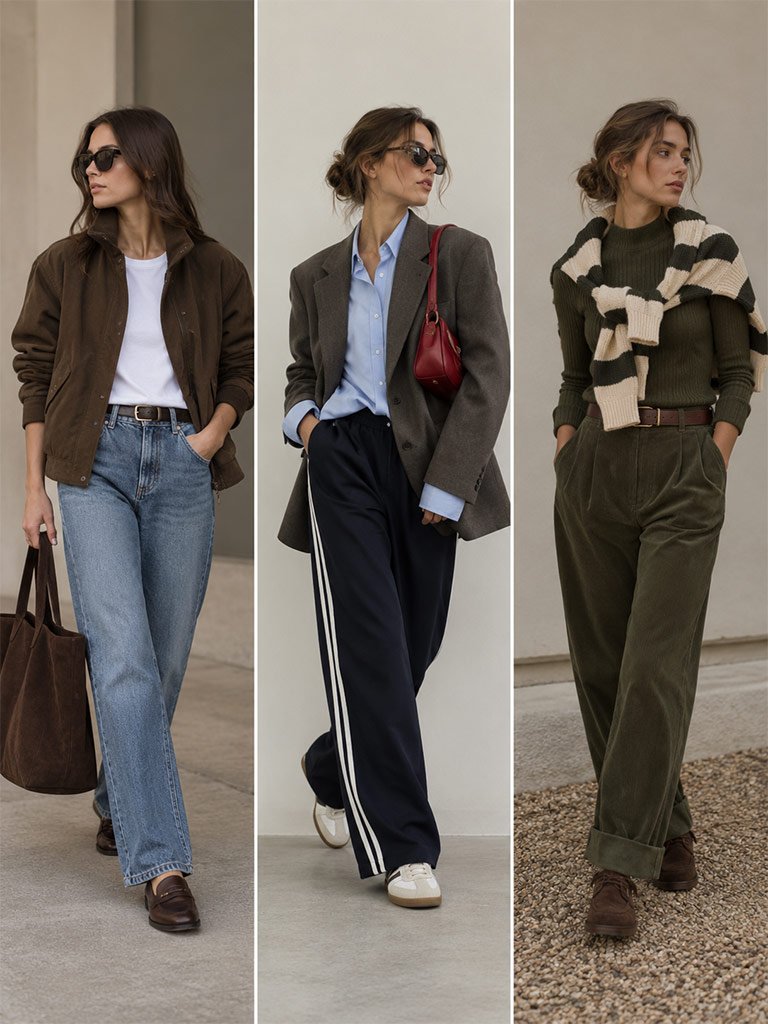
- Pair chocolate brown with a pale blue shirt.
- Wear cream beneath an olive jacket.
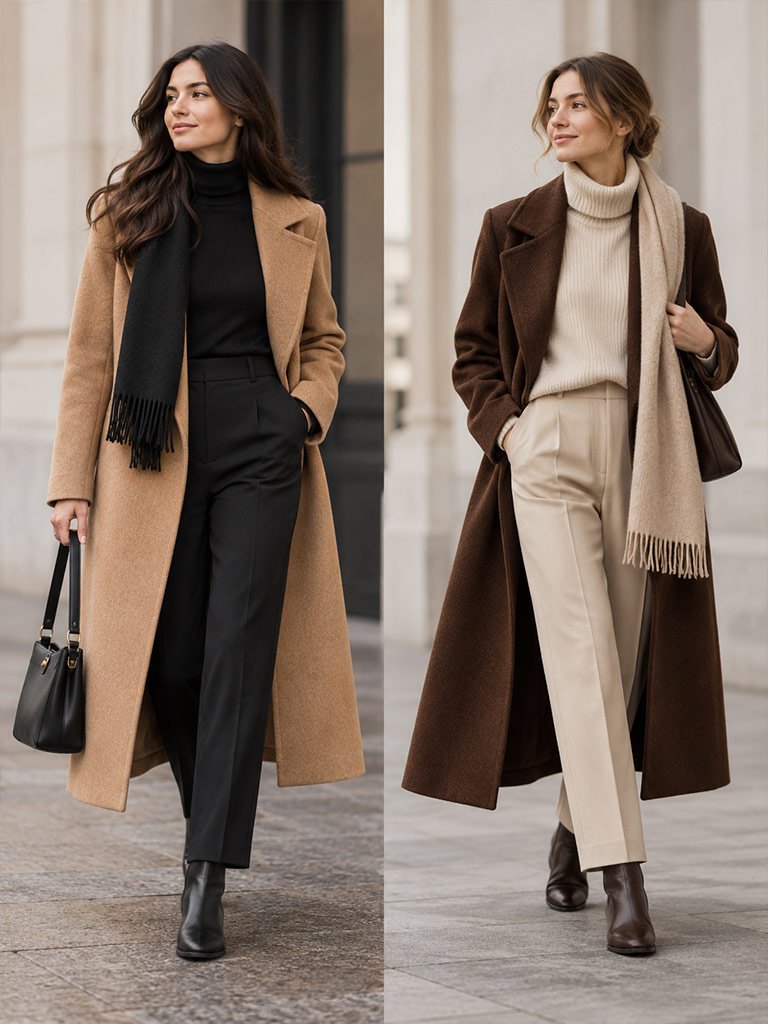
- Add a camel coat over navy separates.
- Mix smooth trousers with a textured knit.
- Try different shades of the same color.
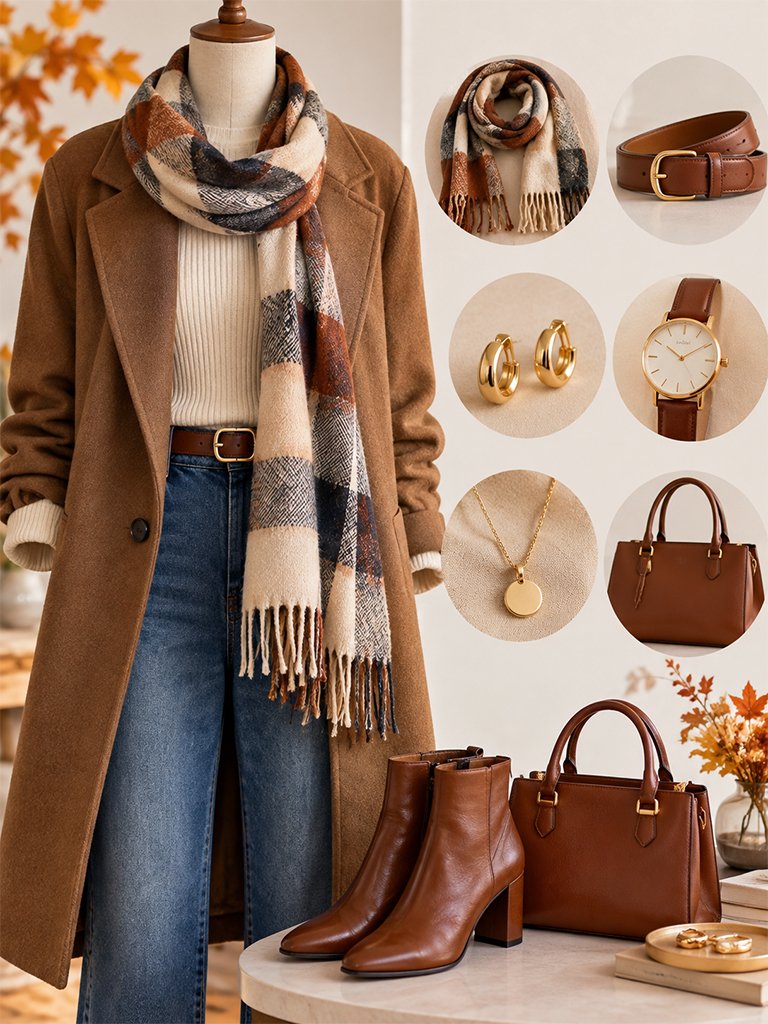
For example, a cream knit with dark brown trousers and tan boots keeps the warm fall palette while giving each piece room to stand out.
If you prefer an outfit in one color, vary the fabric. A soft wool sweater, smooth skirt, and suede boots can add depth without a bright accent.
2. Choosing Oversized Pieces Without Checking the Overall Shape
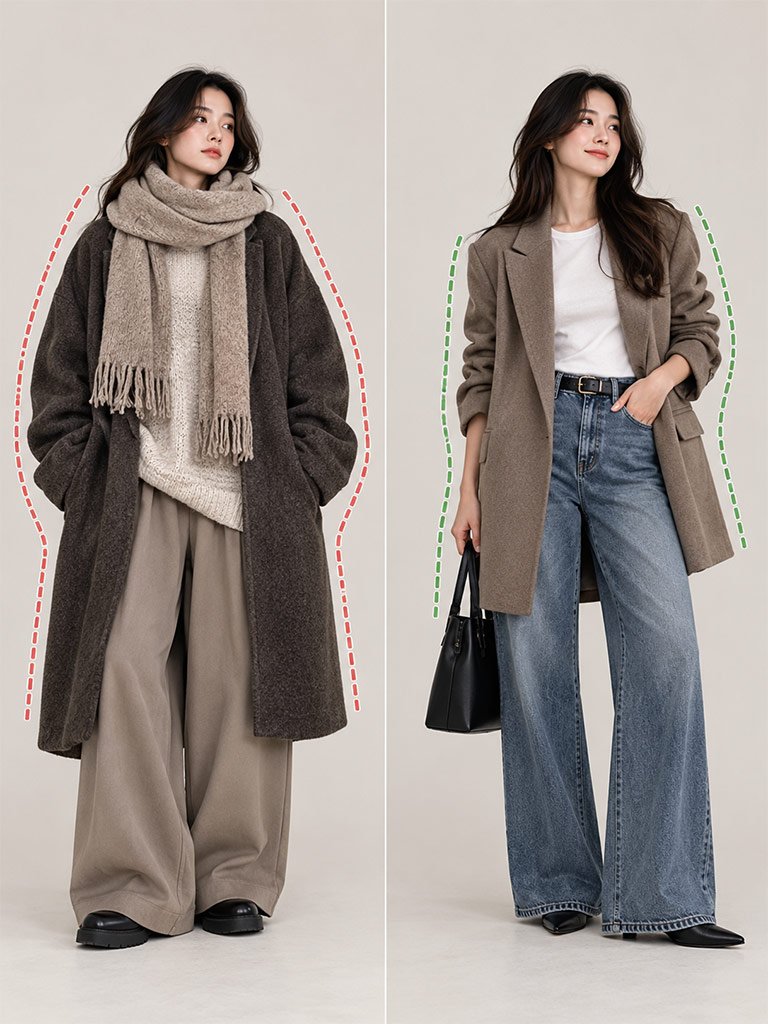
Loose clothes can be comfortable, stylish, and easy to layer. There is no reason to give them up just because the weather turns cool.
However, several roomy pieces worn together can create more bulk than you intended. Wide trousers, a long sweater, a broad coat, and a thick scarf may hide details you would like to show.
The solution does not have to be tight clothing. Often, one small adjustment adds enough shape.
How to fix it:
- Pair a roomy sweater with straight-leg jeans.
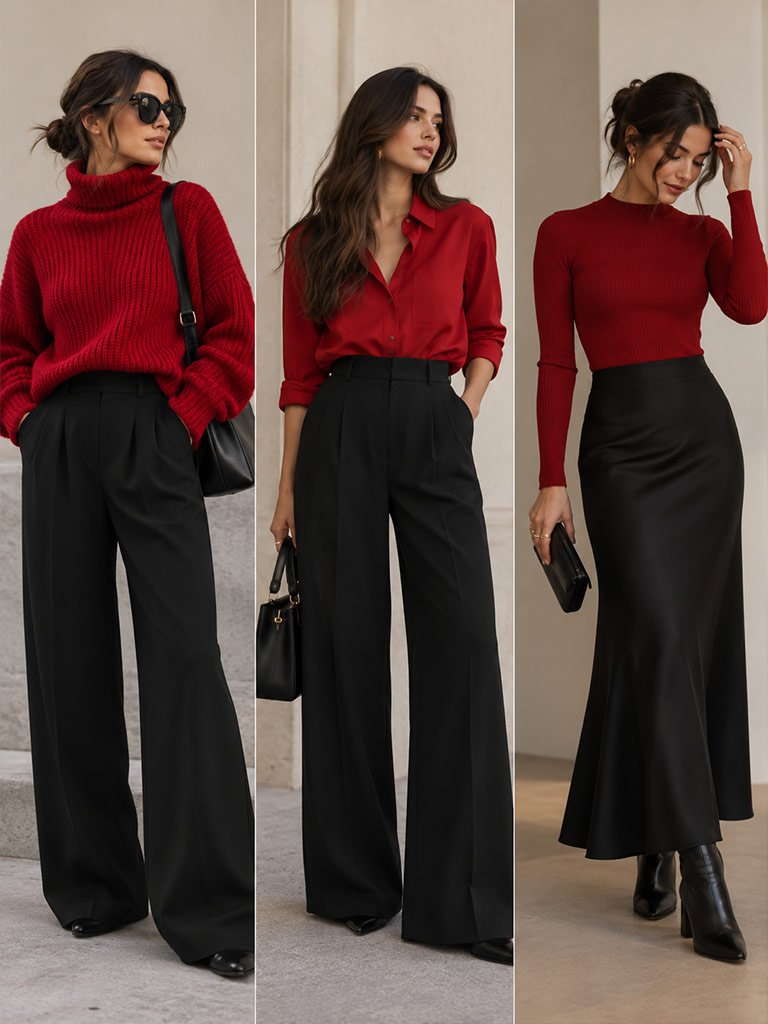
- Wear wide-leg trousers with a shorter knit.
- Leave an oversized jacket open to show the layers beneath.
- Try a small front tuck if the fabric sits comfortably.
- Choose a less bulky scarf when your coat has a generous fit.
An oversized blazer can look great with wide trousers. A neat tee underneath and visible waistline help make the combination feel deliberate.
Look at the full outfit in a mirror. Notice where each piece ends and whether the layers move easily together.
3. Picking Shoes Without Considering Your Hemlines
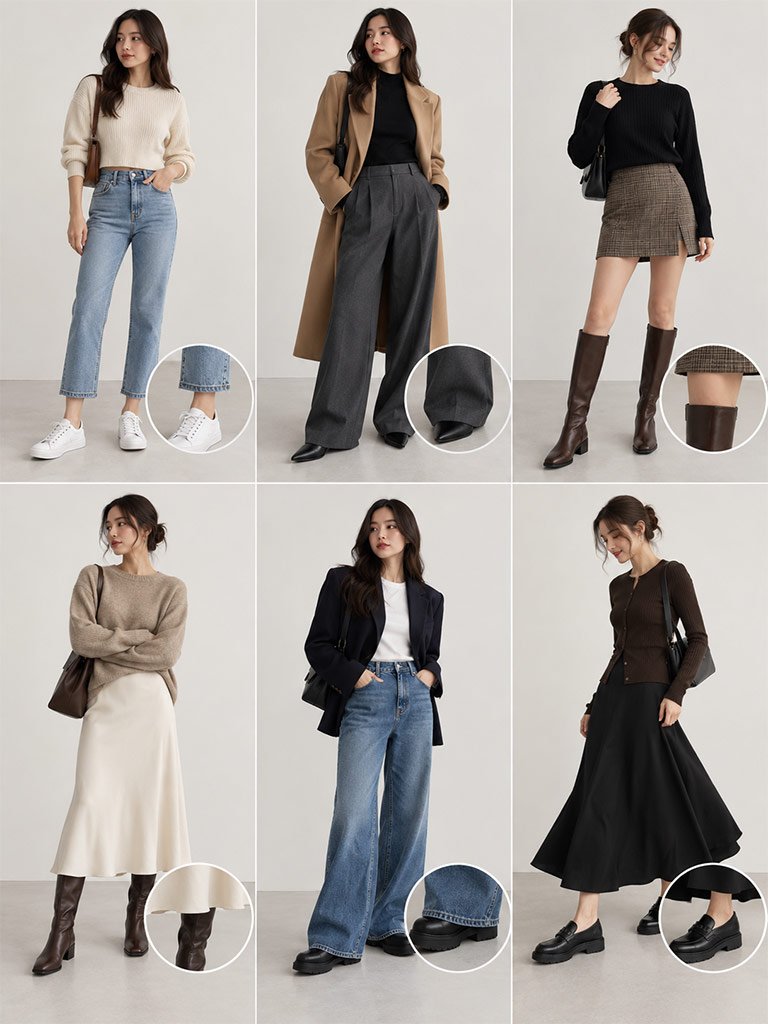
Shoes affect both the appearance and comfort of an outfit. A pair that works with cropped jeans may sit awkwardly beneath long trousers.
Boot height also changes how a skirt looks. A skirt hem that barely catches the top of a boot can bunch as you walk. Long trousers may gather over bulky footwear or drag on the ground.
These are practical fit issues as much as styling concerns.
How to fix it:
- Try trousers on with the shoes you plan to wear.
- Make sure long hems clear the ground.
- Let a skirt overlap the boot shaft comfortably, or leave a clear gap.
- Check the outfit while walking and sitting.
- Choose shoe bulk according to the look you want.
Sleek boots can give wide-leg trousers a clean finish. Chunky boots can also work when the trousers have enough length and room to fall over them.
You do not need pointed shoes or heels for every outfit. A well-fitting flat, loafer, or sneaker can look just as considered.
4. Wearing Too Many Statement Pieces at Once
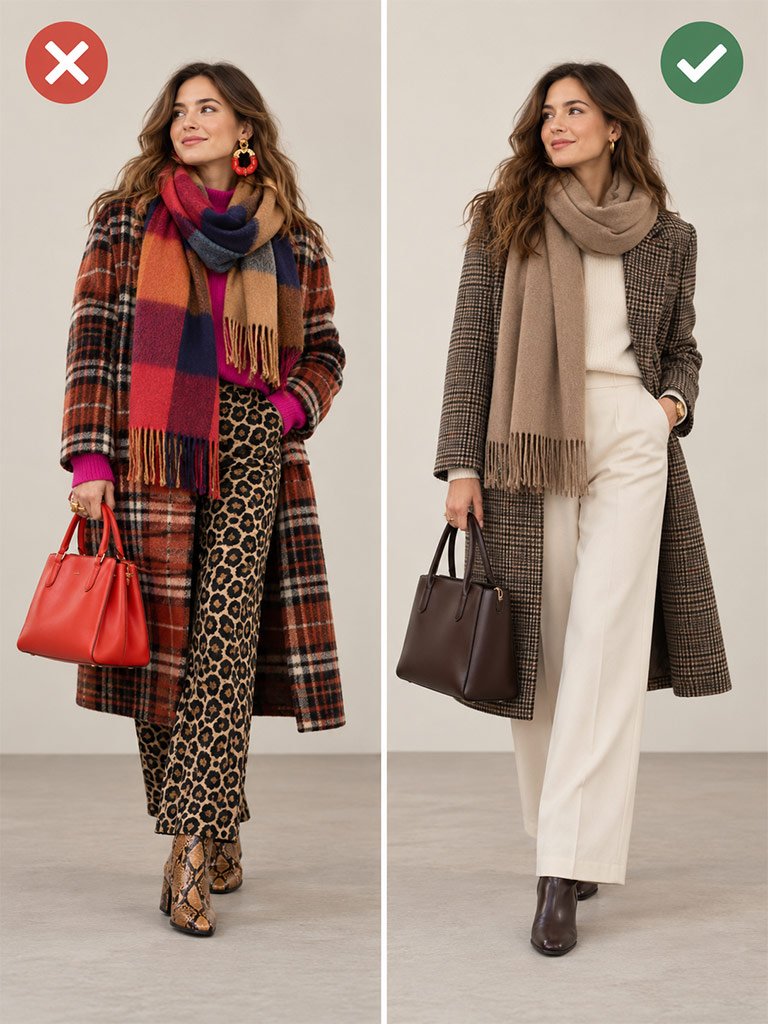
A patterned coat, bright bag, large scarf, bold earrings, and distinctive shoes can each look wonderful. Together, they may compete for attention.
This is especially common in fall because there are more pieces to combine. Accessories that seemed simple on their own can create a busy look once added to several layers.
If you enjoy a bold, expressive style, that may suit you. If you want a calmer finish, choose a clear focal point.
How to fix it:
- Let one or two pieces lead the outfit.
- Pair a checked coat with simple clothes underneath.
- Wear smaller earrings with a large scarf.
- Use a plain bag when your shoes have a strong pattern.
- Remove one item and compare the result.
There is no universal two-accessory rule. A watch, scarf, bag, and earrings can work together when their scale and colors feel balanced.
The useful question is whether each addition helps the outfit feel complete.
5. Choosing Faux Leather Only for Its Appearance on the Hanger
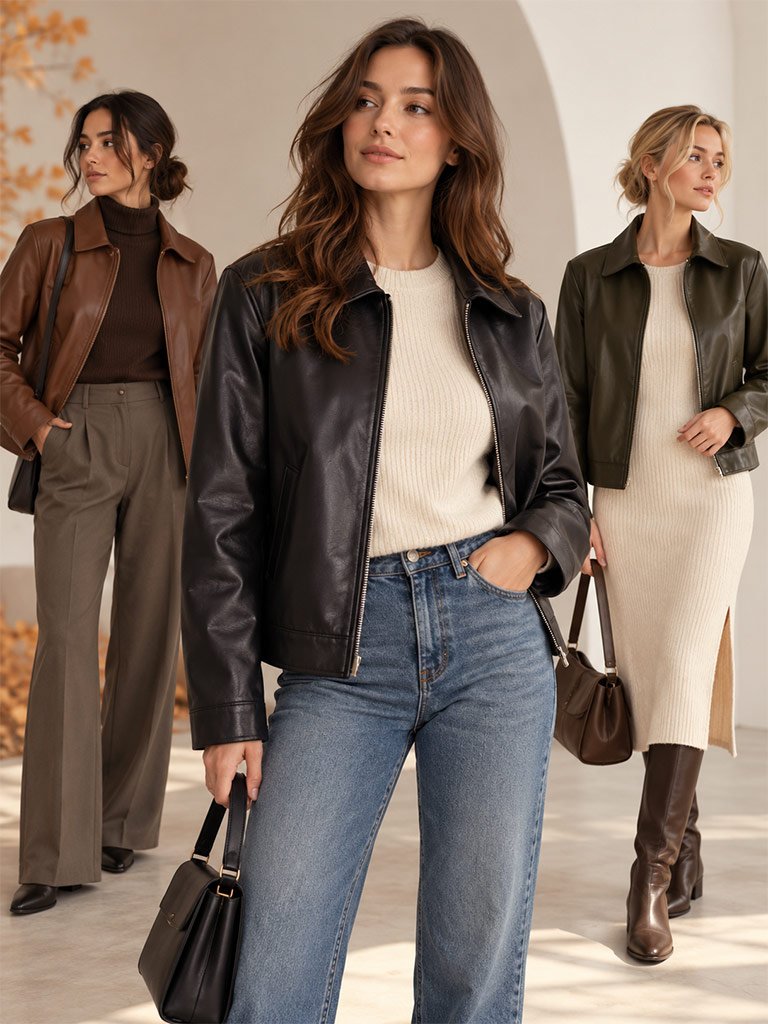
Faux leather can be a practical part of a fall wardrobe. Yet its finish, thickness, and flexibility vary from one garment to another.
A jacket may look appealing on a hanger but feel stiff when you bend your arms. Trousers may crease sharply or cling in ways you dislike. A very glossy finish may also look different in daylight than under shop lighting.
Price alone does not tell you how a piece will perform.
How to fix it:
- Check the seams, lining, and fastenings.
- Sit down and move before deciding on the fit.
- Look at the fabric in natural light when possible.
- Choose enough room for a layer beneath a jacket.
- Read the care instructions before buying.
A simple faux leather jacket with a comfortable fit can work with jeans, knits, or a plain dress.
If you dislike the feel of faux leather, try denim, wool blends, or sturdy cotton. You can create a polished fall outfit with many different fabrics.
6. Layering Thick Clothes Beneath a Close-Fitting Coat
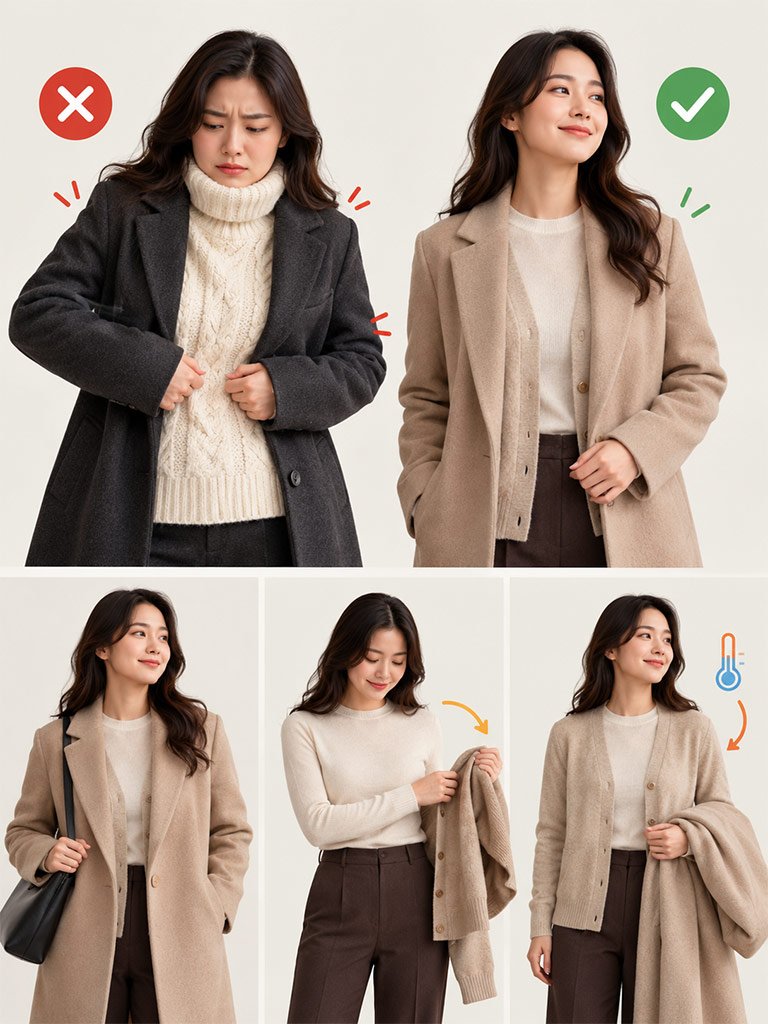
A chunky sweater looks warm and inviting, but it may not fit comfortably beneath every coat.
When both layers are thick, sleeves can bunch. The coat may pull across the back, and bending your arms may feel difficult. You might also find the outfit too warm once you reach a shop, office, or classroom.
Good layering starts with space and flexibility.
How to fix it:
- Wear fine knits beneath coats with a close fit.
- Save chunky sweaters for roomier outerwear.
- Try your coat over your usual fall layers before buying.
- Check whether you can reach forward comfortably.
- Use a removable middle layer for changing temperatures.
A thin long-sleeve top, cardigan, and coat can offer more flexibility than one very thick sweater.
You can remove the cardigan indoors and put it back on later. This makes the outfit easier to wear through a full day.
7. Leaving Every Top Untucked Without Checking Its Length
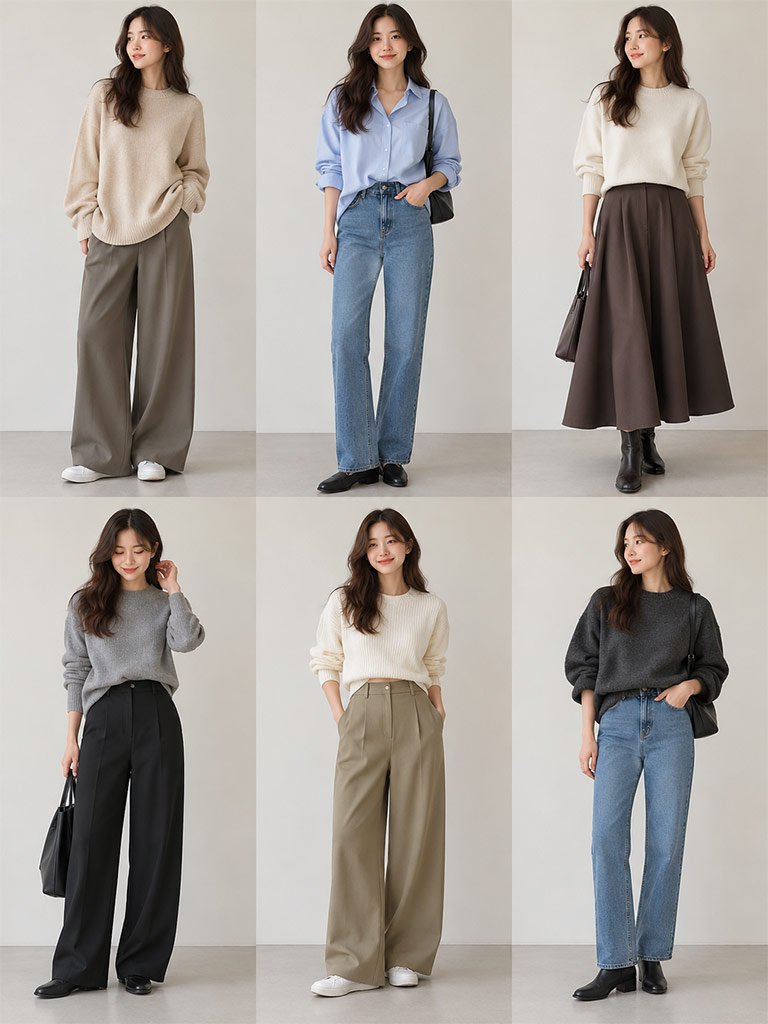
An untucked top can look relaxed and feel comfortable. The issue is where its hem falls in relation to the rest of your clothes.
A long sweater over wide trousers may create a different shape from the one you expected. Several shirt and jacket hems can also overlap awkwardly around the hips.
You do not need to tuck every top. It helps to try a few options.
How to fix it:
- Compare the top tucked and untucked.
- Try a small front tuck with a flexible knit.
- Choose a shorter top with high-rise trousers.
- Fold a sweater hem inward if it stays comfortably.
- Avoid forcing thick fabric into a tight waistband.
A roomy sweater worn loose over straight jeans may work beautifully. With a full skirt, you might prefer a shorter knit.
The goal is to find a length that suits your outfit and lets you move comfortably.
A Quick Checklist for Better Fall Outfits
Before leaving home, use these simple checks:
- Look at the colors. Add contrast if the outfit feels too flat.
- Check the shape. Notice where tops, coats, and trousers end.
- Test the layers. Make sure sleeves and shoulders move freely.
- Check the hems. Keep long trousers clear of the ground.
- Review accessories. Keep the pieces that add something useful.
- Inspect the fabrics. Remove lint and check for visible wear.
- Think about the day. Choose shoes and layers for the weather and your plans.
This takes only a few moments once you know what to look for. You may need to adjust just one item.
Build Your Next Fall Outfit From What You Own
Choose one outfit you already enjoy wearing. Put on the full look, including your shoes, bag, and coat. Then check whether the colors, lengths, and layers work together comfortably.
Make one change if something feels awkward. Try a shorter top, a lighter scarf, another pair of shoes, or a different shirt beneath your sweater.
Save a photo when you find a combination you like. Build a small collection of dependable looks for work, weekends, and cooler days. With a few thoughtful adjustments, your fall wardrobe can become easier to wear and more enjoyable to use.