When we think of high-end tailoring or a perfectly draped summer dress, our minds often jump to the “shell” fabric—the beautiful wool, silk, or printed cotton that the world sees.
However, the true mark of a masterfully constructed garment lies on the inside. Lining fabric is the separate, attached inner layer that serves as the invisible backbone of fashion, providing comfort for the wearer, preserving the garment’s shape, and concealing the complex internal construction that makes the piece possible.
Whether you are a professional tailor, a home sewist, or a fashion enthusiast, understanding the nuances of lining fabric is essential for creating or choosing garments that are durable, comfortable, and luxurious.
Why Use a Lining? The Functional Magic of the Inside Layer
A lining is far more than just a “cover-up” for messy seams. It performs several critical roles:
Comfort and Wearability
Linings provide a smooth surface that allows a garment to slide easily over other layers of clothing. This is particularly important for suit jackets and winter coats, which must glide over shirts and sweaters without snagging.
Structure and Shape Preservation
A well-chosen lining absorbs the stress of the body’s movements, preventing the fashion fabric from stretching or overextending. It helps the garment maintain its intended “hang” and inhibits “hanger stress”.
Protection of the Fashion Fabric
Linings act as a boundary between the wearer’s body and the outer shell, absorbing perspiration and body oils that could otherwise damage expensive wools or silks.
Opacity and Aesthetics
For sheer or lightweight fabrics, a lining adds necessary opacity. It also conceals constructional details like interfacings, shoulder pads, and raw seam edges, creating a “neat and smooth look” on the interior.
Insulation
In cold-weather garments, specific lining types add an extra layer of warmth.
Lining, Underlining, and Interlining: Clearing the Confusion
In the world of dressmaking, three terms are often used interchangeably, but they serve distinct purposes:
- Lining: Attached at the neck or waistband, a lining hangs somewhat freely inside the garment to hide the internal structure.
- Underlining (or Flat Mounting): This involves cutting the lining fabric to the exact same shape as the pattern pieces and treating them as a single layer during construction. This adds body to the fabric, makes sheer fabrics opaque, and allows the sewist to catch-stitch hems to the underlining instead of the fashion fabric for an invisible finish.
- Interlining: This is an extra layer placed between the lining and the shell fabric, usually for insulation (like fleece or flannel) or added structure (like hair canvas in tailoring).
A Comprehensive Guide to Lining Fibers and Weaves
The fiber content of your lining influences its breathability, durability, and “hand” (feel).
1. Natural Fibers
- Silk: Known for luxury, silk linings (like Habotai or China Silk) are incredibly soft, breathable, and have a natural sheen. While they are ideal for couture and evening wear, they are more expensive and less durable than synthetics.
- Cotton: Cotton linings (like Voile or Batiste) are breathable, hypoallergenic, and machine washable. They are perfect for summer dresses and children’s wear, though they lack the “slippery” quality needed for jacket sleeves.
- Wool: Used primarily in winter coats, wool linings provide maximum warmth and insulation but can be itchy if not of high quality.
2. Artificial (Cellulosic) Fibers
- Viscose and Rayon: These are man-made from wood pulp. They offer a silky feel, are highly breathable, and are static-free. However, they are prone to wrinkling and may shrink in the wash.
- Cupro and Bemberg: Bemberg is the most famous brand of cupro. It is a regenerated cotton fiber that is exceptionally smooth, durable, and anti-static. It is the “gold standard” for high-end suit linings because it wicks away perspiration and feels cool in summer while remaining warm in winter.
- Acetate: This is a plant-based fiber often found in ready-to-wear garments. It has a soft, shiny finish but is prone to fraying and is less breathable than cupro or silk.
3. Synthetic Fibers
- Polyester: The most versatile and affordable option. Polyester linings are incredibly strong, wrinkle-resistant, and easy to care for. Their main drawback is a lack of breathability, which can make the wearer feel hot.
- Nylon: Often used in specialized linings like mesh, nylon is strong and durable but can suffer from “seam puckering” during construction.
Performance Properties: The Science of Quality Linings
Research on lining fabrics highlights several technical parameters that determine if a lining is truly high-quality.
Thread Count and Strength
The thread count of a lining—the number of yarns per square centimeter—directly affects its density, weight, and tensile strength.
Generally, as thread count increases, the fabric becomes stronger and more resistant to stretching. For garments that face high stress, such as uniforms or children’s wear, a higher yarn count is preferable.
Weight and Drape
The weight of the lining must be carefully balanced with the fashion fabric. A rule of thumb is to select a lining that is lighter in weight than the shell fabric. If the lining is too heavy, it can distort the hang of the garment; if too light, it may not provide enough support.
Dimensional Stability (Shrinkage)
It is vital that a lining does not shrink more than the outer fabric during washing. Fabrics with poor dimensional stability can cause the outer garment to pucker or pull out of shape after the first cleaning.
Colorfastness and Crocking
“Crocking” occurs when color is transferred from the lining to another material via rubbing. If a lining is not colorfast, perspiration can cause the dye to bleed, permanently staining the fashion fabric. This is particularly dangerous when lining light-colored shells with dark-colored linings.
Specialized Linings for Unique Applications
- Stretch Linings: Specifically designed for knit garments or stretch-woven blazers. It is crucial that the lining has a similar stretch factor to the outer fabric to prevent the garment from feeling restrictive.
- Mesh Lining: A warp-knitted fabric (usually polyester or nylon) with an open structure that allows for maximum ventilation. This is standard in activewear and swimwear.
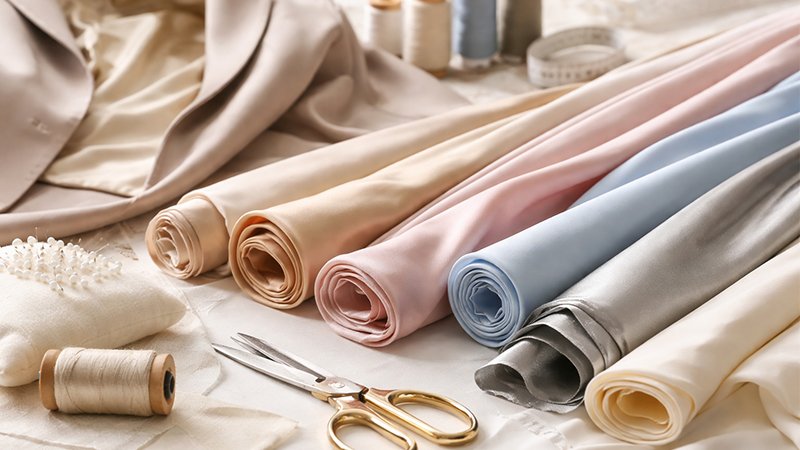
- Satin and Taffeta: These refer to the weave rather than the fiber. Satin linings offer a high-gloss, slippery surface ideal for outerwear. Taffeta is crisper and helps garments like coats maintain their structural shape.
- Sherpa Lining: A soft, thick, polyester-based fabric that mimics wool. It is popular for lining denim jackets and heavy winter wear.
Expert Construction: How to “Bag” a Jacket Lining
One of the most professional methods for finishing a jacket is known as “bagging the lining.” This technique is preferred in ready-to-wear manufacturing because it requires minimal hand-sewing and produces a very clean finish.
The Basic Steps of Bagging:
- Construct the shell of the jacket and the lining separately.
- With right sides facing, stitch the shell and lining together around the neck and front edges, leaving the hem open.
- Understitch the facing to ensure the seam rolls to the inside.
- Stitch the lining hem to the jacket hem.
- Reach through a small opening (left in a sleeve seam) to pull the entire jacket right-side out.
- The small hole in the sleeve is then stitched shut.
This method creates a “pleat” at the hem, which provides the necessary “give” so the lining doesn’t pull on the outer fabric when you move.
Handling Special Fabrics
When working with certain “special” fabrics, the choice and handling of the lining change:
- Fur and Felt: These bulky fabrics often use lining fabric for facings to avoid thick, unsightly seams.
- Chiffon and Sheer Fabrics: Since the lining will show through, it is best to use a color that matches the skin tone for an “invisible” look.
- Beaded or Sequin Fabrics: Always use lining fabric for facings to prevent the beads from scratching the skin.
- Stretch Fabrics: Use a ballpoint or jersey needle and a stretch stitch (small zigzag) to maintain the elasticity of the lining.
The Future: Sustainable Lining Fabrics
As the fashion industry pivots toward “Green Fashion,” the demand for eco-friendly linings is surging.
- Recycled Polyester: Made from post-consumer materials, offering the same durability as virgin polyester with a lower carbon footprint.
- Plant-Based Acetate: A biodegradable solution that provides a luxurious, soft finish.
- Technological Innovations: Advanced manufacturing now allows for “dyeable” linings using non-toxic, natural dyes.
Conclusion
Lining fabrics play a crucial role in elevating both the functionality and aesthetics of garments. By providing comfort against the skin, improving durability, and enhancing the overall structure, they ensure clothing not only looks refined but also feels better to wear.
From breathable cotton to luxurious silk and practical synthetics, the right lining can transform a piece entirely.
Designers and consumers alike benefit from understanding their importance, as thoughtful lining choices contribute to long-lasting quality and style.
Ultimately, lining fabrics are an essential yet often overlooked element that bridges craftsmanship with comfort in modern fashion.