While the name “Liverpool” often evokes thoughts of professional football, it also refers to a highly popular textured stretch-crepe double knit fabric.
Composed typically of a polyester and spandex blend, this material features a distinctive “pebbled” or crinkled face with a smooth reverse, offering a unique combination of structure and four-way stretch.
Renowned in the sewing community for being beginner-friendly and having no-fray edges, it is a staple for everything from hair accessories to structured apparel like pencil skirts.
Beyond fashion, its exceptional water retention properties have made it a subject of modern engineering research for desalination. Rooted in the city’s historic textile heritage, Liverpool fabric remains a versatile tool for both crafters and industrial innovators.
Technical Profile: What is Liverpool Fabric?
To understand why Liverpool fabric is so beloved by crafters and scientists alike, one must first understand its construction. Liverpool fabric is defined as a textured, stretch-crepe double knit fabric.
The Double-Knit Construction
Unlike ordinary single knits, Liverpool is a double knit, which means it is created by knitting two layers of fabric together simultaneously.
This method provides the material with more weight, greater strength, and significantly more stability than standard knits. Because of this “full-bodied” nature, it typically weighs approximately 10 oz, giving it a substantial feel that holds its shape beautifully without going limp.
Material Composition and Stretch
Most commercially available Liverpool fabric is synthetic, typically consisting of a blend of 95%–97% polyester and 3%–5% spandex (elastane). This specific blend is crucial for its performance:
- Polyester provides durability, wrinkle resistance, and the ability to hold vibrant dyes.
- Spandex grants the fabric a 4-way stretch, meaning it can expand both horizontally and vertically with excellent recovery.
Texture and Aesthetic
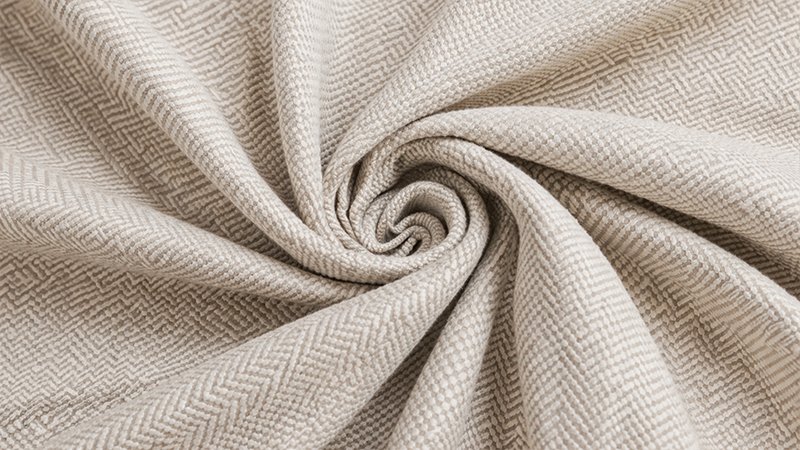
One of the most defining features of Liverpool fabric is its aesthetic contrast. It features a distinctive “crepe” or pebbled texture on the face side, while the reverse side is significantly smoother.
This unpretentious texture structure makes it an ideal choice for highlighting the subtleties in garments like tops and skirts.
The Maker’s Perspective: Why Sew with Liverpool?
For home sewists and small business owners, Liverpool fabric is often a “go-to” material because it solves many common problems associated with knit fabrics.
1. Beginner-Friendly Handling
While many knits are notoriously slippery and difficult to control, Liverpool is widely considered easier to work with than other stretchy materials.
It doesn’t slip around during the sewing process and feeds through machines nicely. Because the fabric is stiffer than other single knits and “falls straight,” it allows beginners to maneuver and control the material with ease.
2. The “No Fray” Advantage
Perhaps the most celebrated property of Liverpool fabric is that its cut edges do not fray or unravel. This unique characteristic means that sewists do not necessarily need to finish their seams or use a serger to achieve a professional-looking result.
This makes it the premier choice for hair accessories, such as bows and headbands, where raw edges are often part of the design.
3. Versatile Apparel Applications
Liverpool’s blend of structure and stretch makes it suitable for a wide range of clothing:
- Pencil Skirts: It holds a fitted shape perfectly without being overly stiff or clingy.
- Structured Blazers and Coats: It maintains elegance and definition even after long hours of moving, typing, or driving.
- Peplum Tops: The weight of the fabric provides the necessary “load” to the wings of a peplum, beautifully characterizing the waistline.
- Party Dresses: Its ability to accentuate curves while maintaining a structured silhouette makes it ideal for cocktail attire.
When to Choose a Different Fabric Despite its versatility, Liverpool is not a universal solution. Because it is a medium-weight synthetic, it does not breathe well and is not recommended for hot summer days. Additionally, its stiffness makes it unsuitable for garments requiring a fluid, flowing drape or complex pleats.
The Great Debate: Liverpool vs. Bullet Fabric
In many crafting circles, the terms “Liverpool” and “Bullet” are used interchangeably, but there is a subtle difference in their texture patterns.
- Bullet Fabric: Gets its name from a distinctive pebbled surface that resembles tiny bullet points.
- Liverpool Fabric: Often described as having a more “spongy” or jacquard-like texture.
Beyond this minor visual difference, the two fabrics are identical in weight, stretch, and quality. Most suppliers treat them as the same category, and they can be substituted for one another in any pattern without issue.
Technical Insights: Liverpool Fabric in Science and Engineering
One of the most fascinating aspects of Liverpool fabric is its role in mechanical engineering research, specifically regarding Humidification-Dehumidification (HDH) desalination.
The Engineering Challenge
Researchers at the University of Texas Rio Grande Valley investigated 38 different commercially available fabrics to see which could best serve as “wet cloth sheets” in a nature-powered desalination system. The goal was to find a fabric that could effectively hold and transport seawater to facilitate evaporation into fresh water.
Liverpool’s Performance in Testing
The “Liverpool Knit” used in the study (96.5% Polyester / 3.5% Elastane) revealed contrasting technical properties:
- Water Retention: Liverpool fabric showed exceptional water retention capabilities, scoring a high Water Retention Measure (WRM) of 0.0112. Its textured surface and double-layer construction allow it to hold a significant mass of water relative to its dry weight.
- Capillary Wicking: Conversely, Liverpool demonstrated “ultra-slow” wicking velocity, measured at only 0.25 mm/min. This means that while the fabric is excellent at holding onto moisture once wet, it is very poor at drawing water upward through its fibers via capillary action.
Practical Implications
In a desalination humidifier, Liverpool fabric performs excellently when fully saturated by “overtopping” (waves splashing over the top).
However, on “calm days” where the fabric must rely on wicking water upward from a reservoir, Liverpool fails to maintain a steady state of humidification because the air flow dries the fabric faster than the wicking can replenish the moisture.
This research highlights that while Liverpool is a “king” of retention for fashion, it requires specific conditions to be useful in industrial water production.
A Walk Through History: The Liverpool Connection
Liverpool fabric takes its name from the city in England where it was first manufactured. The city has a deep, storied connection to the global textile trade.
The Historic Fabric District
Located in the Islington area of Liverpool, the Fabric District was once a primary hotspot for textile manufacturing during the Industrial Revolution.
At its heart lies London Road, which served as a bridge between the city’s cultural quarter and its academic institutions.
Historically, this area was home to numerous manufacturers and retailers, including the site of the UK’s first TJ Hughes department store.
The Birth of the Futures Market
In the 19th century, Liverpool emerged as the largest cotton importing port in the world, supplying the vast majority of the British spinning industry.
Because the price of cotton was highly unstable, Liverpool brokers developed the first commodity futures market in Europe.
This allowed traders to “hedge” against price fluctuations by selling promises to deliver cotton in the future, a system that still underpins global commodity trading today.
Modern Resurgence
Today, the Liverpool Fabric District is undergoing a vibrant transformation. It has evolved from a manufacturing hub into a cultural neighborhood that nurtures independent businesses, fashion talent, and creative industries.
With over 200 businesses now calling the district home, it remains a vital link to the city’s industrial heritage while embracing modern innovation.
Sewing and Care Masterclass
To get the most out of Liverpool fabric, follows these professional tips for sewing and maintenance:
Essential Sewing Tools
- Needles: Always use ballpoint or stretch needles (size 80/12 or 90/14). Universal needles may snag the textured surface or cause runs in the knit.
- Stitches: Opt for a narrow zigzag or a dedicated stretch stitch. This allows the seams to move with the fabric without snapping the thread.
- Thread: Standard polyester thread is ideal as it matches the fiber content of the fabric.
Customization via Sublimation
Because Liverpool fabric has a high polyester content, it is perfect for dye sublimation printing. This process allows for vibrant, permanent custom designs that will not fade or crack over time, making it a favorite for small businesses creating unique hair bows.
Care Instructions
- Washing: Machine wash in cold water with like colors. Turning garments inside out can help protect the textured face from pilling during the wash cycle.
- Drying: Tumble dry on low heat. High heat must be avoided as it can melt the synthetic fibers or damage the spandex.
- Ironing: Use a low to medium heat setting with steam. It is recommended to press from the wrong side to avoid crushing the pebbled texture.
Conclusion: A Modern Multi-Tool
From the high-stakes cotton markets of the 19th century to the cutting-edge desalination labs of the 21st, Liverpool fabric represents a unique intersection of history, fashion, and science.
Its “bullet-proof” stability and no-fray edges make it a dream for beginner sewists and accessory entrepreneurs.
Meanwhile, its exceptional water-holding properties continue to intrigue engineers looking for sustainable solutions to global water scarcity.
Whether you are sewing a structured pencil skirt for the office, crafting professional hair bows, or studying the physics of capillary action, Liverpool fabric offers a depth of character that few other textiles can match. It is truly a fabric that holds its shape, its history, and its future.
FAQ
What exactly is Liverpool fabric?
Liverpool fabric is a textured, stretch-crepe double knit material that features a distinctive “pebbled” or crinkled texture on the face side and a smooth surface on the reverse.
It is a full-bodied, medium-weight fabric (typically around 10 oz) that provides significantly more structure and stability than standard single knits.
Does Liverpool fabric fray when cut?
No, it does not fray. One of its most celebrated characteristics is that the cut edges do not unravel or or fray. This makes it a favorite for beginners and professional crafters alike, as it allows for raw-edge designs in accessories like hair bows without the need for finishing seams or using a serger.
What are the most common uses for this material?
Because of its ability to hold its shape while remaining stretchy, it is the premier choice for hair accessories, including statement bows, headbands, and top-knot hats.
In apparel, it is ideal for structured garments such as pencil skirts, peplum tops, blazers, cardigans, and sheath dresses.
How do I wash and care for Liverpool fabric?
This synthetic blend is durable and easy to maintain; it should be machine washed in cold water and tumble dried on a low heat setting.
=If ironing is necessary, use a low-to-medium heat setting with steam and always press from the wrong side to avoid crushing or melting the distinctive pebbled texture.