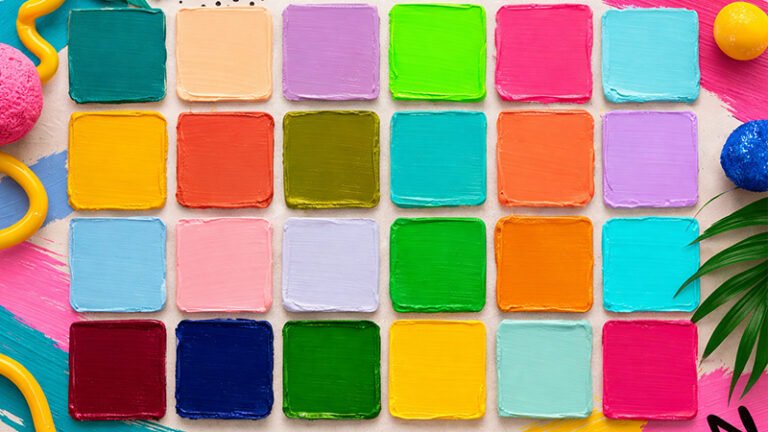
Cyan is a striking hue that elegantly bridges blue and green, combining qualities of both colors. Scientifically, it has a wavelength between 500 and 520 nanometers, giving it its distinct greenish-blue appearance.
In digital media, cyan is a secondary color in the RGB model, formed by combining green and blue light equally. Its hexadecimal code is #00FFFF, and its RGB values are 0, 255, 255, making it on screens.
In printing, cyan is a primary color in the CMYK model, essential for producing a wide range of colors on paper, with a typical CMYK code of 100, 0, 0, 0.
Beyond its technical role, cyan exudes a lively yet calming energy, making it versatile and widely appealing across both digital and physical design applications.
The Deep Roots of Cyan: Historical and Cultural Significance
The significance of cyan is not merely a modern phenomenon; its profound meaning can be traced back to antiquity, deeply woven into the fabric of human history and culture.
Ancient Reverence and Symbolism
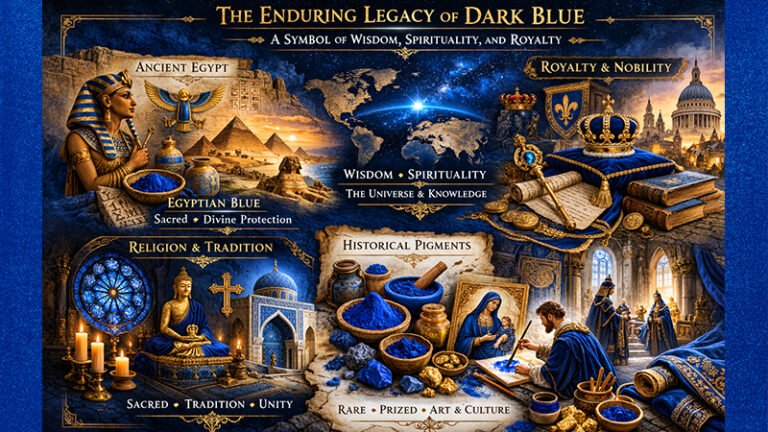
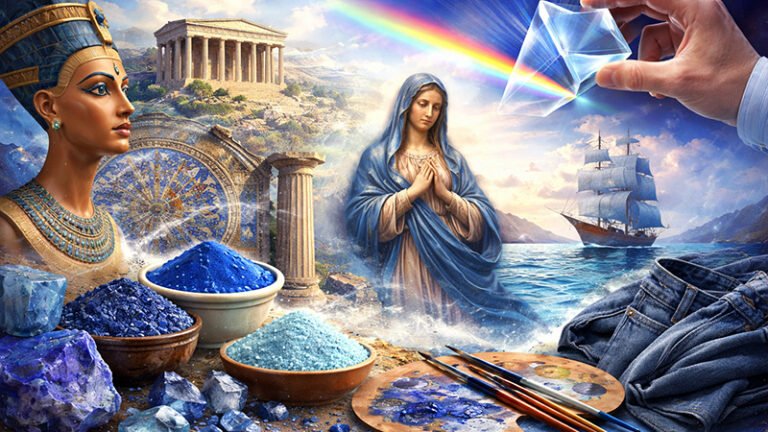
In ancient times, colors similar to cyan held deep symbolic meaning. Turquoise, ranging from blue to green, was highly valued in Egyptian art and jewelry, symbolizing life and rebirth.
The Greek term kyanos initially meant dark blue enamel but later came to describe brighter cyan-like shades. Lapis lazuli, a blue stone with gold-like flecks, represented the heavens and held spiritual significance.
These uses show that ancient cultures recognized blue-green hues as powerful symbols of life, divinity, and the cosmos.
Enduring Cultural Connections
Throughout history, cyan has symbolized nature’s vastness, particularly the sea and sky, often linked to divine power and spiritual depth.
Across cultures, it appears in art to convey emotion, depth, and serenity. While its cultural significance has evolved, cyan consistently embodies tranquility and calm, making it a universally soothing and spiritually resonant color.
Its enduring presence highlights its versatility and profound impact in art and cultural symbolism.
Modern Resonance: Innovation and the Digital Age
In contemporary culture, cyan has gained new meaning, symbolizing innovation, creativity, and fresh perspectives.
Its presence is prominent in digital art, design, and technology, where it conveys energy and modernity.
Frequently used in screens, interfaces, and branding, cyan feels both striking and approachable. This evolution—from an ancient symbol of nature and spirituality to a hallmark of the digital age—highlights its enduring influence and versatile cultural significance.
The Psychology of Cyan: Emotions, Mindset, and Personality
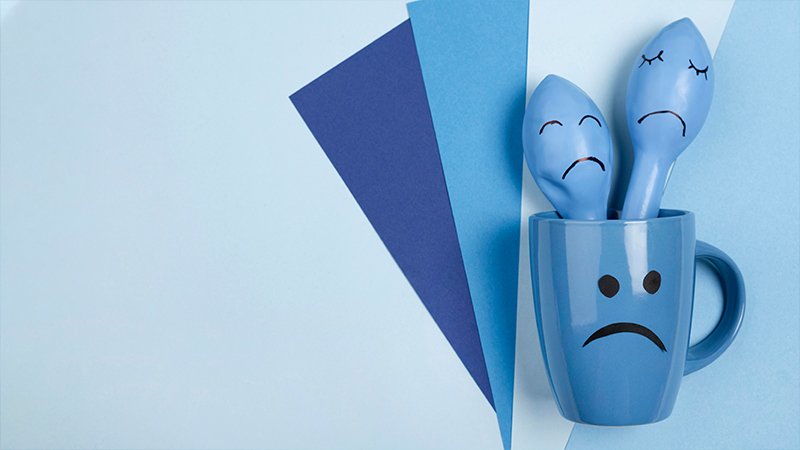
Beyond its visual appeal and historical ties, cyan profoundly influences human psychology, evoking specific emotional responses and aligning with particular personality traits.
Positive Attributes
Cyan embodies a spectrum of highly positive attributes that contribute to its pervasive use in environments designed for well-being and productivity.
- Calmness: One of cyan’s most recognized effects is its ability to create a soothing atmosphere that can effectively reduce stress. As a cool hue, it is inherently linked to a calming effect, making it a popular choice in spaces specifically designed to promote tranquility and relaxation.
- Clarity: This color is widely thought to aid in clear thinking. Its association with purified, transparent, and clean waters reinforces this link, suggesting a pristine state conducive to mental focus and communication. Environments that require concentration and clear minds often benefit from the presence of cyan.
- Innovation and Renewal: Cyan’s significant presence in technological fields is deeply symbolic of cutting-edge thinking and forward-looking ideas. It subtly suggests new beginnings and a fresh outlook, aligning with modern advancements and creative breakthroughs.
- Spiritual Harmony: In various cultural contexts, cyan is observed as representing balance and inner peace. Spiritually, it is often associated with healing and purity, with some cultures believing it promotes physical and emotional well-being, as well as truthful communication and self-expression.
Potential Negative Connotations
While predominantly positive, cyan, like any color, can carry certain negative associations in specific contexts or interpretations.
- Coldness: In some applications, the cool nature of cyan might evoke a feeling of cool detachment or aloofness. This can happen if the color is used in isolation or in environments where warmth and intimacy are desired.
- Immaturity: Occasionally, its and sometimes playful nature might be misinterpreted as lacking in sophistication or depth. This perception is less common but can arise depending on the specific shade or combination of colors.
Emotional Effects and Personality Alignment
Cyan evokes peace, calm, and balance, helping reduce anxiety and promote well-being. Its ties to the ocean and sky enhance its soothing effect, offering a refreshing alternative to intense colors.
People drawn to cyan often value harmony, clarity, and serenity, reflecting a desire for stability while also signaling creativity and a lively, thoughtful mind.
Cyan in Action: Design, Art, and Everyday Applications

Cyan’s position as a keystone in design and art is primarily attributed to its remarkable versatility and inherent aesthetic appeal.
Its fresh vibrancy and the ease with which it can be seamlessly incorporated into various color palettes make it a perpetually preferred choice for designers across numerous disciplines.
Graphic and Web Design Mastery
In graphic and web design, cyan (#00FFFF) is a striking, attention-grabbing color ideal for digital media due to its RGB compatibility.
Designers adjust its shades to set moods, while in print, cyan is a key CMYK ink. It can cool and balance color schemes or add, innovative energy when paired with other hues.
Fine Arts Exploration
Cyan has long inspired artists, offering blue-green tones that spark creativity and innovation. Its versatility allows exploration of emotions and concepts, influencing art movements from Impressionism to contemporary digital art.
Beyond aesthetics, cyan often conveys themes of serenity, vitality, and nature, making it a timeless and expressive color in artistic storytelling.
Everyday Practicality
Cyan extends far beyond art and design, appearing in many everyday applications due to its refreshing and calming qualities.
- Digital Devices: Screens use cyan via the RGB model, blending green and blue pixels to produce the hue.
- Printing: As a key CMYK ink, cyan is essential for creating a wide range of colors in books, posters, and billboards.
- Art: Artists mix cyan with other colors to adjust temperature and add depth to their work.
- Safety & Signage: Its high visibility and calming effect make cyan ideal for water safety signs and informational displays.
In digital and print media, cyan enhances visuals, conveys messages, and guides attention with clarity and harmony.
Scientific Underpinnings: Spectral Properties and Complementary Hues
To fully appreciate cyan, it is essential to understand its scientific basis, particularly its spectral properties and its relationship to other colors on the color wheel.
Visible Spectrum and Color Models
Cyan, a greenish-blue hue with a wavelength of 490–520 nm, is a secondary color in the RGB (light-based) model, formed by mixing green and blue. In pigment-based models like CMYK, it is a primary color alongside magenta and yellow, highlighting its importance in both light and pigment systems.
Complementary Color and Precision
On the traditional color wheel, cyan’s complementary color is red, creating strong contrast and visual energy. Scientifically, cyan’s light interacts with materials in measurable ways, which is crucial for accurate color reproduction in printing, manufacturing, and digital displays.
Conclusion
Cyan, with its calming yet presence, has long inspired humans—from ancient civilizations valuing it as a precious pigment to modern times, where it symbolizes clarity, innovation, and creativity.
Its unique blend of green and blue makes it visually striking, emotionally soothing, and endlessly versatile across art, design, and digital media.
Whether used to enhance a design, enrich an artistic canvas, or simply appreciated in nature and technology, cyan brings balance, energy, and depth.
Exploring its impact highlights how color shapes perception, mood, and creativity. By embracing cyan, we invite calm, inspiration, and expressive potential into both our work and everyday life.