The invention of the “whitest white paint” represents a groundbreaking advancement in material science, merging scientific precision with artistic potential.
Unlike conventional paints, this innovation reflects almost all incident light, achieving a level of brightness never before possible.
Its creation is the result of years of dedicated research, driven by the pursuit of maximizing reflectivity for both aesthetic and practical purposes.
Beyond its striking visual purity, the paint offers profound implications for design, sustainability, and environmental solutions.
By dramatically reducing heat absorption, it holds the potential to lessen energy consumption and mitigate urban heat.
At the same time, it opens new possibilities for artistic expression and architectural design, redefining how we engage with light, color, and space in the modern world.
What Makes White, “White”? Understanding the Basics
White is defined by its ability to reflect all wavelengths of visible light equally, making it the absence of hue and a symbol of purity and simplicity.
Subtle variations in white are measured by Light Reflectance Value (LRV), which indicates how much light a color reflects—higher values create brighter effects, crucial in design and architecture.
Whites fall into two main categories: warm whites, with yellow or red undertones that feel cozy and traditional, and cool whites, with blue or green undertones that feel crisp, modern, and expansive.
Today, innovations in ultra-white paints go beyond aesthetics. By reflecting both visible light and infrared radiation (radiative cooling), they not only brighten spaces but also reduce heat, making white a powerful tool for energy efficiency and sustainability.
The Scientific Breakthrough: Crafting the Whitest White
The whitest white paint, developed by Xiulin Ruan and his team at Purdue University, is a major scientific breakthrough. Unlike regular white paints that reflect only 80–90% of sunlight, this new paint reflects up to 98.1%.
By bouncing back nearly all incoming solar radiation, it not only sets a new record for reflectivity but also offers powerful potential for energy savings, since it helps surfaces stay cooler without relying on air conditioning.
This achievement is the result of years of research and refinement, transforming paint from a decorative product into a tool for tackling global energy and climate challenges.
The Science Behind the Brilliance: Composition and Properties
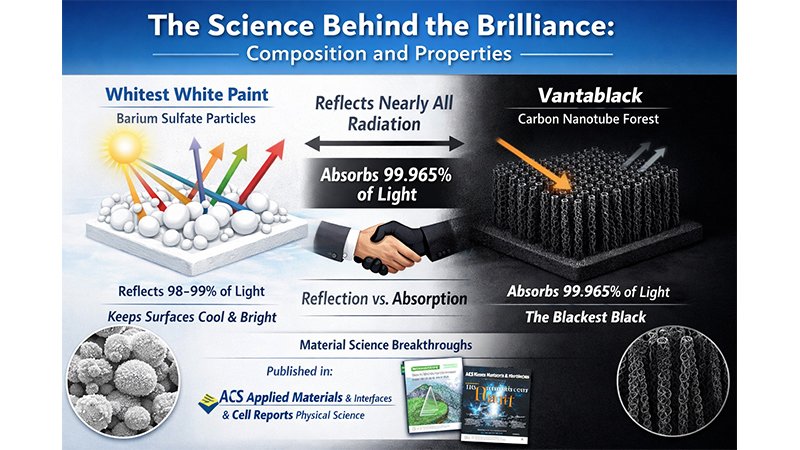
The whitest white paint owes its brilliance and cooling power to barium sulfate, a mineral with exceptional light-scattering properties.
Unlike ordinary reflective coatings, it uses a carefully engineered mix of different particle sizes, each optimized to scatter specific wavelengths across the solar spectrum—visible, UV, and infrared. This design reflects nearly all incoming radiation, keeping surfaces cool and dazzlingly bright.
In contrast, Vantablack, the “blackest black,” absorbs 99.965% of light using carbon nanotube structures. Together, these coatings highlight the extremes of light manipulation—ultimate reflection versus ultimate absorption.
This breakthrough reflects the collaborative work of materials scientists, chemists, and engineers, with findings published in leading journals such as ACS Applied Materials & Interfaces and Cell Reports Physical Science.
Transformative Applications: Energy Conservation and Cooling
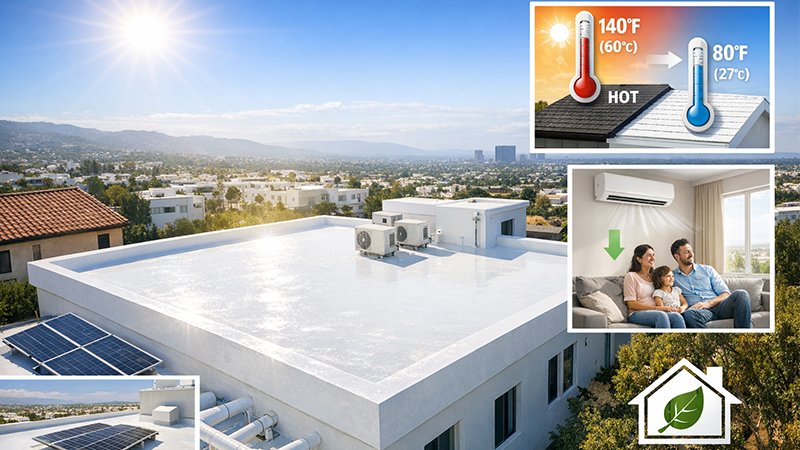
The whitest white paint goes beyond aesthetics, offering a groundbreaking solution for energy conservation.
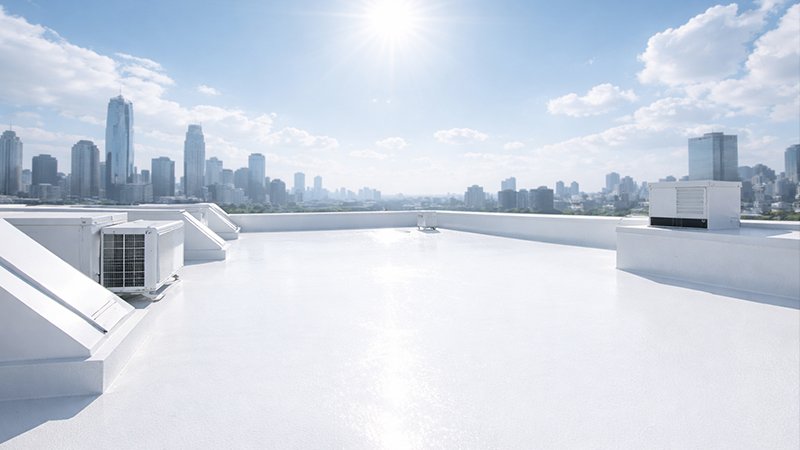
By reflecting nearly all sunlight, it prevents heat absorption and keeps surfaces dramatically cooler, even under direct sun.
Applied to rooftops or walls, it lowers indoor temperatures and reduces reliance on air conditioning—especially vital in hot climates and peak summer months.
Its adoption represents a major step toward sustainable building design, cutting energy use and carbon emissions.
As the world faces climate change, this passive cooling technology provides a scalable, practical path to a greener built environment.
Mitigating the Urban Heat Island Effect
Urban areas face a critical environmental challenge known as the urban heat island effect, where concrete, asphalt, and buildings absorb and retain far more solar radiation than rural surroundings.
This raises city temperatures, increases energy demand for cooling, worsens air quality, and impacts public health. The whitest white paint offers a strategic solution.
Applied to rooftops, roads, and large urban surfaces, its extreme reflectivity prevents heat absorption, turning cities into sunlight-reflecting environments.
In metropolitan centers like New York, this could lower surface and ambient air temperatures, alleviate heatwaves, reduce ozone formation, and ease electricity demand.
By transforming urban infrastructure into a giant passive cooling system, this paint provides a scalable, practical approach to mitigating the heat island effect.
Economic and Environmental Benefits
The whitest white paint offers a rare combination of economic savings and environmental protection, creating benefits that extend from individual households to the global community.
Economic Advantages
For homeowners and building operators, the paint provides a practical means of reducing energy consumption.
Coating roofs with this highly reflective material significantly lowers indoor temperatures during hot months, which in turn reduces the reliance on air conditioning.
This decrease in energy use directly translates to lower electricity bills, offering tangible cost savings over time. Across the lifespan of a roof, these cumulative savings can be substantial, making the investment in the paint economically attractive.
Commercial buildings also stand to gain from reduced cooling costs, which can improve operational efficiency and profitability.
Environmental Impact
The environmental benefits are equally compelling. By decreasing the demand for energy-intensive cooling systems, the paint indirectly reduces the burning of fossil fuels, a primary source of carbon emissions.
This contributes to lowering greenhouse gas output and mitigating the effects of climate change. Widespread adoption of the paint in urban areas can also help reduce the urban heat island effect, enhancing overall climate resilience and improving air quality.
Proven Effectiveness
The paint’s benefits are not merely theoretical. Field studies, such as those conducted in West Lafayette, Indiana, demonstrate consistent reductions in indoor temperatures for both residential and commercial buildings during summer months.
These empirical results confirm that the paint delivers measurable energy savings and environmental benefits, underscoring its potential as a scalable solution for sustainable urban development.
Future Prospects and Challenges
The ultra-white paint has vast market potential, with applications beyond rooftops—including building surfaces, vehicles, and heat-generating infrastructure like data centers—offering significant global energy savings.
Commercial availability depends on rigorous testing for durability, weather resistance, adhesion, and regulatory compliance to ensure long-term effectiveness.
Manufacturing at scale requires cost-effective, sustainable methods to maintain the paint’s reflective properties, particularly the careful incorporation of barium sulfate.
Future research may enhance the formulation through new materials, coating techniques, or hybrid solutions.
Purdue University has likely filed patents to protect the innovation, secure commercial rights, and encourage further investment, highlighting the paint’s role as a foundation for next-generation cooling technologies.
The Interplay with Art and Culture
The whitest white paint, beyond its scientific and environmental impact, opens intriguing possibilities in art and culture.
White has long symbolized purity, beginnings, or absence, and this extreme white adds a new dimension to that symbolism.
Its emergence echoes debates over exclusive rights to pigments, like Vantablack, raising questions about access, innovation, and artistic freedom.
By reflecting nearly all light, it enables artists, designers, and architects to explore luminous, ethereal aesthetics, inspire new light-based artworks, and even create visually striking, energy-efficient spaces—blurring the line between technological innovation and creative expression.
Conclusion: Luminous Inspiration: The Whitest White as a Symbol of Progress
The whitest white paint is more than a color—it is a testament to human ingenuity and artistic exploration.
From laboratory innovation to urban rooftops, it embodies purity, illumination, and boundless creative potential. Beyond aesthetics, it offers tangible environmental benefits and challenges us to rethink how materials shape our world.
This radiant hue transforms perception, influences emotion, and redefines space, standing as a luminous example of how science and design can converge to create a brighter, cooler, and more sustainable future.