
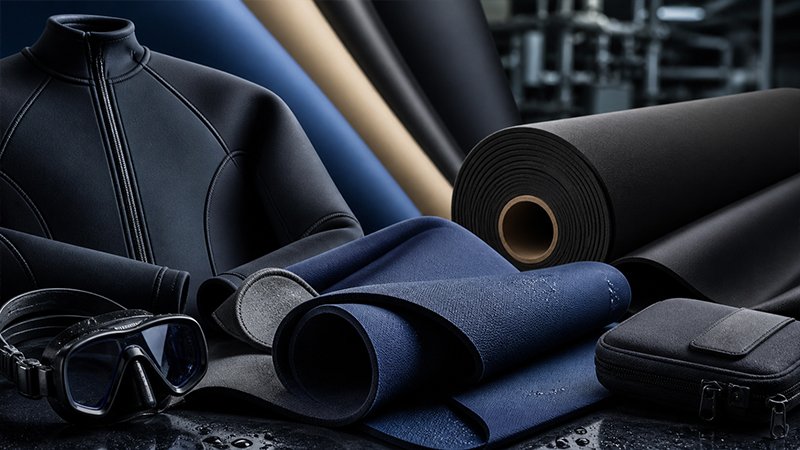
Neoprene, scientifically known as polychloroprene, is a versatile synthetic rubber that has revolutionized industries ranging from deep-sea diving to high fashion.
Originally developed by the DuPont Corporation in 1930 as a substitute for natural rubber, this petrochemical-based material rose to prominence during World War II for its durability in military applications.
Today, it is renowned for its unique physical properties, including total impermeability, high stretchability, and exceptional heat retention.
While it lacks breathability, its ability to form a solid barrier against wet and cold environments makes it the gold standard for wetsuits and protective gear.
As the USA remains its primary global producer, the fabric continues to evolve, proving that Neoprene remains an essential “miracle” material for the modern world.
What Exactly is Neoprene Fabric?
Neoprene is not a traditional woven textile; rather, it is a brand name for polychloroprene, a synthetic rubber originally developed by the DuPont Corporation.
Unlike natural fabrics like cotton or wool, Neoprene is a petrochemical-based material. It serves as a superior substitute for natural rubber due to its unique molecular structure, which offers a complete barrier against the elements.
In the consumer market, you may hear it referred to as scuba fabric, though technical Neoprene used for industrial purposes or wetsuits often features distinct chemical additives and manufacturing methods compared to the lighter “scuba” variations used in high-street fashion.
A Legacy of Innovation: The History of Polychloroprene
The creation of Neoprene was fueled by necessity during a time of global crisis. In the early 20th century, Western industrial giants faced a severe shortage of natural rubber, prompting a desperate search for a synthetic alternative.
The breakthrough occurred in 1930 through a collaboration between academia and industry. Fr. Julius Arthur Nieuwland, a chemistry professor at the University of Notre Dame, had been researching a plastic material known as divinyl acetylene. His work caught the attention of DuPont executives, who recruited him to help develop a mass-producible compound.
By the time World War II arrived, Neoprene had become a strategic asset. It was used extensively by Allied forces for everything from Jeep tires to specialized military wetsuits. Without this invention, the material logistics of the war effort might have looked vastly different.
Core Physical Properties: Why Neoprene Stands Out
Neoprene, formally known as polychloroprene, stands out as a “miracle” material because it possesses a combination of physical properties that traditional woven fabrics cannot replicate. Originally developed as a synthetic substitute for natural rubber, it has become a staple in both industrial and consumer markets due to several unique advantages:
Total Impermeability
Neoprene forms a solid, waterproof barrier between the wearer and the environment. While this eliminates breathability, it provides essential protection and insulation from harsh conditions that would otherwise be harmful or uncomfortable.
High Elasticity
Despite being a dense, waterproof material, it is remarkably stretchy. This elasticity is critical for products like wetsuits, allowing them to remain skin-tight for performance without restricting the movement of surfers or divers.
Superior Heat Retention
It is highly valued for its ability to insulate against extreme cold. This property allows individuals to remain active in forbidding climates and fully submerged conditions while staying warm and dry.
Unique Formability
Unlike most textiles that are woven from fibers, Neoprene is formed. This means it can be pre-made into practically any shape or size, offering fashion designers structural possibilities that traditional fabrics do not provide.
Durability and Protection
Beyond apparel, Neoprene stands out for its resilience. It provides a protective buffer for electronics against scratches and minor drops and is durable enough for heavy-duty military and industrial applications, such as gaskets.
Additionally, the material is evolving with the introduction of limestone-based polychloroprene, which divers prefer for its smooth, closed-cell structure and its improved sustainability compared to traditional petrochemical-based versions.
The Industrial Journey: How Neoprene is Manufactured
The manufacturing of Neoprene (polychloroprene) is a multi-stage industrial process that transforms petroleum or limestone into a durable, waterproof synthetic rubber.
1. Chemical Synthesis
The process begins with a chemical reaction called free radical emulsion polymerization. This reaction converts natural chloroprene into synthetic polychloroprene, which possesses the unique durability and insulation attributes required for technical fabrics.
2. Mixing and Baking
Polychloroprene is typically delivered to textile factories in a liquid form. At this stage, it is combined with specific additives to enhance certain traits, such as increasing its elasticity.
This mixture is then placed in a large mixer and baked in an industrial oven until it hardens into a solid mass known as a “loaf”.
3. Precision Slicing
Because the loaf is a solid block, it must be processed into usable sheets using a large industrial machine. This machine slices the loaf into chunks or sheets of various widths; the thicker the slice, the more insulative and waterproof the resulting material becomes. On average, these slices are between 3 and 5 millimeters thick.
4. Assembly and Finishing
The sliced sheets are shipped to apparel and gear manufacturers, who trace patterns directly onto the polychloroprene slices. Entire sections of a product—such as the face of a wetsuit—are cut from a single slice and then sewn together to form the final item.
Before packaging, manufacturers may apply waterproofing or fireproofing sprays to the finished product.
Alternative “Organic” Production
While the majority of Neoprene is petrochemical-based, some manufacturers produce an “organic” version using natural limestone.
This variation creates a closed-cell structure that is highly popular among divers for its smooth feel and is considered more sustainable because the Earth constantly renews its limestone reserves.
Versatile Applications in Modern Industry
The utility of Neoprene extends far beyond the ocean. According to the sources, its applications are divided across several key sectors:
1. Sporting and Scuba Gear
This is the most well-known use for the fabric. Its waterproof and insulative properties are vital for keeping divers and surfers warm in fully submerged conditions.
2. Fashion and Apparel
In the world of clothing, Neoprene is often used for its structural “pop”. It is frequently found in summertime garments for women, sports bras, and high-performance activewear.
3. Accessories and Tech Protection
Due to its ability to provide a buffer against scratches and minor drops, it is a leading material for electronics cases.
4. Military and Industrial Uses
The material is a staple for the U.S. government and various militaries, where it is utilized for gaskets, industrial equipment, and heavy-duty gear.
Environmental Impact and Sustainability Efforts
Like all petrochemical-derived fabrics, Neoprene has a significantly negative impact on the environment. Its production contributes to global pollution, though it currently represents only a small fraction of the world’s total annual plastic production.
Because it is a synthetic material, it is not biodegradable and is generally not recycled, making it ineligible for sustainability honors like the Global Recycle Standard (GRS) certification.
Despite these challenges, there are ongoing efforts and emerging alternatives aimed at improving the material’s sustainability:
- “Organic” Limestone-Based Polychloroprene: A newer variation of the material is produced using natural limestone instead of petroleum. While this version is not any more biodegradable than traditional Neoprene, it is considered technically more sustainable because the Earth constantly renews its limestone reserves. Divers often prefer this version for its smooth, closed-cell structure.
- Cleaner Production Efforts: Industrial efforts are currently underway to make the manufacturing of chloroprene rubber cleaner and more sustainable.
- Certification Standards: While it cannot receive organic or non-GMO labels, consumers can look for ISO certifications, such as ISO 9001, which verify specific levels of chemical purity in the synthetic substance.
Ultimately, while Neoprene is a “useful fabric friend” in many industries, the next major frontier for the material is finding ways to make it more environmentally friendly.
Certifications for Neoprene Fabric
Because Neoprene (polychloroprene) is a synthetic, petrochemical-based material, it is ineligible for certifications typically reserved for natural fibers, such as organic or non-GMO labels. Additionally, since the material is generally not recycled, it cannot receive certification from the Global Recycle Standard (GRS).
However, manufacturers can obtain ISO (International Organization for Standardization) certifications, which verify the purity and quality of the synthetic substance based on its intended use:
- ISO 9001: This certification is awarded if the polychloroprene demonstrates a specific, verified level of chemical purity.
- ISO 13485: This is a specialized certification required for polychloroprene used in the production of medical equipment.
Maintenance and Care Instructions
To preserve the integrity and performance of Neoprene products, proper maintenance is essential, particularly regarding temperature exposure:
- Washing Temperature: It is recommended to wash Neoprene in cold or warm water.
- Heat Sensitivity: You must never exceed 80° C when washing or drying the material. Like all petrochemical-based fibers, Neoprene is highly sensitive to heat and can melt at the slightest touch of extreme heat.
- Durability: While the fabric is resilient, it has a medium prone to pilling or bubbling, so gentle handling during cleaning can help extend the life of the garment or gear.
Conclusion: The Future of the “Fabric Friend”
Neoprene, formally known as polychloroprene, remains an enduring legacy of 20th-century innovation. From its origins as a wartime substitute for natural rubber to its current status as a versatile high-performance textile, this fabric offers unmatched waterproofing, elasticity, and thermal insulation.
While its petrochemical origins present ongoing environmental challenges, the industry is shifting toward sustainable alternatives like limestone-based polychloroprene.
With manufacturing evolving at key sites like DuPont’s Los Angeles facility, the focus remains on balancing utility with ecological responsibility.
Whether protecting divers or structuring fashion, Neoprene’s unique formability ensures its longevity as a cornerstone of material science. Ultimately, it remains a “miracle invention” essential to the modern world.


