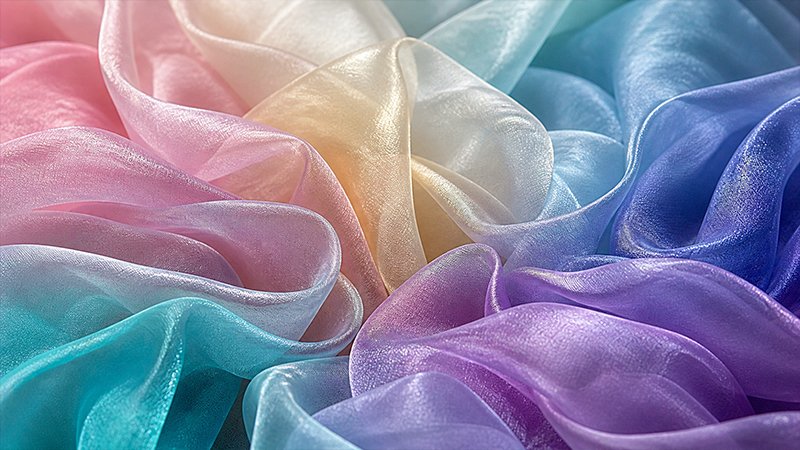
Organza is defined as a lightweight, plain-weave textile characterized by its sheer appearance and low-density construction.
This transparency is achieved by weaving fibers in a way that allows light and air to pass through easily, resulting in a fabric that is famously breathable but relatively flimsy.
Because of these unique properties, organza is frequently utilized as an overlay for more substantial garments, adding a layer of ethereal texture without significant weight.
While traditionally a silk product, modern advancements have expanded the definition of organza to include varieties made from synthetic fibers like polyester and nylon.
Despite its delicate look, organza possesses a distinct stiffness that sets it apart from other sheer fabrics like chiffon, allowing it to hold shapes and ruffles with remarkable precision.
The Technical Specs: HPI and Weave Quality
In the world of textiles, quality is often measured by thread count; however, organza follows a different standard known as Holes Per Inch (HPI). Because the fabric is so thin and lightweight, manufacturers count the number of tiny gaps in every square inch of the weave.
- HPI Variations: Organza typically ranges from 7 to 18 HPI.
- Quality Indicator: A higher HPI rating generally indicates a superior quality of fabric.
- Structure: As a plain weave fabric, the warp and weft threads are identical in size and are woven with an equal number of picks and ends per inch, ensuring a uniform surface.
A Storied History: From “Urgang” to the Modern Era
The lineage of organza is deeply intertwined with the ancient Silk Road, the legendary trade network connecting China to the Western world.
Interestingly, the name “organza” does not stem from a Chinese dialect but is instead derived from “Urgang,” a town in Turkestan that served as a major silk market in antiquity.
By the Middle Ages, Western cultures had adapted the term into various regional names for the fabric. Related to this is the term “organzine,” which refers to a specific simple-twist spinning method used to create the silk threads required for this textile.
For centuries, this fabric has been a cornerstone of Western bridal attire and formal evening wear, prized for its ability to create volume without density.
The Manufacturing Process: From Raw Fiber to Finished Textile
The creation of organza varies significantly based on whether the base material is organic or synthetic.
1. Silk Organza (The Organic Method)
The production of silk organza is a purely organic endeavor. It begins with silkworms, which produce cocoons that are harvested and then boiled or soaked in hot water. These cocoons are then “reeled” or unraveled into long, continuous strings of fiber.
2. Synthetic Organza (The Lab-Grown Method)
Conversely, polyester and nylon organza are synthesized in laboratories from non-organic components. This process involves the refinement of petroleum oil into a textile yarn using various chemical treatments and machinery.
3. The “Organzine” Twist and Acid Treatment
Regardless of the base material, the threads must undergo a specific twisting process where two fibers are spun in opposite directions so they naturally cling to one another.
A defining step in creating organza’s signature “hand” is the acid treatment. Before being woven, the yarn is combed and treated with acid to increase its stiffness. While essential for silk, this step is sometimes omitted for synthetics, which are naturally more rigid.
4. The Human Touch: Hand-Woven vs. Machine
To maintain the integrity of the seams and prevent puckering, the highest quality organza is still woven by hand. While machine weaving is possible, it often results in a lower-quality product that lacks the precise finish of hand-crafted textiles.
Popular Varieties of Organza
Organza fabric is available in several popular varieties that are distinguished by their base materials and unique visual finishes. While historically made from silk, modern versions are commonly crafted from synthetic fibers such as polyester and nylon.
The most popular decorative varieties of organza include:
- Spark Organza: This variety is named for the bright sparkles that are woven directly into the fabric.
- Crystal Organza: Unlike spark organza, this type does not have noticeable sparkles but is prized for its all-over shimmer.
- Pearl Organza: This subtype is characterized by its pearlescent color and a shine that closely resembles the appearance of a real pearl.
- Snowflake Sparkle Organza: This is a specific themed variation often used for its unique sparkling effect.
The quality of these varieties is typically measured by Holes Per Inch (HPI), with a higher HPI generally indicating a better quality of fabric. Despite these variations, all organza types share the signature stiffness achieved through an acid treatment process during manufacturing.
Modern Applications: More Than Just Fashion
While organza is most famous for its role in high fashion and bridal wear, its unique properties of stiffness, transparency, and breathability allow it to be used in a variety of modern applications beyond traditional apparel.
According to the sources, modern applications for organza include:
1. Interior Decor and Household Textiles
Because of its sheer nature and ability to let light pass through, organza is a popular choice for interior design.
- Curtains: Its high breathability and transparency make it ideal for window treatments that require a delicate, airy feel.
- Lampshades: The fabric is used to create decorative covers for lamps, where its low density allows light to filter through beautifully.
- General Household Textiles: It is occasionally employed for various other home accents where a lightweight, semi-transparent fabric is desired.
2. Performance and Stage Wear
Organza’s signature stiffness—often enhanced by an acid treatment during production—makes it indispensable for garments that need to hold a specific shape.
- Dancewear: It is a primary material for tutus and other specialty dance apparel.
- Stage Costumes: The fabric is frequently used for costumes that require volume without adding significant weight.
- Underskirts: It provides the necessary structure and “fluffiness” underneath other garments.
3. Specialized Fashion Accessories
Beyond full garments like wedding dresses, organza is used for versatile fashion additions:
- Overlays: These are sheer shawls or wraps worn on top of dresses, often featuring complex, brightly colored patterns.
- Scarves and Blouses: Its lightweight nature makes it suitable for delicate accessories and airy tops.
4. Niche and Decorative Uses
The sources also highlight that organza is viewed as a niche textile with creative applications:
- Craft and Gift Packaging: For example, the sources mention its use in decorative contexts like an “organza fabric jar”.
- Textile Art: Due to the various types available—such as spark, crystal, and pearl organza—it is used for items that require specific visual effects like shimmering or pearlescent finishes.
Global Production: Who Makes Your Fabric?
Today, China is the largest producer and exporter of organza fabric globally. While the fabric’s production was historically concentrated in East Asia due to its silk origins, modern manufacturing is split between silk and synthetic varieties across several key regions.
Silk Organza Production
China and India remain the primary producers and exporters of silk-based organza.
- China: A significant amount of organza yarn is produced in textile mills located near the Yangtze River and within the Zhejiang province.
- India: The Bangalore region is known for spinning a coarser variety of organza yarn. In some instances, this yarn is woven into fabric locally, but it is often exported for final garment assembly.
Synthetic Organza Production
The production landscape changes when organza is made from synthetic materials like polyester or nylon.
- China: This nation produces the vast majority of the world’s polyester and is the leading exporter of nylon. Consequently, most synthetic organza yarn and finished textiles are manufactured in China.
- United States: Because polyester and nylon were originally developed in the U.S., some synthetic organza yarn is still spun there.
Global Manufacturing Hubs
While yarn may be produced in one region, it is frequently exported to major factories in other countries to be turned into finished garments for global consumers. These manufacturing hubs include:
- China
- Pakistan
- Indonesia
- Bangladesh
Historical Origins
Historically, organza was first produced in Turkestan. The name itself is derived from “Urgang,” a town in Turkestan that hosted one of the most popular silk markets in the ancient world along the Silk Road.
The Sustainability Debate: Silk vs. Synthetics
The debate over the sustainability of organza fabric centers on the environmental and ethical trade-offs between its two primary source materials: silk and synthetic fibers (like polyester and nylon).
While “organza” refers specifically to a plain-weave pattern rather than a material, the choice of fiber significantly dictates its ecological footprint.
The Environmental Impact of Synthetics
Synthetic organza is widely viewed as having a significantly negative impact on the environment.
- Resource Depletion: These fabrics are derived from petroleum oil, which is a non-renewable natural resource.
- Toxicity: Large amounts of energy are required for extraction, and the refining process releases various toxins into the environment that can also harm workers.
- Persistence: Petroleum-based fabrics are not biodegradable. Long after silk or other organic fabrics have been reclaimed by the environment, synthetic organza will continue to block waterways and release toxins.
The Sustainability of Silk
In contrast, the production of silk organza is considered an environmentally sustainable and purely organic process.
- Low-Input Farming: Silkworms live on mulberry trees, which are typically grown without the need for fertilizers or pesticides.
- Clean Production: No toxic substances or non-biodegradable materials are released during the manufacturing or use of silk.
- Biodegradability: Silk is a natural fiber that is fully biodegradable, making it a more environmentally friendly choice than polyester or nylon.
Ethical and Economic Considerations
The sustainability debate is complicated by factors beyond environmental impact, including ethics and cost:
- Animal Rights: A major point of contention for silk is that the larvae must be boiled alive within their cocoons to harvest the fiber, a practice criticized by animal rights activists.
- Cost of Luxury: Silk organza is one of the world’s most expensive and luxurious textiles due to its laborious production, whereas synthetics are relatively cheap and accessible to a wider market.
Navigating Quality and Ethics with Certifications
The sources suggest that certifications can help consumers make more sustainable choices:
- For Silk: Look for USDA organic certification or the Silk Mark (in India), which is awarded to manufacturers using safe and sustainable processes.
- For Synthetics: While they cannot be certified as organic, some synthetic organza may carry a Global Recycle Standard (GRS) certification if they are verified as being made from 100% recycled materials.
Cost and Certification
Silk organza is significantly more expensive than its synthetic counterparts due to the laborious production process and the inherent luxury of the material. Synthetics like nylon are relatively cheap.
When purchasing, look for certifications to ensure quality and ethics:
- Silk Mark: Awarded to Indian manufacturers using safe and sustainable practices.
- Global Recycle Standard (GRS): Verifies that synthetic organza is made from 100% recycled materials.
- Organic Certification: Silk can be certified organic by the USDA or other international bodies.
Caring for Your Organza
Organza is an exceptionally delicate fabric that requires specialized care to prevent damage and maintain its signature stiffness.
- Washing Guidelines: Due to its incredibly delicate nature, organza cannot be washed in a washing machine. The recommended cleaning method is to hand-wash the fabric in cold water. However, many consumers prefer to have their organza garments professionally dry cleaned to ensure they are handled safely.
- Handling and Protection: Because the fabric is extremely thin and lightweight, it is highly susceptible to physical damage. It is important to be cautious and avoid catching organza textiles on any surfaces that might cause snags.
- Storage: For long-term preservation, you should wrap organza in a protective substance, such as muslin, when it is in storage. This helps protect the sheer material from environmental damage and accidental tears.
Conclusion
Organza fabric remains a timeless staple in the textile world, bridging the gap between ancient Silk Road heritage and modern synthetic innovation.
Defined by its sheer transparency and signature acid-treated stiffness, this plain-weave fabric continues to be the premier choice for bridal gowns, evening overlays, and intricate home decor.
While the shift from traditional silk to polyester and nylon has made organza more affordable, the environmental trade-offs highlight the ongoing importance of sustainable material choices.
Whether measured by its Holes Per Inch (HPI) or its ethereal aesthetic, quality organza demands specialized care to preserve its delicate structure.
As production remains centered in hubs like China and India, organza’s unique blend of breathability and structural integrity ensures its enduring relevance across high fashion and interior design.