Have you ever wondered why your favorite gym leggings feel so smooth, or why a specific cloth cleans your windows without leaving a single streak? The secret usually lies in a textile marvel known as microfibre fabric.
In the modern world, this material is everywhere. It’s in our closets, our kitchens, and even our industrial filtration systems. While it’s often celebrated as a “miracle” fiber for its performance and low cost, it also carries a complex environmental footprint.
Whether you are a fashion enthusiast looking for durable materials, a textile buyer, or someone simply curious about the fabrics in your home, this guide will walk you through the science, history, and reality of microfibre.
What is Microfibre Fabric?
To understand what is microfiber, you have to think small—really small.
At its core, microfibre fabric is a synthetic textile made from incredibly fine fibers. How fine are we talking? To be classified as a microfibre, the strands must be less than 10 micrometers in diameter.
To put that in perspective, a single strand of microfibre is significantly thinner than a strand of human hair and even finer than a strand of silk, which typically measures around 1 denier (a unit of textile measurement). Microfibres usually clock in at under 0.7 denier.
Most of the microfibre you encounter today is a blend of two main synthetic materials: polyester and polyamide (often known as nylon).
Sometimes, you might also find versions made from polypropylene. By weaving these ultra-thin threads together, manufacturers create a fabric that is exceptionally soft, remarkably strong, and surprisingly versatile.
A Brief History: From Lab Experiments to Global Success
The journey of microfibre didn’t happen overnight. Scientists began playing with ultra-low-denier fibers back in the 1950s.
However, early versions were tricky to work with because manufacturers couldn’t control the length of the fibers, which limited their use in real-world products.
The real “eureka” moment came in the 1960s in Japan. A company called Toray, led by Dr. Miyoshi Okamoto and Dr. Toyohiko Hikota, figured out how to mass-produce these tiny fibers.
They used “bicomponent polymers”—essentially mixing different types of plastics—to make the fibers strong enough to survive the manufacturing process without snapping.
One of their first hits was Ultrasuede, which became a popular leather alternative. But while Japan started the fire, Europe—specifically Sweden—poured gas on it in the 1990s.
Swedish manufacturers expanded microfibre’s use into cleaning and everyday apparel, turning it into the global staple it is today.
How Microfibre Fabric is Made: The Science of “Star and Filler.”
The production of microfibre fabric is a fascinating piece of engineering. Because the fibers are so tiny (some as small as 0.2 denier), they can’t be made using the standard machines used for thicker fabrics.
Instead, manufacturers use a specialized process:
- Core Creation: The “skeleton” of the fiber is usually made of polyester. This polyester is extruded through tiny metallic tubes to create a shape that looks like a star or an asterisk when viewed under a microscope.
- The Filler: The gaps between the “points” of the polyester star are filled with polyamide. Polyamide is less dense and serves as a “filler” that adds bulk and absorbency.
- The Fusion: These two different plastics are fused together using heat.
- The Split (Optional): For cleaning products, the fibers are often “split.” This creates a “split-weave” fabric where the fibers are separated, creating millions of tiny hooks that can grab dirt and liquid.
- Finishing Touches: Once the fibers are ready, they are woven into large sheets. At this stage, they can be dyed or treated with chemicals to make them more heat-resistant or stain-proof.
Key Microfibre Properties: Why We Use It
What makes this fabric so special? The unique microfiber properties come from its physical structure.
Incredible Softness
Because the fibers are so thin, the fabric feels like a cloud against the skin. This is why it’s a favorite for bathrobes and bed sheets.
High Durability
Don’t let the softness fool you. Microfibre is remarkably tough and can withstand frequent washing and heavy use without falling apart.
Superior Absorbency
The polyamide components and the “split” structure allow the fabric to hold a significant amount of liquid—perfect for towels and mops.
Moisture-Wicking
It’s excellent at pulling sweat away from the body and moving it to the surface of the fabric where it can evaporate. This makes it a top choice for athletic jerseys and leggings.
Electrostatic Power
Microfibre naturally carries a slight static charge. This allows it to act like a magnet for dust and allergens, which is why it’s so effective in cleaning cloths and air filters.
Water Repellency
Depending on how it’s woven, microfibre can also be made to repel water, making it useful for jackets and outdoor gear.
Exploring the Different Types of Microfibre
Not all microfibres are created equal. Depending on the weave and the material blend, it can behave very differently:
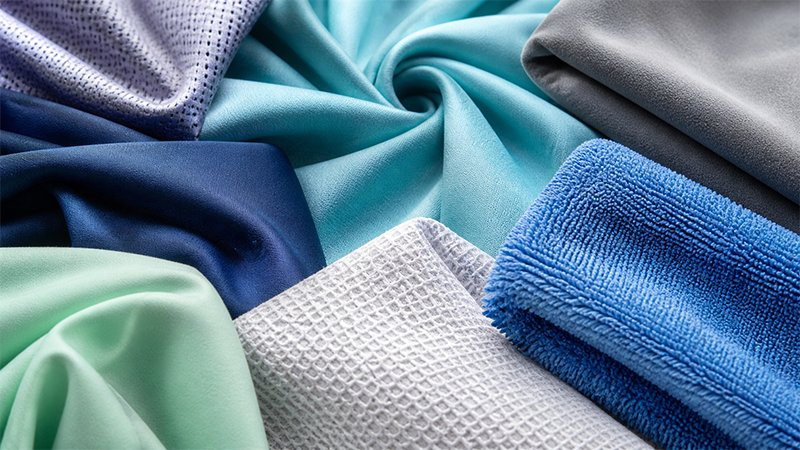
Flat-weave Microfibre
This is the “smooth” version of the fabric. It’s very durable but not particularly absorbent. You’ll mostly find this in clothing, such as skirts, jackets, and accessories.
Split-weave Microfibre
If you’ve ever used a microfibre cloth that feels like it “clings” to your skin, that’s a split-weave. During production, the fibers are split to create tiny loops. This version is the gold standard for cleaning because it traps dirt and absorbs liquid like a sponge.
Micromodal
This is a specialized, 100% polyamide version of microfibre. It is incredibly soft and stretchy, though slightly less durable than polyester blends. It’s often used as a high-end alternative to standard modal fabric.
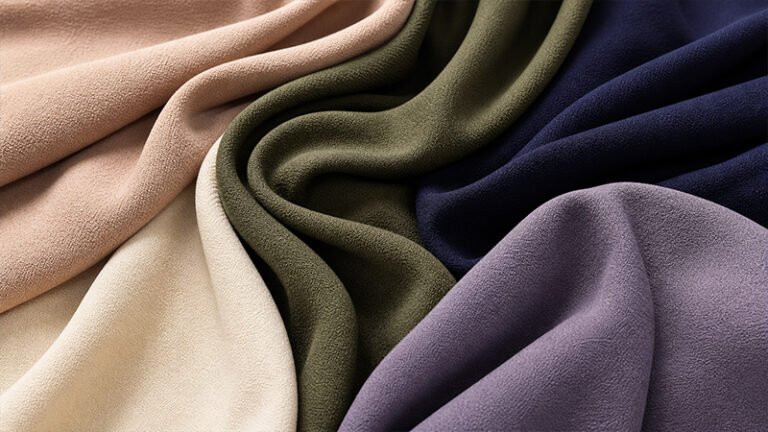
Ultrasuede and Suede Microfibre
These types are designed to mimic the feel of genuine leather. Ultrasuede is one of the oldest forms of microfibre, while suede microfibre has a very low pile, making it perfect for cleaning delicate items like eyeglasses.
Waffle Weave and Terry
- Terry microfibre uses the same looped weave you find in traditional bath towels, maximizing absorbency.
- Waffle weave has a raised, grid-like pattern that reduces friction, making it the best choice for cleaning glass and mirrors without leaving streaks.
Common Microfiber Uses: From Gym to Gallery
The range of microfiber uses is truly staggering.
- The Cleaning Industry: This is where microfibre truly shines. It’s used for everything from floor mops to kitchen towels. Research even suggests that its fine structure can help remove microbes and viruses from surfaces.
- Fashion & Apparel: Because it’s stain-resistant and moisture-wicking, it’s a staple for athletic wear, swimwear, and lightweight jackets.
- Home Textiles: You’ll find microfibre in sheets, pillowcases, throw blankets, and even upholstery. Its ability to resist stains makes it a popular choice for furniture.
- Accessories: It’s frequently used to create “vegan leather” for wallets, handbags, shoes, and backpacks.
- Industrial Applications: Its electrostatic properties make it an ideal material for high-tech filtration. It’s also used as high-density insulation in construction.
The Balanced View: Advantages and Disadvantages
Like any material, microfibre fabric has its pros and cons.
The Advantages
- Affordability: It is one of the most budget-friendly textiles on the market, costing significantly less than natural fibers like silk or high-end cotton.
- Longevity: It doesn’t shrink or stretch out of shape easily, meaning products last a long time.
- Efficiency: For cleaning, it often requires less water and fewer chemicals to get the job done.
- Low Maintenance: It is generally wrinkle-free and dries very quickly.
The Disadvantages
- Heat Sensitivity: Because it’s made of plastic, it can melt if exposed to high heat (like a hot iron or a high-heat dryer).
- Breathability Issues: While some weaves are breathable, others can feel “plastic-y” and trap heat against the skin.
- Environmental Impact: This is the biggest drawback, as the fabric contributes to plastic pollution throughout its lifecycle.
Microfibre vs. Cotton: Which Should You Choose?
When shopping, the choice often comes down to microfibre or cotton. Here is a quick comparison:
| Feature | Microfibre | Cotton |
|---|---|---|
| Source | Synthetic (Plastic) | Natural (Plant) |
| Absorbency | High (Traps moisture) | High (Soaks up moisture) |
| Wicking | Excellent | Poor (Stays damp) |
| Durability | Very High | Moderate |
| Softness | Extremely Soft | Soft (Gets softer with age) |
| Price | Very Affordable | Mid-to-High |
| Environment | Higher impact (Plastic) | Biodegradable (but water-intensive) |
The Verdict: Choose microfibre for performance tasks (cleaning, working out, travel) and cotton for breathability and a natural feel.
The Environmental Impact: A Complicated Reality
It is impossible to discuss microfibre fabric without addressing its impact on the planet, which is unfortunately “considerably negative”.
The issues start at the factory. Producing polyester and polyamide requires toxic chemicals that are difficult to dispose of safely. But the problems continue even after you take the product home.
Every time you wash microfibre, it sheds tiny plastic particles—microfibres—into the water system. These particles are too small for many filtration systems to catch, meaning they eventually end up in our rivers and oceans, contaminating the “hydrosphere”.
Furthermore, because these fabrics are made from plastic, they are not biodegradable. When you eventually throw away a microfibre towel, it will sit in a landfill for centuries.
Is there a silver lining? Some manufacturers are now using recycled plastics to create microfibre, which can earn them a Global Recycle Standard (GRS) certification. If you are concerned about the environment, look for these certifications or use specialized wash bags designed to catch microplastics in the laundry.
Care and Maintenance Tips
To make your microfibre products last as long as possible (and minimize their environmental impact), follow these simple rules:
- Keep it Cool: Always machine wash in cold or warm water. High heat can damage the fine fibers or even melt them.
- Avoid Fabric Softener: This is crucial. Fabric softeners coat the fibers in a waxy layer, which ruins the fabric’s ability to absorb water and grab dust.
- Air Dry if Possible: Because it’s synthetic, it dries very quickly on a line. If you must use a dryer, use the lowest heat setting.
- Wash Separately: Don’t wash microfibre cleaning cloths with cotton towels. The microfibre will “grab” the lint from the cotton, making the cloth less effective.
Summary: The Modern Textile Workhorse
Microfibre fabric has changed the way we clean, dress, and live. Its combination of extreme softness, durability, and affordability makes it hard to beat for sheer performance. While it is a synthetic material with significant environmental challenges, its utility in everything from life-saving filtration to high-performance athletic gear is undeniable.
By understanding how to care for it and choosing recycled options when possible, you can enjoy the many benefits of this “tiny” fiber while being a more conscious consumer.
Frequently Asked Questions (FAQ)
Is microfibre a type of plastic?
Yes. Most microfibre is made from polyester and polyamide, which are both forms of plastic derived from petroleum.
Does microfibre fabric pill?
It has a “medium” prone-to-pilling rating. High-quality flat-weave microfibres are less likely to pill than cheaper, lower-density versions.
Where is most microfibre produced?
China is currently the global epicenter for synthetic textile production, including microfiber.
Is microfibre safe for sensitive skin?
Because it is exceptionally soft and often hypoallergenic, many people with sensitive skin find it comfortable. However, because it is synthetic, it may not be as breathable as natural fibers for everyone.