Acrylic paints are a staple in the art world, celebrated for their colors, durability, and rapid drying times. However, many users remain unaware of the chemical complexities hidden within their favorite tubes.
While these paints are primarily water-based and non-flammable, they can contain hazardous heavy metals such as cadmium, cobalt, and lead.
Understanding when a “non-toxic” medium becomes a health risk—such as during airbrushing, sanding, or accidental ingestion—is essential for every creator.
This guide explores the critical ingredients in acrylic formulas, deciphering safety labels like the AP seal, and establishing best practices for a safe studio.
Whether you are a professional artist or a parent, mastering these safety protocols ensures that your creativity remains a healthy and rewarding pursuit.
The Chemical Blueprint: What Is Really Inside Your Paint?
While acrylic paints are celebrated for being water-based and non-flammable, their chemical profile is more complex than it appears on the surface. To master the medium, one must first understand its foundational ingredients and the potential toxins that may be lurking within the formula.
The Non-Toxic Foundation vs. Hazardous Additives
Most high-quality acrylics are generally considered safe for standard use. However, the quest for specific “artist-grade” colors—those that offer unparalleled lightfastness and saturation—often requires the use of heavy metals.
Primary “Red Flag” Ingredients to Monitor:
- Cadmium: Used for brilliant yellows, oranges, and reds; a known heavy metal.
- Cobalt: Essential for deep blues and teals.
- Manganese and Chromium: Often found in specialized pigments.
- Lead: Though increasingly rare in modern formulations, it can still be present in certain lower-quality or vintage pigments.
The Environmental Factor: Propylene Glycol
Beyond human health, we must consider the ecological footprint of our art. Many acrylic formulas contain propylene glycol.
While this ingredient is generally considered non-toxic to humans, it is harmful to the environment. This necessitates a professional approach to paint disposal to prevent contamination of local water systems.
High-Risk Exposure Scenarios: When “Safe” Becomes Hazardous
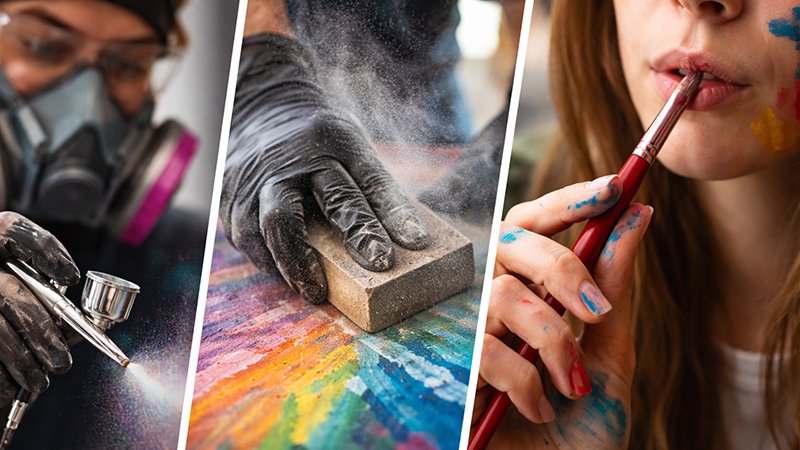
The toxicity of acrylic paint is often less about the substance itself and more about the method of application. Standard brush-on techniques carry minimal risk, but specific professional practices can bridge the gap between safety and hazard.
The Inhalation Risk: Airbrushing and Sanding
The most significant health risks associated with acrylics occur when the paint is aerosolized or turned into dust.
- Airbrushing: This technique releases fine particles and toxic dust directly into the air. Without a pressurized ventilation system or high-grade respiratory protection, these particles can be inhaled deep into the lungs.
- Sanding: Professional artists often sand dry acrylic surfaces to achieve specific textures. This process creates a cloud of potentially toxic pigment dust. Sanding should never be performed in an enclosed studio; it is best handled outdoors or with professional-grade dust extraction.
The Ingestion Hazard
While a small amount of paint on the hands is rarely a cause for alarm, swallowing large amounts of acrylic paint can lead to significant health complications.
This is particularly relevant for artists who “point” their brushes with their mouths—a dangerous habit that should be strictly avoided.
Skin Contact and Dermatological Safety
Acrylic paint is designed for canvas, wood, and metal—not the human body.
- Face Painting Warning: You should never apply acrylic paint to a child’s face. The pigments and binders are not cosmetic-grade and frequently cause skin irritation.
- Nitrile Barrier: For artists with sensitive skin or those working with heavy-metal pigments, wearing nitrile gloves is a recommended industry standard to prevent dermal absorption.
Deciphering Safety Labels: The Artist’s Shield
In a globalized market, safety standards provide the necessary transparency for informed purchasing. When sourcing materials, look for two primary certifications that signal a product has undergone rigorous testing.
The AP (Approved Product) Seal
The AP seal is the gold standard for non-toxicity, especially in products intended for educational settings or use by children. This seal certifies that the product contains no materials in sufficient quantities to be toxic or injurious to humans, including children, or to cause even chronic health problems.
ASTM D-4236 Compliance
Always verify that your paint tubes bear the ASTM D-4236 code. This indicates that the product has been evaluated by the American Society for Testing and Materials. This labeling standard ensures that all potentially hazardous ingredients are clearly disclosed, along with instructions for safe use.
Protecting Vulnerable Groups: Children and Pets
For many, the home studio is a shared space. Protecting children and pets requires a proactive strategy that goes beyond simply choosing “non-toxic” labels.
Pediatric Safety Guidelines
Painting is an essential developmental activity, but acrylics require strict supervision.
- Age Restrictions: Acrylic paint is generally not recommended for children under the age of three. At this developmental stage, the tendency to put fingers or brushes in the mouth is too high for the chemical complexity of acrylics.
- Supervised Hygiene: Children should be taught to wash their hands immediately after painting to prevent accidental ingestion.
- Safer Alternatives: For younger artists, consider transitioning to safer mediums such as liquid tempera, finger paints, or watercolors, which are designed with a higher safety margin for ingestion and skin contact.
Pet Safety in the Studio
Pets are naturally curious and may lick wet palettes or newly painted surfaces.
- Symptoms of Ingestion: While small amounts may only cause mild irritation, large-scale ingestion can lead to nausea, vomiting, tremors, diarrhea, and respiratory distress.
- Immediate Action: If a pet exhibits signs of depression or difficulty walking after a studio mishap, contact a veterinarian immediately.
- Storage Protocol: All art supplies, especially those containing heavy metals, must be stored in secure, pet-proof containers.
The Professional Studio Setup: Engineering Out Risk
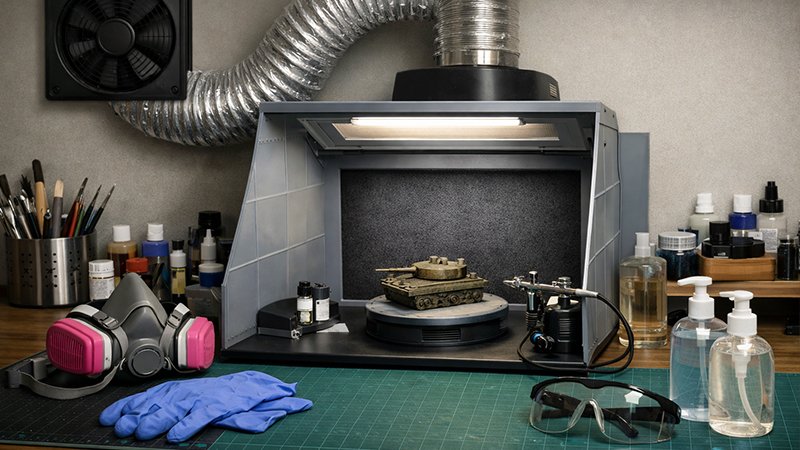
Creating a “Fortune 500 standard” workspace means moving beyond basic cleanup and implementing an Engineering Control mindset.
Ventilation: The Breath of Life
Acrylics can release chemical vapors and particulates into the air. Proper ventilation is the single most important factor in maintaining a safe workspace.
- Ensure a constant flow of fresh air.
- If working in an enclosed space, use a dedicated exhaust fan.
- For airbrushing, utilize a spray booth with a charcoal filter to trap fine particles.
Personal Protective Equipment (PPE) Checklist
To maintain the highest safety standards, the following PPE should be standard in any professional studio:
- Respiratory Protection: A breathable mask or respirator when airbrushing or sanding.
- Dermal Protection: Nitrile gloves to prevent pigment contact with the skin.
- Hygiene: Regular hand washing and the prohibition of food and drink in the painting area to prevent accidental cross-contamination.
Frequently Asked Questions (FAQ)
Q: Do acrylic paints contain flammable substances?
A: No. Acrylic paints are water-based and do not include flammable substances in their formula.
Q: Can acrylic paint cause cancer?
A: Paints marked as “non-toxic” are not associated with cancer risks. However, pigments containing hazardous heavy metals like cadmium, chromium, and cobalt must be handled with extreme care, as these specific ingredients have been labeled as hazardous.
Q: Do acrylic paints become toxic when heated?
A: Yes. Acrylic is a thermoplastic. When subjected to high temperatures, it can emit dangerous gases. Avoid using heat guns excessively or burning acrylic-coated surfaces.
Q: What should I do if my child swallows acrylic paint?
A: Have them gargle with saltwater and drink plenty of water. If large amounts were consumed, contact poison control or a medical professional immediately.
Conclusion: The Balanced Artist
Acrylic paint remains one of the most versatile and beloved mediums in the history of art. Its ability to adhere to wood, fabric, and metal while providing a durable, low-odor finish makes it an industry favorite.
However, professional excellence requires a commitment to safety. By identifying toxic heavy metals, ensuring proper ventilation, and respecting the vulnerability of children and pets, you can create a studio environment that fosters creativity without compromising health.
Always verify your materials, check for the ASTM D-4236 code, and prioritize non-toxic formulations whenever possible.