Pattern Description:
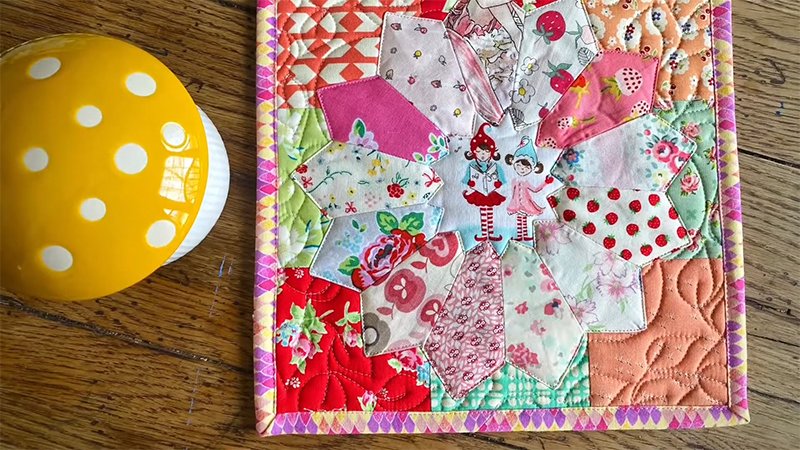
Create a vivid Dresden Color Wheel Mug Rug using fabric scraps and an Easy Dresden Template.
Cut 20-21 wedges, stitch and press them into a colorful ring, then add two stitched and turned fabric circles for the center.
Finally, top-stitch the design onto a felt backing, trim neatly, and enjoy a cheerful, quilted mug rug perfect for brightening your table.
Materials Needed & Measurements:
Materials Needed
- Fabric: Fabrics chosen from your stash. Scraps of material are suitable. Center fabric (for cutting two circles).
- Template: Easy Dresden Template designed by Darlene Zimmerman (the author obtained theirs from Joann’s).
- Backing: Felt.
- Other Supplies: Paper or plastic (to create a circle template). A plate was used to draw the original circle template.
- Optional items mentioned by commenters include: Cardstock or a cereal box for a circle template, spray starch, and a bobkin or chopstick for smoothing edges when turning circles.
Measurements & Cutting Instructions
- Wedges: Cut about 20-21 wedges. The author used 20 wedges in one sample and 21 in another.
- Wedge Cutting Positions: The author used the 1-1/2″ and the 2″ positions on the Easy Dresden Template to cut the 20 wedges for the pictured examples.
- Wedge Construction Seam Allowance: Use a 1/4″ seam allowance when stitching along the top of the folded wedge and when stitching all the wedges together to form a ring.
- Center Circles: Measure the inner circle of the Dresden ring, and then add 1/2″ to 3/4″ to each side for the seam allowance. For the smaller Dresdens created, the circles measured 4″ to 4-3/8″.
- Finishing Seam Allowance: When attaching the Dresden to the felt backing, top-stitch 1/8″ in around the points and valleys.
Instructions for Making the Dresden Color Wheel Mug Rug Pattern:
Selecting and Cutting the Wedges:
Begin by choosing various fabrics from your existing stash. To cut the wedges, utilize the Easy Dresden Template designed by Darlene Zimmerman. For the examples pictured in the tutorial, the author used the 1-1/2″ and the 2″ positions on the template.
You will need to cut about 20 to 21 wedges. The author suggests using your own judgment to determine the exact quantity that works best, noting that one sample used 20 wedges while another required 21.
Forming the Points:
Once the wedges are cut, fold each piece in half along the long edge. Using a 1/4″ seam allowance, stitch across the top edge of the folded wedge. This step is suitable for chain-stitching pieces together. After stitching, turn the wedge right side out to form a distinct point at the top.
Assembling the Dresden Ring
To form the Dresden ring, lay each individual finished wedge right side together. Stitch all the wedges together, consistently using a 1/4″ seam allowance. When all wedges are joined, the pieces will form a complete ring. Press the seams open to reduce bulk and prepare the ring for the center piece.
Cutting the Circle Templates:
The center piece is composed of two fabric circles. First, measure the inner circle of your newly constructed Dresden ring. To determine the size needed for the fabric circles, add 1/2″ to 3/4″ to that measurement to account for the seam allowance.
You must create a physical template for the circles; this can be cut from paper or plastic. For the small Dresdens in this tutorial, the finished circles measured between 4″ and 4-3/8″.
Optional tips for template making: The author used a plate to draw the original circle template onto regular paper so it could be reused.
Alternatively, you can look around the kitchen for a lid that is the correct size to trace. A circle template can also be made using cardstock or a cereal box.
Stitching and Turning the Circles:
Cut two circles from your chosen center fabric. Place the two circles together with right sides facing. Stitch the circles together using a 1/4″ seam allowance. To minimize bulk, cut notches into the seam allowance.
To turn the circle right side out, pinch the fabric on one side and cut a small slit. Pull the fabrics through this slit. Once turned, press the circle flat.
Note: If you are having trouble getting the circle to lay flat, an optional method is to pair the decorative quilting fabric with a lightweight, thinner fabric (or even a used fabric softener sheet) for the unseen back. Using a bobkin or chopstick can help smooth the edges before using spray starch and pressing the fabric.
Securing the Center:
Lay the completed fabric circle on top of the Dresden ring. Pin the circle in place if necessary. Using a sewing machine, top-stitch the circle to secure it firmly onto the ring of wedges. The author top-stitched the circle twice for extra security.
Backing and Final Edging:
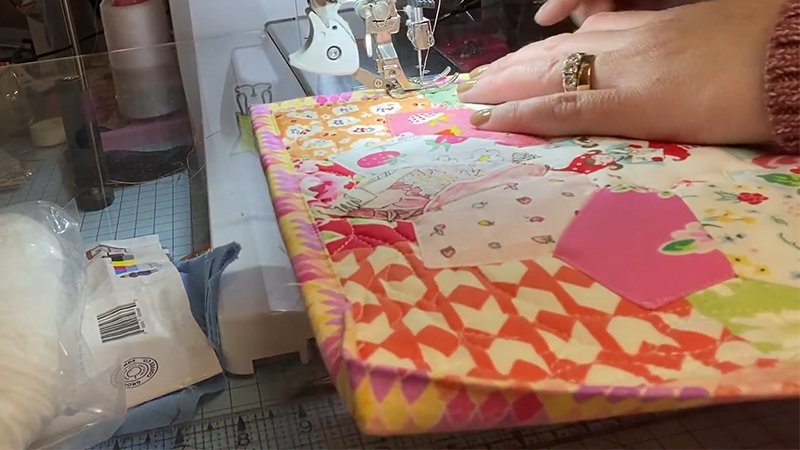
Lay the entire Dresden piece onto a piece of felt that will serve as the backing. Secure the Dresden to the felt by top-stitching 1/8″ in around all the points and valleys of the Dresden ring.
After the stitching is complete, trim the felt backing close to the points and valleys.
Finally, stitch in the ditch around the center circle to fasten the entire piece more securely to the felt backing.