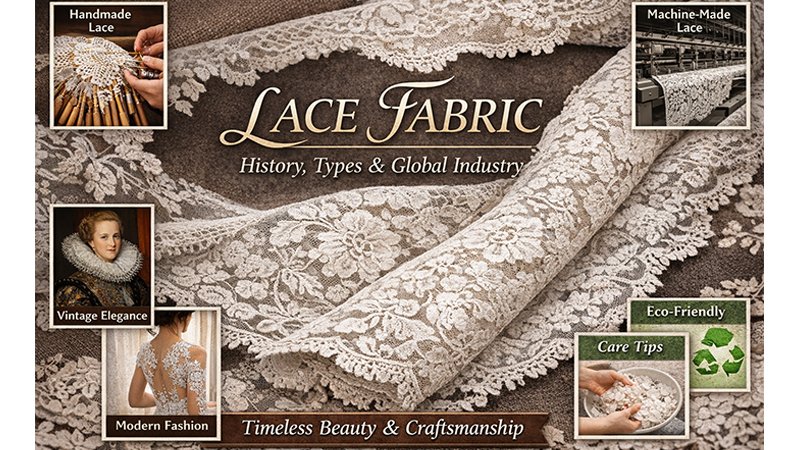
Lace is more than just a textile; it is an enduring symbol of sophistication, a feat of technical engineering, and a mirror of socio-economic history.
From the opulent courts of the Renaissance to the high-tech production lines of modern textile giants, lace has maintained a unique position in the global market as a fabric defined by its transparency, breathability, and intricate “openwork” patterns.
In today’s competitive landscape, understanding lace requires a multi-faceted approach—balancing the artisan’s craftsmanship with the industrialist’s efficiency.
This comprehensive guide serves as the definitive resource for designers, historians, and industry professionals looking to master the complexities of lace fabric.
Defining the Art of Openwork: What is Lace?
At its core, lace is a decorative openwork fabric characterized by intentional holes created through the looping, plaiting, twisting, or knotting of threads.
Unlike traditional woven fabrics, which are solid surfaces, lace creates a “net-like” structure that allows light and air to pass through freely.
The etymology of the word reflects its function: derived from the Old French las (noose) and the Latin laqueus, it implies an enticing or ensnaring beauty.
Traditionally crafted from linen, silk, or even precious metals like gold and silver, modern lace now incorporates a diverse array of fibers including cotton, polyester, and nylon.
Whether used as a subtle accent on a collar or as the primary material for a couture bridal gown, lace is defined by its artistic ornamental style and its ability to combine elegance with transparency.
A Heritage of Luxury: The Disputed Origins and Rise of Lace
The history of lace is a narrative of elite status and intense international rivalry. While historians debate the exact birthplace, it is widely accepted that “true lace” emerged in Europe during the late 15th and early 16th centuries.
The Continental Rivalry: Italy vs. Flanders
The origins of lace are claimed by two primary regions. Italy points to a 1493 will from the Milanese Sforza family mentioning lace, while Flanders (modern-day Belgium) cites depictions of lace in the 1485 paintings of Hans Memling.
Regardless of its specific origin, lace was born from earlier techniques like cutwork and embroidery, evolving into a freestanding art form.
Lace as a Status Symbol
During the 16th and 17th centuries, lace was a luxury item reserved for royalty, the wealthy, and the high clergy of the Catholic Church.
It was used extensively in religious vestments, ruffs, and collars. The demand was so high that many European states passed sumptuary laws to restrict its use, aiming to curb extravagant spending and maintain social hierarchies.
For example, in 1634, Massachusetts colonists were banned from owning or making lace to prevent “extravagance”.
The Shift to Women’s Fashion
Historically, lace was a staple in both men’s and women’s wardrobes. However, following the Industrial Revolution and shifts in societal norms by approximately 1840, lace largely disappeared from masculine attire.
It remained, however, an integral pillar of women’s fashion—specifically in bridal gowns and lingerie—where it continues to represent sensuality and beauty.
Manufacturing Mastery: From Hand-Stitched to Machine-Made
The production of lace is a study in evolution, moving from the painstaking labor of the “lacemaker” to the rapid output of the “Raschel machine.”
The Craft of Handmade Lace
Handmade lace remains the pinnacle of the textile arts, valued for its uniqueness and the immense labor required.
- Needle Lace: Created using only a needle and thread, this technique involves stitching over a base fabric or creating free-form designs by connecting thread loops. It is considered the most time-consuming and expensive form of lace.
- Bobbin Lace (Pillow Lace): This method involves winding threads onto numerous bobbins (sometimes 20 or more) and twisting or crossing them over a stiff pillow fitted with a pattern template.
- Other Artisan Techniques: This category includes Crocheted Lace (such as Irish Crochet), Knitted Lace (famed for the “wedding ring shawl”), Tatting (using knots and loops), and Macramé.
The Industrial Revolution and Machine Innovation
The 19th century transformed lace from an elite treasure to an accessible commodity.
- Leavers Machines: These complex machines were designed to replicate the fine, intricate details of handmade lace, often used today for high-quality couture lace.
- Raschel Machines: The workhorses of the modern industry, Raschel machines produce lace quickly and in large volumes. They are particularly effective for creating stretch lace used in contemporary lingerie and activewear.
- Chemical Lace (Schiffli): A modern miracle of chemistry where a pattern is embroidered onto a sacrificial base fabric. The base is then dissolved in a chemical bath (or by water/heat), leaving only the freestanding embroidery behind.
Popular Types of Lace Fabric
Navigating the market requires a granular understanding of lace styles, each offering distinct textures and aesthetic profiles.
Chantilly Lace: Originating in France, this is a delicate lace known for its fine floral patterns on a soft net background. It is the premier choice for bridal veils and light evening wear.
Guipure Lace (Venise Lace): A heavy, structured lace without a net backing. The motifs are connected by thick “bars,” making it ideal for formal dresses and bold fashion accents.
Corded (Alençon) Lace: Characterized by a raised thread (cord) that outlines the floral patterns, creating a 3D effect. It is frequently utilized in high-end bridal lace.
Stretch Lace: Incorporating elastic fibers like spandex, this lace moves with the body, making it essential for fitted garments and lingerie.
Beaded and Sequined Lace: A luxury variant where beads or sequins are hand- or machine-stitched into the patterns to add sparkle and weight.
Eyelet Lace: Typically cotton-based, this style features small holes cut into the fabric with reinforced stitching around the edges, perfect for summer apparel.
Limerick Lace: A hybrid lace created by decorating machine-made net with embroidery or darning.
Modern Applications: Beyond the Wedding Aisle
While bridal wear remains the most significant formal category for lace, the fabric’s versatility extends across multiple industries.
Fashion and Apparel
Lace serves as a primary material in lingerie and bodysuits due to its soft texture and stretch. In everyday wear, lace panels or trims on blouses and skirts elevate basic outfits into sophisticated statements. Accessories like sashes, gloves, and hairbands also leverage lace for a “vintage-inspired” aesthetic.
Interior Design and Home Décor
In the domestic sphere, lace adds a “cozy and classic” feel.
- Windows: Sheer lace curtains provide privacy while allowing diffused natural light to enter.
- Dining: Lace table runners and placemats are staples for formal occasions.
- Accents: Throw pillows, blankets, and lampshades frequently feature lace trimmings to add texture.
Arts, Crafts, and Media
Lace is a favorite in costume design for period dramas and fantasy films, as it can instantly establish a historical or regal context. In DIY communities, lace is used for scrapbooking, jewelry making, and even as a stencil for furniture painting.
Global Production and Economic Impact
The production of lace has shifted from European cottage industries to a global manufacturing powerhouse.
- Primary Producer: China is currently the world’s most prolific producer and exporter of lace fabric.
- Regional Specialties: Despite China’s volume, European nations like France, Belgium, and Italy maintain their status as the leaders in luxury, handmade, and high-end machine lace.
- Market Costs: The price of lace varies drastically. Synthetic lace is the most affordable, followed by cotton and linen, while silk lace and handmade needle lace remain the most expensive textiles on the market.
The Sustainability Imperative: Ethical Lace Production
As the textile industry faces increasing scrutiny, the environmental impact of lace production has become a critical concern for Fortune 500 brands.
The Problem with Synthetics
The majority of mass-produced lace today uses polyester or nylon, which are petroleum derivatives. These materials are non-biodegradable and contribute to plastic pollution.
Furthermore, the traditional “chemical lace” process involves harsh chemicals to dissolve the base fabric, which can be environmentally damaging if not managed correctly.
Sustainable Solutions
To align with modern ESG (Environmental, Social, and Governance) standards, manufacturers are shifting toward:
- Natural Fibers: Utilizing organic silk, linen, and cotton which have a lower environmental footprint.
- Eco-Friendly Processing: Modern chemical lace now uses water-soluble or heat-sensitive bases instead of caustic chemicals.
- Certifications: Leading brands look for certifications such as OEKO-TEX (for safety and sustainability), the Global Recycle Standard (GRS) for recycled synthetics, and organic certifications for natural fibers.
Preservation and Care: Maintaining the Integrity of Lace
Because lace is inherently fragile—prone to snagging, tearing, and fraying—proper maintenance is non-negotiable for longevity.
- Washing: Hand washing in cold water with a mild detergent is the gold standard. If a machine must be used, the item should be placed in a mesh laundry bag on a gentle cycle.
- Drying: Never wring or twist lace, as this distorts its intricate shape. Instead, lay the fabric flat on a towel, reshape it gently, and allow it to air dry away from direct sunlight.
- Ironing: Use a low heat setting and a pressing cloth to protect the fibers. Some lace types are wrinkle-resistant and should not be ironed at all.
- Storage: Store lace items flat or rolled in a cool, dry place. Avoid hanging, as the weight of the fabric can cause it to stretch and lose its structural integrity over time.
Enhanced FAQ: Expert Insights into Lace Fabric
Q: Is lace fabric breathable enough for summer wear?
A: Yes. Due to its open, airy structure, lace is naturally one of the most breathable fabrics available, making it ideal for warm-weather garments and layering.
Q: Why is handmade lace so much more expensive than machine-made lace?
A: The cost reflects the “time, skill, and labor” involved. Some antique-style needle laces require hundreds of hours to complete using techniques and threads that are no longer mass-manufactured.
Q: Can lace be dyed to match specific color palettes?
A: Yes, lace is highly customizable. Natural fibers like cotton and silk take dye very well, while synthetic laces require specific chemical dyes for color fastness.
Q: What is the most durable type of lace for high-use items?
A: Corded lace or Guipure lace are generally more durable because they utilize thicker threads and more robust structural connections compared to the airy nets of Chantilly.
Conclusion: The Timeless Appeal of an Intricate Art
Lace remains a “timeless appeal” that bridges the gap between ancient craftsmanship and modern fashion.
Whether it is the intricate floral motifs of a Chantilly veil or the bold, structured lines of a Guipure bodice, lace continues to define elegance in the textile world.
For the modern consumer and industry professional, choosing the right lace means balancing beauty with durability, and tradition with sustainability.
As we look toward the future, the integration of organic fibers and eco-conscious manufacturing will ensure that lace remains not just a relic of the past, but a sustainable staple of the global fashion industry for centuries to come.