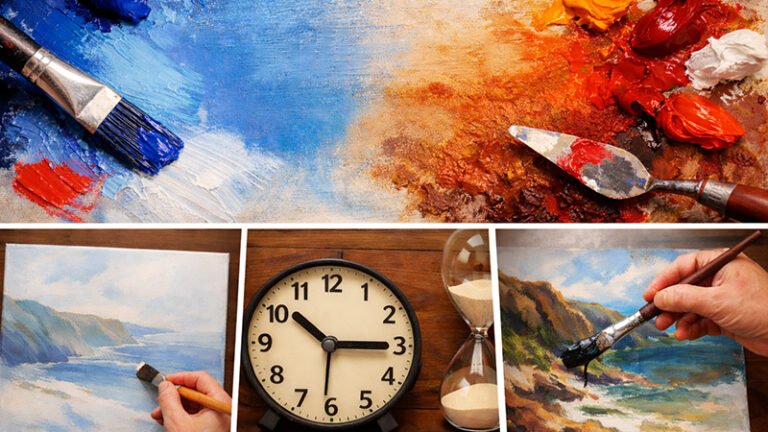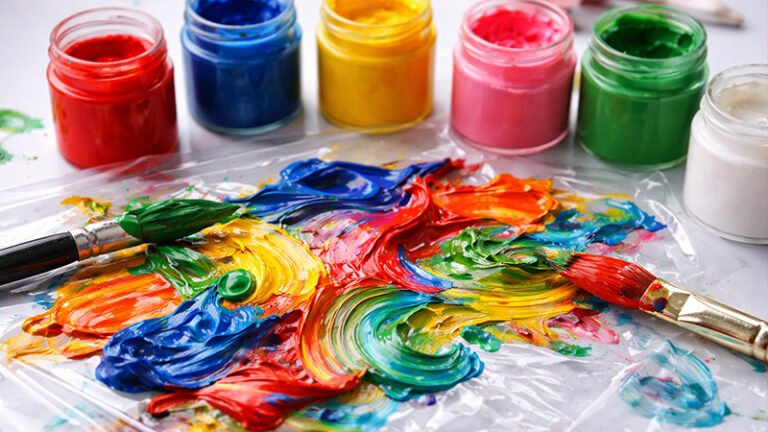
Whether you are a professional illustrator looking to refine your commercial portfolio or a hobbyist embarking on your creative journey, the choice between gouache and acrylic is a pivotal decision that defines your artistic output.
Both mediums are celebrated for their ease of use and water-based cleanup, yet they offer radically different tactile experiences and visual results.
As we dive into this comprehensive comparison, we will explore the chemical foundations, performance metrics, and strategic applications of these two powerhouses.
This guide is designed to help you navigate the nuances of opacity, durability, and workflow efficiency, ensuring your next project meets the highest standards of professional excellence.
The Chemical Foundation: Understanding the Binder
To truly master any medium, one must first understand its “DNA.” In the world of paint, this is the binder—the substance that holds pigment in suspension and allows it to adhere to a surface.
The Soluble Soul of Gouache
Gouache (pronounced gwash) utilizes gum arabic as its primary binder. This is the same binder used in traditional watercolors, but gouache is formulated with a higher pigment-to-binder ratio to achieve its signature opacity.
The defining characteristic of gum arabic is that it remains water-soluble even after the paint has dried. This means an artist can return to a painting days, or even years later, and “reactivate” the pigment with a wet brush to blend or lift colors.
The Permanent Power of Acrylic
In contrast, acrylic paint utilizes an acrylic polymer, which is essentially a liquid plastic. Once the water evaporates from the paint film, the polymer particles fuse together to create a flexible, waterproof surface. This chemical transition is irreversible; once acrylic is dry, it cannot be reactivated or changed with water.
Aesthetic Finish: Matte Sophistication vs. Glossy Versatility
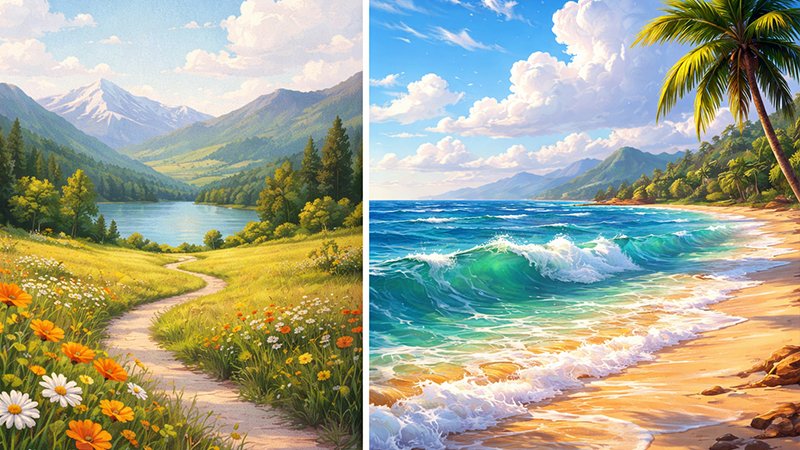
The visual “personality” of your work is largely determined by how the paint reflects light once cured.
The Gouache Aesthetic
Gouache is renowned for its soft, flat, matte finish. Because it lacks the “plastic” sheen of acrylic, it is the preferred choice for illustrators and designers whose work will be scanned or photographed, as the matte surface prevents glare.
While it is more vibrant than watercolor, it often appears more “velvety” and less intense than high-gloss acrylics.
The Acrylic Aesthetic
Acrylics are known for their brightness, vibrancy, and opacity. Depending on the brand and medium used, acrylics can dry to a variety of finishes, including glossy, satin, or matte.
Their ability to mimic the depth of oil paints while maintaining the convenience of a water-based medium makes them incredibly versatile for fine art.
Texture and Application: From Flat Washes to Impasto Peaks
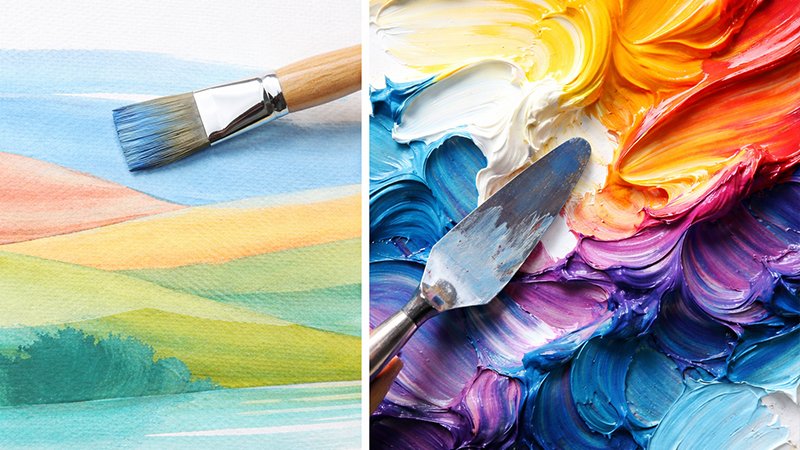
The physical “body” of the paint dictates the techniques an artist can employ.
Texture Limitations in Gouache
Gouache has a pasty but thin consistency. It is designed for smooth, flat applications. A critical technical constraint of gouache is its propensity to crack if applied too thickly.
Artists must work in relatively thin layers to ensure the paint film remains stable. Because of this, gouache is traditionally applied with paintbrushes rather than heavy-duty tools.
The Sculptural Freedom of Acrylic
Acrylics offer a spectrum of textures that gouache simply cannot match. From fluid acrylics and inks that mimic watercolor to heavy-bodied acrylics that can be sculpted into large peaks, the possibilities are nearly endless.
Artists can use palette knives to build physical texture (impasto) without the fear of the paint cracking as it dries.
Surface Versatility and Durability
Where do you intend to display your art? The answer may decide the medium for you.
| Feature | Acrylic Paint | Gouache Paint |
|---|---|---|
| Compatible Surfaces | Wood, metal, plastic, canvas, fabric, glass | Watercolor paper, illustration board |
| Water Resistance | Waterproof when dry | Not water-resistant (reactivates) |
| Environmental Resilience | High (Resistant to UV, dust, and moisture) | Low (Prone to fading and moisture damage) |
| Display Requirements | Can be varnished or hung “naked” | Must be framed behind glass for protection |
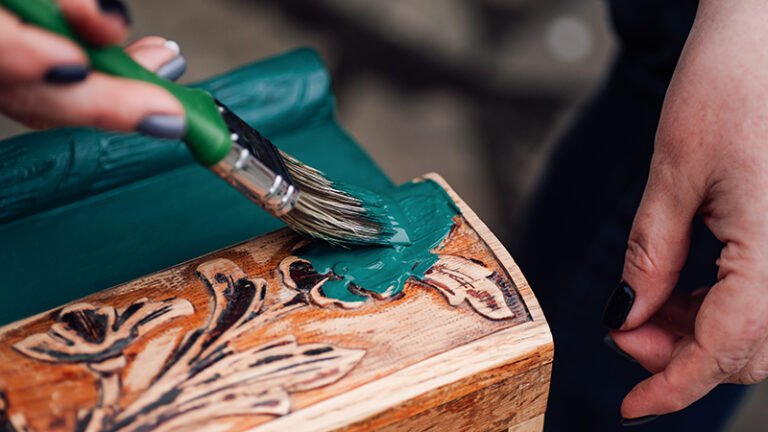
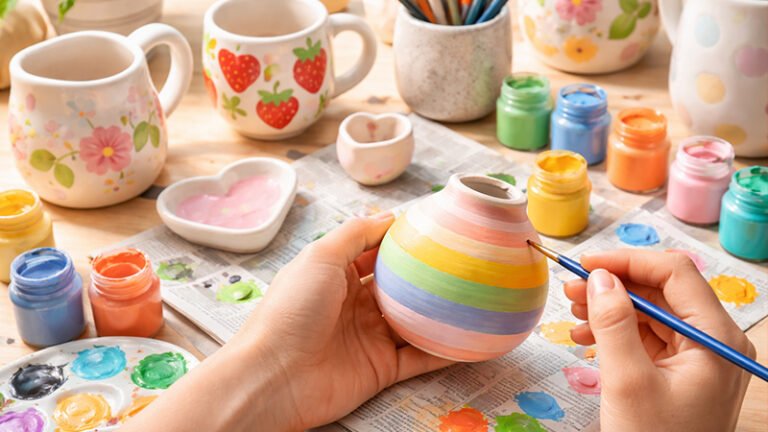
Expert Insight: Acrylic’s ability to adhere to almost any non-greasy surface—provided it is properly cleaned and primed—makes it the ultimate choice for mixed media and craft projects. Gouache, being more delicate, is best reserved for traditional paper-based works.
The Workflow: Blending, Layering, and the “Race Against Time”
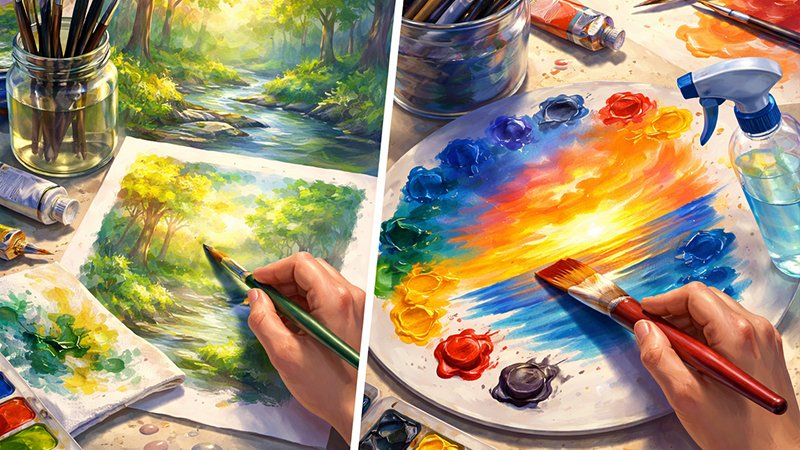
The most significant difference in the “feel” of painting with these mediums is how they handle time and mistakes.
Gouache: The Forgiving Medium
Because gouache can be reactivated, there is no need to rush. If a transition is too harsh, you can simply add water and soften the edge.
If you make a mistake, you can “lift” the color by re-wetting the area and dabbing it with a paper towel. However, this flexibility makes layering difficult; adding a fresh wet layer can easily “bleed” into the layer beneath it.
Acrylic: The Precision of Permanence
Acrylics dry incredibly fast—often faster than gouache. Once dry, the layer is “locked” in place, allowing for effortless layering without the risk of disturbing the work underneath.
The challenge lies in blending; you must work quickly or use tools like retarders (to slow drying) or mist the paint with water to keep it workable.
Strategic Hybrid: What is Acrylic Gouache?
For artists who love the matte, opaque look of gouache but hate the difficulty of layering, the industry has developed a hybrid: Acrylic Gouache.
Acrylic gouache is essentially acrylic paint formulated with a high pigment load and matting agents to look like traditional gouache. It provides the flat, matte finish designers crave but becomes waterproof and permanent once dry. This allows for the layering advantages of acrylic with the specific aesthetic of gouache.
Frequently Asked Questions
Is gouache just watercolor?
While they share the same binder (gum arabic), gouache contains more pigment and is far more opaque. Watercolor relies on the white of the paper for luminosity, whereas gouache creates a solid “blanket” of color.
Can you use gouache and acrylic together?
Yes, but with caution. Mixing them directly creates a version of acrylic gouache. However, remember that once you add acrylic to the mix, the paint will lose its ability to be reactivated with water once dry.
Why do illustrators prefer gouache?
Gouache is a staple in the world of posters, comics, and commercial illustrations because of its flat finish (no camera glare) and its ability to be easily corrected.
Which is more expensive?
Generally, acrylics can be slightly more expensive than gouache, particularly when purchasing professional-grade “heavy body” versions, whereas student-grade gouache is often very affordable.
Final Verdict: Which Should You Choose?
Neither medium is inherently “better” than the other; they are specialized tools for different artistic goals.
- Choose Acrylic if: You enjoy building texture, you want to paint on varied surfaces like wood or fabric, or you prefer a fast-paced workflow where you can layer colors without them mixing.
- Choose Gouache if: You love the look of flat, matte color, you want the ability to fix mistakes by re-wetting the paint, or you are creating work specifically for digital reproduction (scanning/photography).
The best way to find your preference is through experimentation. Many artists find that the skills learned in one medium—such as the color-mixing precision of gouache—significantly improve their performance in the other.