In the world of professional artistry and high-end DIY projects, your tools are your most significant capital investment.
For any creator, the transition from the “flow state” of painting to the logistical demands of cleanup is often cited as the most challenging phase of the creative process.
Yet, failing to implement a rigorous cleaning protocol does more than just create a mess; it actively degrades your assets and compromises the quality of your future work.
This comprehensive guide serves as a Standard Operating Procedure (SOP) for the maintenance, restoration, and preservation of acrylic paint brushes. By leveraging professional-grade techniques and understanding the chemistry of your materials, you can ensure your brushes remain in peak condition for years of high-performance use.
Understanding Your Assets: The Anatomy of the Brush
Before implementing a cleaning strategy, a professional must identify the material composition of their tools, as the cleaning method is dictated by the brush type.
1. Synthetic Paint Brushes: Performance and Sensitivity
Synthetic brushes are engineered from polyester, nylon, or a blend of both. These tools are prized for their precision and durability in specific applications, such as wall painting or furniture refinishing.
- Best Use Cases: Smooth, precise applications and gloss or stain projects.
- Vulnerability: Synthetic fibers are highly sensitive to aggressive solvents. Using incorrect cleaning agents can cause the bristles to break down or dissolve entirely.
2. Natural Fiber Brushes: Resilience and Investment
Natural brushes, often crafted from animal hair such as hog/pork hair, represent a higher initial capital expenditure but offer superior long-term ROI.
- The Advantage: These fibers are exceptionally resilient and resistant to most chemical cleaners. They possess superior paint-loading capacity and offer a smoother application across diverse textures.
- Professional Recommendation: For acrylic painting, natural brushes are the gold standard because they can withstand the harsh chemicals sometimes required to remove stubborn acrylic resins.
The Science of Solvents: Professional Cleaning Agents
Acrylic paint is water-soluble when wet but becomes a permanent plastic polymer once cured.
Household Solvents for Rapid Recovery
When professional-grade restorers are unavailable, certain household chemicals can serve as effective substitutes, provided they are used with caution.
- Acetone: Found in most nail polish removers, acetone is powerful enough to penetrate deep into the brush ferrule to break down hardened paint.
- Warning: Due to harsh odors and fumes, always work in a well-ventilated space. Never use acetone on synthetic brushes, as it will likely dissolve the bristles.
- Isopropyl Alcohol: A common ingredient in commercial paint removers, alcohol penetrates the bristle core to dissolve build-up. It is slightly less pungent than acetone but still requires careful handling and storage.
- Hand Sanitizer: In a pinch, the ethyl alcohol in hand sanitizer can break down acrylic resins. By massaging a small amount into the bristles and rinsing with soapy water, you can achieve a surprising level of cleanliness.
Professional-Grade Brush Restorers
For high-value brush collections, investing in specialized formulas is the most sustainable path.
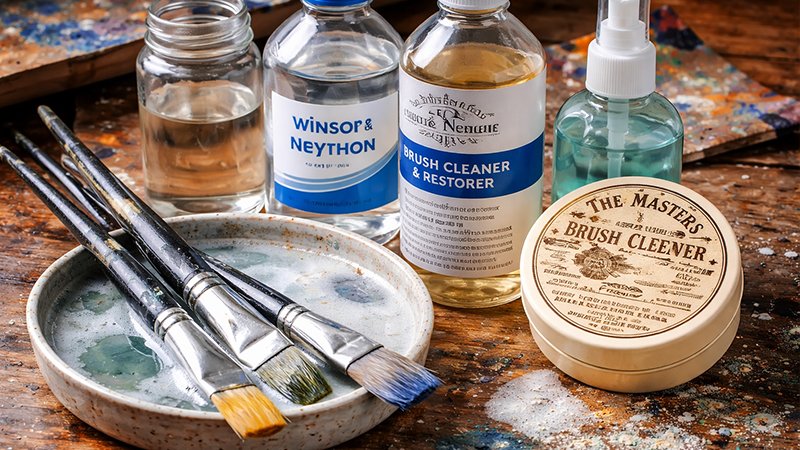
- The Master’s Paintbrush Cleaner and Preserver: This non-toxic, lemon-scented solution is a staple for both water-based and oil-based media. It excels at routine cleaning and conditioning, though it may struggle with heavily dried, “dead” paint.
- Winsor & Newton Brush Cleaner and Restorer: This is the premium choice for restoration. It is biodegradable, non-flammable, and safely removes dried acrylic from both natural and synthetic brushes without leaving oily residues.
Step-by-Step Restoration: The Professional Recovery Process
If a brush has been allowed to dry with paint in the bristles—a common but costly mistake—follow this recovery protocol to restore its utility.
1. The Chemical Soak
Pour your chosen solution (acetone, alcohol, or a professional restorer) into a glass jar—never plastic, as some solvents will dissolve the container.
Submerge the bristles only; soaking the handle can damage the wood or dissolve the glue in the ferrule. Allow the brush to sit for a few minutes, then wash thoroughly with soapy water.
2. Mechanical Agitation (The Hair Comb Method)
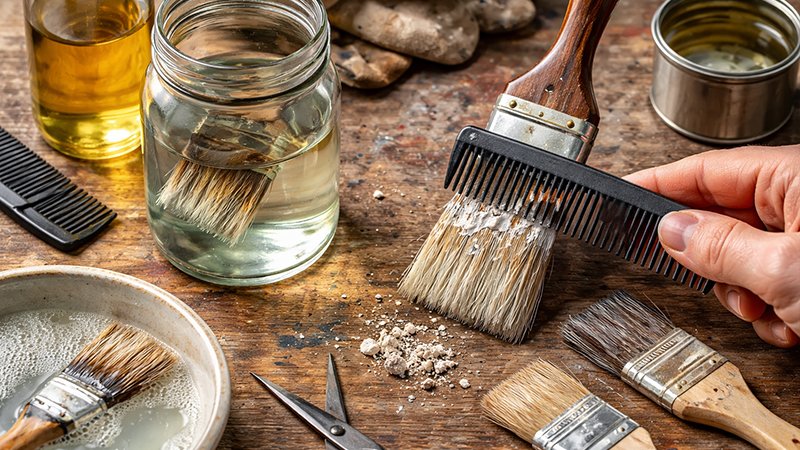
For stubborn clumps near the base of the bristles, use a fine-tooth hair comb.
- Pro Tip: Wet the brush with linseed oil first to provide lubrication.
- Technique: Grasp the brush firmly by the base to prevent shedding and gently pull the comb through the bristles to extract acrylic debris.
3. The “Quick Haircut” (Last Resort)
If the tips are permanently fused and all other methods fail, you may carefully trim the damaged ends. While this alters the brush’s performance, it can transform a “ruined” tool into a specialized brush for unique textures or craft projects.
Proactive Maintenance: The “Zero-Failure” Strategy
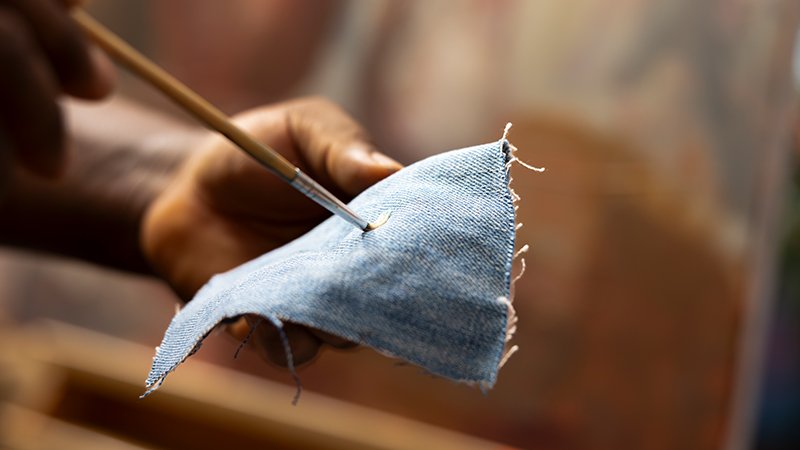
The most cost-effective way to manage your tools is to prevent paint from drying in the first place.
The Hourly Audit
Professional artists often set timers to remind them to pause and clean their brushes every hour. This prevents the “creeping” of paint into the ferrule (the base of the bristles), which is the most difficult area to clean.
Active Agitation
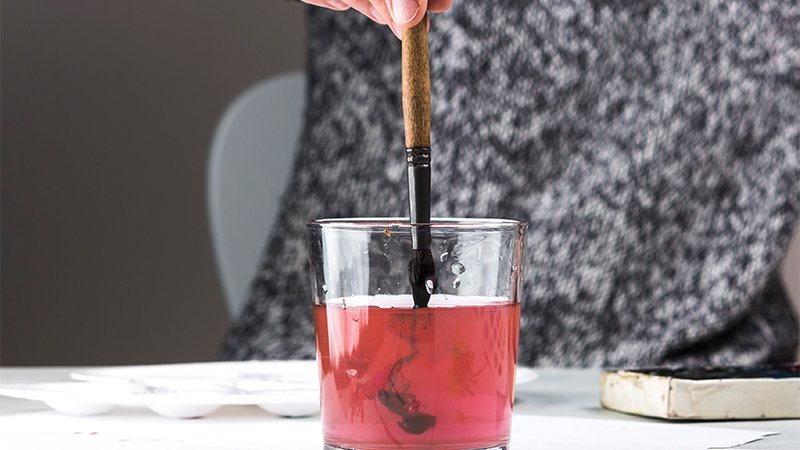
Simply dipping a brush in water is insufficient. You must move, swirl, and agitate the bristles against the bottom of your water container or under running water to dislodge the pigment.
Conditioning
After a deep clean, use a dedicated conditioner or mild soap to keep bristles supple. This prevents the hardening that leads to brittle, broken fibers.
Storage Best Practices
Never leave brushes soaking in water overnight. This causes the bristles to bend permanently and can rot the wooden handles.
Enhanced FAQ: Expert Insights for Artists
Q: Why does color persist even after multiple washings?
A: This often indicates that the paint has reached the ferrule. You must continue rinsing under running water until it runs clear, or use multiple jars of clean water to ensure all pigment is extracted from the core of the brush.
Q: Can I use the same brushes for both oil and acrylic?
A: While possible, it is not recommended for high-end work. The different chemistries of the paints and the harshness of the required cleaners mean that brushes typically perform better when dedicated to a single medium.
Q: What is the most effective soap for daily use?
A: A mild dish soap or a specialized detergent is highly effective for removing wet acrylic paint without stripping the natural oils from high-quality brushes.
Conclusion: Protecting Your Creative Capital
Maintaining a professional studio requires more than just artistic talent; it demands a disciplined approach to tool preservation.
Because acrylic paint dries rapidly and restricts brush motion, immediate cleaning is the best way to ensure your equipment remains in peak condition.
While synthetic brushes offer precision, natural fiber brushes provide superior long-term ROI due to their resilience against the harsh chemicals required for deep restoration.
Avoid soaking brushes overnight to prevent permanent bristle damage, and prioritize removing paint from the ferrule to maintain structural integrity.
By implementing a rigorous cleaning schedule, you protect your creative capital and ensure every project achieves a flawless finish.
Ultimately, your brushes are an investment that deserves consistent, professional care to deliver high-performance results.