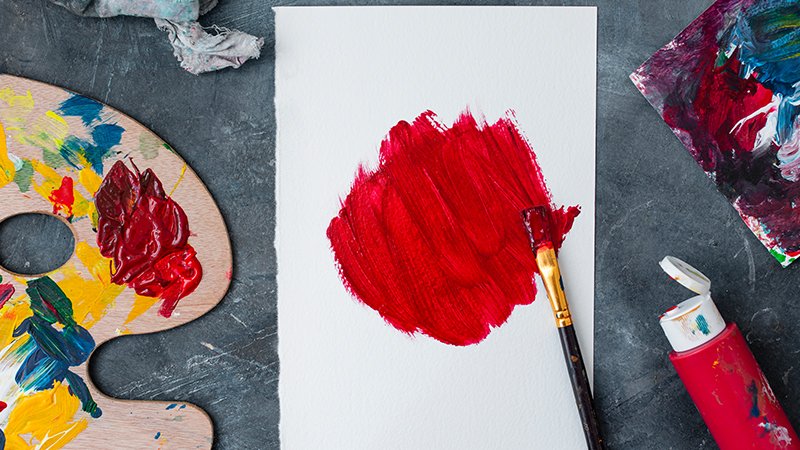
In the evolving landscape of contemporary art, the versatility of media has become a cornerstone of creative innovation.
While oil paint has historically been viewed as the primary “artist’s paint,” acrylic paint has ascended to become a globally dominant medium for both professional artists and hobbyists alike.
This surge in popularity is no accident; acrylics are celebrated for being fast-drying, water-soluble, and incredibly adaptable to a vast array of surfaces, from standard canvas to more unconventional choices like leather, wood, and metal.
However, for the modern artist seeking a balance between cost-efficiency and professional quality, paper has emerged as a premier choice.
Whether you are conducting initial color studies or creating a final masterpiece, understanding the technical nuances of acrylic on paper is essential for archival longevity and aesthetic excellence.
Why Paper is an Essential Asset for the Acrylic Artist
Choosing paper over canvas is a strategic decision that offers several distinct advantages. For the artist operating at scale, the primary appeal is affordability.
High-quality paper can be significantly more cost-effective than stretched canvas, allowing for a higher volume of experimentation without the financial pressure of wasting expensive materials.
Beyond cost, paper offers unparalleled portability and convenience. It is lightweight and easy to transport, making it the ideal choice for en plein air painting or for artists traveling between studios. Furthermore, paper serves as an invaluable tool for professional “studies.”
Artists frequently use paper for acrylic paints to test color interactions, compositional designs, and new techniques before committing to a final large-scale piece on canvas.
The Technical Pillars: What to Look for When Selecting Paper
Not all paper is created equal. To ensure your artwork remains vibrant and structurally sound, you must evaluate four key technical factors: weight, pH level, texture, and durability.
1. The 300gsm Threshold: Weight and Thickness
The most common challenge when using water-based mediums like acrylics is warping or buckling. When water is applied to thin paper, the cellulose fibers expand unevenly, leading to a wavy, distorted surface.
To mitigate this, professional artists adhere to the 300gsm rule. Paper weight is measured in grams per square meter (gsm) or pounds (lb).
Any paper lighter than 300gsm (140 lb) is generally considered too thin for heavy acrylic applications. Heavier paper not only resists warping but is also much easier to frame or mount on board for a professional finish.
2. Archival Longevity: The Importance of pH Neutrality
If you intend for your artwork to last for years—or if you are selling it to collectors—you must prioritize pH-neutral (acid-free) paper. Paper containing acid will turn yellow and brittle over time, leading to the eventual degradation of both the surface and the paint.
High-quality art papers explicitly state their acid-free status, ensuring that your work maintains its original color and integrity for decades.
3. Durability and Composition
The source material of the paper dictates its strength. Paper manufactured from cotton or linen is inherently more durable than wood-pulp paper. These fibers are less likely to tear under the pressure of multiple paint layers or aggressive brushwork, making them superior for professional-grade acrylic painting.
4. Texture and “Tooth.”
The “tooth” of the paper—its surface roughness—determines how the acrylic paint adheres. A smoother surface allows for fine detail, while a rougher texture can grab more paint, allowing for thicker, impasto-like applications. The level of absorption is also influenced by this texture and the consistency of the paint being used.
Top Professional Recommendations for Acrylic-Compatible Papers
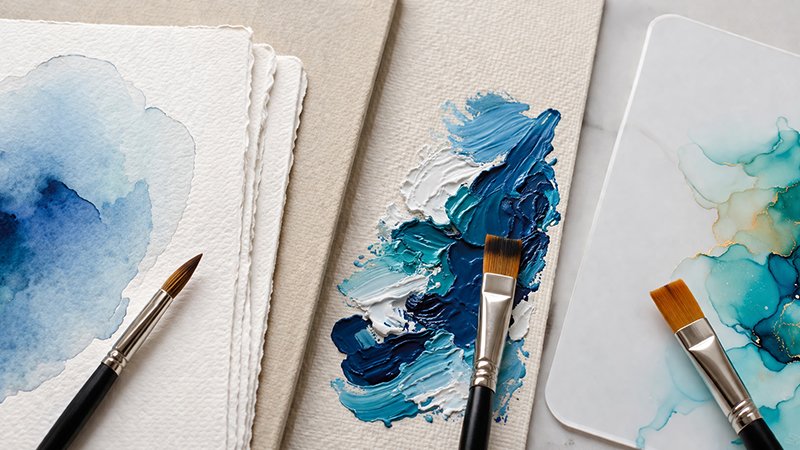
Based on technical performance and user feedback, three primary categories of paper excel with acrylic mediums.
I. Watercolor Paper: The Versatile Heavyweight
Because acrylics can be thinned with water to mimic watercolor techniques, high-quality watercolor paper is an excellent choice. These papers are designed to be ultra-absorbent, which can lead to stunning, layered results.
- Our Recommendation: UCREATE Watercolor Paper. This 140 lb. (approx. 300gsm) paper is acid-free and designed to tolerate various wet media.
- Pros: Uniform whiteness, pH neutral, and excellent for mixed-media techniques.
- Cons: Can be susceptible to warping if excessive water is used.
II. Specialized Acrylic and Canvas Paper
For those who prefer the feel of a traditional canvas, specialized acrylic paper is available. These papers often feature a “canvas-like” texture and are specifically engineered to handle the unique demands of acrylic resins without bleeding.
- Our Recommendation: CANSON XL Series Oil and Acrylic Paper Pad. This is a global favorite among artists for its bleed-proof technology.
- Pros: Requires no priming or preparation; it is “ready to paint” out of the box.
- Cons: Despite its weight (290 gsm), it can still be prone to minor warping if not secured properly.
III. Synthetic Polypropylene Paper: The Warp-Proof Alternative
A modern innovation in the art world is synthetic paper made from polypropylene. Because it contains no natural fibers, it is completely immune to water-induced warping.
- Our Recommendation: IMPRESA Alcohol Ink and Watercolor Paper. While non-absorbent, it offers a silky-smooth surface that allows for vivid, bold abstracts.
- Pros: Reusable and fully erasable, allowing artists to correct mistakes effortlessly.
- Cons: Requires extra effort to ensure the paint adheres correctly due to its non-porous nature.
Advanced Surface Preparation: Mastering the Foundation
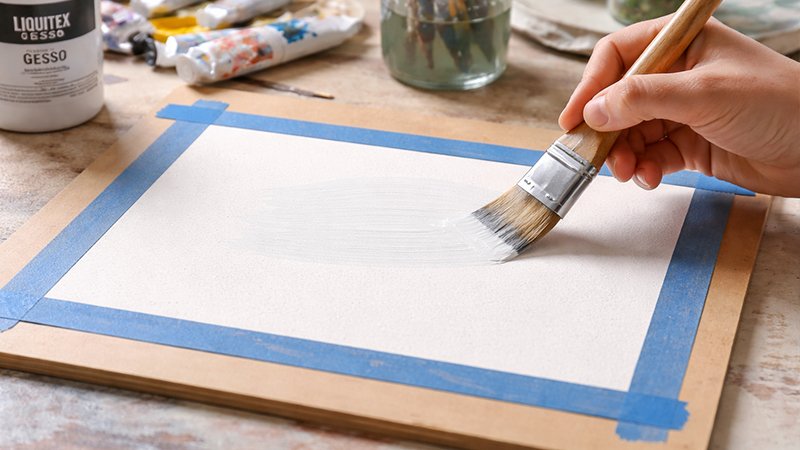
While high-quality acrylic paper is often ready for use, many artists prefer to prepare their surface to control absorption and enhance durability.
The Role of Gesso on Paper
Gesso is a binder mixed with pigments and chalk that acts as a primer. Applying gesso to paper serves several purposes:
- Reduced Absorption: It prevents the paper from “soaking up” too much paint, allowing for more vibrant colors.
- Structural Support: Gesso helps thicken thinner paper, providing more rigidity and reducing the likelihood of buckling.
- Adhesion: It creates a “toothier” surface that helps the acrylic paint bond more effectively to the paper.
For professional results, apply one or two thin layers of gesso (such as Liquitex Gesso Surface Prep Medium) and allow each layer to cure completely before beginning your painting.
If you are working with recycled or non-acid-free paper like cardboard, a non-acidic primer is mandatory to protect the paint from chemical discoloration.
Preventing Warping and Bleeding
To ensure your paper stays flat:
- Tape the Edges: Use artist’s tape to secure the paper to a flat board before painting.
- Control Moisture: Use heavier paper (300gsm+) and be mindful of the water-to-paint ratio.
- Use Additives: Instead of water, use impasto gels or binder mediums to thicken your paint. These additives create texture—similar to the famous works of Van Gogh—without the warping risks of water.
Enhanced FAQ: Expert Insights for Acrylic Artists
Can you use acrylic paint on regular printing paper?
Technically, yes, but it is not recommended for anything other than very quick sketches. Standard paper is usually far below the 300gsm threshold, meaning it will buckle and likely tear when the paint dries.
Does acrylic paint bleed through paper?
This is entirely dependent on the weight of the paper. Thin, lightweight paper will likely experience bleed-through. To prevent this, either upgrade to a heavier paper or apply a layer of gesso to create a protective barrier.
What other surfaces can I explore with acrylics?
Acrylics are remarkably versatile. Beyond paper and canvas, you can paint on wood, leather, metal, stone, and even plastic. Note that non-porous surfaces like plastic or metal often require sanding and specialized priming to ensure the paint doesn’t peel.
Is priming always necessary?
If you are using high-quality, acid-free paper specifically designed for acrylics (like the Canson XL series), priming is not strictly necessary. However, for watercolor paper or general-purpose heavy cardstock, a layer of gesso will almost always improve the final result.
Conclusion: Elevating Your Artistry through Choice
The decision to use acrylic paint on paper is a resounding “yes” for any artist looking to expand their horizons.
By selecting the correct weight (300gsm+), ensuring pH neutrality for archival safety, and mastering surface preparation with gesso, you can create works of art that are both professional in quality and efficient in execution.
The paper offers a landscape of possibilities. Whether you are using the rugged texture of cold-pressed watercolor paper or the futuristic, warp-proof surface of synthetic polypropylene, the medium allows for endless experimentation.
We encourage you to step beyond the canvas and explore the tactile, versatile world of paper—your next masterpiece may just be a single sheet away.