Kashmir silk fabric stands as one of India’s most exquisite textile treasures, known worldwide for its luxurious texture, intricate designs, and rich cultural heritage.
Woven primarily in the pristine valleys of Jammu and Kashmir, this fabric is more than just a material—it is a symbol of tradition, artistry, and opulence.
This blog explores the origin, types, weaving techniques, cultural significance, care, and modern relevance of Kashmir silk fabric, giving you a complete understanding of its allure.
Origins and History of Kashmir Silk
The history of Kashmir silk is deeply intertwined with the region’s centuries-old tradition of craftsmanship. Silk production in Kashmir dates back to the 3rd century CE when sericulture—the cultivation of silkworms—was introduced from China.
The pristine environment of the Kashmir valley, with its moderate climate and fertile soil, proved ideal for mulberry cultivation, which is essential for producing the finest silk threads.
During the Mughal era (16th–19th centuries), Kashmir silk reached its zenith. The Mughal emperors were great patrons of art and luxury textiles.
They encouraged the local artisans to innovate with weaving and embroidery techniques, leading to the creation of the famous Kashmiri brocades and jamavar shawls, often incorporating silk with gold and silver threads.
The legacy of Mughal patronage not only enhanced the aesthetic appeal of Kashmir silk but also elevated it to a symbol of royalty and sophistication.
The fabric later became central to Kashmiri identity, worn during festive occasions, weddings, and religious ceremonies. Even today, owning a piece of Kashmir silk is considered a mark of elegance and cultural appreciation.
The Art of Kashmiri Silk Weaving
The creation of Kashmir silk fabric is an intricate process that requires patience, precision, and skill. Unlike mass-produced fabrics, each piece of Kashmir silk is the result of hours of meticulous handwork. The process typically involves the following steps:
Sericulture (Silkworm Rearing):
Kashmir silk is primarily derived from the mulberry silkworm, which produces fine, lustrous fibers. Farmers carefully rear silkworms in controlled environments, feeding them exclusively on mulberry leaves. Once the cocoons are ready, they are harvested to extract silk threads.
Spinning and Dyeing:
The silk threads are spun to create fine yarn. Natural dyes, derived from plants, minerals, and flowers, are traditionally used to color the threads, although modern methods sometimes employ synthetic dyes for durability and variety.
Weaving:
Skilled artisans use handlooms to weave the silk threads into fabric. Depending on the design, weaving can take several days to months. Kashmir silk is often woven with brocade (zari work), jacquard patterns, or ikat designs, each adding texture, depth, and vibrancy to the fabric.
Embroidery (Optional):
Many Kashmir silk fabrics are further enhanced with embroidery, especially the world-famous Kashmiri zari and resham work. This hand-embroidered detailing adds intricate motifs of florals, paisleys, and geometrical patterns, making each fabric unique.
The combination of hand-spun silk, natural dyes, and traditional weaving techniques ensures that every piece of Kashmir silk is a masterpiece, often considered a wearable piece of art.
Types of Kashmir Silk Fabric
Kashmir silk is not a single type of fabric; it comes in a variety of textures, weaves, and designs. Some of the most renowned types include:
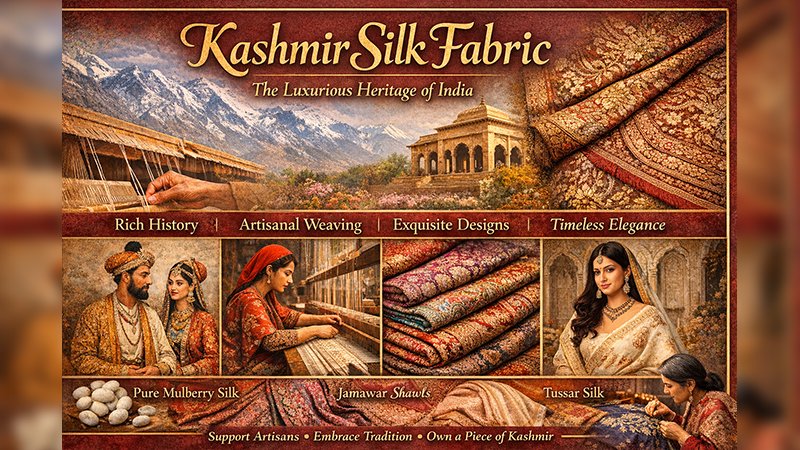
1. Pure Mulberry Silk
Derived directly from mulberry silkworms, this silk is smooth, glossy, and soft. It is highly durable and ideal for making sarees, dresses, and high-end upholstery.
2. Pashmina Silk Blend
Pashmina, the fine wool from Himalayan goats, is often blended with silk to create a soft, lightweight fabric that combines warmth and sheen. This blend is used to make luxurious shawls and stoles.
3. Jamawar Silk
Jamawar, meaning “cloth of the king,” is a type of silk woven with intricate floral or paisley motifs, often in gold or silver threads. Traditionally, it was used for shawls and royal attire.
4. Tussar Silk
Also called “wild silk,” Tussar silk is produced by silkworms feeding on oak and other wild leaves. It has a slightly coarse texture but a beautiful natural sheen, suitable for sarees and suits.
5. Satin and Chiffon Silks
Kashmir also produces satin-like and chiffon silk fabrics, which are lightweight, flowy, and often used in modern fashion wear, offering versatility for both casual and formal attire.
Unique Features of Kashmir Silk Fabric
Kashmir silk fabric is instantly recognizable due to its unique characteristics:
- Softness and Smooth Texture: The fabric is smooth to the touch, making it comfortable for long wear.
- Natural Sheen: Handwoven silk has a subtle, lustrous glow that catches the light beautifully.
- Intricate Designs: From floral patterns to geometric motifs, Kashmir silk often features elaborate designs that are painstakingly handwoven.
- Durability: High-quality Kashmir silk can last decades if properly cared for, making it a worthwhile investment.
- Versatility: It can be fashioned into sarees, dresses, stoles, kurtas, and even interior decor items like curtains and cushion covers.
Cultural Significance
Kashmir silk is deeply rooted in the cultural and social life of the region. Historically, it was associated with nobility and ceremonial attire.
Today, it continues to play a central role in Indian weddings and festive occasions. Brides often choose silk sarees or lehengas from Kashmir silk for their luxurious feel and elaborate embroidery.
Moreover, the motifs used in Kashmir silk—like paisleys, lotuses, and chinar leaves—are symbolic. For instance, the paisley motif represents fertility and life, while the chinar leaf is a nod to Kashmir’s natural beauty.
Kashmir silk also serves as a vehicle for preserving traditional crafts. By purchasing and wearing Kashmir silk, consumers help sustain centuries-old weaving and embroidery techniques, supporting local artisans and the regional economy.
Care and Maintenance of Kashmir Silk
Silk is a delicate fabric that requires special care. To ensure longevity:
- Dry Cleaning: Professional dry cleaning is preferred, especially for garments with zari or intricate embroidery.
- Storage: Store silk fabrics in a cool, dry place, away from direct sunlight. Wrapping in muslin cloth prevents damage from moisture and dust.
- Washing: If washing at home, use mild detergents and cold water. Avoid wringing the fabric.
- Ironing: Use a low-heat setting and preferably iron on the reverse side to avoid damaging the shine or embroidery.
Proper care preserves the softness, color, and sheen of Kashmir silk for decades, making it a lifelong investment.
Modern Applications and Fashion Trends
Kashmir silk has evolved to remain relevant in contemporary fashion. Designers and brands worldwide incorporate it into high-end couture, bridal wear, and even casual luxury clothing. Some notable trends include:
- Silk Sarees and Lehengas: Still a staple for weddings and festivals, modern silk sarees feature bold colors and minimalistic patterns.
- Western Wear: Dresses, skirts, and blouses made from Kashmir silk are increasingly popular among urban fashion enthusiasts.
- Accessories: Scarves, stoles, and handbags crafted from silk offer a touch of elegance.
- Home Decor: Silk cushion covers, curtains, and table runners elevate interior spaces with luxury and texture.
The ability of Kashmir silk to blend tradition with modernity ensures its continued demand in both local and international markets.
Economic Importance and Artisanship
Kashmir silk is not just a cultural treasure; it is an economic lifeline for thousands of artisans. The weaving and embroidery industry in Kashmir provides employment to skilled craftsmen, particularly women, helping sustain local communities.
Government initiatives and cooperative societies have also been established to support silk production, ensuring fair wages and promoting global exposure for artisans.
However, challenges like competition from machine-made fabrics, declining sericulture knowledge, and climate factors pose threats. Supporting authentic Kashmir silk through conscious consumer choices helps preserve this heritage.
How to Identify Genuine Kashmir Silk
Due to its high value, Kashmir silk is often imitated. To ensure authenticity:
- Texture and Feel: Genuine silk feels soft, smooth, and slightly cool to touch.
- Shine: It has a natural, subtle sheen—not overly glossy.
- Weave Quality: Examine embroidery and patterns closely; handcrafted pieces have slight irregularities, which indicate authenticity.
- Price Point: High-quality silk is an investment. Extremely cheap silk may be synthetic.
- Burn Test: In a small, inconspicuous area, real silk burns slowly with a smell of burnt hair, while synthetics melt quickly.
Environmental and Ethical Considerations
Kashmir silk production, especially mulberry sericulture, is relatively eco-friendly. Mulberry trees absorb carbon dioxide, silkworm cultivation is renewable, and traditional dyeing methods use natural plant-based colors. Ethically sourced silk also ensures humane treatment of silkworms and fair labor practices for artisans.
By choosing Kashmir silk from certified and ethical sources, consumers support sustainable fashion and contribute to a responsible supply chain.
Conclusion
Kashmir silk fabric is much more than a textile; it is a manifestation of centuries-old craftsmanship, cultural pride, and timeless elegance. Its soft texture, intricate designs, and natural sheen make it a prized possession for fashion enthusiasts, collectors, and connoisseurs of luxury.
By understanding its origins, types, weaving methods, and cultural significance, one can truly appreciate why Kashmir silk remains an unparalleled symbol of sophistication.
Investing in Kashmir silk is not just about owning a luxurious fabric—it is about supporting artisans, preserving heritage, and celebrating the artistry of one of the world’s finest silks.
Whether worn as a wedding saree, a delicate stole, or even showcased in home décor, Kashmir silk continues to enchant, embodying a legacy that transcends generations.